Blog Archives
Our greatest 20th century premier
Yesterday we buried a titan and she was a woman. Not since Churchill’s bravery when he took the awful decision to sink his French ally’s fleet in WWII, rather than let it fall into enemy hands, have we seen such a brave leader. I even think that Churchill might have blanched at the idea of sending the hugely depleted Fleet that Margaret Thatcher had at her disposal to rescue the Falkland Islands, 8,000 miles away.
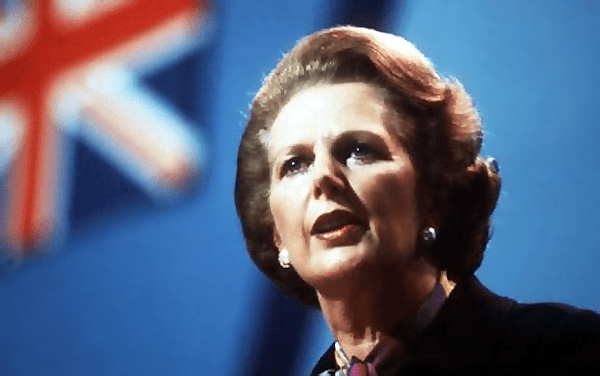
Thatcher has for all time proved – with her competence, drive, bravery and vision – that women are truly the equal of men.
But her bravery extended well beyond the battlefield – something that Churchill’s did not. She took on and defeated ‘the enemy within’, as she called them: the Arthur Scargills, Derek Hattons and Ken Livingstones of this world. ‘Union Barons’, one by one, fell upon her lance until the wheel had turned full circle and we had the fewest strikes in all Europe.
Churchill had his own bitter enemies among the working classes as well as the establishment, but somehow their vehemence had faded under the glow of his magnificent conduct of the war and the glory of his rhetoric in its early days, urging his countrymen to stand fast and not be seduced by peace ‘with honour’ offer which he knew would turn out to be humiliating. But Margaret Thatcher’s enemies never left her in peace, not even in death. Whole swathes of industrial England, Scotland and Wales died on her watch. Most of them were dying anyway (as they had been under Labour), but she did nothing to slow the process.
Yet much the same was happening all over the industrialised West. Mines were closing and shipyards were losing out to cheap labour in the East; steel was being produced in the same areas at Mickey Mouse prices. Long-established and close communities who had come to rely on a single industry became a wasteland. Standing guardian over these nationalised and loss-making industries was a union hierarchy more powerful, many argued, than the state itself. It was said that no law could be enacted without their approval.
Thatcher believed herself to be on a mission to restore Britain’s governance, finances and greatness. She believed she saw a very sick patient whom only surgery could cure. The medicine, she knew, would be bitter and the recuperation hard. But she insisted it would be all be worth it. Some said she was stubborn, and she was. But she could be flexible when she needed to be; she could duck and dive with the best of them in politics, but on core issues, as she saw them, she would not budge. You don’t stay on the way to twelve years at the top (almost as long as Hitler’s Reich) without heavy doses of pragmatism.
Also she was not above using her sex either to get her way. Flirtatious Mitterrand, the French president, thought her coquettish and remarked that she had “the eyes of Caligula and the mouth of Marilyn Monroe.” He fell in love with her ballroom dancing skills. In another world he would have had her – or at least tried.
For all this, Thatcher was an earnest woman, almost devoid of humour (jokes had to be explained to her). She had an almost childlike certainty that she knew what to do to lift the economy out of the pit of despondency into which it had fallen. When 360 of the country’s leading economists signed a letter to tell her that her policies were doomed, she ignored them. Once she was the boss she would brook no backsliders. She was dictatorial, but luckily she was compelled to operate within the constraints of a liberal democracy. But she got the essentials right and, remarkably, that army of doomsayers were proved wrong.
Personally, she was very kind to her staff and to the little people, the ones without power – but she could be brutal to those who wielded it. However, her all-consuming ambition made it impossible for her to be a hands-on mother; perhaps that wasn’t her style anyway. But in her extreme old age she did feel pangs of guilt. She shed more tears over her lost boys in the South Atlantic than ever she did for her own children. It is said that she never went to bed during the three months of the Falklands conflict, dozing instead on a chair, waiting to hear the telephone ring to tell her of more boys lost in the latest sinking. She took it all very personally. Churchill seldom did. An eyewitness told of her sobbing for 40 minutes non-stop when news reached her that another ship had been hit by a missile. When her own torpedo slammed into the cruiser Belgrano and sent Argentina’s sailors to the bottom of the icy south Atlantic, I have no doubt that her mother’s heart felt for those other mothers in far away Argentina. But if ‘cruel necessity’ – Cromwell’s justification for cutting off his own king’s head – called for its sinking to save her own precious boys, she would not hold back.
She was tough beyond belief – far tougher than any of the men who surrounded her. She would not yield to IRA hunger strikers, no matter what. It was a case of an irresistible force meeting an immovable object. It took ten emaciated corpses before the IRA conceded defeat. They repaid her by destroying her hotel and almost her.
Her toughness and certainty of the correctness of her policies followed through to the economic woes which beset the country; her monetarist measures brought record inflation to low levels; her privatisation of loss-making, nationalised industries stopped the haemorrhaging and put shares into millions of pockets, becoming a model for virtually the whole world; her sell-off of council houses made property owners of millions; her ‘Big Bang’ financial liberalisation in the City made London the world’s leading capital market; and her curbing of restrictive union practises such as flying pickets and the closed shop brought order to the factory floor. It is an impressive list and there is more.
But she made mistakes. She believed too much in the service economy and failed to realise sufficiently the importance of manufacturing. She was plain stupid in doing a dry run of the Poll Tax in, of all places, prickly Scotland – even though its principals were sound. (She never had any admirers in that part of the kingdom and still doesn’t.) And she should never have allowed herself to be talked into signing up to the ERM at a rate that shadowed the Deutschmark. Her earlier signing of the Single European Act cost her many of her cherished powers of veto. Also her closure of Grammar Schools exceeded even that of her Labour predecessors. It infuriated great numbers of her own followers.
Too long in power, and with the inevitable hubris setting in she finally gave the game away when she used the ‘royal we’ to announce the birth of a grandchild. Her patronising treatment and her public put-downs of her loyal chancellor and foreign secretary, Geoffrey Howe, were not pretty to watch and her hectoring style got worse the longer she remained in office.
But for all her faults and mistakes, she was nevertheless a force of nature that moved the economic firmament. There was no going back, even for an incoming Labour government. She also moved the political centre ground. It might be said that if you seek her monument, as Sir Christopher Wren once famously stated, “look around you”.
Nothing is the same. She was not interested in spin doctors, focus groups, think tanks, legions of special advisers or even the nasty things the papers said about her. She had a job to do and she would do it come what may. There is a certain courage here also. But if we still have difficulty in recognising her greatness then we have to cast our eyes around the world. All of its leaders are in awe of her achievements. They know a colossus when they see one. They were not distracted by the smoke and din of battle as we were here at home. They could see more clearly where she was headed. Their universal opinion was that Great Britain was a more respected nation than it had been at the start of her reign. Flags flew in many countries at half mast when her death was announced and most of all across the broad expanses of North America. There her name, alongside Ronald Reagan, is revered – as it is too across Eastern Europe, as the liberator from Communism. It was she who brought Gorbachev in from the cold and told her friend, the president, “this is a man we can do business with”. Together, their steely resolve and willingness to do whatever it took, brought the Cold War to a triumphant end. It might justly be said that had she accomplished nothing else, that alone would stand as a fitting testament.
Finally there is the no small matter of a grocer’s daughter – a woman – scaling the heights of a man’s world to achieve the highest office in the land. Women everywhere, and that encompasses the whole world, owe it to her that she has for all time proved – with her competence, drive, bravery and vision – that women are truly the equal of men and that there is no office of state that they cannot handle. In the great scheme of things I do believe that history will place her before Churchill – who, after all, was born to privilege – as our greatest 20th century premier.

Growing ourselves out of a hole
There is no better way to get yourself out of the kind of hole we find ourselves in today than to grow your way out.
All the emphasis to date has been on the debt which hangs round our neck like an albatross. But while it was right to worry about this and to take measures to bring it under control, now we must get an engine fired up whose sole purpose is growth.
Where can this growth come from? It is easier first to identify areas where it cannot and should not come from; namely the self-indulgent areas such as we had known for the decade before the credit crunch hit us in 2008.
More than any other sector, the construction industry has taken the brunt of the recession. Once, it was commonplace to see giant cranes at work in every city centre, out of town shopping development and business park. Not anymore.
All is quiet on the Western Front, yet at the same time we have a crisis in housing. Millions of newcomers have flooded into our country and they all need accommodation. And while this moribund industry is virtually at a standstill, millions of our young people cannot get on to the housing ladder because prices are still too high.
Nothing is more likely to bring these prices down than a massive programme of building which closes the gap between supply and demand.
More housing means more carpets to be fitted; more furniture and electrical appliances to be bought; more soft furnishings; more blinds; more kitchen utensils; more visits to DIY stores – the list goes on and on. So here is one area crying out for a massive growth strategy.
With interest rates at an historic low there was never a better time to take out a mortgage, if only the product was there at an affordable price.
What about infrastructure projects to which we are already committed? Surely these could be fast-tracked. The Olympic project has shown us what can be slung up in a remarkably short time frame.
And then there’s Boris Johnson’s pet project: the Thames Estuary Airport to complement Heathrow. The estuary project would not only send a powerful signal to the world that Britain is determined to get ahead of the curve business-wise and continue to host the world’s number one airport; it would also be a faith restoring project as well as, hopefully, the world’s most exciting and, perhaps even beautiful, airport. Even the green lobby would have to have all its boxes ticked.
In our efforts to get energy prices down – a very necessary prerequisite for growth – why don’t we and the rest of the struggling West release a large part of those strategic reserves of oil we all built up to fight the Cold War in the event that it became hot? And why, for that matter, are we pussyfooting about getting up the massive reserves of oil which lie all around the Falkland Islands? At a stroke it would make us oil self-sufficient and even allow us to make the European Union independent of Russian or any other single country’s oil. Imagine what clout that would give us in Brussels!
We could set up ‘Enterprise Zones’ in depressed areas with special tax breaks. There could also be NI exemptions for new start-ups as well as firms employing fewer than 50 who take on new employees.
Yet underpinning it all should be massive, irresistible pressure on the banks to make it all possible. And funnily enough, quite apart from the massive liquidity injected into the banking sector via quantitative easing (money printing), Britain’s big and medium-sized companies are sitting on a huge stash of cash, too frightened to spend it. Rather than wasting political capital debating House of Lords reform or gay marriage, the government must develop a more coherent business strategy to inspire confidence in the business community.
With the pound so much more competitive than before the crisis and historically low interest rates provided by our recapitalised banks, we are in so much better a place than our continental rivals who have yet to bite this most difficult of bullets. Altogether we have very much going for us, if only we could be brought to see it.
Growth can also come from the world beyond Europe which occupies 60% of our export market – some of which in the developing world is not in recession at all. In this regard we have a competitive advantage since much of what we have kept of our once mighty industrial capacity is now at the cutting edge – and consequently difficult for foreigners to poach – such as Rolls Royce aeroplane engines and other high-tech earners such as our renowned computer software sector.
While we do not exercise that hard power that we once deployed around the world any longer, we still deploy plenty of soft power. We punch far above our weight everywhere.
There is a huge amount of warmth and goodwill to be found towards us in the world. You have only to look at that great gathering of the Commonwealth of Nations every four years to see that. Nowadays you even have countries which were never part of the empire applying to join the grouping.
I do not see it as fanciful that one day Uncle Sam himself will wonder why he has not re-joined his original family. Perhaps there is some truth in what George Santayana, the famous Spanish-born American philosopher, poet, and humanist, said when he opined in the nineteenth century: ‘Never since the heroic days of Greece was the world ruled by such a sweet, just, boyish master’.
We are mad not to capitalise on all this. And the wheels have been greased for us by the world choosing to speak our language before any other. We don’t even have to take an interpreter with us.

Why are the Argentines so obsessed?
This was a dismal week thirty years ago.
A very nasty military junta, which had already killed over 20,000 of its own people – many thrown out of helicopters over the open ocean – had seized a far away British territory and made it its own. We were in shock.
And so the Falkland Islands burst upon the world scene and became a cause celebre – at least for the British nation.
Of all the many campaigns our assertive little country has ever fought, this had to be the bravest of them all… some said almost suicidally so; certainly foolhardy in the extreme, said others.
Our connections with the south polar regions have always been very great. Cook sailed into them in his search for the great ‘southern continent’ before he became almost ice locked and was forced to turn tail. The intrepid Ernest Shackleton almost made it to the pole and our very own Plymouth hero Captain Scott was mourned again this very week on the 100th anniversary of his poignant and tragic death.
It has always been a very great puzzle to me as to why Argentina obsesses, as it does, about the Falkland Islands and why it believes it has a better legal claim to them than we do.
It was, after all, the English navigator John Davis who first discovered them in 1592. And the British first established a permanent settlement as long ago as 1765 – over seventy years before Argentina came into existence.
In today’s world, the United Nations makes the wishes of the inhabitants of a disputed territory the deciding factor. Does anybody doubt for a second what those wishes would be?
Iceland is not a great deal more distant from Britain than are the Falklands from Argentina. What would the world say were we to state that Iceland should rightfully belong to us?
And what about the Channel Islands, only 10 miles from France and 90 miles from us? I don’t hear the French playing up about them.
My thoughts on the Falklands are simple: history is on our side, as well as that little matter of possession being nine-tenths of the law. What’s more, we’ve paid in blood to overturn Argentine aggression.
They stay ours until the inhabitants decide otherwise.
While blood can never be redeemed, expenses can; and to secure them against future aggression, they have been huge. So get up that oil and quickly!
Our balance of payments deficit can be mightily relieved by a bonanza hugely greater than the north sea.
Should Argentina be so foolish as to try to intimidate the oil companies already operating there then the British Government should state unequivocally to underwrite any risks that such silly threats are thought to pose to those operations.
Long ago – thirty years in fact – I made an attempt to summarise that heroic conflict in verse. This might seem a good moment to share the thoughts I had at that time with my readers.
The last of the colonial wars
Was strangely in a noble cause:
A far off people, few but strong,
Knew in their hearts where they belonged;
Their island home to most unknown
Would tug at Albion like a bone:
Assaulted for its wind-lashed bogs,
Its distant owners viewed as dogs;
Sad days for Argentina, these:
How could its despots seek to please
A tortured land in Fascist claws?
But rouse them in a long-lost cause,
The British state seemed not to care:
Its woes so great its chest would bare;
Now was the time to strike and win,
And quell its people’s clamorous din!
The world awoke that April day
To find that Spain’s child now held sway;
A stunned and humbled Britain gasped:
Depression reigned but would not last;
A steely thought ran through the land
That such an outrage must not stand;
The empire’s day it knew was done,
But never did its soldiers run;
The islanders sought firm redress;
Their injured pleas brought dire distress:
They were not Latin folk in chains,
But free-born Brits they stoutly claimed;
At any other time but this,
The men in London would resist
A rescue from across the world;
But now was firm defiance hurled:
A Boudicca was come to power,
Though some around would only cower;
At lightning speed her ships set forth,
To 50 South from 50 North;
Long years of cringing fell away
As Britons cheered them on their way;
Then silence fell as weeks progressed,
With fearful thoughts and risks assessed;
Its one-time child, the USA,
Could only look on in dismay:
A war between its two allies
Could rupture one of these two ties;
How hard she tried to arbitrate,
Then left the despots to their fate;
For Latin pride stood in the way
And now was come the time to pay!
Ships at length reached southern waters:
Skull and Crossbones meant no quarter;
The pride of Argentina’s fleet
Went plunging to the icy deep;
Now did the blood begin to flow
As combat raged with woe on woe;
For freedom comes at heavy price:
The toll is death when fools play dice;
Malvinas?… now read Falkland Isles:
The settlers there could once more smile;
In Latin parts more despots fell:
Their foul regimes consigned to hell.
 The Last Foundling