Blog Archives
Putin is no a fool
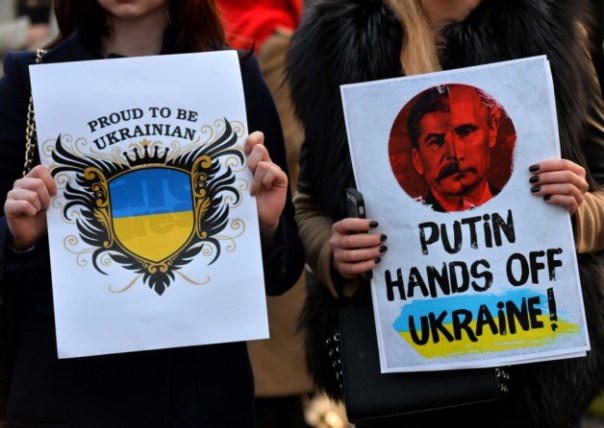
A great opportunity was thrown away by the West when Putin first came to power.
What are we to make of developments in Eastern Europe? It is one thing to have a squabbling clutch of Balkan countries at each others’ throats, as we saw in the breakup of the former Yugoslavia, but quite another to have the Russian bear stomping around with what looks like a very sore head. Europe, historically, never expected anything sensible coming out of the powder keg of the Balkans. After all – at its worst – it gave us the First World War, but since then Europe has never had to worry too much about that region disturbing the peace of the continent as a whole – only its own.
The chief reason for its instability were those many hundreds of years that it lay under the yoke of the Turkish sultan who did his best to turn as many of them as he could into Muslims. So in that corner of Europe you have not just a religious divide, such as we still have between Protestants and Catholics in Northern Ireland, or Sunni and Shia in Syria, but a divide of Faiths itself: Islam and Christianity.
But none of this exists where the bear is concerned. He belongs to the Christian community of the West. His trouble is that, unlike us, he has not yet come to terms with the loss of empire. It is, after all, only twenty years since the Soviet republics – there were thirteen of them – gained their independence. Russia still believes, deep down, that those countries rightfully should belong to it or at the very least should be under its sway.
Putin, the Russian leader, knows that the warm water ports of the three Baltic republics will never be his again; they are too close to the West and with long historical ties to it. But, more to the point, they now enjoy the protection of NATO – the best life insurance policy they could have taken out. Even now NATO planes, including our own, are sweeping Baltic skies daily. The message there is ‘thus far and no further’.
A great opportunity was thrown away when Putin first came to power. He wanted desperately to gain acceptance from the West, but foolishly his overtures were spurned. Even as late as his second presidency he offered to open up his vast country into a free trade area which would extend from Lisbon in the extreme west to Vladivostok in the far east. Instead of looking seriously at this, what did the West do? It pooh, poohed the notion and even provocatively poked the bear by offering deals to Russia’s former vassal states, Moldova, Armenia and Georgia – the latter two far from Europe’s heartland.
Undoubtedly, down the ages, Russia has been Europe’s perennial headache – and I’m not just talking about the seventy years of the Communist era. For almost all of its history it has been a delinquent state and now resembles something of a corrupt gangster state. But it needn’t have been this way. An understanding tutelage by the West after the failed experiment of Communism would almost certainly have worked wonders.
When Russia lost the Crimean war in the middle of the 19th century and the Russo/Japanese war in 1905 it came to a full appreciation of how backward it was, politically and economically. It set about changing this at a fast and furious pace and, by the outbreak, a hundred years ago, of the First World War, it had very largely succeeded. Only the curtailing of the Tzar’s autocratic powers remained.
It was the foolish mobilisation by Tzar Nicholas II of his army – much like what Putin is doing today on Ukraine’s border – which brought the whole process of modernisation to a halt. It gave Germany the excuse she sought to smash her militarily before she became too powerful for even the Prussian-led German army to defeat easily. But for the Tzar’s crazy action in plunging Russia into WWI and losing it there would never have been a Bolshevik revolution and no wasted seventy years pursuing the fantasy of a workers’ paradise under Communism.
The Duma – Russia’s parliament – would have long since clipped the Tzar’s powers and turned him into a constitutional monarch, much like our own. She would by now have genuine democratic institutions and, probably, with all her vast natural resources, be the world’s leading economic power instead of running an economy smaller than Italy’s.
Putin, although a bully, is not a fool. He is in fact an intelligent man. He knows that in the long-term his 145 million people cannot hope to get the better of the European Union’s 485 million. He also knows that his armed forces are miniscule compared to NATO’s.
It must be made plain to him that the postwar borders of Europe are sacrosanct and if he insists on challenging them there will be consequences – damaging and unpleasant ones. Chancellor Merkel of Germany is the one best placed to talk turkey to him. He learned fluent German during his years as a KGB operative (a colonel) in East Germany.
Then, when he quietens down, she must tell him that his gifted people – great in the sciences, literature, sport and music – will not be spurned and belittled anymore but will be embraced by the West and led into the comity of nations, so completing the mission which Peter the Great began all those years ago.
 The Last Foundling