Monthly Archives: July 2012
The Greatest Show on Earth
It may be said that the gods have punished us these many wet summer months for some misdemeanour of which we are unaware. But it appears they may have stayed their hand in ruining the most spectacular sporting jamboree on the planet.
 By this time of year the country’s lush foliage is normally beginning to wilt a little. Sometimes even our abundant and lovely grasslands are looking a bit browned off. But with the way it has all panned out it has made this summer, of all summers, the lushest it has ever been. Truly, if the sun shines on all this, our sceptred isle will look like no other place on earth. The nations of our planet will return to their homelands realising, perhaps for the first time, what a beautiful place we inhabit.
With its cosmopolitan and multicultural dynamism they are unlikely to deny they have been privileged to spend a fortnight in the coolest city in the world, and the closest thing to an earthly paradise beyond its city boundaries.
Danny Boyle’s evocation of the Britain he cherishes I hope will do us proud. Someone once said that “it is not what you are, but what you would be”. I believe that to be true and beautifully put.
No event provides such an opportunity to showcase yourself as does the Olympics, and what a sporting year this is already proving to be. We came within a whisker of carrying off the Wimbledon title and Bradley Wiggins has triumphed in the mighty Tour de France in what is surely the greatest single sporting achievement in any of our lifetimes.
We cannot know how many medals we will carry off, but I am sure we will acquit ourselves well. We are, after all, fielding two and a half times as many contestants as we did in Athens. And we are on our own home turf.
What an inspirational overture to all the contestants about to mount the podium to listen to the melody of the Chariots of Fire. We made that film and with it we made the world’s heart beat faster.
We are a little nation, but the footprint we have left on the world is that of a giant. It is small wonder that the author of ‘Jerusalem’, the gifted but delusional William Blake writing at the height of the Industrial Revolution, believed that we were a chosen people favoured by god to be a light to the nations. Only that explanation, he considered, could account for such extraordinary and overwhelming success in the world.
Reticence and understatement are in our genes, but the world looks to, and expects, the host nation to lay out its wares. What are those wares? We have sent out our sons and daughters to every corner of the planet in the greatest diaspora in human history; we created the greatest empire ever known to man and seeded it with justice, law, democracy and the world’s first – and likely to be its only – universal language; and our scientists, entrepreneurs and engineers catapulted the world into the Industrial Revolution: the only true change in the human condition since hunter-gathers turned to farming. It is not too much to say that we have invented the modern world.
And let’s not forget, during this great celebration of human physical prowess, our own contribution to sport. Just listen to the roll call of competitive sports we invented: football, golf, rugby, cricket; baseball, tennis, polo, modern boxing, darts, eventing/horse trials, billiards, badminton, squash, hockey, snooker, sailing, motor racing and Formula One, table tennis, cycling, rowing, ice hockey; bowls, ten-pin bowling, some forms of skiing, mountaineering and curling. It doesn’t appear we left very much for anyone else, does it?
So as tomorrow you enter this great festival of human endeavour be proud of who you are and of what your ancestors have achieved. Try to live up to them – not easy, I know – but remember, too, those many, still alive, who bought in blood and treasure the liberties that we and the world enjoy today.
Recessions come and go, but in the great pantheon of the gods, you – a little people living on less than 1 per cent of the world’s land surface – occupy a special place. You have done wondrous things. For all our many and grievous faults, I remain convinced that history will be kind to us.
Now go out to get some gold and lay on the greatest show on Earth!
Our PR-obsessed leaders today don’t cut the mustard
Last week was a disastrous week for the Cameron government, not because of anything the opposition did to it, but what it did to itself. An issue was presented to parliament of such importance that ninety-one of the Prime Minister’s normally loyal supporters could not, in all conscience, back the government line.
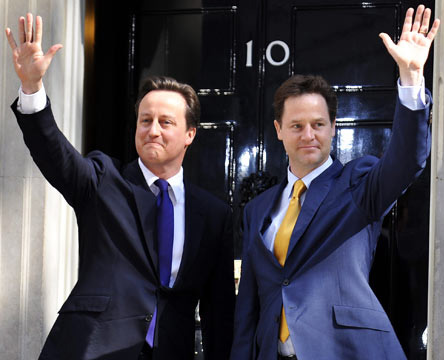
The rebellion concerned reform of the House of Lords. Should we get this wrong – as ‘devolution’ has so tragically shown – and all sorts of genies would be out of the bottle which could never be put back. The Lib Dem’s proposed reforms would land us with an unworkable setup between the two legislative houses and a second chamber, stuffed full of third-rate has-beens who couldn’t cut the mustard in the first house: the Commons. Patronage – itself one of our crippling ills – would, as a result, have been reinforced even further.
No one argues that the House of Lords (which, we should not forget, does a surprisingly effective job) does not need sorting out to make it more democratic. But the great conundrum is how, and we have been pondering that question for a hundred years. All we know is that if we get it wrong there will be the most grievous consequences, as we now realise with devolution, which threatens the very integrity of our country.
The Liberal Democrats want the reformed House of Lords to adopt the very system of proportional representation which was so soundly rejected by the public a year ago with – you may not be surprised to learn – beneficial results for themselves.
We would end up with two forms of democracy in our country, with the new one claiming a more genuine mandate. It seems a given that there would be serious clashes between the two house with each claiming the greater legitimacy; we would end up with the same sort of paralysis which so blights the life of Congress and the Senate in the US today.
Why does the PM test his party in the way he does? Why does he not realise that in a matter of such monumental importance he cannot expect party loyalty to override what so many in his party are convinced is for the greater good of the country? Is keeping the Lib Dems onside worth splitting his party for?
Little by little the evidence piles up that our leader – despite his good intentions – is not over-blessed with sound judgement. And the same applies to his chancellor, his deputy and so many more of his appointees. Remember Andy Coulson, the Downing Street photographer, and Liam Fox’s antics?
For a start, it was foolish – when people were feeling incredibly angry at what the moneyed classes had done to them – to stuff his cabinet with millionaires and public schoolboys, some from his own alma mater Eton College. It was Bullingdon brought to Whitehall, as many perceived. Didn’t he realise that his own privileged background raised eyebrows for some, and that to surround himself in cabinet with more of the same sent out the wrong signals? To reinforce this whole perception of privilege was crass in the extreme.
The government we have today is the most out of touch with ordinary concerns since Palmerston was sending out his gunboats. I’d put money on half the cabinet not knowing within 30 per cent the price of a loaf of bread, a pint of milk or a litre of petrol. Indeed, the Deputy Prime Minister was over 50 per cent adrift as to what a pensioner got. What a shower!
The trouble is that hardly any of them have first-hand knowledge of the workaday world the rest of us inhabit. They move seamlessly from Russell Group universities into think tanks and policy institutes before beginning their journey up the greasy pole. Once ensconced in the Westminster bubble they purport to know and understand the issues that concern the rest of us.
They disburse gargantuan sums of public money without suitable qualifications and experience, with none ever having headed up a public company; and they legislate on matters of which, in so many cases, they have no real experience. They live in the British equivalent of walled communities and don’t know within a million miles what it is to live on a sink estate.
On top of these shortcomings, they are too young. Occasionally, a boy like Alexander the Great or Pitt the Younger can confound the norm, but history is exceedingly short on such prodigies. (Both, as a matter of interest, had incredible fathers.) What is needed in our rulers is men of proven ability who have made their mark in the world.
Here, in our neck of the woods, we have such a man in Gary Streeter: son of a farmer, former solicitor and once Chair of Plymouth City housing. In defence of what he saw as an overriding public interest (rejecting the proposed Lords reform) he waved goodbye to any preferment in the Cameron government, which he could reasonably have expected as a senior MP and former Shadow Minister. That’s what I call guts. It is also high-minded and noble.
Everything today is so shallow. We even require our leaders to look telegenic, be bubbly and have a Tony Blair perma-smile, if possible. Say goodbye to ever getting a Churchill or an Attlee again, the miserable sods. May the Lord preserve us! How will we ever get out of the sort of crises they got us through? We could do with one such right now. But remember: he can’t be ugly, fat or have a speech impediment – like Churchill – or a clipped, staccato delivery like Attlee. No, no, they must be of the sort that can entertain us on breakfast television.
My sure-fire weight loss plan
There is a silver bullet in the fight against flab that the diet industry does not want you to know about. In fact, they are doing their utmost to hide from us the fact that there is a quick, simple and – dare I say it – easy way to ensure that nobody is heavier than they would like to be.
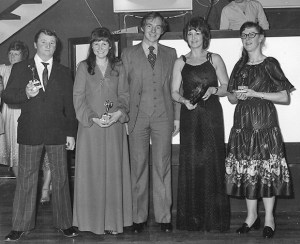 My interest is these matters has been an enduring one; I suppose it is the legacy of running health clubs for 25 years. A big part of my job was helping my customers lose weight; I used to hold annual weight loss awards in my Plymouth health club, Physique & Figurama, to celebrate my star slimmers’ achievements (pictured).
But unlike the fitness industry, the enormous $100 billion diet industry has a vested interest in keeping its customers overweight for as long as possible, seducing us with a bewildering array of dubious products and services. After all, what kind of business wants to lose customers as quickly as possible?
Before the day arrives when that other behemoth, the pharmaceutical industry, develops a magic pill which renders the diet industry’s so-called experts’ products and services redundant, I propose there is a natural solution.
My wife and I used to have to watch the calories very closely while maintaining a healthy diet. But despite our best efforts, the pounds crept on. We were never obese, but we knew we could so easily have become so.
At my own peak (I am 5’11”) I reached 14st 1lb and my waist had expanded from 32″ to 38″. Yet after 20 years of wishing each spring that I could enter the summer looking trim, I have finally succeeded. I have lost 21lbs in four weeks.
How has this been achieved? The answer is that I have fasted my flab off. Some days, 2 ¼ lbs would vanish.
The regime I followed goes like this: Monday, fast; Tuesday, eat (but only the amount I would eat normally); Wednesday, fast; Thursday, eat; Friday, fast; and, glory be, I would eat both days of the weekend. But during those days of fasting, I still enjoyed my cappuccinos after work and drank plenty of milkless green tea as well as Oxo cube drinks. Keeping up the fluids is crucial.
So there you have it: a regime which will deliver weight loss beyond your wildest dreams. And unlike these paid-for diets, my regime didn’t cost me a penny. In fact, I saved 40 per cent of my typical supermarket food bill on those intensive weeks.
The fasting regime worked for me, and in spectacular fashion. Nothing else had. I have to stress that I am not a man of incredible willpower; I still have not been able to break with my ten fags a day as so many of you have. If you can do that too then congratulations.
Exercise is always important, regardless of how many calories you’re consuming, so I also continued my long-established practice of having two 1½-mile walks each day. I don’t amble along, but try to walk at a brisk enough pace so as to compel me after a short time to draw breath through my mouth. So successful have my knee replacements been that I could even jog if I wanted to. Well done NHS! You’ve probably saved me from a wheelchair.
Now, I think I know your next question. Did I feel wretched on those days of fasting? Not at all. I suffered absolutely no adverse effects: no hunger pangs, no nothing. What I did notice, however, was that on those days of fasting I was considerably sharper and much more alert.
The beauty of this system – which would have made my health club boom as never before had I thought of it in those days – is that stick is followed by carrot in double-quick time.
The diet industry wants you to believe that results take time – while they make money – and considerable effort on your part – which, of course, they can help alleviate. But by fasting, I have reached my target weight rapidly with minimal effort. Every second day I would get back to eating before I plunged in again. And the weekends were simply heaven: two whole days of normal (not excessive) eating.
Another great boon you will enjoy is that, on those days of fasting, your body – which is normally clogged and at work 24/7 – is flushed out with stomach and bowels rested up; it is given a detox, if you like. And unlike those few successful dieters who mostly see it all come back on again, my method is truly sure-fire.
When I get on the scales in the morning following the previous day’s fast, it is a moment of drama. But it isn’t a question of whether I have lost weight, but rather one of how much.
Now that I have reached my goal of 12st 4lbs, which equates to a reduction of six belt notches, I am only fasting one day a week. I know that, should my weight start creeping up again, I have the means to nuke the flab.
Fasting one day a week represents a weekly drop in calories of around 15 per cent, and hopefully that should be sufficient for me. If your body naturally stores little excess fat, you may only need to fast once a fortnight to keep the weight down; but if you’re obese, you may instead be better off fasting two days a week. It’s really a case of trial and error.
Another beauty of my regime is that I shall not be condemned to eating things which are prescribed to me, many of which I don’t particularly like, at the expense of foods I do enjoy.
It is interesting to ponder why, if there are negative health side-effects of fasting, so many of the world’s religions insist on it. And remember that early man was never guaranteed three square meals a day; he regularly fasted between kills and his system evolved accordingly. Evolution works slowly and we all still have that ability. Did you ever see an overweight bushman?
Good luck to anyone who may be inspired to try this sure-fire method of losing weight. Keep me posted and let me know how you’re doing.
A triumph for mankind
I cannot let this day pass without mention of the Large Hadron Collider’s incredible achievement in validating Peter Higgs’ prediction of the so-called ‘God Particle’, which he made almost half a century ago in 1964.
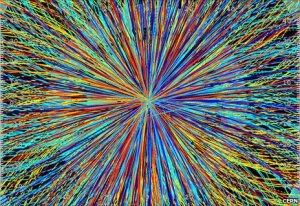
The discovery, announced at CERN today, stands up there with Einstein’s theories of relativity and the discovery of DNA in its implications for how we understand ourselves and the universe we live in.
The importance of the Higgs boson’s discovery should not be underestimated. It is vindication of the Standard Model of particle physics, which in recent decades has come under fire by more exotic theories such as String Theory due to a hole in the model which today’s discovery now fills.
But spare a thought for the many physicists and others who bought into these bizarre theories. Having spent many years pursuing them, they are now totally discredited. Years of research have gone down the Swanee.
At last we have recognised our brave bomber boys
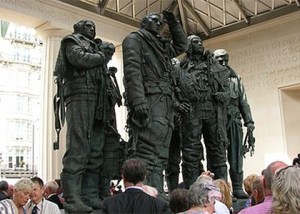 I am delighted that after 67 years the nation has finally honoured the brave young men of Bomber Command who did their country’s bidding and died in such horrific numbers in the blackness of the night over occupied Europe. My own mother was made a widow in that campaign of hitting back at the enemy.
What must be remembered is that, after the evacuation at Dunkirk, we faced years of being marooned on our island with no way of being able to engage the enemy on the mainland of Europe while we rebuilt our army and readied ourselves to assault Hitler’s formidable Atlantic Wall.
What were we to do in this time? Allow Hitler to consolidate his hold over all the captured nations or disrupt it as best we could?
He had showed no qualms about using that new form of warfare – aerial warfare – to bomb our cities, and the jury was still out at that time as to whether it was possible to win a war entirely from the air. So it was not, in my view, immoral to send out our air fleets to see if this surgical solution was indeed possible. If we had won the war from the air, we certainly would have saved many of our soldiers’ lives from a bloody land campaign.
Although events later revealed that, until the arrival of the atomic bomb, you could not win a war without boots on the ground, the bombing campaign brought massive disruption to the German war machine; over a million men were tied down on home defense who would otherwise have been deployed on the Eastern Front and huge quantities of ordnance were similarly kept at home which also would have gone east. Indeed, 70% of their fighters alone had to stay to engage our bombers. It made the difference between Russia staying in the war or losing it, which it very nearly did anyway.
It can be convincingly argued, therefore, that the air campaign indirectly won the war by preventing the full might of Germany ever reaching Russia.
As well as having only 30% of its fighter force to engage the Russians, it had 50,000 fewer artillery pieces and much else besides. And then there was that massive morale booster: a symphony in the night skies played out over occupied Europe. In the eyes of its downtrodden peoples it beat anything Beethoven ever wrote; it was the sound of our bombers droning their way to the oppressor’s heartland. It was the one thing that gave them hope. It reminded them that a free people on the Atlantic seaboard of their continent remained unbowed and would one day bring them deliverance.
So when the establishment turned its shameless back on those brave young men (average age of 22) who were carrying out their orders so selflessly and stood a one in two chance of dying, it did a terrible thing.
The otherwise great Churchill must take a considerable share of the blame. In his speech after victory, when he lavished praise on every branch of the Armed Forces, he pointedly made no mention of those 55,000 dead bomber boys.
Now, at last, thanks to the pops stars Jim Dooley and Robin Gibb – bless them – the people, with their humble subscriptions, have had their say. The Ministry of Defence would not contribute a penny, nor has it to this day issued a campaign medal to this arm of the services who took by far, proportionately, the highest number of fatalities. Shameless, in fact, does not even begin to describe how they have behaved.
What, I have to ask myself, is the matter with our ministry? It refused also, through all those same years, to issue a medal to those heroes of the Arctic convoys who made what Churchill described as “the worst journey in the world” – worse even than that terrrible slog through the jungles of Burma to retake that country from the Japanese.
Our Ministry of Defence does not deserve such fighting men. Though it is penny pinching in looking after our boys – not even giving their families decent housing, and sending them into battle ill-equipped – it even argues the toss over piddlingly inexpensive medals.
And it can’t even get its procurement policies right, recently ratchetting up a black hole of debt that was almost as great as the annual defence budget.
The Ministry of Defence should be disbanded and started again with the top 10% of its echelon lopped off and not allowed to re-apply for their jobs.

 The Last Foundling