Monthly Archives: September 2012
Mind those plebs, Thrasher!
Concerning ‘Thrasher’ Mitchell, the Chief Whip, we seem to have moved backwards in electing ourselves governments of all talents. I am not saying we should discriminate against public school boys, yet at seven per cent of total school population they are grossly over-represented in government comprising over 50 per cent of the cabinet. Sixty years ago the Attlee cabinet was much more representative of the people it governed. But here we are today, all these years on, with one which would not have looked out of place in Downton Abbey days.
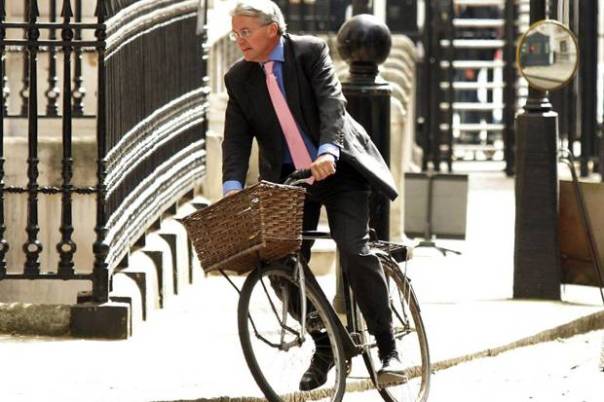 Although Cameron is a personable enough chap himself – one you perhaps wouldn’t mind having a pint with – he seems not to have the wit to see any of this. He understands that the nation’s finances are in dire need of sorting out, along with welfare dependency and educational shortcomings, but he seems to think that only a cabinet stuffed full of stinkingly rich public school boys can be relied on to see it through. The irony is that the two crucial success stories of his administration are likely to be the very ones not piloted by his public school chums: welfare reform and education.
The display of petulance, arrogance, threats and not to say downright abuse that the Chief Whip showed his police guardians – in the very week of grief, would you believe, for fallen comrades – opened a window into the mindset of these privileged individuals who really do believe that we are here to serve them, not they us. Theirs, it would seem, is a god-given right to rule and we should get used to it. The public does not like what it sees.
All of this is disastrous to the man who spent years trying to massage the image of the Tory party into a kindlier, voter-friendly mode. In a little over two years’ time he is going to have to asks the ‘plebs’ if they will give him and his pals a fresh run. It is lucky in the extreme that he faces such a deeply unattractive and discredited Opposition, but that won’t necessarily save him. If there is visceral hatred for his class, fanned by the likes of the ‘Thrasher’, that might be enough to sink him.
In addition to all this, Tory foot soldiers have neither forgotten nor forgiven for the fact that Cameron failed to win an outright majority against the most disastrous government of modern times led by the most unpopular prime minister ever. The fact that he failed in these circumstances and was obliged to put himself in hock to a party that hates his own and spends its time sabotaging so many of its most cherished policies rankles still further. And then there are the multiple instances of poor judgement in his appointments. It ill behoves Cameron, therefore, to adopt all too often a high-handed approach with his backbenchers which can be taken a a sign of perceived class superiority. Dollops of humble pie and signs of genuine contrition should be more the order of the day.
But Cameron’s troubles don’t even stop with those outlined; women (half the electorate) have gone off him too. They have concluded that – Samcam excepted – he doesn’t much like them and that Bullingdon attitudes still lurk beneath the surface. There is real anger that he has shortchanged them, having promised them a third of cabinet seats. The recent reshuffle was his last chance to make good on that promise and he failed miserably.
So for the prime minister there is much to do and little time to do it in. It worries me also that he doesn’t seem much concerned at the drip, drip hemorrhaging of his party to UKIP. Had disaffection not driven so many into their camp he may well have had that precious majority at the last election and the process continues apace. As I see it only one thing stands a chance of bringing large numbers of them back into the fold: he must give them an unequivocal pledge, written in blood, that there will be an in/out EU referendum immediately after the election. Then he must make it clear to them that if they do not respond they will have only themselves to blame for a fresh dose of Labour, but with even more of a Leftish lean. That, together with a hopefully recovering economy, troops home from Afghanistan, robust law and order policies and falling immigration should be enough. Welfare and Education success would be the clincher.
In the meantime he must get all his appointments carefully scrutinised beforehand, stop patronising women (or anyone else for that matter) and put the equivalent of a chastity belt on the mouths of certain of his ministers. As for the ‘Thrasher’ himself, he must go – but not before he has has received a damn good thrashing himself, to encourage les autres.
It was always delicious irony that Rugby School (of Tom Brown’s Schooldays fame) should spawn a character who would go on to be known as the ‘Thrasher’ and that that same character would go on to be awarded the Chief Whip’s job in government. That same whip must now be used on him. ‘Flashman’ Cameron is just the man to wield it. He’s got the perfect credentials.
Cinema is winning the fight against piracy
Cinema still exercises a powerful influence in the world today. There are the A-listers and the B-listers (terms I was never familiar with) along with all the time-honoured film festivals. Although youngsters still flock to see a blockbuster, I wonder if that influence is as all pervasive as it once was.
For a long time it seemed that cinema was on a slippery slope with the rise of internet piracy and competition from every conceivable quarter, but at long last it has found its proper niche of operating a service and not just selling a product.
What motivates people to going to the cinema? May it be because watching a movie in the company of hundreds of others, with a giant screen dominating and the wrap around surround sound, is an experience that people are willing to pay a premium for?
In the Golden Age of cinema (the post-war years) the attendances were truly vast. Hardly a person in the land did not go to the cinema at least once a week, and many twice – as I did. The competing modes of entertainment were so few that the ‘flicks’, as we knew it, had almost a free run. Today, however, life is very different.
Certainly the technology has advanced, with incredible special effects, digital and 3D all adding an extra dimension. The stars in my day became role models we all aspired to and were expected to behave well, even if privately they matched any of today’s shenanigans. When someone broke rank and was in danger of being caught out, the studios would go to extraordinary lengths to preserve their squeaky clean image. Winona Ryder would never have been allowed to go down the swanny over shoplifting; unquestionably, studio power was absolute.
Adults, and in particular youngsters, are almost overwhelmed by choice nowadays. Go to any high street and it seems that almost half of people are engaged with their mobiles, while at home the youngsters disappear almost immediately to their bedrooms to play video games. It is easy in these circumstances to see why cinema felt itself to be up against it. Modern cinema has met this lethal challenge by upping its game mightily by improving the ‘experience’: bigger than ever screens and better than ever sound and 3D (for those who fancy it).
Yet all these innovations are only available to those wanting to see new releases. That vast body of movies which so influenced the lives of all those over 55 is now relegated either to dusty archives or the small screen – an altogether inferior experience. Vue and the like are not interested in featuring these classics from the Golden Age.
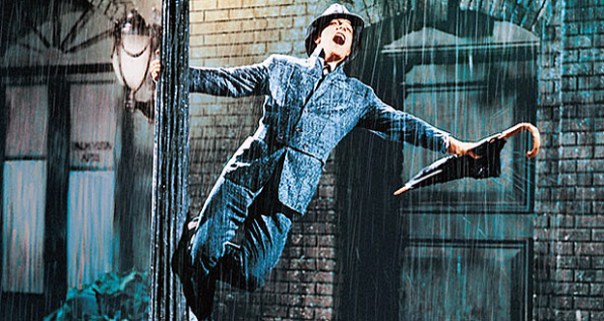
But all is not lost! After 25 years as a projectionist (many of them spent at Plymouth city centre cinemas) covering both traditional and digital film showing techniques, David Huxham wants to bring back that great experience which the older generation so pines for. David has come up with the great idea of Plymouth Film Shows, where he will be hiring a screen at the Reel Cinema at Derry’s Cross every Wednesday morning. The doors will be opening for the first time at 10:15am on 26th September, when David will be showing that great silver screen classic, Singin’ In The Rain, staring Gene Kelly, Donald O’Conner and Debbie Reynolds.
Tickets are priced at £4 each and the Plymouth Film Shows’ website can be found at www.plymouthfilmshows.co.uk, which includes details about what’s on, how to purchase tickets and much more. David has also put together a competition on the site giving away several pairs of free tickets, so give it a try!
I was delighted to meet David a couple of weeks ago when he came into my shop on the Ridgeway to have his shoes repaired. He explained to me how his working life has been almost a love affair; always thrilled at putting on a show for hundreds, sometimes thousands, he started as a projectionist at 17. But much as he admires present advances in cinema techniques, he laments that lost ‘experience’ which was so central to his early life.
I, for one, look forward to a trip down memory lane to see some of the great classics on the BIG screen again, with many benefitting from being digitally enhanced, potentially providing an even greater level of enjoyment than could be experienced in that Golden Age.
Unfortunately David doesn’t propose bringing back the organist or the pretty, titillatingly clad ice cream sellers who walked up and down the aisles flogging their wares in their precursor minis; nor does he require the audience to all rise at the end of the performance and belt out the National Anthem. Woe betide those who tried to slink off early, anticipating the movie’s end. Destainful looks would accompany their hurried retreat.
A lovely little footnote to David’s story is that his Mum & Dad met while standing in a cinema queue at the Gaumont, Union Street, cinema in 1954. “Do you want to go in as a double?” inquired cheeky-chappy dad of the strange young woman close by. The rest is history.
Good luck, David. Let’s hope that Plymouth gets behind you.

Olympic legacy should re-ignite British pride
What a game-changer the Olympics have been. When I was born, London was the largest city in the world. Now there are 30 larger – though it is still the largest in Europe and North America.
We agonised as to whether we had made the right decision to host the games in the first place, though we felt a frisson of excitement at the challenge and dared to hope that we could pull it off. We knew we were a prime and juicy target for a terrorist attack and felt it next to impossible to guarantee that there would be no chinks in our armour.
We fretted over a gridlocked city, militant train drivers going on strike, and whether we could hold our nerve at stage managing such a colossally intricate extravaganza before the focused gaze of the whole world. Most of all – amidst the gloom and despondency of the longest recession in living memory – we worried about the sheer cost of it all. Yet every anxiety has been laid to rest in magnificent style.
The world will long remember these 2012 games and Britain has been showcased as it has never been in its long, long history. It was a project of immense and overarching complexity and we could have been forgiven for our worries as to whether we were any longer up to such a challenge. But that too has been laid to rest. We may not be the titan that bestrode the world when I was born – the only one to look Hitler straight in the eye and not blink – but we remain the repository of immense skills, artistry and organisational powers. The challenges that lie before us are daunting, to say the least, but we have proved to ourselves that however big and complicated they may be, we can cope.
In the past we have acquired something of a reputation for being always able to muddle through, but that can hardly be said of the way we have handled these games. It augers well for great projects like the Thames Estuary Airport; the Bristol Channel tidal energy scheme; the high speed rail link and perhaps anything else we might wish to put our mind to like the extraction of our massive reserves of shale gas.
We have been enthused with a renewed spirit of “can do”. Far from being a nation in decline, we can start to believe that we may be a nation on the cusp of great things again. With our massive reserves of oil around the Falklands, we can become energy-independent again and make ourselves indispensable to our European partners by supplying their needs too – no bad thing in the tough negotiations which lie ahead to repatriate many of the powers we have lost.
As we are all well aware, finance rules the world and the City of London rules finance. Of all metropolises, London seems to be the one that the “movers and shakers” most rave about, buying up real estate wholesale. It is cosmopolitan; tolerant; open; a good place to do business; is perfectly placed – time wise – to transact on the same day with both east and west; boasts an unrivalled theatre-land, along with – at last – good restaurants; and as if all this were not enough, it speaks the world’s lingua franca.
Empire gave us links and goodwill that no other country can match. We have our cosy little Commonwealth Club, spread all over the planet, and we play against each other in our cosy little world of cricket. What fools we have been not to maintain the great trading links we developed over centuries with those who were always best disposed towards us. Had we done so we would not now be so exposed to events on the continent as we are today. Even now it is not too late to reverse this shortsightedness. We should be putting together trade missions with the same zeal and fervour as the missionaries of old who carried the Gospel and opened the way for trade.
Having landed ourselves with the Olympics, we knew that we would be watched as never before for our competence and flair (if there was any) and we surprised the world, not least ourselves.
As for the Paralympics, we even set a new benchmark, having pioneered it – like so much else – in the first place. Disabled people have never in all history felt better about themselves and that is wonderful. In so many respects they took our breath away. Their feats would have outperformed most able-bodied people and they showed guts beyond belief.
In my own humble way I too am bionic – like so many of them – with two knee replacements. I’d be happy – even proud – to stand alongside them, if they would have me. Maybe future organisers should think about a 100m sprint for the over 70s with knee replacements. I’d be up for it in an instant, shouting, “Rio here I come!” The training, I promise, would start at once.
Like many of you (I suspect) I am sad that I could not see all of this wonderful jamboree. But I intend to buy a DVD of the highlights. And there you go! There are some of my Christmas presents taken care of already. For once I wont have to rack my brains for something that will not disappoint.
Doomed to mediocrity
As Zero Hour approaches with regard to Plymouth airport we have to ask ourselves some very important questions.
 Are present communications by road and rail so good and secure that we can still thrive by relying on them alone?
Are we confident that Captains of Industry thinking of establishing great centres of work will not dismiss us instantly because they cannot access us in the shortest time possible; maybe even think that because we have no air link there is something odd about us?
Are we confident that in a rapidly changing world nobody in the future will step forward with a plan which will work?
Is the prospect of foreclosing on an option which can never be reversed something that we can live with?
In today’s world large numbers of tuppenny ha’penny places have airports. They are regarded almost as a mark of the community’s virility. For myself it is a resounding NO to every one of these questions and I will tell you why.
Plymouth is the only big city in a peninsula 200 miles long, which commands the Western Approaches and with the largest naval dockyard in Europe is an important regional centre.
Are we not peculiarly at risk by rail and by road? When the Victorians drove through their rail link they were anxious to make the journey (experience) a memorable one; quite rightly so.
In some places they did brave things, like when they challenged the ocean waves by running so perilously close to them as they did in places like Dawlish.
They could not be expected to know that man made emissions would alter the world’s climate so that extremes of weather would become a regular feature of life.
It is entirely possible that, as a result, that line may be broken if not washed away at some point in the future. What then do we do?
That marvel for its time, the almost 170 year old Brunel suspension rail bridge must surely be coming to the end of its life so that Cornwall becomes no longer accessible by rail.
May not the private operator, faced also with a storm lashed, perilous and collapsing Dawlish line, then decide to cut his losses and end the rail link at Exeter?
I remember well the storm of protest that met the decision to end the M5 at Exeter. Nothing would move them.
It was almost as though they’d got it in for Plymouth. They gave us a quite superior A 38 for the remaining 40 miles and tried to console us by calling it the Devon Expressway.
But nobody was fooled. At the end of the day it remained at best a dual carriage way. When accidents, resurfacing and other repairs happen we are doomed to single lane traffic. Imagine your Captain of Industry who on being told he could not fly then asking for a first Class rail ticket only to be told that isn’t possible either.
He then takes to the road and ends up in nose to tail single lane traffic. Nice one Plymouth City! This may all sound bizarre and it is. But it entirely within the bounds of possibility. These thoughts and other should be pressing on the minds of those who are charged with looking to the future of our city.
No one blames Sutton Harbour Development Company for seeking to coin a buck – millions of them by off-loading non profitable airport land to make themselves a fortune – with all sorts of other developments. Their duty is to their shareholders not the people of Plymouth.
I do blame a desperate city, though, for granting them such a preposterous lease as 150 years. They may as well have sold it to them freehold, but perhaps as well they didn’t, they might have let it go for silly money.
So strongly do I believe many people view this issue that it would not surprise me in the least to see protesters sitting on the runway on the day the bulldozers were told to move in.
Our city seems obsessed with short term considerations. Of course it is right not to burden itself with loss making operations, but its priorities seem very skewed when it rushes off to build theatres, Pavilions, Domes, Life Centres and even Aquariums.
Some may say this is all very wonderful while others might to say it is self indulgent.
All I know is that Plymouth must keep its lungs and arteries open while being ready at the same time to receive the world. Business should trump all other considerations. From that comes the wherewithal to do all these other no doubt commendable things.
It is not, even now, too late to hold back from an irrevocable decision. While it is impossible to predict what the future holds, what seems foolhardy in the extreme is to do this thing; like close down the argument forever.
Who would want to be the man or council who very possibly doomed this city to permanent mediocrity? What a sad epitaph to have to say that it happened on my watch.

 The Last Foundling