Category Archives: culture

The Flags Are Rising
The national awakening on September 13th represents a very strange statement being made by significant elements of the British people. Frustrated, and eventually driven to fury by the refusal of the governing classes to honour promises made to gain their vote, hundreds of thousands of flags of the four nations of the UK will suddenly make an appearance.
Flags for other countries are a cause of little comment. I was in Lithuania recently, and they were everywhere. Even our former colony across the pond will seek out every opportunity, or none, to raise the standard, proudly and unashamedly proclaiming its nationhood. Not so the British. For them there has to be a good reason, one which even unfriendly nations would seem churlish not to acknowledge. Ours are brought out sparingly, even judiciously, one might say. The reticent Brits are never anxious to over-egg their presence, even if their own flag once held sway across a quarter of the planet.
So what has caused this sudden about-turn? It was the bone-headed action of a local authority in cutting down British flags, put up to counter the appearance of a rash of foreign flags of a proscribed terrorist organisation, while leaving the proscribed flags in situ. It was the straw that finally broke a very patient camel’s back. To add insult to injury, the flags of the home country were unceremoniously binned like so much rubbish.
But the London Freedom Festival protest on September 13th, in reality, is about very much more than that bone-headed council. It is about long years of what amounts to abuse of the electorate: lies and bad faith, venal behaviour and pandering to the wishes of foreign states, many of which wish us harm, while all the time ignoring the wishes of the people who trusted them with their vote. No better example of the latter is the Chagos Islands fiasco. We end up giving something we own to someone who never owned it, and then paying that someone billions to lease it back. Tell me that I must have that wrong; but I haven’t. At the very same time we put our national security in peril, as well as that of our closest ally, by handing over the archipelago to a minnow of a state busily cosying up to the biggest threat the democratic world faces in the 21st century: expansionist and militarising China.
Also among the grievances are the years that a small minority of our people have preached to the rest of us of the wickedness of our ways. I speak of the fanatics of the woke brigade, the holier-than-thou bigots, the people who have allowed the tyranny of Stonewall to infect government, the law, academia, big business, the Town Halls – in fact, every agency which is in a position to make our lives a misery. Not only is their bigotry destroying lives, careers, marriages, you name it, but they are busy imprisoning people for voicing their opinions. Today, spontaneous talk is disallowed, since it must first run through the filter of: will it offend someone?
These same sanctimonious know-it-alls even have the gall to tell our young people that they should be ashamed of what their forefathers did around the world, and that a part of their hard-earned income should be handed over by way of restitution. The established church has even made a start on this absurdity by earmarking the first tranche of £100m. Where once our young people were encouraged to laud and seek to emulate the stupendous achievements of those who went before, these contemptible denigrators peddle an altogether different narrative and seek to instil a deep sense of guilt.
But what goes round comes round, and a reckoning is in the making. These young people who are now to be given the vote at 16 by this pork-barrel government are not, it seems, of a mind to vote for what they see as a band of losers. They do not buy into the prophets-of-doom narrative and the Britain-haters. Deep in their bones they know what a massive contribution their ancestors have made to the happiness of humankind. For the truth is their countrymen and women have made the modern world we know today, winning more Nobel prizes per capita than any other nation.
If we go to work in factories, it is because they showed us how to do it. If we trade across the broad expanses of the world, it is because they sought out markets for the products of those factories. If a rules-based order protects those products, it is because they put that order in place. If capital can be raised to produce and grow those products, it is because they became both bankers and insurers par excellence. And when all the toils of making an honest living are done, and it is time to play, who gave the world football? Who gave it golf? Who gave it cricket?
And when China calls its own recent summit of ‘friendly’ countries, was it a multiplicity of national costumes that we saw? No, not a bit of it! It was the English suit, even on our sworn enemies. Finally, when the Great Hall of the People echoed to the voices of hundreds of delegates from far-flung lands, was it Mandarin Chinese we were hearing? No, it was our own sceptred tongue.
So, bearing all these things in mind, and so much more that there isn’t space nor reader’s time for, does it not make utter fools of those who seek to belittle us? And the ones who should be truly ashamed of themselves are those who come from within our own ranks.
Are the English guilty of language imperialism?
There is a new term I have stumbled upon which might be said to have sinister undertones. It is called ‘language imperialism’. For myself, I am hugely conflicted because the language in question is my own.
While our legions have long ago been withdrawn from around the world, our language has not. It is good that we have seen the back of imperialism, of course. No country has the right to run the affairs of another, much less to oppress its peoples in order to maintain its dominance. In that regard, this country has much to answer for – though I like to console myself by believing that my forebears seldom employed gratuitous violence to maintain their position.
The world does, however, stand in need of a universal language, one which will allow us to communicate not just information, but, our thoughts, fears emotions and everything between. When you face a person from another culture, almost all of whose habits are alien to your own, there is so much better a chance of reaching an understanding if you have no need of an interpreter and don’t end up lost in translation, as it were. I swear so many past conflicts could have been nipped in the bud had this been the case.
Rome’s reach, great as it was, never extended to giving all Europe – and the Near East – its wonderful language of Latin. Perhaps if it had, we may have avoided many of the miseries we have endured down the centuries and continue to endure to this day. Wouldn’t we be better placed to achieve harmony in the troubled Middle East if we could all talk to one another?
So while I deplore our part in the imperialism of the past – though I will not say no good ever came of it – I cannot deplore the fact that we have succeeded where Rome failed in leaving behind a language which in the fullness of time will play an important part in bringing together the whole human race.
But this second language is in danger of coming at a price. That price is the threat it poses to indigenous languages. Just as here in our small corner of Europe we have not allowed the Irish, Welsh and Scottish languages to die – sadly it appears Cornish is doomed – we must not allow the other home languages of the world to disappear. Imagine what treasure troves they hold of those often-captivating cultures. What would we know of ancient Egypt if we had not cracked hieroglyphics?
People are perfectly capable of continuing to use their home language while becoming totally fluent in another’s; witness French Canadians, Scandinavians and the Dutch. And let’s not forget the Swiss who somehow manage, for the most part, the four languages which make up their own country.
But in India, today, we see an oppression where their languages are concerned of a most worrying kind. So obsessed are the governing classes in pushing English that they refuse to feature local dialects in such things as prescriptions, menus. road warnings and street signs, driving licenses, government forms, medical instructions, ingredient labels or even movie tickets. How crippling is that for the hundreds of millions who do not form part of the elite. Imagine what it’s like not to be able to read your child’s medical instructions. It’s a bit like when Norman French pushed Saxon English into the shadows for 300 years and you had court cases decided in a language you couldn’t understand.
There are laudable reasons why the Indian elite promote English in the way they do. They believe it to be a unifying factor in a land with 150 languages, all with sizeable populations and a total of 1,650 altogether. They also see it as giving them an advantage in business and a world of still increasing globalisation. But it’s tough meantime out in the hundreds of thousands of villages and towns who cannot fathom the language.
There is one good thing about the language, however, which they and the world, by happy chance, have been landed with and which they will eventually master. It is blessed with a massive vocabulary, a rich literature, beautiful poetry, great flexibility and much else besides. Many reasons have contributed to this. It is a fusion of invading settlers, mainly Germanic and Scandinavian in origin. And adding to the mix are those 300 years of Norman French, from which 45% of our words are derived. They carry a high Latin content so perhaps Rome didn’t, after all, lose out completely. She remains with us still.
Viva Las Vegas
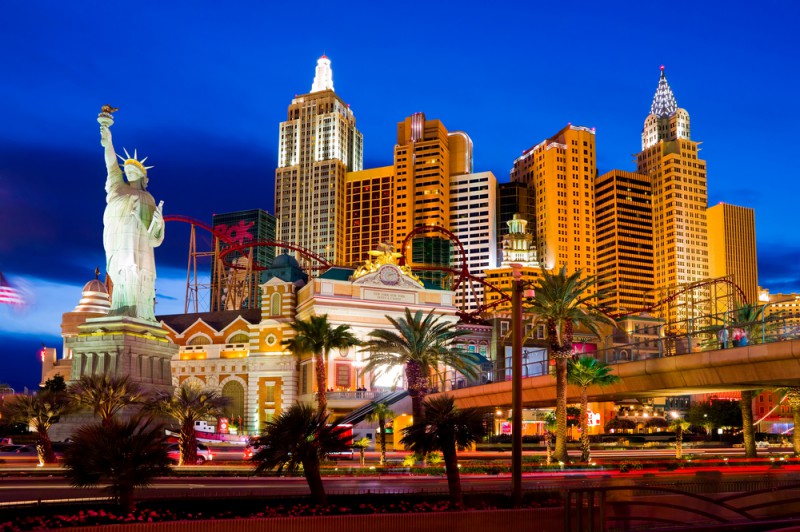
I’ve always viewed Las Vegas as a totally artificial construct – something dumped in the middle of the desert and catering to the most vulgar, hedonistic, licentious and tasteless leanings of human nature. In many ways it is these things, but in other important ways it is a great deal more.
I’m sitting here in our bedroom on the 28th floor (top) of the 3,626-bedroomed Flamingo hotel close to the 3,933-bedroomed Bellagio hotel as well as opposite the 3,960-bedroomed Caesar’s Palace hotel on Las Vegas’ famous ‘Strip’. What brings me to this exotic location is an invitation from an award-winning San Francisco broadcaster to talk about my recently released book. My wife and I thought it would be an opportunity lost if we didn’t see as many sights as possible of the western US, and Las Vegas is the jumping off place for the Grand Canyon. These three hotels alone, according to our tour driver, have more rooms than all of San Francisco’s put together. Vegas is awash with them and these three represent only the smaller part of an incredible total.
I’ve always viewed Las Vegas as a totally artificial construct – something dumped in the middle of the desert and catering to the most vulgar, hedonistic, licentious and tasteless leanings of human nature. In many ways it is these things, but in other important ways it is a great deal more. My wife and I are not gaming types (never having bought so much as a scratch card or a lottery ticket) and not a nickel slipped through these canny fingers of ours in the three days we have been here. But it is the jumping off place for the Grand Canyon and the Hoover Dam, and it seemed churlish not to explore this ultimate symbol of western decadence and see if we could discover what makes it tick.
To begin at the beginning, I doubt I shall ever again be assigned a bedroom more palatial than the one we have; it has to be more than twice the size of any other we have stayed in. We showed interest in the receptionist who came from Hong Kong and had a little chat. She told us Hong Kongers yearned for the old days and determinedly kept as many symbols and aspects of their colonial past as the Beijing authorities were prepared to countenance (and actually, as it turns out, it’s quite a few). I think our interest and the fact that we were from the old colonial power was rewarded with this magnificent top floor bedroom with its spectacular views. Considering the amazing online deal my wife got, we were truly lucky.
America, as we all know, is a big country and it likes – wherever possible – to do things big. America also works; it’s rare you encounter anything with an ‘Out of Order’ sign on it or malfunctioning in any way. It also does things in style (the showman is never far away) and here you will find everything, absolutely everything: the good, bad and the ugly. The good – and truth to tell there are so many ‘goods’ – is that it is full of so many unexpected delights. One such is a wonderful water course… one is a fountain display in front of the Bellagio hotel the like of which I have never seen. It must be unequalled in the world. Also, no city on earth brings the wonders of electricity so brilliantly to life. An orbiting visitor from outer space would have to wonder what this incredible glow from the blackness of the surrounding desert was all about.
You might say that a fake volcanic eruption in the giant forecourt of one of the strip’s hotels would have to be tacky. But it is not. It is, in fact, a truly breathtaking spectacle and, like the water display, free. There is, of course, much that is vulgar and much that is kitsch, such as Little Venice, but it is a very superior kitsch. Every single structure is built to the highest order using the best materials and the finest craftsmanship. And everywhere is spotlessly clean. Pity the litter-bug Brit who indulges that particular vice of his: he will be jumped on from a very great height. But make no mistake, this place is about money – as much of the lovely stuff as they can legitimately extract, though I have to say they do not harass you. Prices, with some exceptions, are not extortionate. It took a whole half mile of walking to get through one hotel: MGM and its mall. The walk took us past thousands of games machines, umpteen roulette tables, shops, bars and cafes. Any visitor to Vegas needs first to get in training: the walking will test them to their limit, especially those parts under the blazing sun. What a relief that my two knee replacements had bedded in and that I walk the two-mile journey to my shop and back every day.
We visited in the autumn when temperatures are at their best (the high 20s (75F – 80F). But as states go, Nevada is a poor one – close to desperately poor. As a desert state, it has little or no arable land and precious few minerals. Something had to be done. Thankfully it had the mighty, 1,400-mile-long Colorado River, and on it bounty. Las Vegas became possible as did – 400 miles away – Los Angeles. In my own lifetime, Vegas has grown from a few thousand to 2.1m, and it is still growing apace. It is based almost entirely on the service industry. If our excursion driver to the canyon is to be believed, 90% of its workers are on the minimum wage and, irritatingly to those of us from Europe, he made what we would consider an unseemly powerful pitch to be tipped. It is sad that someone has to abase himself in this way to make a decent living, but probably he doesn’t see it that way as he has been doing it so long and has got used to it. The bogeyman in all this is the employer who, by improper means, gains a cheap workforce. But there’s another way of looking at it. America is famous for its service; everybody is keen to help you, to smile at you, to please you. To them we must extend thanks for causing our supermarket checkout girls and others to stop being surly, to engage with us, look us in the eye and smile at us. May this not in part be because their living is not guaranteed and they need your reward for looking after them?
On reflection, it is not so different in my own little shop. I cannot be indifferent to my customers. I must at all times engage with them and provide the service they are looking for. If I and my wife are now celebrating the 20th anniversary of the shop’s opening, may this not be because we have done this? This grim recession has taken its toll. Perhaps 25% of our takings have been lost, but we are still standing and signs are beginning to look up.
But returning to Las Vegas, and how it seeks to please and relieve you of a dime or two, everything operates on a huge scale. The buildings are ginormous with more shiny glass and steel skyscrapers than you are ever likely to see in one place, except perhaps the Gulf States and some newly built Chinese cities. Although much of Vegas is now 40 years old, it looks remarkably pristine and un-weathered. That’s down to the same desert conditions which helped preserves the pharaohs and their monuments. The place heaves with people, but somehow absorbs them so that they do not seem to be too many. There are masses of Malls so that you will still find wide, empty spaces. Las Vegas is America’s premier playground – it’s guilty secret. Running through the country’s psyche is a vein of Puritanism that includes a loathing of gambling. Even now, a majority of the states ban it. It all goes back to those pilgrims who left my own city of Plymouth almost 400 years ago to create a better England, a New England, in a far-off wilderness across the ocean.
Here in the desert, their descendants have conspired to offer a bit of light relief to those earnest hopes of yesteryear. In the process, they have gone a long way to rescuing their basket-case state. Rich widows come here – some regularly – to spend their husband’s fortunes in the cause of cheering themselves up. Ordinary Americans come here because it’s just one helluva place. Executives come here for conventions, naughtiness and show-time on the side. Outsiders like ourselves come to gawk, and newly-weds for the ‘quickie wedding’. From day one the Mafia made it their home and large dollops of their ill gotten gains have been laundered through it and financed its expansion. Hollywood too, along with its stars, once looked down their noses at Las Vegas, but now play court to it. And above it, all the sun shines down for 320 days of the year. It’s an amazing place, and like Muslims with their religious obligation to visit Mecca once in their life, consumerist Westerners should feel a similar obligation to visit this desert El Dorado: this hedonistic, earthly temple of pleasure.
Cinema is winning the fight against piracy
Cinema still exercises a powerful influence in the world today. There are the A-listers and the B-listers (terms I was never familiar with) along with all the time-honoured film festivals. Although youngsters still flock to see a blockbuster, I wonder if that influence is as all pervasive as it once was.
For a long time it seemed that cinema was on a slippery slope with the rise of internet piracy and competition from every conceivable quarter, but at long last it has found its proper niche of operating a service and not just selling a product.
What motivates people to going to the cinema? May it be because watching a movie in the company of hundreds of others, with a giant screen dominating and the wrap around surround sound, is an experience that people are willing to pay a premium for?
In the Golden Age of cinema (the post-war years) the attendances were truly vast. Hardly a person in the land did not go to the cinema at least once a week, and many twice – as I did. The competing modes of entertainment were so few that the ‘flicks’, as we knew it, had almost a free run. Today, however, life is very different.
Certainly the technology has advanced, with incredible special effects, digital and 3D all adding an extra dimension. The stars in my day became role models we all aspired to and were expected to behave well, even if privately they matched any of today’s shenanigans. When someone broke rank and was in danger of being caught out, the studios would go to extraordinary lengths to preserve their squeaky clean image. Winona Ryder would never have been allowed to go down the swanny over shoplifting; unquestionably, studio power was absolute.
Adults, and in particular youngsters, are almost overwhelmed by choice nowadays. Go to any high street and it seems that almost half of people are engaged with their mobiles, while at home the youngsters disappear almost immediately to their bedrooms to play video games. It is easy in these circumstances to see why cinema felt itself to be up against it. Modern cinema has met this lethal challenge by upping its game mightily by improving the ‘experience’: bigger than ever screens and better than ever sound and 3D (for those who fancy it).
Yet all these innovations are only available to those wanting to see new releases. That vast body of movies which so influenced the lives of all those over 55 is now relegated either to dusty archives or the small screen – an altogether inferior experience. Vue and the like are not interested in featuring these classics from the Golden Age.
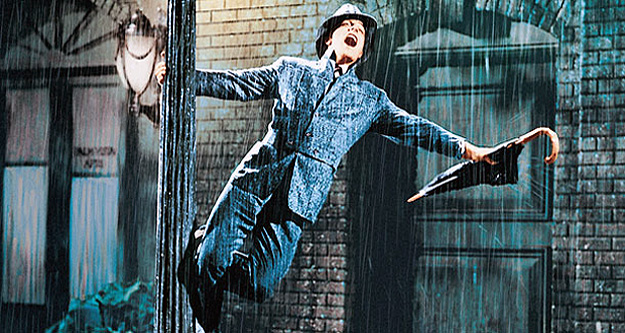
But all is not lost! After 25 years as a projectionist (many of them spent at Plymouth city centre cinemas) covering both traditional and digital film showing techniques, David Huxham wants to bring back that great experience which the older generation so pines for. David has come up with the great idea of Plymouth Film Shows, where he will be hiring a screen at the Reel Cinema at Derry’s Cross every Wednesday morning. The doors will be opening for the first time at 10:15am on 26th September, when David will be showing that great silver screen classic, Singin’ In The Rain, staring Gene Kelly, Donald O’Conner and Debbie Reynolds.
Tickets are priced at £4 each and the Plymouth Film Shows’ website can be found at www.plymouthfilmshows.co.uk, which includes details about what’s on, how to purchase tickets and much more. David has also put together a competition on the site giving away several pairs of free tickets, so give it a try!
I was delighted to meet David a couple of weeks ago when he came into my shop on the Ridgeway to have his shoes repaired. He explained to me how his working life has been almost a love affair; always thrilled at putting on a show for hundreds, sometimes thousands, he started as a projectionist at 17. But much as he admires present advances in cinema techniques, he laments that lost ‘experience’ which was so central to his early life.
I, for one, look forward to a trip down memory lane to see some of the great classics on the BIG screen again, with many benefitting from being digitally enhanced, potentially providing an even greater level of enjoyment than could be experienced in that Golden Age.
Unfortunately David doesn’t propose bringing back the organist or the pretty, titillatingly clad ice cream sellers who walked up and down the aisles flogging their wares in their precursor minis; nor does he require the audience to all rise at the end of the performance and belt out the National Anthem. Woe betide those who tried to slink off early, anticipating the movie’s end. Destainful looks would accompany their hurried retreat.
A lovely little footnote to David’s story is that his Mum & Dad met while standing in a cinema queue at the Gaumont, Union Street, cinema in 1954. “Do you want to go in as a double?” inquired cheeky-chappy dad of the strange young woman close by. The rest is history.
Good luck, David. Let’s hope that Plymouth gets behind you.

 The Last Foundling