Blog Archives
NATO’s Unity and the Challenge of Article 5
All of us have felt safe in the belief that, should any one of the thirty NATO countries be attacked, it would trigger an automatic response from all members, putting them at war with the attacker. However, today, for the very first time, I read in the Sunday Times that this is not the case. For Article 5 to become a reality, unanimity is required. If a single country were to demur, then it would not happen.
Now, in any situation that requires the unanimity of so many, it is next to impossible to envisage a scenario in which such a large number would agree. It is almost certain there will be one or more who will not, especially when what they are being asked to agree to is war. Some might argue that, in a real-world scenario, Article 5 is, therefore, worthless.
In the context of the war in Ukraine, there are two countries — Hungary and Bulgaria — who we know already would not agree, and there are likely to be more recalcitrants; one that springs to mind immediately is Turkey.
The alarming situation which now presents itself is that if a desperate Russia strikes out against either of the three Baltic states, or indeed Poland, which all four now see as a real possibility, then NATO will be shown to be impotent.
The only solution that stands any chance of making Article 5 mean what it says, which is almost certainly the reason why all of its members joined in the first place, is if the European Union came to the rescue. It could make it clear that any dissenting state would forfeit its place in the Union. Such a loss would be more than likely to bring any of the foot-draggers to heel.
In providing such a guarantee of its own, the Union would be protecting its own best interests since war in Europe would likely shatter what it has lovingly accomplished over the past seventy years.
As for NATO itself, it will need to look to the future—if there is to be one for it—at this impossibly high bar of unanimity and opt for a threshold of, say, 60%. Any member who will not agree to this should be invited to leave. That way, the remaining members will have what they have long, mistakenly, believed they always had: a cast-iron guarantee.
Turkey should be embraced, not scorned
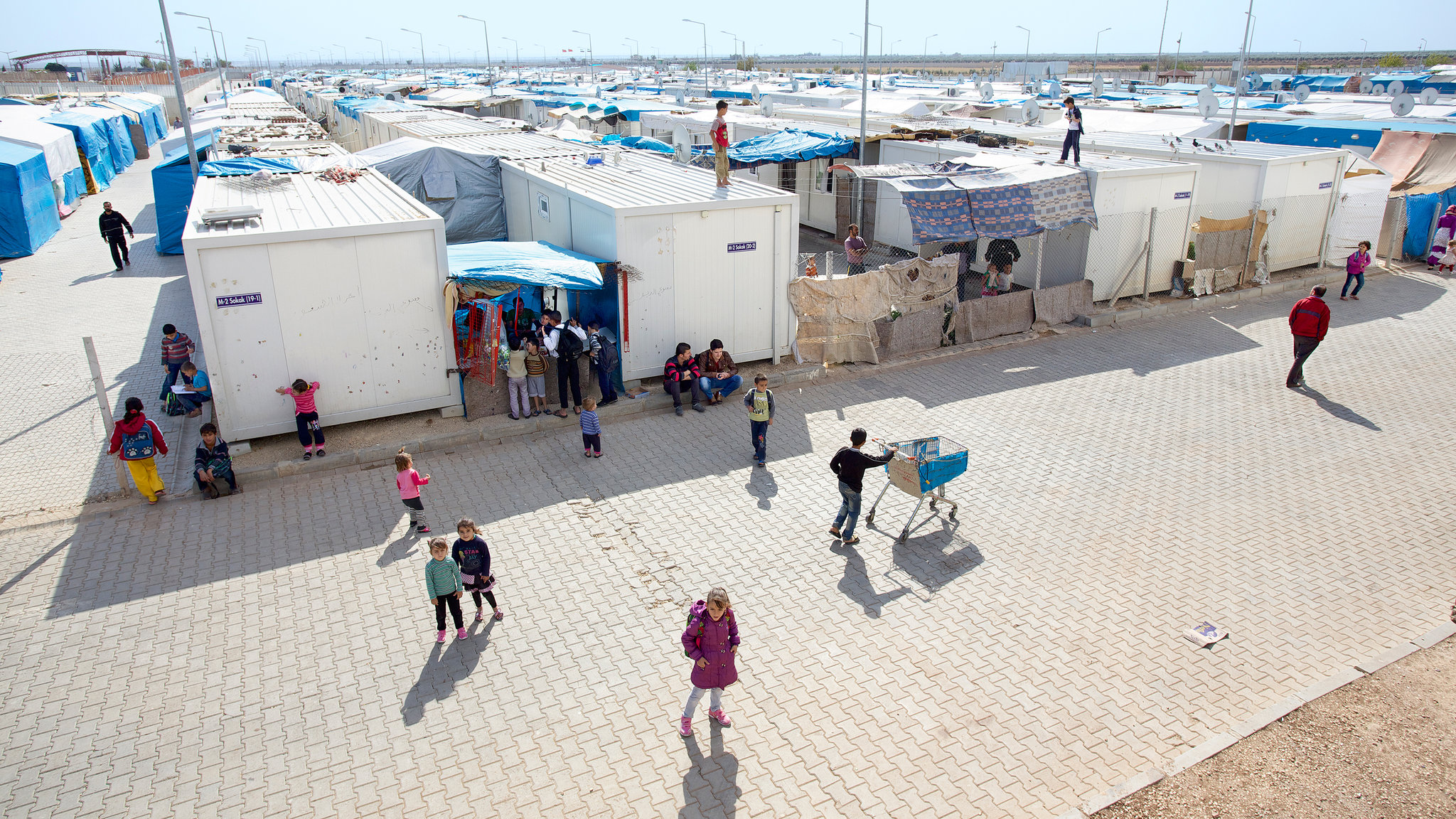
Kilis, a refugee camp in Turkey near the Syrian border.
I wrote some time ago that the EU was making a big mistake by playing hardball with Turkey’s application to become a member. They fear that the entry of a major Muslim country will have a destabilising effect.
They fear a possible Trojan Horse whose admission could immerse our continent in many of the horrors currently being visited on Turkey’s neighbours, Syria and Iraq. They couldn’t be more wrong.
Turkey is the obvious Muslim country which stands any chance of enabling Europe to gain acceptance throughout the Muslim world as a friend. As a member of the EU, it would send a signal to all Muslims that Europe is not irredeemably prejudiced and could happily work with them to build a better and more secure future. Once a member, you could be sure that Turkey would go after the nihilist maniacs with a sure-footedness that is not open to the rest of us.
Remember that Turkey single-handedly kept order throughout the Near East and North Africa for 500 years right up to modern times. Millions of Turks headed for Germany by invitation during the post-war years of the economic miracle to help rebuild that country’s shattered industries and infrastructure. They were known as ‘Guest Workers’ and the understanding was that, in due course, they would return to their homeland. They were not meant to stay.
So little did they offend their German hosts, however, that they were never asked to leave. Theirs proved to be the face of Islam that Europe never needed to fear. Even with the recent controversial admission of the huge refugee influx triggered by Chancellor Merkel’s off the cuff offer, there is not in Germany the festering resentment among Muslims and, indeed, Germans that exists in France. Two reasons account for this. In Germany, there is not the ghettoisation and lack of jobs as in France. Also, France’s Muslims are, for the most part, of Algerian origin and are the legacy of a bitterly savage colonial war of independence. Neither side fully forgave the other.
All of us can agree that Europe is at a crossroad in its relationship with the Muslim world. An implacable death cult has cast a shadow over all the continent’s urban conurbations and the crowd-gathering events which are staged there. Messaging each other in the new Wild West of the internet in an encryption form harder than Enigma to crack, they can operate in cells or as ‘lone wolves’ with manuals provided to allow them online to acquire and assemble deadly bombs. How the zealots of the IRA must regret that they never had such tools.
The result of it all is that people increasingly live in a fear they have never known before. They know the authorities have no answer, and never can, to the lone operator who can drive a truck or buy a knife across a supermarket counter. Even if we succeed, as we very well might, in taking back the land which Isis has claimed for its new Caliphate, its fighters will disperse throughout Muslim lands and perhaps our own and reappear hydra-headed to continue the mayhem. It is a depressing prospect and one to which we can envisage no end.
My own regular visits to London, its museums and places of interest, have lost their appeal. On a recent visit, I found that the dear old British Museum, an endless source of wonderment to me, had a half-hour long queue for semi airport-like security checks. I took one look and went on my way. In a long life, I had hitherto been able to wander up unmolested and pass through its hallowed portals unchallenged. That soon will become a distant memory. Security everywhere has become the order of the day.
We must resist. Turkey can help us for only it, as a Muslim nation closely allied to the West with NATO’s second largest army, can help us confront the threat ideologically. And that is the only way this death cult can be beaten.
Followers of their own faith must turn on them en masse. Their communities and their own families must place them beyond the pale.
The cowardly recruiters and dissemblers who encourage disaffected youngsters whose lives have gone off the rails to make an end of themselves and carry as many as they can into oblivion with them must be taken out of circulation and denied any platform to propagate their poison. Theirs should be a special place in perdition.
Turkey has already won the hearts, as well as plaudits, from the millions driven from their homes in Syria. Their efforts to provide a refuge from Assad’s killing machine dwarf those of any other nation, including Germany. The camps they have set up are a model of humanitarianism; they provide every conceivable facility and resemble more villages more than camps. Turkey receives scant recognition for her huge efforts and, needless to say, massive expense. And this from a nation which, unlike those in the West, cannot be described as rich.
For all the frequently ill-informed criticisms of Turkey’s president, he has proved himself a man with a heart which is more than can be said of many of the rest who weep crocodile tears. With 14 years of enlightened economic policies, he has also achieved growth rates the envy of all but China and India. In short, until these terrible troubles on his border, Turkey was booming.
My own message is clear: Turkey should be embraced, not scorned. If we continue to reject her overtures she will turn her back on us, and rightly so, with dire consequences for any last hope of getting back to normal and putting terrorism back in the malign box where it belongs.
A turbulent Islam
What is happening in Egypt and, indeed, through much of the Muslim world is sad beyond belief.
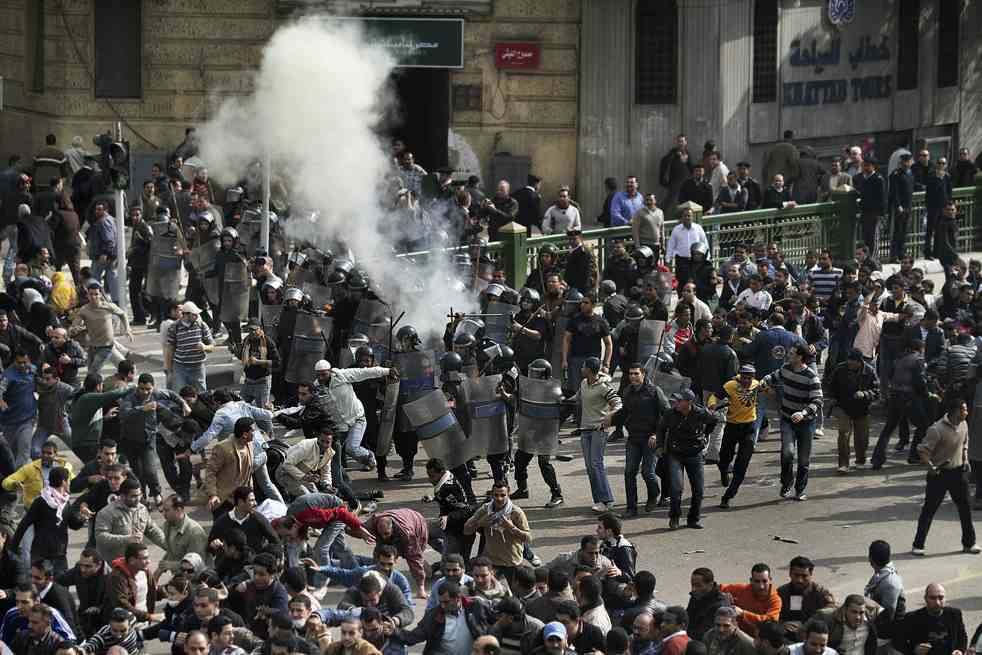
The cradle of civilisation is being reduced to barbarism with no end in sight for an equitable solution.
For two and a half years now we have seen the Syrian people tearing themselves apart. Before that it was Tunisia, then Libya, then Yemen, then Bahrain and now back again to Egypt. We even saw riots in normally peaceable Turkey. What is happening in these lands which once spawned one of the world’s most tolerant religions – lands which form Europe’s nearest abroad?
I believe it is all down to aspirations and two classes of people which live cheek by jowl with each other but yet have totally divergent views on how life should be lived. They have co-existed for many years now, but what is different today from what has gone before is the advent of the Internet, the mobile phone – which is able to tap into it – and the spread of literacy, which even the most authoritarian of regimes has proved unable to resist.
From the point of view of totalitarian regimes which find themselves unable to stop the free flow of information and the millions now able to liaise and call up street protests in an instant it is a total disaster – a truly toxic mix. It is what I call empowerment of the masses.
The two worlds of which I speak are the world of the cities and the largely unchanged world of the hinterland beyond. Across the broad expanses of the countryside – where the majority of the population still live – life goes on in much the same way as it has done for hundreds of years. Yet in the cities things are very different. The educated and young people are in revolt. Their outlook is not so very different from that of their fellow city dwellers just across the Mediterranean Sea. They want the same jobs, opportunities and freedoms as they see in the West.
In times past, their authoritarian rulers have been able to keep them ignorant of what is happening in the rest of the world, but thanks to people like Sir Tim Berners Lee, the inventor of the World Wide Web, those times are over. They are now fully aware of the venal corruption and murderous cruelty which holds them back and they are no longer prepared to put up with it. Good on them, I say.
Turkey is an interesting example to look at. Here is a not in-your-face Muslim state which has fully embraced development without compromising its Muslim faith. It has one of the highest GDP growth rates in the world.
But again the educated classes and young people were having none of it and they pulled him up sharp. This was the true reason for the recent riots.
We can take some credit for Turkey’s emergence as a secular state. It was our defeat of the old Ottoman Empire in World War One which ended the Caliphate and set Turkey on the path to modernity.
(On this note we can also take some pride too in the emergence of democracy throughout South America since it was our defeat of the Argentine military junta in the Falklands War which saw democracy restored there and umpteen other Latin American military dictatorships discredited and overthrown.)
But the great worry in Egypt and elsewhere in the troubled Muslim lands is that democracy is hijacked and used as a tool to impose Iranian-style rule by the Mullahs. At that point democracy ends.
It would be a bit like our Parliament having to seek the approval of the Arch Bishop of Canterbury before any act could pass into law.
That, effectively, is what you have got in Iran, and soon its Ayatollah hopes to have his finger on the trigger of a nuclear bomb. When the masses protested vote rigging during their 2009 election they were shot down like dogs for daring to question the Mullahs. People on the Iranian street do not like it and neither do those on the Arab street, whether it be in Cairo, Alexandria or any of the other large Egyptian cities.
The democratically elected Muslim Brotherhood – largely made up of the masses from the countryside – pressed its strict Islamic agenda too hard for the city dwellers. It did not understand that democracy only works by compromise. Morsi, the Brotherhood president, felt that it was enough that he had a democratic mandate. But urban Egypt wasn’t having it, particularly the women who saw their recent hard won liberties under threat again. The highly westernised army agreed with them.
Democracy is a fragile thing which took the West many decades to refine and make workable. It involves a great deal of give and take and a willingness to put up with the other side – in Egypt’s case the Muslim Brotherhood – but it has to learn not to push it luck too far with the opposition. Think how it sticks in the craw of right wingers in the West to put up with years of left wing policies and vice versa.
Complicating everything right now in the Muslim world is not just the stand-off between city dwellers and the countryside, but the schism between Shia and Sunni. It reminds me of the wars of religion between Catholics and Protestants, and in particular the Thirty Years War in the early 17th century which brutalised and lay waste so much of central Europe. We must hope and pray that Islam is not heading down that terrible rad.
For all its many fine qualities, Islam’s greatest failing, it seems to me, is its attitude to women. It is going to have to address that. But we must remember that it was not so very long ago that a husband in the West had the legal right to beat his wife and gain all her property on marriage. It ill behoves us to forget these things when we get on our high horse about what is happening in our neighbour’s world.
Meanwhile we must hope that things do not get out of hand in these two pivotal Arab states of Syria and Egypt so that the whole region goes up in smoke. Syria’s neighbour, Iraq is already teetering on the edge. Meantime the West must mount a monumental effort to relieve the suffering presently going on there.

 The Last Foundling