Monthly Archives: November 2012
Only a free press holds the powerful to account
Today the Leveson Report on press behaviour and ethics is published. Seldom has a particular report – from among the seemingly endless stream which emanate from government these days – been so awaited.
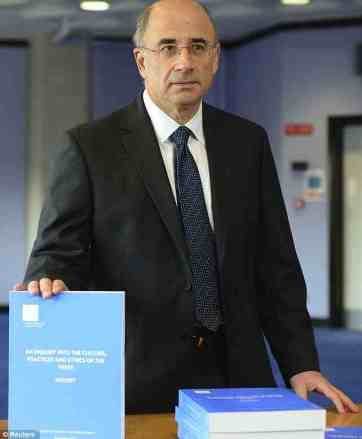
SOURCE: REUTERS
Its commissioning was a knee-jerk response of the PM to admittedly disgusting lawbreaking by certain sections of the press. But that is the point – certain sections and lawbreaking. Apart from the little man who cannot afford, like Lord McAlpine, to sue (and a way for justice for him must be found) the rest are covered by existing law.
It was the duty of the police to act, still less to be found complicit in the whole sorry racket themselves. It didn’t need an inquiry costing millions of pounds – which we can ill afford at this time of austerity – to deal with the matter. And it jarred that it provided a platform for the likes of sad Hugh Grant to strut the stage as though he was whiter than white as well as pretend that all he was interested in was the public good. It is true that many who have reported to Leveson had genuine and sometimes heartbreaking reasons to feel aggrieved, but Grant and his ilk were not among them. Nowadays when some scandal or other is breaking news there is this childish response… ‘we need legislation’.
We have been passing laws for hundreds of years and almost every conceivable thing that human beings can get up to has been provided for. A few have slipped the net and need closing off, like stalking, but by and large, if you look hard enough, there is a law which will cover it. All that is required is that the police stay clean and do their job. Everything that Savile did was against the law, as well as the North Wales children’s home abuses, the sex grooming of underage girls and the sick activities of Cyril Smith. What else is out there that we don’t know about? We have to have authorities in charge who are beholden to no one and will not cover up for the rich and powerful.
So what are we to do about Leveson? There is no God-given law written on tablets of stone saying his wisdom is so great that we must all be bound by his strictures. In fact, there is the understandable fear that the whole Leveson imbroglio is one of simple revenge on the part of the political establishment; payback time, in other words, for the press exposing their own scandalous shenanigans over expenses and the slurry of humiliation that poured over their heads as a consequence.
For my part, I have said it before and I’ll say it again: only a free press stands between us and the rich and powerful doing as they please. Only in the fear of their salacious and corrupt activities being laid open to public view is there a chance of holding them to account. If we are admired around the world for our media being willing and free to speak truth to power that is because for three hundred years – ever since the ‘Glorious Revolution’ when James II, the last of the autocratic Stuart kings, was sent packing – we have insisted on being told the truth.
Just as the current furore over secret trials, which seek to overthrow an even more ancient liberty, open justice, we cannot allow a clique of puffed-up, self-interested individuals to hide their shameful doings from us. That way lies the emasculation of what has been called the Fourth Estate of the Realm.
In the US, freedom of expression has been elevated to an even higher level. It forms the 2nd Amendment of the American Constitution and as such is untouchable. Leveson would not have been possible in that land of the free. So it should be here.
Cameron is now between a rock and a hard place. If he ignores the findings of a report that he himself commissioned and promised to abide by he will be accused of wasting vast amounts of public money in staging a media and celebrity circus as well as breaking his promise. On the other hand, if for the first time in centuries he succeeds in cowing the media by putting a political straitjacket on it, it will be a retrograde step whose end consequences we cannot even begin to imagine. Also, he will have made a bitter enemy of the media and that will not help his re-election chances.
Even under the freedoms we presently enjoy, which have allowed the press to go after wrongdoers fearlessly, dreadful things still happen. Imagine what slime will gather under future stones if you can no longer dislodge them and turn them over because the press is too afraid. Governments are famous for kicking inconvenient reports into the long grass. It should do that in this case.
Is it time for real change in the police force?
Last week’s police commissioners’ election was the biggest non-event in a very long time. In terms of voter turnout it was truly abysmal. Were it not for the court jester’s candidacy – John Prescott – it would have been even worse.
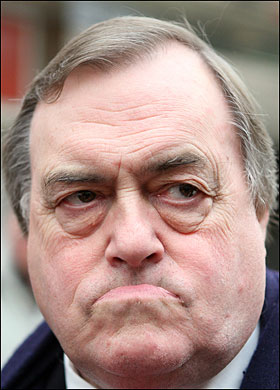
Two Jags’ supporters couldn’t be bothered to stir themselves from the warmth of their slumbers on that cold November day
This lack of interest is a pity because crime in a recent poll was right up there almost on a par with benefits and pensions as an issue of great concern to the public. Why then this lack of voter turnout when it has been given a chance to do something about it?
First, unlike general elections and referendums, there was a marked lack of information and hype. It all seemed like one big yawn; we didn’t even know who was standing nor where we were expected to vote and what’s more, no one bothered to tell us. In my own case, on the day itself, I had to ring up the town hall to find out where to vote and ask for a list of candidates. It took them ages to find out. Then I had to Google each one to find out what he or she stood for and what their track record was. Who, apart from a few nerds like me, was going to go to all that trouble? I tell you, I was on the line all of ten minutes waiting for an answer – and then they gave me the wrong place to go and vote.
What then was so important about this particular election? First, law and order is something that impinges on the life of every one of us. We have more contact with plod, by far, than we do with our local MPs. And the person who heads up our constabulary is responsible for an area and population hugely greater than our MP – in my case the whole of Devon and Cornwall, where there are many MPs.
We have all for many years been feeling that our friendly neighbourhood policeman has been slipping away from us: his presence on our streets declines daily, his appearance grows more intimidating, and his friendly nick closed – except by appointment in increasing numbers. He cannot, as a matter of course, have guns because on this one we dig in our heels, but he says ‘in that case then let us have tasers’. He seems unwilling to listen to our pleadings and determined to go his own way.
We have always judged it important that, operationally, the police should be free from political interference. And while this has to be right, it is equally right that ultimate control of policy should rest with civilians. In theory this is the case, but every Home Secretary has found it next to impossible either to impose their will on a Chief Constable or sack him when it becomes necessary. The reality is that the police have many of the characteristics of an army: they learn to march in formation and salute; they are trained to obey orders; and they can hold you against your will; they have armouries; are licensed to kill; and they wear uniforms, even body armour. But we do not allow an army commander – even the chief of staff – to decide policy, much less to determine the magnitude of the lethal force to be used. If we did, then General MacArthur – admittedly an American but bound by the same military ethos – would have atom-bombed the Chinese in Korea. His insistence caused him to be sacked by the president.
Because the new police commissioners have hire-and-fire powers over chief constables, as well as budgetary control, we can now reasonably expect police priorities to move in the direction we would all like. What was important in this recent election was that we didn’t get a load of puffed up, power-hungry chancers make it through to these crucial positions. Nor did we want them to be over politicised. In the event, the public (at least that small part of it that voted) thought this too and the Independents, as a result, made a very good showing.
In a perverse sort of way the pathetically low voter turnout may have aided (this first time round) a good outcome. Elections are normally held during the better weather of the summer, and what with the lack of information and hype, Two Jags’ supporters couldn’t be bothered to stir themselves from the warmth of their slumbers on that cold November day. Yet the Polly Peck, compromised Michael Mates for the Tories couldn’t get his loyal followers out either so the field was left clear for that little band of determined, civic-minded individuals who saw the potential and understood what was at stake to make the effort. So, for the second time, Two Jags had egg on his face, but on this occasion managed to restrain himself from throwing a punch at his adversary.
May these elected police chiefs not be seen as part of the much touted ‘Big Society’ so beloved of the PM? David Cameron may not have planned it this way – that would have been too Machiavellian; too clever for him – but the fates conspired to keep the famous ‘plebs’ at home and leave it to the more dedicated. He may, as a result, have got himself some very good police commissioners. If the commissioners they do a good job, they can reasonably expect a new term with re-election.
For all the present government’s shortcomings, there is at last the prospect that many areas of public life will be the better for police commissioners having been brought into existence, albeit again – like the recent election – in an unplanned for way.
The coalition is hellbent on making us solvent again, although weaker on promoting growth; it is tackling welfare abuse and shrinking the bloated state; it promises a revolution in raising educational standards and it is not giving up on immigration. Only the police stand unreformed – a law virtually unto themselves with some horrendous practises coming to light. Now, at last, we may see some real changes there too.
If the economy starts to recover it would be a mean person who would not give the government on whose watch it all happened some credit.
The BBC deserves better than ‘five jobs’ Chris Patten
The BBC, perhaps the world’s greatest broadcaster, is much in the news these days. The trouble is that it’s for all the wrong reasons.
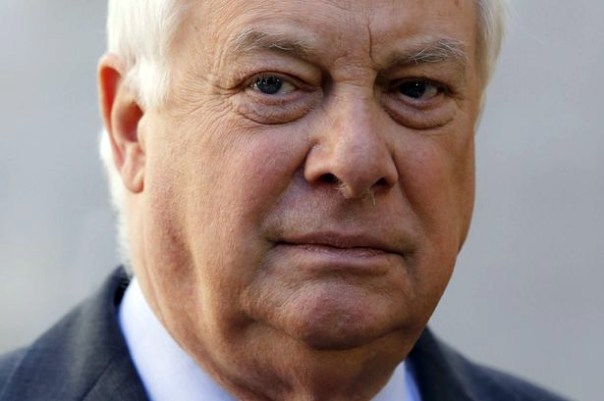
PATTEN PENDING
All the major countries began broadcasting at about the same time, so how, historically, it got to its hitherto august position in the world is hard to say. But undoubtedly the BBC’s founder, Lord Reith, had a lot to do with it. He set a bar for standards of truth and impartiality at an almost impossibly high level. Reith’s credo was to inform, educate and entertain. His stern, Scottish countenance, looking down from office walls all over the Beeb, struck terror into the hearts of those who were minded to transgress.
All countries felt the temptation to use broadcasting, once it was invented, as an arm of propaganda; none more so than the Nazi propaganda minister, Joseph Goebbels. His guiding mantra was that if you told a lie often enough and loud enough it would assume, eventually, the attributes of truth. But while he was broadcasting his lies, half truths and sly innuendos, the majestic BBC ploughed on, keeping faith with its Reithian traditions.
Even during the darkest days of the war when defeat followed defeat it told it as it was. Sometimes Churchill was furious with it and berated the organisation for giving succour to the enemy and spreading doom and despondency. Despite his draconian wartime powers it was all to no avail. The result was that the world, and most of all the downtrodden peoples of occupied Europe, turned to the BBC for the ungarnered truth.
Round their forbidden radios all over Europe they huddled together in darkened rooms, fearful of the sound of approaching jackboots. But they were prepared to take those heart-stopping risks, so much did they crave the reassuring chimes of Big Ben and the sentient words which followed: ‘This is London. Here is the 9 o’clock news.’ It is true to say that the BBC in its single self kept the flame of hope burning throughout those terrible times. It became almost a ‘light unto the nations’.
In the years that followed, the BBC World Service became the most trusted broadcaster on the planet speaking truth unto power fearlessly. Even today among our enemies in the badlands of northern Waziristan in Pakistan, it is listened to in their own language with respect – even, dare one say it, with affection.
This then is the organisation which currently faces the worst crisis since it began its work 90 years ago. We should all feel alarmed.
I am a great believer in the maxim that the buck stops at the top. Foreign Secretary Lord Carrington took it over the Falklands and was much admired for it. In my view it was a great mistake to appoint a man who had five other jobs. It was an insult to a body of such august pedigree, and indeed size, as the BBC. A part timer for such a massive organisation? What were they thinking about.
What of the man himself, Chris Patten? This is a man who purports to have a keen appreciation of the working world we all operate in, offering his services left right and centre, but who has never held a non-political job in his life. He began his ascent of the ‘greasy pole’ straight after leaving Oxford.
One of our complaints about modern politicians is that too few of them have any real experience of life outside the Westminster bubble. That could not be said of previous generations, but it can be said of Patten. He’s as smooth and smarmy an operator as it is possible to imagine. Even now, when he has at last woken from his slumber, he is busy mouthing the smooth platitudes expected of such a man trying to extricate himself from trouble.
For all the multitude of jobs that Patten has had he has not made a success of a single one of them. So why does such a man keep on getting these lucrative sinecures? What made David Cameron appoint him to head up the troubled organisation? Do we have yet another example of the PM’s own lack of judgement? I suspect we do.
As for Patten’s judgement, he was the man who thought it proper to appoint Entwistle to the post of Director General and then, when the heat started to move in, hung him out to dry. Patten arrogantly and high-mindedly berated the Culture Secretary, whose remit covers the BBC, for sticking her genuinely worried nose in to his fiefdom. Now he admits that although he knew of the impending, devastating assault on poor Lord McAlpine’s reputation, he didn’t think it necessary to warn poor Entwistle of the coming storm so that the Director General could check his facts before going on air.
The BBC is at a watershed. Its current amateur level of journalistic rigour is truly astonishing. Especially for an organisation with a budget of some £4.4bn.
Its left-leaning stance makes a joke of impartiality. This desperately needs sorting out. But can a man as ineffective and compromised as Patten be the right man to do it? I think not.
As was said of Charles I, the hopeless king who lost his head so magnificently: ‘Nothing in his life so became him as the manner of his leaving it.’ “Never mind,” Mr Patten declares, “heads may well have to roll in the BBC too.” He should start with his own.
He’d be doing us all a great favour and just for once we’d have something to truly thank him for.
We must get our railways back on track
We had better all pray that it will neither be a wet nor cold winter. That’s asking rather a lot seeing as it is the perverse British climate we’re talking about.
The reason for not being wet is that the water table from being alarmingly low at the start of the summer is now alarmingly high. Just a small amount of the liquid stuff and it will have nowhere to go except lie on the surface. Floods will then be inevitable and widespread, perhaps more than we have known in living memory.
As for not being too cold that is because we are a million miles from having repaired the pothole damage of the recent severe winters. To make matters worse the cost of keeping warm is going to be more than many people can bear, especially the old. We have had enormous hikes in energy bills – twice the level of general inflation.
This leads me to question of whether the wholesale privatisation of the utilities was a wise thing to do, especially where we have allowed so many of them to fall into foreign hands.
Apart from strategic aspects which we should always have an eye to, foreign companies care little if the British play up over being ripped off and obliged to pay more than the same company is charging in their own country. Naturally these companies are more sensitive to home criticism and will seek to minimise it there. The foreigner is seen as fair game.
Part of the problem is that there are only six or so major players – a similar number to the banks – and there is not genuine competition. Without a doubt real competition makes for efficiency and puts a brake on exploitative charges. It was right, as a consequence, to divest the taxpayer of as many of the lame-duck industries as possible – provided genuine competition could be introduced. I well remember how it was normal to wait for up to six weeks for a phone to be put in.
However, if we are sensible, we must accept that certain industries – and water is a good example – do not lend themselves to competition. Governments of all hues have known this, but were all so rapacious in getting their hands on the massive sums which the utilities could generate that they have been willing to sacrifice the national interest to do so.
And why, apart from common greed at the thought of all this lovely lolly, were they so anxious to do this? First, they had been so monumentally inept at balancing the national books that an infusion on this scale would camouflage their hopelessness; and second, they each had their own pet projects – mostly social engineering – which they were mad-keen to indulge.
Such indiscriminate privatisation as took place was not in the national interest. What was needed was an open-minded, selective approach and not one driven by short-term economic advantage nor an ideological zeal such as ‘privatise the lot’ or ‘nationalise all the commanding heights of industry’.
One very sad aspect of what has taken place is that the industry which this country pioneered, and as a result changed the world forever – the railways – is now a national disgrace, even a joke (albeit one in very low taste).
I almost wept when the last carriage-making facility in Leeds lost out to the Germans and this great industry, in the land of its birth, died. How sad that is.
 A person could urge the prime minister in all earnestness to wade in over the railways. He would earn more brownie points than all his silly PR stunts like ‘hug a hoodie’, husky driving and riding a bike to the Commons put together. A recent poll has shown that 70 per cent of the nation would like to take the railways back into public ownership. As things stand, our ticket prices are almost the highest in Europe – four time that of Slovenia and three times that of Spain and Italy. The pricing structure is a nightmare of Byzantium complexity and the overcrowding of passengers an utter disgrace. At the same time umpteen 1st Class carriages lie almost empty. Speaking of this term – 1st Class – is unfortunate in itself, especially in this still most class-ridden of societies. Far better it be called Premium Rate.
Communications are at the heart of any country’s success or failure. It was the railways which opened up the world. The American west was won more by the iron horse than by Wild Bill Hickok and the vast riches of the Russian east by the Trans-Siberian Railway. We absolutely must get our railways back on track.
We have vilified a progressive and enlightened English king for long enough
I have been pondering the proper course that should be adopted should the ‘king under the car park’ (Richard III) be validated by DNA tests. Assuming that the tests are positive, which seems likely, the find is of great significance.
Richard is one of the few English kings known around the world thanks to the story told about him by the world’s greatest playwright. Shakespeare undoubtedly has earned his place as a playwright of genius, but the same cannot be said of his powers as an historian. When the facts are examined his depiction of Richard lll can be argued to be nothing less than a character assassination. In two short years as king Richard performed an astonishing array of good works, some of which, such as the Bail system and the standardisation of weights and measures remain with us today. We know also that he was extremely pious, and endowed many monasteries and colleges of learning as well as ending the practise of buying public office. For him, merit alone counted. None of Richard’s achievements are acknowledged by Shakespeare; instead we have the depiction of a murdering ogre of grotesque physical appearance.
Were Shakespeare to be right then Richard’s dethronement would have been fully justified, even perhaps by someone with as thin a claim to the throne as Henry Tudor, the victor of the battle of Bosworth. But was Shakespeare right? We know what the record says about Richard’s achievements. Soon we may know what forensics say about the bones. Was it a hunchback with a withered arm, as Shakespeare said? It is known that Richard, after a heroic dash to cut down Henry Tudor, was himself cut down after being surrounded and that the butchery that took place against his person was truly dreadful. He was even stripped naked – no way to treat a king – and slung over a horse before being paraded for all to see to the nearby city of Leicester. Interestingly, the body under the car park did die violently. There is an arrow in the back and the skull has been impacted twice with an axe or a sword. Further examination may reveal more injuries.
As fascinating as these battlefield injuries undoubtedly are, what will be the clincher will be the integrity or otherwise of the spine and arm. You see, Shakespeare was adamant that Richard was grossly deformed; a hunchback, no less with a withered arm. Early examination suggests no such thing – just a slight curvature of the spine (certainly not a hunchback) and a perfectly normal arm. We cannot know whether he was of evil look mien as again suggested by the Bard, but portraits of the time show a perfectly normal countenance. Laughably, our Will said that even dogs barked when they saw him.
The person chosen to provide DNA evidence is a man who lives in Canada. He is of Plantagenet ancestry – the bloodline of the 300-year-old dynasty of English kings of which Richard was the last. Always assuming that the tests prove positive, then Shakespeare will stand exposed as a liar. He told porkies also about Macbeth. Let us be kind – in view of his colossal eminence – and call him an arch propagandist for the Tudors. It was, after all, under their patronage that he wrote and they insisted on nothing good ever being said concerning Richard, except that he died bravely. And in that matter there were too many witnesses to pretend otherwise.
But the fact will remain that because of him we and the world for five hundred years have vilified a progressive and enlightened English king. It surely must be right to do our best to make recompense. Justice dictates that the remains be treated with the respect and receive full honours as an English monarch – the last as it happens of truly English stock and the last to die in battle. After Richard came monarchs from Wales, Scotland and Germany. He should be laid to rest where many of his ancestors lie, in Westminster Abbey. This particular monarch’s end marks not only the end of the dynastic, thirty years bloodbath of the Wars of the Roses, but even more significantly the end of the Middle Ages and the start of modern times. So for all these reasons and many more Richard was an important king.
In ordinary circumstances fallen warriors of distinction were buried in the cathedral nearest the scene of battle, in this case Leicester. Then my thoughts turned to York – the Minster there – where his most devoted followers were located. He was a prince of the House of York and its famous white rose he many times carried into battle fearlessly against the red rose of Lancaster. Finally I plumbed for Westminster. Why? Because these are not ordinary circumstances. We have a major player in the great saga of English kingship and one, who I am convinced, has been grievously wronged. His interment, with due ceremony, in the home of English kings where he was crowned would be a way of saying sorry. It should be attended by the present monarch. It cannot make up for the generations who have lived and died believing Richard to be England’s most villainous king, but it would, at a stroke, set the record straight and be the right thing to do. Incidentally, I would hazard a guess that just about all the world’s media would be there to record the event. Westminster Abbey would be more on the tourist trail than ever. Most of all we would be able to take quiet satisfaction from the knowledge that after half a millennium truth has finally triumphed.

 The Last Foundling