Category Archives: history
Iran, the Straits, and the Looming Crisis for the West
A truly alarming situation is developing for the G20 advanced economies. If not handled deftly, its outcome threatens more disastrous consequences for those economies than the events following the oil crisis of the early 1970s. One of the world’s four choke points carrying 20% of its oil and gas has been shut down, and another could easily follow. Nothing like this has ever happened before.
If the religious fanatics of Iran ask their Houthi proxies in Yemen to up the tempo of their strikes in the approaches to the Suez Canal, Europe will shut down. Reserves will be exhausted in a matter of weeks — days in some cases like ours.
How, you might ask, do the mad mullahs have the power to achieve this? The Houthi insurgents of Yemen look to them for their supply of weapons, and both share a visceral hatred of Israel. Altogether, it would represent a doomsday scenario for the embattled democracies.
In such a situation, the gloves would have to come off. Any pretence at playing Mr Nice Guy would end, and the democracies, east as well as west, would feel obliged to offer their military assets to re-open these choke points to save their economies from collapse. It might well be that military occupations of the zones for a period of time would be judged necessary.
It might also be decided for future stability that if boots have to be put on the ground, the opportunity should be seized to rid the world once and for all of the theocratic regime that has brought such murder and disruption to the world. Certainly, the toppling of the regime would be welcomed by a very large majority of the population, its entire sisterhood for a start. As a result, regime change would be unlikely to be a protracted affair.
Sadly, and depressingly for future generations, recent events in Iran have demonstrated that street uprisings can no longer bring down a tyranny if that tyranny is ruthless enough to murder enough people. And that is what the ‘Holy Men’ of Iran were prepared to do — tens of thousands in this case. Only if the men with guns turn against the mullahs can change occur internally. For the moment, the promptly and well-paid 125,000 men of the Revolutionary Guard are, and are prepared to remain, loyal to their master’s dirty work.
As in Afghanistan, and sadly throughout the Muslim world, a high proportion of men quite like their faith’s legitimising male power over women. This explains why the Iranian authorities are able to mount counter-demonstrations. Look for the women among the demonstrators, and you’ll be pushed to find them. But before we get on our high horse, we should remember that our own societies were highly patriarchal only a few generations ago, though this was not mandated by scripture as it is in Islam.
With the USA and Israeli air and naval assault on Iran to neutralise its nuclear and rocketry ambitions, the aims have widened to regime change. But history has taught us that no amount of damage from the air, short of nuclear strikes, can achieve that end. Iranian cities bear no resemblance to those of Hitler’s or our own, come to that. But even so, neither of us considered surrender.
It is a great deal easier to get into things than to get out. If boots on the ground are forced on the West to secure free passage through the straits, then to quote Macbeth, ‘If it were done when ’tis done, then ’twere well it were done quickly.’ And in this case, with such majority hatred of the clerical killers of their sons and daughters, I believe it would be quick. Iranians are a clever and gifted people. There is no reason to believe that if the ghastly, evil regime that has held them in thrall for almost half a century is cast into the dustbin of history, they will not be capable of becoming a normal country and ruling themselves competently. Their civilisation, after all, was once a beacon to the world, tolerant and much admired by Alexander the Great.
The loss of the West’s confidence began with Vietnam. It continued through the fiascos of Afghanistan, Iraq, Libya and Syria. In earlier times there had been triumphs such as the Berlin Airlift, the forming of NATO, the Cuban missile crisis, and the landing on the moon. Going into countries with all guns blazing proved to be the easy bit, but putting together an exit strategy proved altogether harder. Part of the problem was a lack of understanding of the complexities of the regions they were operating in. The Middle East and Muslim world, with its Shia-Sunni divide, was made even more complex by the colonial powers’ ill-thought-out settlement of frontiers following the destruction of the Ottoman Empire. It enabled an entirely new state, Israel, to be set up, creating the thorniest issue of the lot.
Into this china shop has stormed the proverbial bull in the form of the American president. Ironically, Trump’s very unpredictability can sometimes achieve results that plodding diplomacy struggles to keep up with. If the degrading of the bestial regime in Tehran can bring about its collapse, the world and most of all Iranians should rejoice. There is everything to play for, and with luck the world’s most troublesome area may have a chance to settle down, with its remaining tyrants sleeping less easy in their beds.
Farewell to the Heroes of Britain’s Finest Hour
The recent passing of the last of the 2,900 pilots known affectionately as “The Few”, at the remarkable age of 105, should give us all pause for reflection. These brave individuals handed Nazi Germany its first defeat during the pivotal Battle of Britain. It is no exaggeration to say their courage and sacrifice did more than just save Britain; they changed the course of world history.
Had Britain fallen, Hitler would have been free to unleash the full might of his war machine against Soviet Russia, inevitably leading to its defeat. With the immense resources of Eurasia under German control, even the United States would have found itself powerless against an advanced enemy armed with weapons such as the feared V2 rockets. Winston Churchill famously warned of a “New Dark Age” descending upon humanity, a chilling prospect narrowly avoided thanks to “The Few”.
Twenty years ago, inspired by the heroism and selflessness displayed by these young pilots, I penned my own tribute to honour their memory and courage. My poem, “Salute to the Few,” is now proudly displayed at the Battle of Britain Museum. At this solemn moment, I would like to share it with you as a heartfelt reminder of their extraordinary bravery and sacrifice.
Salute to The Few
You were young and you were brave;
You a nation had to save.
Scrambled from your aerodrome,
Test those skills so freshly honed.
Whirling in your fighter high,
Fought your duels across the sky.
Like the famous knights of old,
You were fearless, keen and bold.
Never did a fate so grim
Threaten all with mortal sin.
Never did so very few
Save so great a multitude.
Spurn a deal that would have saved
All that men of empire made.
Chose the path of blood and debt;
Know that honour’s fully met.
Far beyond your nation’s shores,
All humanity took pause.
For it knew that you alone
Could for misspent time atone.
Be the first to best the Hun;
Yours a famous victory won.
Boyish banter in the sky,
Where you were so soon to die.
Almost out of school you came,
There to die in battle’s flame.
Fire and smoke and cannon’s roar,
Trapped within your cockpit door.
Feel the searing heat around;
See the fast-approaching ground.
Time to dwell but fleetingly
On that love on mother’s knee.
Bought you time that others might
Join you in that fateful fight.
Lift the terror, set men free;
Save them from base tyranny!
Britain’s Role in Shaping the Modern World
Britain has been so lucky. It was perfectly placed for the Industrial Revolution. As an island, it had short lines of communication and transportation with plentiful rivers. Where these were lacking, it dug canals and, forty years later, took trains to the remotest parts of the kingdom. No town or city was more than seventy miles from the sea. Despite its smallness, it had huge reserves of coal and iron. It had displaced despotic kingship with a parliamentary system and had finally become a settled state. Excellent universities worked with inventors and entrepreneurs. Even the factory system and workers turning up at a set time for a set number of hours was their idea. Previously, they had relied on the church bells or a man walking along a street knocking on doors to know the time. Now, thanks to Adam Smith and people like him, they all had affordable timepieces. Hard taskmasters as they were, they were also the first to introduce Bank Holidays.
Commerce was the big driver, even with empire, of which they were often reluctant participants. It even saw itself from the early 19th century as doing God’s work. Its queen, with her dedicated, hardworking German husband, strove to set an example of family life. Is it surprising that before long, they came to believe that the Almighty Himself had appointed them to be a light to the nations? They went out, Bible in hand, to bring the blessings of the scriptures and modernity to distant lands. Their hymns, ‘Jerusalem’ and ‘Greenland’s Icy Mountains’, encapsulate their thinking. All this, and much more, combined with a good business ethos and an all-powerful navy, allowed it to forge ahead to create the world we know today.
How misbegotten it was when I was young to ridicule someone by calling them a Victorian. They were an astonishing breed. However, having said all that I have, any nation blessed with so many advantages would have achieved the same.
From Armistice to Aftermath: Poem for Remembrance
On this Remembrance Day, the 11th of November 2023, we reflect on the armistice that ended the First World War, a day to remember the sacrifices of so many. In 2018 – the centenary of the World War I Armistice – I wrote and posted a poem, but since then, I’ve added two stanzas and modified another. My revisions stem from viewing the two World Wars as essentially one prolonged conflict with a conclusive outcome only in 1945. The same protagonists were involved, with one side refusing to accept its initial defeat, instead preparing during the interwar period for what it considered the rightful outcome in the second.
It was a misstep for the Western Allies to agree to an “Armistice,” a term suggesting a mere truce, at a time when the German army was collapsing, the Hindenburg Line had been breached, and the Kaiser had abdicated. With no path to recovery and its Home Front in revolutionary turmoil, the Allies could have demanded unconditional surrender – and likely would have secured it.
My original poem did not touch upon the second, more devastating round of conflict, nor did it delve into the role of artillery in battlefield losses. The common belief attributes most casualties to bullets, particularly from machine guns, bayonets, poison gas, among other weapons. However, it was in fact artillery – responsible for 60% of the losses – that served as the primary agent of death and injury.
Few war poems capture this immense tragedy comprehensively. I hope my poem does so, portraying the sorrow, waste, and madness of war with poignant clarity. As we commemorate wars past on this solemn day and observe ongoing conflicts in Europe and the Middle East, let us reflect once more on the madness of war.
Echoes from the Trenches

A sea of time has passed us by, and still, we think of them,
The lives unlived, the dreams curtailed, the legions of our men.
We did not know, we could not tell, what horrors lay in store,
As year on year the mournful call went out for more and more.

A maelstrom fell upon our men of iron, steel, and fire,
And sent a piteous wail of grief through every town and shire.
"We must resist," we told ourselves, "the evil, hated Hun,
Have not our leaders deemed this war a just and noble one?"

Through mud and ice and poison gas, the order was ‘stand fast’,
This agony, like none before, it surely could not last.
For four long years, we stood our ground and bravely would not yield,
Till battlegrounds ran red with blood through every poppy field.

Nigh half a thousand miles were dug of trenches where men slept,
Exposed and wet and freezing cold, companionship they kept.
Of lice, of rats, of mice and men, over whom they scurried.
Comes the light, the lice still bite, but off the others hurried.

A wasteland scowled between the lines with not a living thing,
Where even as the dawn came up, the lark, it would not sing.
To cross through no-man’s land and live might be a lucky feat,
But barbed wire and machine-gun fire could yet that luck defeat.

How could men cause such numbing pain and suffering to all?
What thoughts of gain or equity were on their lips to call?
How could they think to justify the carnage and the blood?
What rationale endured to turn their tears into a flood?

Delusions born of hubris' ease had caused them to believe,
This war would be no different from the rest they had conceived.
But science changes everything, and chivalry was dead,
Midst strafing planes and shrapnel shards and mustard gas and lead.

Oh God above, what did man do to vent his foolish spleen,
But sacrifice the best he had on altars of the keen?
How little did he think it through and cry aloud, ‘Enough!’,
But yet preferred to stumble on with bloody blind man’s bluff.

Versailles was born with bitterness and vengeance at its heart,
And so, in barely twenty years, a fresh war would it start.
Depravity beyond belief were hallmarks of this clash,
With millions lost to racial hate, their bodies turned to ash.

Then did at last all Europe rise and vow with every breath,
To put in place a Union to end this dance with death.
A world at war must nevermore be deemed a noble thing,
Its sons and daughters join as one, this anthem now to sing.
Our Queen impressed all humanity
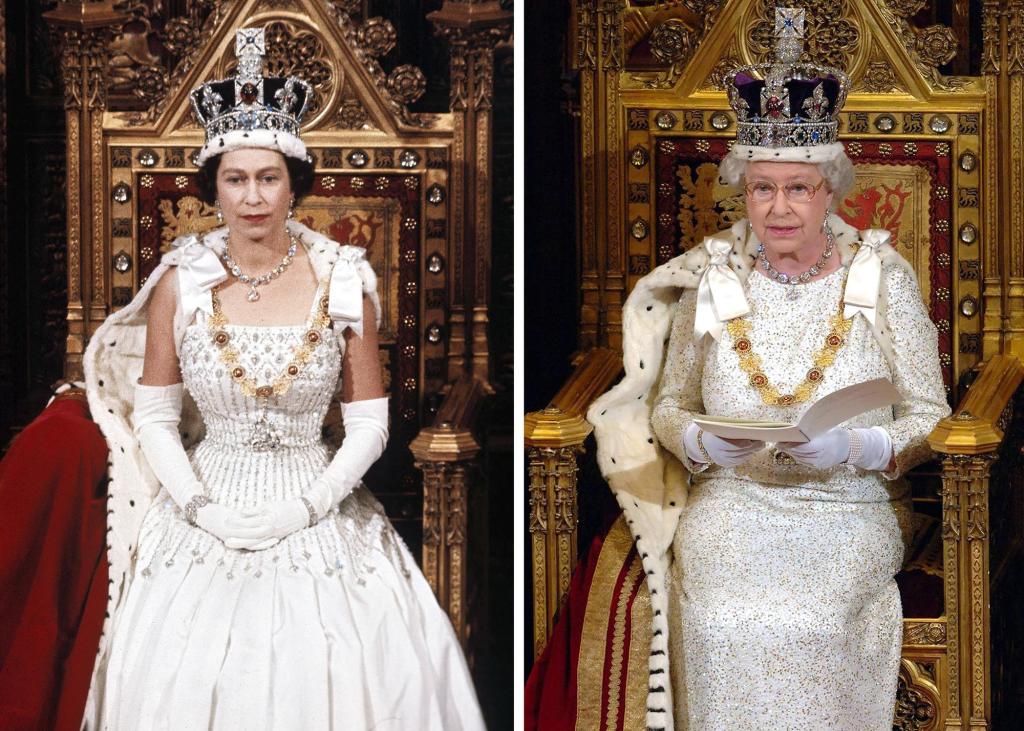
One day in February 1952 when I was thirteen, a man came into my classroom and said that he had an important announcement to make. “The King is dead,” he said. I cannot remember what else he said before he left, but that day has been fixed in my memory all these seventy years. I had known death before, when my beloved foster father had died when I was three and that sorrowful memory was etched too in my memory, especially when we used to visit that sinking mound of earth which was his grave.
Remembered also was where I was – Fulham Road in London – when I saw the newspaper billboard that announced President Kennedy had been shot. Next was the moon landing during which, in the last frantic seconds before Neil Armstrong descended the ladder on to its surface, I was adjusting the aerial on my home’s roof (I made it in time). Fast forward then twenty-eight years to 1997 and you had my young son at 6.30am on a Sunday morning when I got up early to keep an eye on him telling me that Diana, Princess of Wales, was dead. Finally, you had that surreal image set against a bright blue September sky of the Twin Towers billowing out plumes of blackened smoke, and people leaping from great heights to avoid being burned alive.
Now, the whole world – and not just the British people – stand in shock at sudden death again; not this time of thousands, but of a single individual, our Queen. For almost all of everyone’s lives, she had been a constant presence, almost as though she was one of the stars in the firmament. Now that star had not just faded, but suddenly vanished from the night sky. For seven decades she had been head of a still significant country which even in her grandfather’s time had been the superpower of its age. Just five years earlier, and she would have been Empress of India – albeit briefly – had she come to the throne then. The hard power which it had once exercised had been seamlessly inherited by a former colony which shared identical ambitions. That power valued its old boss’s support in the application of the unavoidable nastiness of hard power.
But Elizabeth’s country then set about the accumulation of massive reserves of soft power, perceiving that to be the only power that works in today’s world and does not garner opprobrium. It had the perfect vehicle to achieve this in the Commonwealth. Three centuries now of the Anglo-Saxon diaspora, with its universal language, setting the world agenda and reordering its workings has brought us to where we are now. All this is not lost on humankind.
Queen Elizabeth II was a very homely person who happened to enjoy – if that’s the word – a very exalted position. She was a shy woman brought up with old-fashioned values. She liked nothing better than that everyone should keep the peace, and that included her own family. She was a gifted mimic who could see the funny side of much that was around her, including pompous people who made a fool of themselves in their efforts to do the right thing in her presence. All of us in doing our job, however much we like it, eventually become jaded, but she never did.
More Scottish than English by ethnicity, she loved the songs of Scotsman Harry Lauder. One of his best known and loved was Keep Right On to the End of the Road. And that is exactly what she did. And this simple fact impressed all humanity.
Soon we shall see the greatest assemblage of its high and mighty that the world has ever witnessed; not for an Alexander or a Nobel Prize Winner who saved humanity from cancer, but for a very ordinary human being with a kind heart. Unnervingly for many, especially the old, we live in a fast- moving world which accelerates by the year, but our Queen seemed to embody those aspects of a lost world which we still pine for and hanker after. Like a permanent fixture for all people everywhere.
Who is to blame for the India-Pakistan partition?
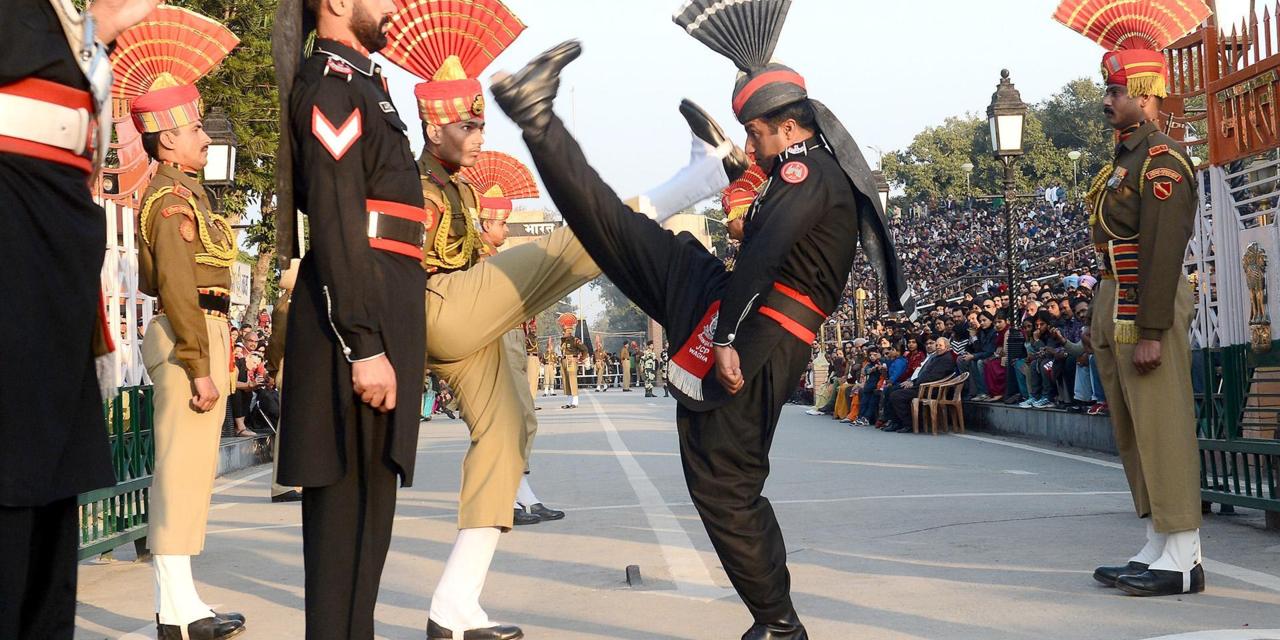
Pakistani Rangers (in Black) and Indian Border Security Force personnel (in Brown) perform the ‘flag off’ ceremony at the Pakistan-India Wagah Border Post.
The year that is now drawing to a close has been a special one for India and Pakistan. Seventy years have passed since they went their separate ways after independence. Few would have thought that they would not have settled their differences after such a period of time, much less fought three wars along the way. Many blame the former colonial power, saying that that a failure to prevent the 5,000 inter-communal deaths which took place in Calcutta a year before independence should have alerted it as to the possible consequences if it failed to deploy the military in the run-up to independence.
At this distance in time, is it possible to take an objective view of the British role of the good, the bad and the ugly of what took place? Perhaps not quite. There are still numbers living whose early lives were traumatised by the unexpectedly bloody partition insisted on by ambitious Hindu and Muslim politicians. Both the government in New Delhi and Gandhi did not want the sundering of a sub-continent, which through guile, able administration – and yes, from time to time, brute force – had worked cohesively for two-hundred years.
Had the colonial power been stronger, and not itself traumatised as well as impoverished by combating German militarism in two world wars, it could have refused those ambitious politicians independence, until such time as they agreed to work together. In other words, it could have said: “We will stay for as long as it takes. You have shown yourselves able to co-exist for two-hundred years and we will not see this good work thrown away.”
What a benefit that would have bestowed, had that been possible. The unified former British India would by now be far and away the world’s largest country. Instead of building up nuclear arsenals, and spending crippling amounts confronting each other, it could have deployed that money to place itself at the forefront of the world technologically. It is difficult to think of a single instance in history where such an opportunity was thrown away. The British had been a strange mix of arrogance, barbarity and enlightenment. Always determined to get their own way – because they considered they knew best – if you buckled down, and accepted what was on offer, they could be good and decent folk to deal with. If not, the consequences could be deadly, and they often were.
Did, then, the sub-continent benefit or suffer from the British experience? It is true that by the time Westerners arrived in any numbers it was enjoying a period of sheer brilliance and prosperity under its Moghul (Muslim) conquerors. Some have estimated that at its height it represented 25% of the world’s GDP. However, a few generations following the arrival of British merchants it had fallen into anarchy. In a remarkably short time, those merchant traders formed themselves into the world’s first multi-national company. Soon the company morphed into the most effective power in the land; it saw opportunities and riches which dazzled, and to protect its developing interests it formed an army (mostly of locals) but officered by its own people.
It had never been The Company’s intention to take over the land. Quite the reverse, such an enterprise seemed to it burdensome. But the alternative guaranteed only a continuance of anarchy, and that was not conducive to making money. In the end you had something unique in human history: a company, not a political power, ruling an entire country – one of the largest, most glittering and most populace lands in the entire world.
So, was the rule of The Company and later The Crown oppressive, even cruel? No more – and many would argue a lot less – than the terrible consequences of the breakdown of Moghul law and order and all that that entailed. So bad did things become that travel between towns became a dice with death. Murderous Thuggees (the term from which we derive the word thug) roamed the land. The new rulers made short shrift of such practices.
Many of the early British arrivals were rapacious chancers. Their sole aim was to get rich quick. Their duplicity broke all records in double-dealing. But, among the newcomers were also men of great integrity, such as Warren Hastings. Such men dressed like Indians, took Indian wives, adopted Indian customs and had no notions of racial superiority. They were hugely interested in India’s past civilisations including its ancient, almost lost, language of Sanskrit which they resurrected. Five universities were set up, one of which became the second largest in the world and the School of Oriental Studies began its work. Great institutions were established along with a free press. Some of the most gifted and dedicated young men ever to leave Britain’s shores were trained at a public school, Haileybury, specially set up to teach them Indian ways as well as languages. It was the alma mater of Clement Attlee himself, the prime minister at the time of independence.
I will not bore you with a full list of the engineering projects; the millions of acres brought under cultivation; the 40,000 miles each of railways and canals; a superior version of our own Common Law tailored specifically to meet Indian needs; the banning of widow burning; the restoration of crumbling architectural wonders, including the Taj Mahal, that took place over the next two centuries; also, the most incorruptible civil service in the world, the ICS, (Indian Civil Service), whose entrance examination equalled that of the Mandarin system in China.
Although a land run by a company for the first half of its existence, it was, undeniably, an empire – an empire in the days when empires were fashionable and, yes, like all empires it was created and ultimately sustained by force. The Indian Mutiny – known to locals as the first war of independence – was put down with a ruthlessness which surprised – and appalled – many back home. Abominations did take place even decades later, such as the almost 1,000 mercilessly gunned down by an out of control colonel at Amritsar in 1919 who feared a new Indian Mutiny. It led to a Commission of Inquiry, with Churchill calling the massacre “monstrous” and widespread British condemnation. But, having said all this, the question remains: could never more than 100,000 Europeans have sustained their position and administered 400 million people for 200 years without a huge amount of local participation and – dare it be said – consent? And what should history make of the 2 million who came to Britain’s aid in two World Wars? It was the largest volunteer army in history.
As empires go, the British version is often said to be one of the better ones. Why else, people argue, would the leaders of 53 countries travel from the ends of the earth every two years to enjoy Commonwealth gettogethers? (There are no such nostalgic gatherings, they point out, for the French, Spanish and Portugese former empires.) And why, with the two exceptions of Canada and Ireland, did they all adopt the British national game of cricket and make it their own? For many, these Test Match contests played around the globe are almost the most exciting item in their calendars.
Today we all accept that no one has the right to impose their systems – however elevated they believe it be – on someone else’s country, but that take is a relatively modern one and we see things now through different eyes. Neither the money-obsessed Georgians, who began it all, nor the Victorians, who believed they were doing God’s work, saw anything wrong in empire-building. That’s what you did in those days if you had the means. It had been going on since time immemorial. With the fall of the Soviet empire – which absurdly it refused to accept was an empire – that phase of human aggrandisement, thankfully, came to an end. Today, with all our international forums, it is safe to say we have seen the last of them.
We must stop flagellating ourselves over the sins of the past and learn to live with them

The man who wanted British rule from the Cape to Cairo.
Remember Blaire’s apology for the Irish potato famine? Or Brown’s apology for our treatment of the Bletchley Park codebreaker, Alan Turing? How about his apology to the families of the 306 executed ‘cowards’ of WWI? This furore over Cecil Rhode’s Oxford University statue is another prime example of our breast-beating tendencies today. What nonsense it is to maintain that because ethnic minority students walk past a high-up – and out of the way – statue of the arch empire builder they are suffering a form of violence. Let’s grow up a little; this surely is over-egging it.
I am not saying that we should not be aware of what was done by us long ago around the world and, indeed, that much of it was wrong. It was even sometimes brutal. But that is to see it through today’s prism. George Washington was a slave owner and Elizabeth II tortured Catholics. Churchill excoriated Gandhi and the whole notion of Indian independence. He positively gloried in the British Empire. Are all his statues, worldwide, to be taken down, including the one in Parliament Square?
I can list many examples of terrible things done by our nation. I can also quote you many more carried out by other nations. Of course, that doesn’t make any of them right. It is simply to contextualise them.
The retreat from empire in the British case was orderly and largely peaceable. In France’s it was bitter and bloody. The First World War brought about an upsurge of nationalism. The genie was partially put back in the bottle after that war, but it burst out with a vengeance following the Second World War and there was no putting it back. Bankruptcy and the need to rebuild Europe convinced us that the imperial game was up. Others were slower to realise it.
Those undergraduate agitators should pause for a moment and reflect on the fact that their privileged Oxford education came courtesy of one of the undoubtedly good things that Rhodes did with his life: he donated an immense sum to the university. I know his detractors will leap in and say that it was wealth accumulated on the backs of poor, benighted Africans, and to an extent, this is true. But we are where we are and numbers of them are at least seeing some of it coming back to them. The fact is we cannot undo the past.
Nowadays we are much taken to apologising for our forefathers’ misdeeds and though I see no great harm coming from that I have to ask myself where it ends. Should Rome apologise to us for its soldiers flogging our Queen Boudicca and raping her daughters? It may, for all I know, be that it makes a few of our ‘victims’ feel better for our having owned up and taken sack-clothe. Perhaps the idea is not that at all, but to make us feel better about ourselves. The question then is whether we are actually achieving anything meaningful at all. Does it help to rake over old coals and give ourselves an unhelpful guilt complex?
If we were such a shower of cruel oppressors, why are our former colonies so anxious to maintain their links with us? Why do they play an active part in the Commonwealth club and travel from the far corners of the earth for its bi-annual jamboree? It is telling that the French have not been able to form such a club.
It can be argued that while we took much – especially from India in the early years – we also gave much. We irrigated huge swathes of the country which hitherto had never been brought under the plough by constructing 40,000 miles of canals. We gave it, too, the largest railway system in all Asia (another 40,000 miles.) We also built and surfaced roads and constructed the 2,000-mile Grand Trunk Road east-west with trees either side to shield its travellers from the Indian sun. We gave our former subjects throughout the Empire the rule of law. We gave the Indian subcontinent parliamentary government. We also saved myriad constructs and temples, including the Taj Mahal, and its ancient language, Sanskrit, by setting up the School of Oriental Studies. We gave them an education system, which they maintain with all its rigours to this day, and we gave them a free press. Oh, and we also gave them the greatest love of their lives, cricket. It has become the poor boy’s hoped-for route out of poverty; their equivalent of our premier league.
In the last century of our rule there we developed a strong conscience so that, when we stood in mortal peril in the two World Wars, they martialled the largest volunteer armies the world has even known to help us win them.
As well as the profiteers and exploiters of the early years, we later sent the brightest and best that our country has ever produced to govern it. The special public school, Haileybury – set up to train those administrators in the languages and culture of the sub-continent – was second to none with, created in its wake, the Indian Civil Service, the most dedicated ‘sea-green incorruptible’ system ever devised. Its entry examination had no equal on earth.
Without exonerating Rhodes for his excesses, he, like many others of his time, believed fervently that they had a duty to mankind to spread British values across the world. It may seem presumptuous, even arrogant to us today, but because the Industrial Revolution had so changed the face of humanity they believed, with their strong Christian faith, that they were the elect of God, chosen to lead the world to a better future. It was an understandable enough trap to fall into and any country finding itself in that position might well have believed similarly. In truth they did mean well.
So let the callow hot-heads who will take away that priceless Oxford degree show a little humility themselves. They are young and, for the moment, know little of the world. For our part we are content to stand on the record and let history be the judge.
Poem: Hubris at Waterloo
Unsparing of his soldiers killed,
Yet loved by them in every way.
Oppressed folk all around he thrilled
As Europe’s monarchies he flayed.
‘Upon their stomachs, armies march,’
Said Bonaparte the Corsican.
Europe and Asia, he almost grasped!
That ego said, ‘of course I can’.
A wild adventure drew him east
To fabled Sphynx’s quizzic stare;
But Horatio sank his fleet
And left his army stranded there.
Then east again to Moscow’s gates
With half a million of his best,
The great retreat was left too late:
With winter came that grimmest test.
An island race stood in his way
While others trembled at French might;
To field their armies it would pay
And lead them in a daunting fight.
Through two decades it fought it out;
Old liberties were put on hold.
To drive France from its last redoubt
It knew it must be hard and bold.
Prussians, Russians, Austrians, Dutch,
Belgians and Swedes joined in the cause;
No one thought of the future, much,
Just to survive those endless wars.
At Waterloo the dye was cast;
Sad soldiers penned their final wills.
Those British squares, they must stand fast,
And Frenchmen by the thousand kill.
Cavalry charged against the squares:
Sharp sabres aimed at British breasts.
How would those lines of redcoats fare?
How would they meet that fearsome test?
Volley on volley they must shoot,
‘The closest thing you ever saw…’
‘Hard pounding!’ balled the Iron Duke,
Till Boney’s men could take no more.
To save the day, an Army Corps!
The Emperor’s Imperial Guard:
Unbeaten in a foreign war,
The hardest of the very hard.
In silence and in fearless line
They bore down on their British foe;
But raked by fire ten thousand times,
They did yet make an awesome show.
At last the fates smiled on the reds;
Their musketry was so intense.
Sad doom came in a storm of lead:
‘Now was the game up,’ Boney sensed.
But Allied lines were fading fast,
Exhausted from the nine-hour fight,
When in the distance came at last
Old Marshal Blücher’s Prussian might.
The fearless Duke maintained morale,
Galloping round those battered squares;
They stood there fixed like Zulu kraals,
One and all did that peril share.
The day was clinched, at fearful cost,
With corpses measured by the ton.
‘The next worst thing to battles lost’
‘Is surely that of battles won.’

Was Napoleon murdered on St. Helena?
I personally believe that it was the power of money that defeated Napoleon. Britain dominated world trade. She was already a hundred years into the Industrial Revolution and these two provided her with the funds to build a truly colossal fleet to keep herself safe from invasion, safeguard all her worldwide trade routes and become the paymaster of all the European monarchies opposed to the ideals of Revolutionary France. French battlefield techniques remained superior to those of any other of the European powers, including ourselves, just as the Nazis were in World War Two; but just as in that war the underdogs got better so that their combined material and numerical numbers eventually proved decisive.
I think also there is a strong case for arguing that we made an end of Napoleon on the remote, South Atlantic island of St. Helena, his final place of exile. Crimes need three ingredients: means, opportunity and motive. We had all three. It was a healthy Napoleon who arrived at the island at the age of forty-seven. Six years later he was dead.
First, as our prisoner, we obviously had the means and opportunity. Finally – in my view the decisive factor – his incarceration was costing us a fortune. On that small island of ten miles by six we felt it necessary to garrison 2,000 troops. Second we also felt it necessary to maintain two ships of the line on permanent duty sailing round the island.
The final and perhaps decisive factor influencing the British government of the day was the nightmarish fear that France – which bounced back strongly after Waterloo – would mount a rescue operation to rescue their humiliated hero and begin the Napoleonic Wars all over again.
Please Hubris at Waterloo to read a poem I’ve written attempting to tell the story of Waterloo.
It’s time to rewrite the history books
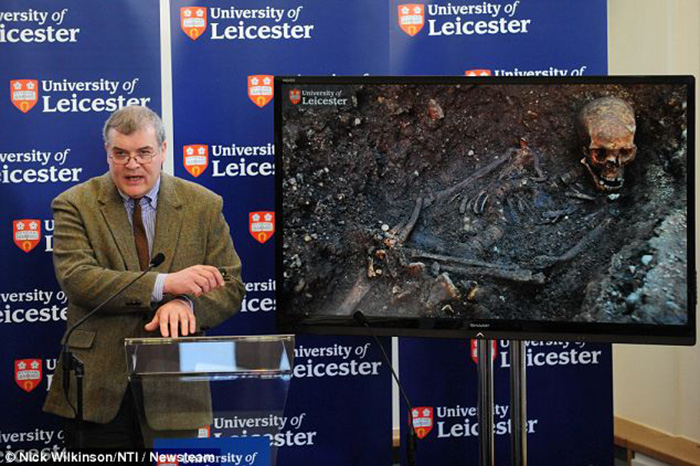
Time and science have laid bare the truth and now it should be spoken loud and clear.
It is not often you get to bury a king of England. The last time we did so was sixty two years ago. The next one will be in seven months’ time when the whole world’s eyes will be on Leicester cathedral. Then we will be burying, in befitting manner, a monarch who died 530 years ago – the only one with no known resting place; who was the last true English king; the last to lead his soldiers from the front and die as a consequence; the last of a 330-year dynasty and the last king of the Middle Ages. We speak, of course, of Richard III, Shakespeare’s ‘crookback Dick’.
More controversy has swirled around this king than perhaps any in our island’s long history. When he was originally buried by monks, they were so frightened and intimidated by the people who had killed him – and under such compulsion to get a move on – that they had no time even to find a coffin. Imagine that. A king of England who, earlier that day, had been their anointed sovereign dumped naked in an unmarked grave like so much flotsam. Minutes before, the badly hacked about, naked body had arrived on a donkey after a fifteen-mile journey from the battlefield of Bosworth and the populace had been invited to abuse it as it went by. One had even driven a dagger deep into an exposed buttock, striking the pelvic bone.
Richard died in 1485 in what we regard as the last of the many battles of the thirty-year dynastic struggle known to us as the Wars of the Roses. He was thirty-two years old. No monarch in all of English history has been so thoroughly traduced and demonised. What has led to this? We know he was utterly loyal to his brother Edward IV – a Yorkist – fighting his battles fearlessly and with great distinction. So trusted was he that at the age of nineteen he was asked to govern the turbulent north of England as a virtual Vice-Roy, which he did so successfully for the next eleven years that they came to love him and regard him as one of their own, hence York Minster’s own fierce battle to have him interred amidst its ancient cloisters.
That total trust of his brother, the king, even extended, when he was dying, to asking Richard to look after his two infant sons rather than their mother. The princes were housed in what was then a royal palace, the Tower of London, and it is their later disappearance which has landed Richard with the heinous charge, even for those brutal times, of murdering his own nephews, aged nine and twelve, in order to usurp their right to the throne. This has been the justification for the victor of Bosworth to set about vilifying Richard for posterity. But what are the facts?
Unfortunately for Richard’s detractors there is not one scrap of evidence to show that their deeply religious and loyal uncle killed them. Yes, he had the opportunity, but then so did several others. What if when Henry Tudor, after killing Richard, had arrived at the Tower to find the boys still alive? He would have been appalled. Rumour had it that they were dead and Henry would certainly have wished it so. Their continued existence would have posed a terrible threat to his rule, in fact it would have removed all legitimacy. May it not be that, when he made a show of looking for the bodies, he knew that they were not there but felt it necessary to make it look as if he believed they were by digging around? Murder, later of the princes, would have been his only option. Strange it was, if Richard was the killer, that Henry never did find the decomposed bodies. That would have damned Richard for all time and been perfect justification for Henry taking the throne. As it happened they were later discovered under a staircase, one of the first places to look, one would have thought. It would have suited Richard’s successor, Henry Tudor, very well on taking over to have found the decomposed bodies as it would have totally validated his killing of the king.
The fact of the matter is that Henry Tudor had a much stronger motive for disposing of the boys than their uncle. While they lived there was no way he could rightfully claim the kingship. His closeness in the line of succession was so remote it was almost laughable. One genealogist has placed him 16th in line.
Now comes the reason why Richard had no great reason to kill the boys. Rumour had widely circulated for years that they were illegitimate – that the king had married bigamously. Then, after he had died, the bishop of Bath and Wells came right out and, like another bishop would do, hundreds of years later, concerning the Duke of Windsor’s affair with Wallace Simpson, he blew the whistle and preached this openly in a sermon. The evidence was that strong for him to do so. The upshot was that Richard, as a consequence, was the rightful heir.
The entire nobility as well as the church rallied behind Richard. Apart from anything else they wanted no boy king. They had the good of the nation to think about. After thirty years of turbulent bloodletting they wanted a wise and proven administrator, a man of action to settle the affairs of state. England had been torn apart during those years and the aristocracy decimated. In one battle alone, Towton – fought during a blizzard – 28,000 men had been slain, the greatest number ever to fall on English soil. It represented 8% of the country’s population, as high a percentage in a single day as four years of World War l clocked up. No wonder there was enthusiasm for Richard. His coronation was the best attended in the whole of the Middle Ages.
The Tudors, after their victory at Bosworth, knew they had an uphill struggle to gain legitimacy in the face of Richard’s watertight claim to the 330-year Plantagenet line. History, as we know, gets largely written by the victors and finally, after a hundred years, the Tudors had the Bard, no less, to finish the job for them; and my, how he did it with his Richard III! ‘Crookback Dick’ became England’s true devil incarnate – and a twisted and deformed one at that; one even dogs barked at as he went by.
Unfortunately for the propagandists, after five hundred years, the wheel has come full circle and the truth is out. He was not a hunchback and he had no withered arm. He did have curvature of the spine (scoliosis), but people would have barely noticed the condition – just a slight stoop to one side. But what forensic science has also shown with this incredible find of the king under the car park is that Richard battled a painful infirmity just as heroically as he fought his brother opponents in battle. It is truly remarkable that he was able to function well under the weight of over sixty pounds of armour and wield a massive broadsword. His slight frame conformed more to that of a woman and his height was barely 5’5”. In today’s world, we would have nothing but praise for such magnificent stoicism. He would at all times have been in acute arthritic pain and, because of compressed lungs, only capable of short bursts of maximum energy before he became breathless.
When he finally succumbed in battle to his enemies, he did so in such a manner – and with so many witnesses – that even the great Tudor propaganda machine could not hide the truth of his incredible bravery. It was Victoria Cross stuff. He came within inches of killing Henry Tudor, having charged him from a thousand yards away, hacking his way to the pretender and cutting down his standard bearer, England’s leading jouster, a massive beast of a man. No English king in history ever led such a heroic charge – not even the magnificent Henry V or Richard the Lionheart – but even in this his detractors still had to have a dig, saying that it was really the mad frenzy of the defeated devil at work. But now time and science have laid bare the truth and it should be spoken loud and clear. Perhaps the Bard’s work should not be performed in future without a disclaimer along the lines of ‘Any resemblance to persons living or dead is purely co-incidental…’ Certainly we must rewrite our history books.
There is, however, one note of puzzlement to me in all this. In view of the massive interest both here and abroad, how is it that we have not, to my knowledge, heard a single word from any of the royals? Are they not in the slightest interested? He was, after all, one of their own and an anointed head of state. Is it their intention to boycott the internment? We must hope not. That would be an act of the crassest folly. A proper response would be for the present sovereign to pay her respects and acknowledge that a terrible wrong has been done to her ancestor. It would be a way of saying sorry on behalf of all of us.
A turbulent Islam
What is happening in Egypt and, indeed, through much of the Muslim world is sad beyond belief.
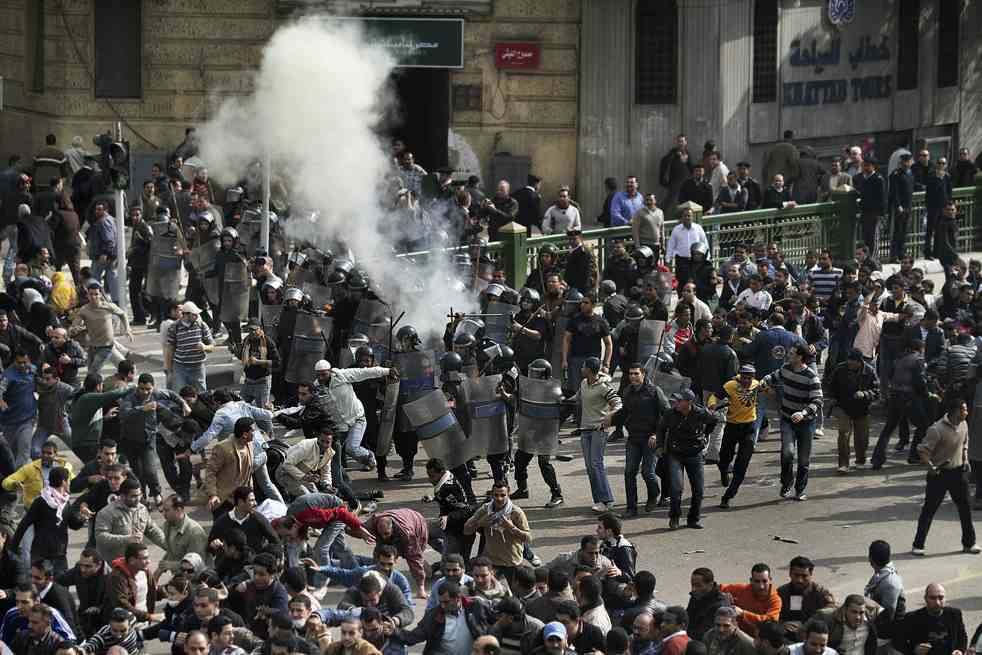
The cradle of civilisation is being reduced to barbarism with no end in sight for an equitable solution.
For two and a half years now we have seen the Syrian people tearing themselves apart. Before that it was Tunisia, then Libya, then Yemen, then Bahrain and now back again to Egypt. We even saw riots in normally peaceable Turkey. What is happening in these lands which once spawned one of the world’s most tolerant religions – lands which form Europe’s nearest abroad?
I believe it is all down to aspirations and two classes of people which live cheek by jowl with each other but yet have totally divergent views on how life should be lived. They have co-existed for many years now, but what is different today from what has gone before is the advent of the Internet, the mobile phone – which is able to tap into it – and the spread of literacy, which even the most authoritarian of regimes has proved unable to resist.
From the point of view of totalitarian regimes which find themselves unable to stop the free flow of information and the millions now able to liaise and call up street protests in an instant it is a total disaster – a truly toxic mix. It is what I call empowerment of the masses.
The two worlds of which I speak are the world of the cities and the largely unchanged world of the hinterland beyond. Across the broad expanses of the countryside – where the majority of the population still live – life goes on in much the same way as it has done for hundreds of years. Yet in the cities things are very different. The educated and young people are in revolt. Their outlook is not so very different from that of their fellow city dwellers just across the Mediterranean Sea. They want the same jobs, opportunities and freedoms as they see in the West.
In times past, their authoritarian rulers have been able to keep them ignorant of what is happening in the rest of the world, but thanks to people like Sir Tim Berners Lee, the inventor of the World Wide Web, those times are over. They are now fully aware of the venal corruption and murderous cruelty which holds them back and they are no longer prepared to put up with it. Good on them, I say.
Turkey is an interesting example to look at. Here is a not in-your-face Muslim state which has fully embraced development without compromising its Muslim faith. It has one of the highest GDP growth rates in the world.
But again the educated classes and young people were having none of it and they pulled him up sharp. This was the true reason for the recent riots.
We can take some credit for Turkey’s emergence as a secular state. It was our defeat of the old Ottoman Empire in World War One which ended the Caliphate and set Turkey on the path to modernity.
(On this note we can also take some pride too in the emergence of democracy throughout South America since it was our defeat of the Argentine military junta in the Falklands War which saw democracy restored there and umpteen other Latin American military dictatorships discredited and overthrown.)
But the great worry in Egypt and elsewhere in the troubled Muslim lands is that democracy is hijacked and used as a tool to impose Iranian-style rule by the Mullahs. At that point democracy ends.
It would be a bit like our Parliament having to seek the approval of the Arch Bishop of Canterbury before any act could pass into law.
That, effectively, is what you have got in Iran, and soon its Ayatollah hopes to have his finger on the trigger of a nuclear bomb. When the masses protested vote rigging during their 2009 election they were shot down like dogs for daring to question the Mullahs. People on the Iranian street do not like it and neither do those on the Arab street, whether it be in Cairo, Alexandria or any of the other large Egyptian cities.
The democratically elected Muslim Brotherhood – largely made up of the masses from the countryside – pressed its strict Islamic agenda too hard for the city dwellers. It did not understand that democracy only works by compromise. Morsi, the Brotherhood president, felt that it was enough that he had a democratic mandate. But urban Egypt wasn’t having it, particularly the women who saw their recent hard won liberties under threat again. The highly westernised army agreed with them.
Democracy is a fragile thing which took the West many decades to refine and make workable. It involves a great deal of give and take and a willingness to put up with the other side – in Egypt’s case the Muslim Brotherhood – but it has to learn not to push it luck too far with the opposition. Think how it sticks in the craw of right wingers in the West to put up with years of left wing policies and vice versa.
Complicating everything right now in the Muslim world is not just the stand-off between city dwellers and the countryside, but the schism between Shia and Sunni. It reminds me of the wars of religion between Catholics and Protestants, and in particular the Thirty Years War in the early 17th century which brutalised and lay waste so much of central Europe. We must hope and pray that Islam is not heading down that terrible rad.
For all its many fine qualities, Islam’s greatest failing, it seems to me, is its attitude to women. It is going to have to address that. But we must remember that it was not so very long ago that a husband in the West had the legal right to beat his wife and gain all her property on marriage. It ill behoves us to forget these things when we get on our high horse about what is happening in our neighbour’s world.
Meanwhile we must hope that things do not get out of hand in these two pivotal Arab states of Syria and Egypt so that the whole region goes up in smoke. Syria’s neighbour, Iraq is already teetering on the edge. Meantime the West must mount a monumental effort to relieve the suffering presently going on there.
Queen Elizabeth II must set the seal on this final verdict of history
The bones of King Richard III are now awaiting disposal. When permission was sought for the highly speculative dig to uncover them from the Leicester city car park – where they had lain undisturbed for 528 years – the Ministry of Justice gave the nod and indicated that, if authenticated, they should be reinterred in the city’s cathedral.
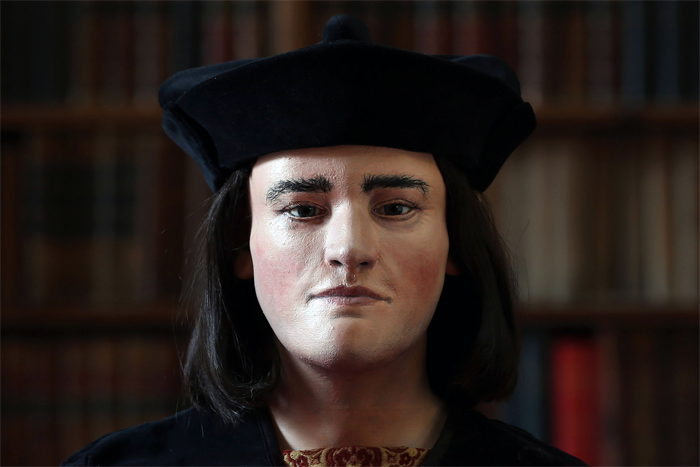
A reconstruction of King Richard III based on his skeletal remains.
First of all, I have to ask: who has rights over a monarch’s remains? I doubt very much if the Ministry of Justice, or indeed any of the secular authorities, have such rights. Were they to exist anywhere – excepting a ‘finders, keepers’ argument – I would have thought they rested with the monarch of the day, under perhaps advice from the ecclesiastical authorities. So, prime minister, please butt out!
Richard III, we now know, was a genuinely good king. Apart from being anointed, and therefore a totally bona fide one with a genuine claim to the throne – unlike his successor – he carried out a whole range of enlightened measures during his two short years as monarch. And forensic examination of the skeleton has told us a great deal – much of it extraordinary. He was neither a freak, as Shakespeare wrote, nor was he ugly (or ‘evil-looking’) as the Bard also insisted. He certainly died violently, but in view of his very slight – almost female-like – frame and physical disabilities, his final sortie into a melee of armoured knights to cut down his usurper rival would have won him a posthumous Victoria Cross in today’s world. So, a hero too!
Let us look at his personality and character – again, hugely disparaged by Shakespeare. Shrinks have examined his whole conduct throughout the thirty two year of his life and they paint a most sympathetic profile. They point to a sad and difficult childhood which, nevertheless, led to an empathetic man with loyal instincts who most certainly knew the difference between right and wrong – and who was extremely pious. Goodbye, we have to say, to the idea that such a man could have murdered his two young nephews, the ‘princes in the tower’.
Nowadays Richard’s disability – his scoliosis and sideways-bent spine – would have evoked great sympathy. Then, however, poor Richard would have been regarded as a pitiable object of scorn rejected by God. But his disability would only have been known to his family – and doubtless the aristocracy (people like to titter) – but not, I suspect, to the general public. Medieval attire of the time, with its raised and puffed-up shoulders, would easily have camouflaged the lower-than-other shoulder. The deeds attributed to this “accursed of God” Richard have him to be a schizophrenic psychopath, yet modern medics insist he was nothing of the sort. Clearly we are going to have to re-write our history books.
We may continue to enjoy Shakespeare’s play for its powerful drama but dismiss its history content. We should do exactly the same with Scotland’s much maligned king, Macbeth. But at least the Bard proved himself even-handed in rubbishing the kings of both kingdoms. (History, we have to acknowledge, was not Shakespeare’s forte.)
As for Richard’s treatment after his heroic death in action, on that occasion the victor, Henry Tudor, let himself down very badly. No chivalric generosity from him to his fallen foe brought down by treachery, but vilification and humiliation. When was ever a king of England stripped naked and slung over an ass for all to see on a fifteen-mile journey from the battlefield to the nearest town, in this case Leicester? Along the way, ignorant locals were encouraged to insult the former king and one went so far as to plunge his dagger so deep into the king’s buttock that it went right through and damaged the pelvis. And when was a king of England was dumped unceremoniously into a hastily dug hole without so much as a shroud to cover his nakedness, much less a coffin? I am sure that the friars who attended had never seen a burial quite like it in their friary – or anywhere else for that matter – and would have wished it otherwise. But they would have been scared stiff of the mailed ruffians who dumped the body on them and of showing the proper respect which was due. They obviously were told to get rid of it quickly and were not minded to disobey or show any form of reverence. Just a few whispered words of the sacraments would have been permitted. Only such a scenario could account for the utter disrespect of it all.
We have much to apologise for to that fallen monarch whose character we then went on to impugn for a full five hundred years with a litany of the most dreadful lies. But now we have a God-given opportunity to make amends, and the eyes of the world are on us.
The dig’s success has excited a worldwide level of interest, with some saying it is among the greatest archaeological finds in the last hundred years. No English king since Richard the Lionheart is better known abroad, and unlike the alleged wickedness of the third Richard, the first (Lionheart) really did do terrible things – like massacre hundreds of Muslim children. There’s an element of black comedy here: one is seen as a hero (he’s even got a statue outside Parliament) and the other as a villain. Yet the truth is that the Lionheart cared little for his English kingdom and preferring his French realm. He didn’t even speak English, and out of his eleven-year reign he spent only months in England. On the other hand, Plantagenet Richard was a first-class administrator who set to with gusto in making England a much more agreeable place for the common man to live.
It seems to me that our Queen is the one best placed to set the seal on this final verdict of history. She is, after all, his successor, and a devout Christian, like him. It will not do for a lesser royal than her to attend the re-interment. To do so would be to suggest that she does not accept the forensic and psychiatric evidence which has exonerated Richard. That would be ungracious, to say the least – even unwise. I feel she is duty-bound to close this final chapter with the dignity it deserves. 538 years is a long time for her ancestor to stand falsely accused.
When the murdered Tsar’s remains were found, the Russian state decided to do right by him by ceremoniously re-interring the bones in the St. Petersburg home of Russian Tsars and the then president, Boris Yeltsin, attended. England can do no less for the last of the Plantagenets, its longest reigning dynasty. This great saga of English kingship can only be brought to a fitting conclusion, in my view, by burial in Westminster Abbey – the most ancient and hallowed resting place of England’s kings and where most of Richard’s ancestors lie. A final, powerful argument for the Abbey is the fact that his beloved wife and Queen – Anne Neville – whose loss he is said to have caused him to cry at her funeral (strange behaviour for a psychopath!) is buried there.
Our Queen is said to have not much liked the Duchess of Windsor, and her mother positively loathed her. But neither denied her right to have her body brought back from exile and laid to rest beside that of her husband, the former Edward VIII. Richard has that right, too.
Finally, the Richard III Society are to be congratulated for their steadfastness over the generations in believing that England never had such a wicked king and that Richard was a good man with the right instincts. Most of all, the young woman who spearheaded the efforts to find Richard, Philippa Langley, is the true heroin of it all.
We have vilified a progressive and enlightened English king for long enough
I have been pondering the proper course that should be adopted should the ‘king under the car park’ (Richard III) be validated by DNA tests. Assuming that the tests are positive, which seems likely, the find is of great significance.
Richard is one of the few English kings known around the world thanks to the story told about him by the world’s greatest playwright. Shakespeare undoubtedly has earned his place as a playwright of genius, but the same cannot be said of his powers as an historian. When the facts are examined his depiction of Richard lll can be argued to be nothing less than a character assassination. In two short years as king Richard performed an astonishing array of good works, some of which, such as the Bail system and the standardisation of weights and measures remain with us today. We know also that he was extremely pious, and endowed many monasteries and colleges of learning as well as ending the practise of buying public office. For him, merit alone counted. None of Richard’s achievements are acknowledged by Shakespeare; instead we have the depiction of a murdering ogre of grotesque physical appearance.
Were Shakespeare to be right then Richard’s dethronement would have been fully justified, even perhaps by someone with as thin a claim to the throne as Henry Tudor, the victor of the battle of Bosworth. But was Shakespeare right? We know what the record says about Richard’s achievements. Soon we may know what forensics say about the bones. Was it a hunchback with a withered arm, as Shakespeare said? It is known that Richard, after a heroic dash to cut down Henry Tudor, was himself cut down after being surrounded and that the butchery that took place against his person was truly dreadful. He was even stripped naked – no way to treat a king – and slung over a horse before being paraded for all to see to the nearby city of Leicester. Interestingly, the body under the car park did die violently. There is an arrow in the back and the skull has been impacted twice with an axe or a sword. Further examination may reveal more injuries.
As fascinating as these battlefield injuries undoubtedly are, what will be the clincher will be the integrity or otherwise of the spine and arm. You see, Shakespeare was adamant that Richard was grossly deformed; a hunchback, no less with a withered arm. Early examination suggests no such thing – just a slight curvature of the spine (certainly not a hunchback) and a perfectly normal arm. We cannot know whether he was of evil look mien as again suggested by the Bard, but portraits of the time show a perfectly normal countenance. Laughably, our Will said that even dogs barked when they saw him.
The person chosen to provide DNA evidence is a man who lives in Canada. He is of Plantagenet ancestry – the bloodline of the 300-year-old dynasty of English kings of which Richard was the last. Always assuming that the tests prove positive, then Shakespeare will stand exposed as a liar. He told porkies also about Macbeth. Let us be kind – in view of his colossal eminence – and call him an arch propagandist for the Tudors. It was, after all, under their patronage that he wrote and they insisted on nothing good ever being said concerning Richard, except that he died bravely. And in that matter there were too many witnesses to pretend otherwise.
But the fact will remain that because of him we and the world for five hundred years have vilified a progressive and enlightened English king. It surely must be right to do our best to make recompense. Justice dictates that the remains be treated with the respect and receive full honours as an English monarch – the last as it happens of truly English stock and the last to die in battle. After Richard came monarchs from Wales, Scotland and Germany. He should be laid to rest where many of his ancestors lie, in Westminster Abbey. This particular monarch’s end marks not only the end of the dynastic, thirty years bloodbath of the Wars of the Roses, but even more significantly the end of the Middle Ages and the start of modern times. So for all these reasons and many more Richard was an important king.
In ordinary circumstances fallen warriors of distinction were buried in the cathedral nearest the scene of battle, in this case Leicester. Then my thoughts turned to York – the Minster there – where his most devoted followers were located. He was a prince of the House of York and its famous white rose he many times carried into battle fearlessly against the red rose of Lancaster. Finally I plumbed for Westminster. Why? Because these are not ordinary circumstances. We have a major player in the great saga of English kingship and one, who I am convinced, has been grievously wronged. His interment, with due ceremony, in the home of English kings where he was crowned would be a way of saying sorry. It should be attended by the present monarch. It cannot make up for the generations who have lived and died believing Richard to be England’s most villainous king, but it would, at a stroke, set the record straight and be the right thing to do. Incidentally, I would hazard a guess that just about all the world’s media would be there to record the event. Westminster Abbey would be more on the tourist trail than ever. Most of all we would be able to take quiet satisfaction from the knowledge that after half a millennium truth has finally triumphed.
Where does the blame lie for WWI?
No one doubts that the war against the Nazis was a necessary war – the closest thing there has ever been to a just war – but argument still rages as to responsibility for World War One.
Our prime minister wishes that all state school children should not be allowed to forget that 100-year-old conflict which took nearly a million of our brightest and best and scarred the psyche of the generations which followed, including our own. He wishes all of them to visit the battlefields of Flanders and is putting up £50 million to commemorate the tragedy.
Was this a war that could have been avoided – at least by us? In my view absolutely not.
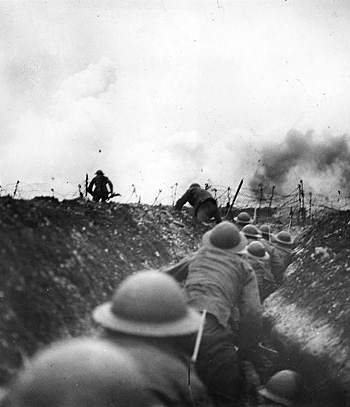 It all began with an assassination in distant Sarajevo, the Bosnian capital besieged in the recent Balkan wars. That pistol shot triggered a chain of events very like a line of dominoes, the first of which that assassination had pushed over. Each domino represented a Treaty which bound this country to that. All Europe was locked into a web of alliances of immense complexity. It was quite unlike the simple NATO v Warsaw Pact confrontation of the Cold War.
We alone of the great European powers had wriggle room enough not to get involved. Our sole commitment was to tiny Belgium which we had been instrumental in setting up a hundred years before, after the defeat of Napoleon. So why did we do it? Why did we risk not only our own defeat but the survival of our worldwide empire? The answer lies, I believe, in the threat which we believed militaristic Prussia posed to the entire world order. Prussian-led Germany was not like any ordinary state. Its closest historical parallel was to be found in ancient Sparta. The whole state revolved around the military.
Statehood had come late to Germany and it was militant Prussia which led the drive for unification of the patchwork of German principalities. Once this had been achieved it launched itself on tiny Denmark, then Austria and finally on France on which it inflicted a crushing defeat in the Franco Prussian war of 1870. Strange as it might now seem, Prussia’s greatest friend and ally had been Britain. She had stood with us on the field of Waterloo and had never stopped admiring us. Then she set about copying our industrial success and this she achieved brilliantly. So now you had a militarily powerful Germany allied to a mighty industrial machine and the largest, by far population and land mass in non Russian Europe. ‘Time for an empire’, thought the Germans. Trouble was that because of the lateness of Germany’s arrival on the international scene and despite her now great power status, she had missed the bus; the world had been carved up between all the other European states. Even tiny Belgium had a great empire in Africa. Germany was left with the scraps.
Huge resentment festered in the German body politic. Their deserved place in the sun had been denied them. But the Prussian military were more upbeat. If the world could not become their oyster then Europe certainly could. They reckoned that if they struck hard and early they could deliver a knock out blow. So Germany would have its empire, after all: the whole of continental Europe. France, Germany’s arch enemy, would certainly have gone down to defeat without us. Russia did. And what would Europe have looked like under a Kaiser jackboot?… an army barracks with occupying Teutons from the Atlantic to the Urals. Next in line would have been Britain and its empire.
Apart from an obsession with all things military, what other aspects of a German-dominated world should we have had to worry about? In a far off corner of Africa – a part which none of the other colonising powers were interested in (Namibia) – they were already practising genocide against the gentle, hapless Herero people. It was a grim precursor of what was to come 21 years later against European Jews. Interestingly, the German governor of the colony responsible for the genocide was none other than the father of Hermann Göring, Hitler’s No.2, and founder of the Luftwaffe and dreaded Gestapo.
So while argument continues to rage as to who was responsible for the Great War, I personally have no doubt that it must be laid squarely at the door of militaristic Prussian-led Germany. It was gagging for a fight. None of the participants had any idea of the horrors which the first war of science was about to unleash. They all marched off with gay abandon and trumpets blaring into a maelstrom of bullets, machine guns, barbed wire, poison gas, incredibly big gunned artillery, tanks and strafing aircraft. And they dug a line of trenches 600 miles long from the English Channel to the Swiss border and hunkered down for four terrible years amidst the vermin, lice, lashing rain, mud and freezing ice. Time after time they were ordered out of those trenches into a withering fire that killed them on an industrial scale.
No one knew what they were letting themselves in for, least of all the supremely confident Brits. Their attitude could be summed up by their recently dead Queen Victoria who when questioned about the possibility of defeat by the South African Boers, replied “It does not exist”. We thought we would be in Berlin by Christmas, four months away. It took four years. Germany’s second attempt at European conquest, 21 years later, was because Hitler managed to convince it that they had not been soundly beaten, first time round, which in fact they had. A more fanatic, ideologically driven effort backed by even better weaponry, he considered, would change the verdict of WWI. He was almost right. So toxic and malign was the very idea of Prussia considered to be by the victorious Allies after WWII that, at the stroke of a pen they abolished it – the only state ever to be so dealt with.
Richard deserves justice
We are going to have to decide what to do with the remains of Richard III, should they prove genuine as seems likely. Richard was the last truly English king and the skeletal injuries confirm what even the Tudors could not deny: that he died bravely in battle – the last English king to do so.
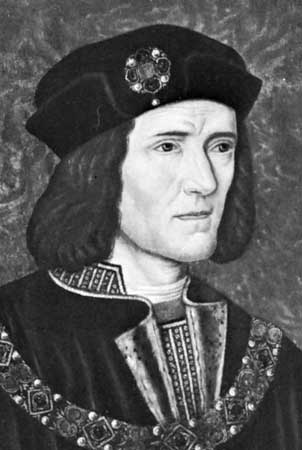
SOURCE: Encyclopædia Britannica
As the Battle of Bosworth neared its conclusion, with Richard having been betrayed by his leading commander switching sides with his large force, he was now outnumbered. Yet having caught a glimpse of Henry in the distance, he decided on an all or nothing dash to cut him down. Henry was surrounded by his supporters and his chief body guard was a huge man – England’s leading jouster – but Richard, like the Furies, crashed through enemy ranks and unhorsed him. He then cut down Henry’s standard-bearer to bring himself within a sword’s length of Henry, before he himself was cut down. We see the grievous injuries on the skeleton: an arrow in the back and his skull cleft through. The autopsy may reveal more.
Now, I am no apologist for Richard. He may well have murdered his nephews in the tower, but then so equally could others – including the victor of Bosworth whose claim to the throne was extremely weak. Richard’s claim was not, however. He was the last in a 300-year line of Plantagenets. In ordinary circumstances the princes had prior claim over Richard, being sons of the late king. But these were not ordinary circumstances.
The evidence is strong that Richard’s brother, the late king, had made a bigamist marriage. In high circles this was talked about, though never, of course, in the king’s presence. Then the Bishop of Bath & Wells waded in after he had died with an open address, making it public knowledge. The two princes were declared bastards and not entitled to succeed. Parliament and the nobility concurred and Richard was duly crowned. So Richard had no need to kill the princes, his nephews; merely to keep them locked up and out of harm’s way. But potentially they were a rallying point that disaffected opponents of Richard might seek to use.
It is entirely possible that Richard’s dilemma was solved behind his back, unilaterally, by close supporters in the same way that Henry II’s was solved when knights dashed off to Canterbury Cathedral to make an end of Thomas Beckett who had become a thorn in Henry’s side. It is acknowledged that Richard took his catholic faith extremely seriously, and it takes some believing that he would kill the children of the brother he loved so dearly and served so faithfully.
So what about the things Shakespeare had to say about Richard? Well, Shakespeare was a very poor historian. His depiction of Macbeth is very wide of the mark. We Scots have a very good opinion of him, and we should know; he was one of the very few medieval monarchs secure enough in his people’s affections to be able to absent himself for a year on pilgrimage. He had no worries about plotters conniving behind his back. What’s more, he kept his throne for 17 years.
The Tudors knew that they were not legitimate claimants and spent their time trying to boost their credentials in any way they could, discrediting Richard in the process. Possible claimants, however remote, were ruthlessly – some say paranoiacally – murdered.
When Shakespeare came along they had found themselves the world’s greatest propagandist. He truly was manner from heaven. His depiction of Richard is so grotesque that even if his usurper had little right to the throne, history would have endorsed his takeover. In Richard was made manifest the devil himself, Shakespeare implies. He had to be got rid of.
But what does the record show? No foreign ambassador ever reported back home of a hunchback sitting on the English throne with an evil countenance and a withered arm – the same arm that served Richard so well in battle. In fact, they all spoke well of him with some saying he was of fair countenance. Richard, by 30, had had an exemplary career, being utterly loyal to his brother and fighting his battles with great valour. On his estates in the north of England people actually loved him.
In two short years as king he proved himself progressive and an able administrator. To him we owe the Bail system, which continues to this day both here and around the world; the standardisation of weights and measures – an immensely complicated project; the banning of rich people buying public office (in Richard’s world, merit alone counted); the common man being able to understand what was going on in court (he banned Norman French and elevated, after 300 years, our own wonderful language to be supreme in the land). And he was extremely pious, endowing many colleges and monasteries. None of this adds up to a monster. Would that our present Prime Minister had done as much in his two years.
Cruel things were done in the Wars of the Roses (it was a cruel age) and Richard was no crueller than his peers. Even if he was responsible for his nephews’ deaths – and remember, that is a very big if – what about another Richard, the much revered Lionheart, England’s only king with a statue outside Parliament? He killed not two, but perhaps thousands of Muslim children. His legacy is so toxic that even today mothers quieten their small children by whispering to them ‘hush, hush, King Richard is coming’.
‘Crookback Dick’, I pray, will soon get justice. He was a brave, enlightened and legitimate king. The Queen should recognise that and do penance for us all. And congratulations I hope are in order for that dogged society The Friends of Richard III who have sought justice for their hero for so long. I hope your time has come.
So let’s give Richard his due after 527 years of lies and calumnies. Truth matters, and if the big furore of the ‘king under the car park’ making headlines around the world serves no other purpose but to set the record straight then it will have been a worthwhile exercise. The tyrant Tsar, Nicholas II, who did no good and was murdered by the Communists and whose bones were found 20 years, ago was given a decent burial. We can do no less. The Queen should go to Leicester Cathedral – the likely burial place – to pay proper respects to a much maligned ancestor.
At last we have recognised our brave bomber boys
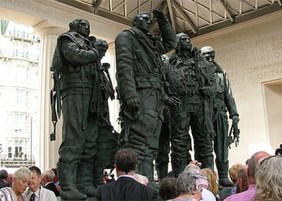 I am delighted that after 67 years the nation has finally honoured the brave young men of Bomber Command who did their country’s bidding and died in such horrific numbers in the blackness of the night over occupied Europe. My own mother was made a widow in that campaign of hitting back at the enemy.
What must be remembered is that, after the evacuation at Dunkirk, we faced years of being marooned on our island with no way of being able to engage the enemy on the mainland of Europe while we rebuilt our army and readied ourselves to assault Hitler’s formidable Atlantic Wall.
What were we to do in this time? Allow Hitler to consolidate his hold over all the captured nations or disrupt it as best we could?
He had showed no qualms about using that new form of warfare – aerial warfare – to bomb our cities, and the jury was still out at that time as to whether it was possible to win a war entirely from the air. So it was not, in my view, immoral to send out our air fleets to see if this surgical solution was indeed possible. If we had won the war from the air, we certainly would have saved many of our soldiers’ lives from a bloody land campaign.
Although events later revealed that, until the arrival of the atomic bomb, you could not win a war without boots on the ground, the bombing campaign brought massive disruption to the German war machine; over a million men were tied down on home defense who would otherwise have been deployed on the Eastern Front and huge quantities of ordnance were similarly kept at home which also would have gone east. Indeed, 70% of their fighters alone had to stay to engage our bombers. It made the difference between Russia staying in the war or losing it, which it very nearly did anyway.
It can be convincingly argued, therefore, that the air campaign indirectly won the war by preventing the full might of Germany ever reaching Russia.
As well as having only 30% of its fighter force to engage the Russians, it had 50,000 fewer artillery pieces and much else besides. And then there was that massive morale booster: a symphony in the night skies played out over occupied Europe. In the eyes of its downtrodden peoples it beat anything Beethoven ever wrote; it was the sound of our bombers droning their way to the oppressor’s heartland. It was the one thing that gave them hope. It reminded them that a free people on the Atlantic seaboard of their continent remained unbowed and would one day bring them deliverance.
So when the establishment turned its shameless back on those brave young men (average age of 22) who were carrying out their orders so selflessly and stood a one in two chance of dying, it did a terrible thing.
The otherwise great Churchill must take a considerable share of the blame. In his speech after victory, when he lavished praise on every branch of the Armed Forces, he pointedly made no mention of those 55,000 dead bomber boys.
Now, at last, thanks to the pops stars Jim Dooley and Robin Gibb – bless them – the people, with their humble subscriptions, have had their say. The Ministry of Defence would not contribute a penny, nor has it to this day issued a campaign medal to this arm of the services who took by far, proportionately, the highest number of fatalities. Shameless, in fact, does not even begin to describe how they have behaved.
What, I have to ask myself, is the matter with our ministry? It refused also, through all those same years, to issue a medal to those heroes of the Arctic convoys who made what Churchill described as “the worst journey in the world” – worse even than that terrrible slog through the jungles of Burma to retake that country from the Japanese.
Our Ministry of Defence does not deserve such fighting men. Though it is penny pinching in looking after our boys – not even giving their families decent housing, and sending them into battle ill-equipped – it even argues the toss over piddlingly inexpensive medals.
And it can’t even get its procurement policies right, recently ratchetting up a black hole of debt that was almost as great as the annual defence budget.
The Ministry of Defence should be disbanded and started again with the top 10% of its echelon lopped off and not allowed to re-apply for their jobs.

A Marshall Plan for PIGS
I recently watched a BBC interview with Angela Merkel, the German Chancellor – a very rare event since she has only once before given an interview to the foreign media.
 The interview represented a considerable feather in the cap of the BBC, further confirming its status as the world’s premier broadcaster.
The interviewer, Newsnight’s Gavin Esler, wanted to get inside the head of the person who will largely determine the future of the eurozone and, to some degree, the rest of the world.
The visual aspect of TV makes it very difficult for an interviewee to ‘fake it’; to pass himself off as someone else. His body language and emotions are often plain to see; and when his face occupies most of a 42″ screen in your living room, you feel you can almost look into his soul. TV greatly assists in our quest to sort out the wheat from the chav.
Merkel came over as a pleasant, but no-nonsense, woman – interested more in getting the job done than in sound bites. Astute as she was with thoughtful responses, she seemed genuine.
And there was more than a little guile there too (but you don’t get to lead the most powerful economy in Europe without a level of that).
It was not difficult to understand why she had taken a shine to our own prime minister – the polished, well-mannered product of England’s leading public school. She may even have fancied the younger man a little, or perhaps felt a tad motherly, seeing him as the archetypal English gentleman as opposed to the coarse, bling-loving French president who wants to smother her at every opportunity with Gallic kisses. The contrast is stark.
Cameron is a most courtly emissary from a fellow Teutonic power which, from early childhood, she had come to respect. Yet despite its bombing of large areas of her beloved homeland almost back to the Stone Age only a generation or two before, it is apparent that – in economic terms at least – Merkel regards Britain as a natural ally and one she is most unwilling either to offend or marginalise.
The BBC was right in picking Gavin Esler as the interviewer, since Paxo might have been too adversarial by adopting his characteristic ‘master inquisitor’ approach.
But what I really gleaned from the interview is an appreciation of the lengths to which Germany will go to save the single currency.
Up to now, Angela Merkel has, understandably, played hardball. The German taxpayer is not going to throw his money at profligate nations which show an unsatisfactory willingness to change their ways.
The Germans want a new economic order in Europe so that nations act responsibly in the future; and to this end they want robust systems in place in the form of a fiscal union.
Germany is not interested in imposing a German jackboot, but wants the whole exercise to be seen as a pan-European affair – even though a fiscal union would result in all 17 eurozone nations’ budgets being overseen by EU officials: a fact masked by a Byzantium-level of cunningness or ingenuity (call it what you will).
I came away from that interview convinced that the German political elite do not want a single member – not even Greece – to drop out of the eurozone. And when push comes to shove, they will do everything in their power to see that this does not happen. They see the loss of a single country as the trigger that will begin the unravelling of the entire single currency and, more than that, of the whole ‘European Project’ to which it is so utterly and irredeemably committed.
So now, it would seem, it is down to the individual eurozone member states to do what is necessary. Only time will tell whether the eurozone’s peripheral countries’ impoverished citizens will – or even can – stay the course.
Pain levels in Greece – and now, more alarmingly, Spain – are at breaking point. A pistol shot to the head outside the Greek Parliament of a 77-year-old retired pharmacist has a terrible resonance with that pistol shot long ago at Sarajevo which set in motion the chain of events which led to the First World War.
Germany has to understand that PIGS’ (Portugal, Italy, Greece and Spain) citizens can take little more pain. While it was necessary to start the austerity drive and change PIGS’ spending habits, it is clear that austerity alone is fast becoming counter-productive.
If Germany wishes them to hold on, she must give them hope – and this can only mean a plan not just for cuts, but for growth. She must put together and spearhead a new Marshall Plan of aid – such as saved Europe in the aftermath of the Second World War.
Germany does not wish to be cast as the villain all over again; the one who did wrong by Europe for a third time, only now by economic, rather than military, might.
Now that we have all come to understand that we must stop living beyond our means, and that the social model we have developed is unsustainable, we are in a position to go forward.
Only by means of growth and a smaller state sector have we a chance of paying down our debt.
Fearful and envious as we may be of the developing countries – and that includes the oil producers – they are as one in wanting us to succeed; for if we go down the pan, we are as likely as not to drag them down with us – and they know this.
They might even feel that it is in their interest to involve themselves in such a rescue plan. But they will not do so if they see north Europe, and in particular the Germans, sitting on a pot of gold but refusing to use it to kick start their own salvation.
God, as they say, helps those who help themselves.

Why are the Argentines so obsessed?
This was a dismal week thirty years ago.
A very nasty military junta, which had already killed over 20,000 of its own people – many thrown out of helicopters over the open ocean – had seized a far away British territory and made it its own. We were in shock.
And so the Falkland Islands burst upon the world scene and became a cause celebre – at least for the British nation.
Of all the many campaigns our assertive little country has ever fought, this had to be the bravest of them all… some said almost suicidally so; certainly foolhardy in the extreme, said others.
Our connections with the south polar regions have always been very great. Cook sailed into them in his search for the great ‘southern continent’ before he became almost ice locked and was forced to turn tail. The intrepid Ernest Shackleton almost made it to the pole and our very own Plymouth hero Captain Scott was mourned again this very week on the 100th anniversary of his poignant and tragic death.
It has always been a very great puzzle to me as to why Argentina obsesses, as it does, about the Falkland Islands and why it believes it has a better legal claim to them than we do.
It was, after all, the English navigator John Davis who first discovered them in 1592. And the British first established a permanent settlement as long ago as 1765 – over seventy years before Argentina came into existence.
In today’s world, the United Nations makes the wishes of the inhabitants of a disputed territory the deciding factor. Does anybody doubt for a second what those wishes would be?
Iceland is not a great deal more distant from Britain than are the Falklands from Argentina. What would the world say were we to state that Iceland should rightfully belong to us?
And what about the Channel Islands, only 10 miles from France and 90 miles from us? I don’t hear the French playing up about them.
My thoughts on the Falklands are simple: history is on our side, as well as that little matter of possession being nine-tenths of the law. What’s more, we’ve paid in blood to overturn Argentine aggression.
They stay ours until the inhabitants decide otherwise.
While blood can never be redeemed, expenses can; and to secure them against future aggression, they have been huge. So get up that oil and quickly!
Our balance of payments deficit can be mightily relieved by a bonanza hugely greater than the north sea.
Should Argentina be so foolish as to try to intimidate the oil companies already operating there then the British Government should state unequivocally to underwrite any risks that such silly threats are thought to pose to those operations.
Long ago – thirty years in fact – I made an attempt to summarise that heroic conflict in verse. This might seem a good moment to share the thoughts I had at that time with my readers.
The last of the colonial wars
Was strangely in a noble cause:
A far off people, few but strong,
Knew in their hearts where they belonged;
Their island home to most unknown
Would tug at Albion like a bone:
Assaulted for its wind-lashed bogs,
Its distant owners viewed as dogs;
Sad days for Argentina, these:
How could its despots seek to please
A tortured land in Fascist claws?
But rouse them in a long-lost cause,
The British state seemed not to care:
Its woes so great its chest would bare;
Now was the time to strike and win,
And quell its people’s clamorous din!
The world awoke that April day
To find that Spain’s child now held sway;
A stunned and humbled Britain gasped:
Depression reigned but would not last;
A steely thought ran through the land
That such an outrage must not stand;
The empire’s day it knew was done,
But never did its soldiers run;
The islanders sought firm redress;
Their injured pleas brought dire distress:
They were not Latin folk in chains,
But free-born Brits they stoutly claimed;
At any other time but this,
The men in London would resist
A rescue from across the world;
But now was firm defiance hurled:
A Boudicca was come to power,
Though some around would only cower;
At lightning speed her ships set forth,
To 50 South from 50 North;
Long years of cringing fell away
As Britons cheered them on their way;
Then silence fell as weeks progressed,
With fearful thoughts and risks assessed;
Its one-time child, the USA,
Could only look on in dismay:
A war between its two allies
Could rupture one of these two ties;
How hard she tried to arbitrate,
Then left the despots to their fate;
For Latin pride stood in the way
And now was come the time to pay!
Ships at length reached southern waters:
Skull and Crossbones meant no quarter;
The pride of Argentina’s fleet
Went plunging to the icy deep;
Now did the blood begin to flow
As combat raged with woe on woe;
For freedom comes at heavy price:
The toll is death when fools play dice;
Malvinas?… now read Falkland Isles:
The settlers there could once more smile;
In Latin parts more despots fell:
Their foul regimes consigned to hell.

Degrade the Taliban to the max
More tears for our brave boys in Afghanistan last week. The sorrow was exacerbated by the knowledge that the ‘soft underbelly’ problem in armoured vehicles was identified more than four years ago and remains unfixed. We fought World War One in that time span.
Had our boys been in an American vehicle, there is every likelihood they would be alive today.
On a cost-benefit basis, both Afghanistan and Iraq have been a disaster. The Romans were more savvy when they built Hadrian’s Wall. They could have crushed the Scots had they wished. But what did Scotland have to offer them? A miserable climate – especially for an Italian – a constantly restive and warlike people (just like some others on the north bank of the Rhine – the Germans) and next to no natural resources.
As a pragmatic people they decided to leave them both to stew. So both missed out on a whole range of benefits which a more advanced civilisation had to offer. The whole of this can be said to apply to Afghanistan today.
Much of America’s financial woes can be traced back to the horrendous cost of the Vietnam war. After all, it was then that it was forced off the Gold Standard. Does anybody doubt that if the untold billions spent on the Iraq and Afghan wars had been sitting in the US treasury today that things would be looking very different? Yet exactly the same could be said about us.
Wars are expensive. From a position of incredible wealth as a country, it took just two of them to ruin us and rob us of our leading position in the world by 1945.
Afghanistan was always said to be the ‘graveyard of empires’, and no one knew this better than we did. We launched no fewer than three ill-fated forays into that country in the days of the Raj. In one of them, an entire column of 16,000 perished in the snows of the Hindu Kush on the retreat back from Kabul to the Indian frontier.
Prime Minister David Cameron would spend a long time reading out their names in the Commons. So, more than anyone else, we should have known better.
Of course it was right to go into that country to flush out Al Qaeda and punish the Taliban for harbouring them, but having done so we should have got out and stayed out. We, in our heyday, were never defeated in the field by the Afghans any more than NATO has been, or, for that matter, the Russians.
But the Afghans do not heed good advice to mend their medieval ways (especially when that advice comes from foreigners) so they must be left to marinate. Just be thankful that you are not a woman in that benighted country.
It is unlikely that if the Taliban return to power after NATO’s exit – which is probable – they will ever again allow Al Qaeda to set up training camps. They are canny enough not to go down that road a second time, helped by Bin Laden’s death. While he was their guest, there was never a snowball’s chance that they would have handed him over, even when we threatened to invade. Muslim law on hospitality absolutely forbade that.
It is always important to have an exit strategy. But it is equally important to keep the date of exit to yourself. Had we held to our original statements that ‘we are here until the job is done’ – even if you had a date in mind – then there is every likelihood that the same weariness which brought the IRA to the negotiating table would have done so in the case of the Taliban.
Why hold on, they would have said to themselves, and stay a fugitive forever and as likely not die in the struggle? Let’s do a deal.
The Afghans have always been known as the world’s greatest wheeler-dealers. Now they are going around saying ‘the West have the watches, but we have the time’. So now that we have revealed our hand, we must make every effort to equip and train the home-grown Afghan forces to look after themselves when we are gone.
Who knows, they might even pull it off, despite everything. And our boys, in the interim, must degrade the Taliban to the maximum extent possible. A weakened force might just be more amenable to a greatly strengthened home army. But the deeply corrupt Afghan government will make this an uphill struggle. We can only hope our fears are misplaced.
The Battle of Britain spelt Hitler’s demise
We have just concluded the 70th anniversary of the Battle of Britain. Today we enter its 71st. I believe that of all the titanic battles of WWII, this was the one which determined its outcome. Though tiny in terms of the numbers of combatants involved, it was massive in high-tech: it did not get more massive in this regard for those times. Brilliant machines and brilliant fliers – on both sides – and a ground-breaking British structure of command and control. Without this system, which was put in place during the year which the much-maligned Chamberlain gained us after the Munich Pact, we would have lost the battle.
Churchill said that upon its outcome depended the survival of Christian civilisation and, indeed, the whole world. Lose it and we would all descend into “a new dark age made more sinister and protracted by the lights of perverted science”. He was surely right.
After the fall of France, Hitler sought peace with Britain. The war which his invasion of Poland had precipitated had been the one gamble which misfired. All the others – the reoccupation of the Rhineland, the Anschluss (union) with Austria, and the annexation of Czechoslovakia – had all succeeded, bloodlessly. He did not realise we had, at last, rumbled him and hereon would fight him. Hitler entertained the fanciful notion that Britain, a fellow Teutonic power he greatly admired, would join his crusade against Bolshevik Russia.
His plan to invade us was born of the lover’s pangs of anger and frustration: unrequited love, they call it. Some in the Royal Navy have said that even if we’d lost the Battle of Britain they could still have sunk Hitler’s landing barges.
But we saw time and again as the war progressed how vulnerable surface ships were to air attack. After all, we crippled the Italian fleet at Taranto as did the Japanese the American at Pearl Harbour.
Interestingly, the Japanese commander said that they would never have thought of it but for what we did at Taranto. Then there was the loss of the Repulse and the Prince of Wales off Malaysia and the Bismarck in the Atlantic.
Tirpitz also succumbed to aerial assault. No one doubts that had the Wehrmacht been able to make a landing in force it would have been game over for Britain.
After the debacle at Dunkirk, three months earlier, the BEF (British Expeditionary Force) survivors were without vehicles, heavy ordnance, and even the majority of their small arms. Britain would have been forced to give in to its own powerful ‘peace party’. What then would have been the result of Britain’s withdrawal from the war? A free run for the Nazi juggernaut. Hitler would have been able to hurl his entire armed might against Soviet Russia. The many divisions locked up facing a still belligerent Britain would have been released to powerfully augment that effort in the east.
As it was he came within a whisker of success. Death would have then been guaranteed to Stalin’s regime. Master, then, of the entire Eurasian landmass, Hitler’s dream of world conquest would have been complete. Only success in the race to develop the atomic bomb could have reversed that verdict. But the US Manhattan Project would have been impossible without the help of British scientists who were well ahead of their US counterparts in their understanding of the physics involved.
These are the reasons which cause me to believe that the battle which kept Britain in the war was the one which spelt Hitler’s ultimate defeat. On the 50th Anniversary, I wrote a poem to commemorate that extraordinary feat of arms and I am greatly honoured that it has found a home in the Battle of Britain museum. I hope the reader feels that I have done justice to those wonderful, boyish heroes of “our finest hour”.
SALUTE TO THE FEW
You were young and you were brave:
You a nation had to save;
Scrambled from your aerodrome,
Test those skills so freshly honed;
Whirling in your fighter high,
Fought your duels across the sky;
Like the famous knights of old,
You were fearless, keen and bold;
Never did a fate so grim
Threaten all with mortal sin;
Never did so very few
Save so great a multitude;
Spurn a deal that would have saved
All that men of empire made.
Chose the path of blood and debt;
Know that honour’s fully met;
Far beyond your nation’s shores,
All humanity took pause:
For it knew that you alone
Could for misspent time atone;
Be the first to best the Hun:
Yours a famous victory won;
Boyish banter in the sky,
Where you were so soon to die;
Almost out of school you came,
There to die in battle’s flame;
Fire and smoke and cannon’s roar,
Trapped within your cockpit door:
Feel the searing heat around;
See the fast approaching ground:
Time to dwell but fleetingly
On that love on mother’s knee.
Bought you time that others might
Join you in that fateful fight;
Lift the terror, set men free:
Save them from base tyranny!

 The Last Foundling