Category Archives: politics
Iran, the Straits, and the Looming Crisis for the West
A truly alarming situation is developing for the G20 advanced economies. If not handled deftly, its outcome threatens more disastrous consequences for those economies than the events following the oil crisis of the early 1970s. One of the world’s four choke points carrying 20% of its oil and gas has been shut down, and another could easily follow. Nothing like this has ever happened before.
If the religious fanatics of Iran ask their Houthi proxies in Yemen to up the tempo of their strikes in the approaches to the Suez Canal, Europe will shut down. Reserves will be exhausted in a matter of weeks — days in some cases like ours.
How, you might ask, do the mad mullahs have the power to achieve this? The Houthi insurgents of Yemen look to them for their supply of weapons, and both share a visceral hatred of Israel. Altogether, it would represent a doomsday scenario for the embattled democracies.
In such a situation, the gloves would have to come off. Any pretence at playing Mr Nice Guy would end, and the democracies, east as well as west, would feel obliged to offer their military assets to re-open these choke points to save their economies from collapse. It might well be that military occupations of the zones for a period of time would be judged necessary.
It might also be decided for future stability that if boots have to be put on the ground, the opportunity should be seized to rid the world once and for all of the theocratic regime that has brought such murder and disruption to the world. Certainly, the toppling of the regime would be welcomed by a very large majority of the population, its entire sisterhood for a start. As a result, regime change would be unlikely to be a protracted affair.
Sadly, and depressingly for future generations, recent events in Iran have demonstrated that street uprisings can no longer bring down a tyranny if that tyranny is ruthless enough to murder enough people. And that is what the ‘Holy Men’ of Iran were prepared to do — tens of thousands in this case. Only if the men with guns turn against the mullahs can change occur internally. For the moment, the promptly and well-paid 125,000 men of the Revolutionary Guard are, and are prepared to remain, loyal to their master’s dirty work.
As in Afghanistan, and sadly throughout the Muslim world, a high proportion of men quite like their faith’s legitimising male power over women. This explains why the Iranian authorities are able to mount counter-demonstrations. Look for the women among the demonstrators, and you’ll be pushed to find them. But before we get on our high horse, we should remember that our own societies were highly patriarchal only a few generations ago, though this was not mandated by scripture as it is in Islam.
With the USA and Israeli air and naval assault on Iran to neutralise its nuclear and rocketry ambitions, the aims have widened to regime change. But history has taught us that no amount of damage from the air, short of nuclear strikes, can achieve that end. Iranian cities bear no resemblance to those of Hitler’s or our own, come to that. But even so, neither of us considered surrender.
It is a great deal easier to get into things than to get out. If boots on the ground are forced on the West to secure free passage through the straits, then to quote Macbeth, ‘If it were done when ’tis done, then ’twere well it were done quickly.’ And in this case, with such majority hatred of the clerical killers of their sons and daughters, I believe it would be quick. Iranians are a clever and gifted people. There is no reason to believe that if the ghastly, evil regime that has held them in thrall for almost half a century is cast into the dustbin of history, they will not be capable of becoming a normal country and ruling themselves competently. Their civilisation, after all, was once a beacon to the world, tolerant and much admired by Alexander the Great.
The loss of the West’s confidence began with Vietnam. It continued through the fiascos of Afghanistan, Iraq, Libya and Syria. In earlier times there had been triumphs such as the Berlin Airlift, the forming of NATO, the Cuban missile crisis, and the landing on the moon. Going into countries with all guns blazing proved to be the easy bit, but putting together an exit strategy proved altogether harder. Part of the problem was a lack of understanding of the complexities of the regions they were operating in. The Middle East and Muslim world, with its Shia-Sunni divide, was made even more complex by the colonial powers’ ill-thought-out settlement of frontiers following the destruction of the Ottoman Empire. It enabled an entirely new state, Israel, to be set up, creating the thorniest issue of the lot.
Into this china shop has stormed the proverbial bull in the form of the American president. Ironically, Trump’s very unpredictability can sometimes achieve results that plodding diplomacy struggles to keep up with. If the degrading of the bestial regime in Tehran can bring about its collapse, the world and most of all Iranians should rejoice. There is everything to play for, and with luck the world’s most troublesome area may have a chance to settle down, with its remaining tyrants sleeping less easy in their beds.

The Flags Are Rising
The national awakening on September 13th represents a very strange statement being made by significant elements of the British people. Frustrated, and eventually driven to fury by the refusal of the governing classes to honour promises made to gain their vote, hundreds of thousands of flags of the four nations of the UK will suddenly make an appearance.
Flags for other countries are a cause of little comment. I was in Lithuania recently, and they were everywhere. Even our former colony across the pond will seek out every opportunity, or none, to raise the standard, proudly and unashamedly proclaiming its nationhood. Not so the British. For them there has to be a good reason, one which even unfriendly nations would seem churlish not to acknowledge. Ours are brought out sparingly, even judiciously, one might say. The reticent Brits are never anxious to over-egg their presence, even if their own flag once held sway across a quarter of the planet.
So what has caused this sudden about-turn? It was the bone-headed action of a local authority in cutting down British flags, put up to counter the appearance of a rash of foreign flags of a proscribed terrorist organisation, while leaving the proscribed flags in situ. It was the straw that finally broke a very patient camel’s back. To add insult to injury, the flags of the home country were unceremoniously binned like so much rubbish.
But the London Freedom Festival protest on September 13th, in reality, is about very much more than that bone-headed council. It is about long years of what amounts to abuse of the electorate: lies and bad faith, venal behaviour and pandering to the wishes of foreign states, many of which wish us harm, while all the time ignoring the wishes of the people who trusted them with their vote. No better example of the latter is the Chagos Islands fiasco. We end up giving something we own to someone who never owned it, and then paying that someone billions to lease it back. Tell me that I must have that wrong; but I haven’t. At the very same time we put our national security in peril, as well as that of our closest ally, by handing over the archipelago to a minnow of a state busily cosying up to the biggest threat the democratic world faces in the 21st century: expansionist and militarising China.
Also among the grievances are the years that a small minority of our people have preached to the rest of us of the wickedness of our ways. I speak of the fanatics of the woke brigade, the holier-than-thou bigots, the people who have allowed the tyranny of Stonewall to infect government, the law, academia, big business, the Town Halls – in fact, every agency which is in a position to make our lives a misery. Not only is their bigotry destroying lives, careers, marriages, you name it, but they are busy imprisoning people for voicing their opinions. Today, spontaneous talk is disallowed, since it must first run through the filter of: will it offend someone?
These same sanctimonious know-it-alls even have the gall to tell our young people that they should be ashamed of what their forefathers did around the world, and that a part of their hard-earned income should be handed over by way of restitution. The established church has even made a start on this absurdity by earmarking the first tranche of £100m. Where once our young people were encouraged to laud and seek to emulate the stupendous achievements of those who went before, these contemptible denigrators peddle an altogether different narrative and seek to instil a deep sense of guilt.
But what goes round comes round, and a reckoning is in the making. These young people who are now to be given the vote at 16 by this pork-barrel government are not, it seems, of a mind to vote for what they see as a band of losers. They do not buy into the prophets-of-doom narrative and the Britain-haters. Deep in their bones they know what a massive contribution their ancestors have made to the happiness of humankind. For the truth is their countrymen and women have made the modern world we know today, winning more Nobel prizes per capita than any other nation.
If we go to work in factories, it is because they showed us how to do it. If we trade across the broad expanses of the world, it is because they sought out markets for the products of those factories. If a rules-based order protects those products, it is because they put that order in place. If capital can be raised to produce and grow those products, it is because they became both bankers and insurers par excellence. And when all the toils of making an honest living are done, and it is time to play, who gave the world football? Who gave it golf? Who gave it cricket?
And when China calls its own recent summit of ‘friendly’ countries, was it a multiplicity of national costumes that we saw? No, not a bit of it! It was the English suit, even on our sworn enemies. Finally, when the Great Hall of the People echoed to the voices of hundreds of delegates from far-flung lands, was it Mandarin Chinese we were hearing? No, it was our own sceptred tongue.
So, bearing all these things in mind, and so much more that there isn’t space nor reader’s time for, does it not make utter fools of those who seek to belittle us? And the ones who should be truly ashamed of themselves are those who come from within our own ranks.
CANZUK: A Marriage Made in Heaven
There are few political outcomes about which any of us can be certain. However, the coming together of the Anglosphere seems almost assured. I am certain that when it happens, it will be a great boost for liberal democracy, becoming at a stroke the third pillar of the Free World after the US and the EU. It will also, at one leap, become one of the largest economic and military entities on the planet.
I speak, of course, of the settler communities of Canada, Australia, and New Zealand reuniting with their founder. A bipartisan poll has shown massive support in all four countries. While keeping their own parliaments, they propose to operate in unison in such areas as freedom of movement, job opportunities, recognition of each other’s qualifications, free trade, common currency; defence and intelligence, along with a joint defence policy. All will enjoy a high level of autonomy, much like the four countries of the UK.
This profound development could not have happened before this time. But a growing chorus argues that its time has come. Each of the now established nations needed to break free from the coattails of their founder, mature in their own right, shaking off any feelings of inferiority to their ancient motherland, and establish their own identity. This, over long years of autonomy, they have successfully achieved. All three punch well above their weight and are a credit to both themselves and their founder. The same could be said of the mighty United States, though its weight can never be in doubt.
Although the four nations of the proposed new union have been free for well over a hundred years to set their own policies, they have remained in remarkable lockstep with each other. So much so that if any of their citizens were to uproot themselves to another of the quartet, they would not feel themselves to be in a foreign land. So similar are all their institutions and the way they go about their daily lives, and so similar are the things they hold dear, that it is not surprising that such massive majorities for a reunion were achieved.
However, the world in which all four now operate has changed beyond all recognition. Who could have imagined that backward, dirt-poor China that occupied Australia’s backyard when it gained its independence would now be a digital, financial, and military colossus that casts a menacing shadow over its empty spaces, rich with rare earth materials and everything you can think of? How could Canada have known, when it achieved its independence 158 years ago, that its kindred neighbour to the south would grow so big as to make any dealings with it, trade or otherwise, totally unequal? Dangers and challenges surround these fledgling nations, as indeed they do their own mother-country since it left the EU. It is glaringly apparent that only their combined muscle can provide an answer.
Quietly and without fanfare, as is their preferred method, the nations of the Anglosphere are already reuniting. Britain’s exit from the EU has now got us back to where we were before that fateful sign-up decision that so upset our natural family. It has no option but to fashion a new future. In truth, it was never a proper fit with the EU, the successors of Charlemagne, wonderful as the concept of the EU was and is. It only joined because it was economically weak, while at the same time, Europe appeared prosperous. Britain’s horizons have always been global, notably marked by its history with the thirteen colonies. But that particular colossus, although it truly belongs in the proposed new union, cannot ever be a part. Ex-officio, maybe, but never a part. It is just too damned big. It couldn’t help itself from bossing the others around. Nevertheless, the emergence of a mighty new ally, fashioned in so many ways in its own image, could only but bring a smile to its face. The US would feel immense relief at no longer having to bear the burden of maintaining the post-war settlement alone. The creation of CANZUK (an acronym for Canada, Australia, New Zealand, and the UK) would also be a boost to the Commonwealth, various members of which, with closely aligned values, might well aspire to join. Singapore springs to mind, as it already shares a great many of these and is an economic fit.
Few would argue that the world would not be a better, happier, and more secure place, were CANZUK to become a reality. As we move into the New Year, I am hopeful that 2025 will see some truly positive developments, even if CANZUK is not one of them. 53 years of Syrian misery is at an end, and I believe that the present leadership means what it says about a Syria for all factions. Ukraine, too, I believe, will see an end to the war, though it cannot be that Putin can claim any sort of a victory. Also, I am sure that there will be a resumption of the Abraham Accords, once the guns fall silent in Palestine. Peace may, at last, come to that benighted region, which we — I am sorry to say, as the arbiters of the time — messed up on and which our progenitor nation, the US, will, hopefully, after a hundred years, make good on.
With all these things in mind, and many more, I would like to wish my own small family of readers a very happy and contented New Year.
NATO’s Unity and the Challenge of Article 5
All of us have felt safe in the belief that, should any one of the thirty NATO countries be attacked, it would trigger an automatic response from all members, putting them at war with the attacker. However, today, for the very first time, I read in the Sunday Times that this is not the case. For Article 5 to become a reality, unanimity is required. If a single country were to demur, then it would not happen.
Now, in any situation that requires the unanimity of so many, it is next to impossible to envisage a scenario in which such a large number would agree. It is almost certain there will be one or more who will not, especially when what they are being asked to agree to is war. Some might argue that, in a real-world scenario, Article 5 is, therefore, worthless.
In the context of the war in Ukraine, there are two countries — Hungary and Bulgaria — who we know already would not agree, and there are likely to be more recalcitrants; one that springs to mind immediately is Turkey.
The alarming situation which now presents itself is that if a desperate Russia strikes out against either of the three Baltic states, or indeed Poland, which all four now see as a real possibility, then NATO will be shown to be impotent.
The only solution that stands any chance of making Article 5 mean what it says, which is almost certainly the reason why all of its members joined in the first place, is if the European Union came to the rescue. It could make it clear that any dissenting state would forfeit its place in the Union. Such a loss would be more than likely to bring any of the foot-draggers to heel.
In providing such a guarantee of its own, the Union would be protecting its own best interests since war in Europe would likely shatter what it has lovingly accomplished over the past seventy years.
As for NATO itself, it will need to look to the future—if there is to be one for it—at this impossibly high bar of unanimity and opt for a threshold of, say, 60%. Any member who will not agree to this should be invited to leave. That way, the remaining members will have what they have long, mistakenly, believed they always had: a cast-iron guarantee.
Brexit and Beyond: Uniting the Old Commonwealth
On the seventh anniversary of Brexit, it is both disheartening and exasperating that the project remains shrouded in negativity, with scant attention paid to the opportunities it presents. A dazzling prospect lies in wait for the British government. By overwhelming majorities, the citizens of our erstwhile Commonwealth allies – Canada, Australia, and New Zealand – have signalled their wish for a revival of the kinship that united us at the dawn of the 20th century.
While steadfastly maintaining their sovereign parliaments, these nations envision sharing with us a common defence, security, and foreign policy. They also aspire to enable freedom of movement, commerce, recognition of qualifications, and much more. This collective interest embodies a potential union that could function exceptionally well. Our levels of employment and standard of living are broadly comparable, and almost all aspects of our societal framework; our values, culture, history, parliamentary system, law and language, are remarkably similar. If realised, this would form the largest union globally, and provide a sturdy pillar of support to a beleaguered Uncle Sam.
Objectively, such an endeavour could be considered a straightforward decision and one that should draw cross-party backing. So, why does Westminster hesitate to seize this momentous opportunity? Could Brexit yield a more significant dividend than to reunite our familial ties in such a monumental development? The renewal of this close relationship, now known as CANZUK, holds a promising future.
Heading into irrelevance
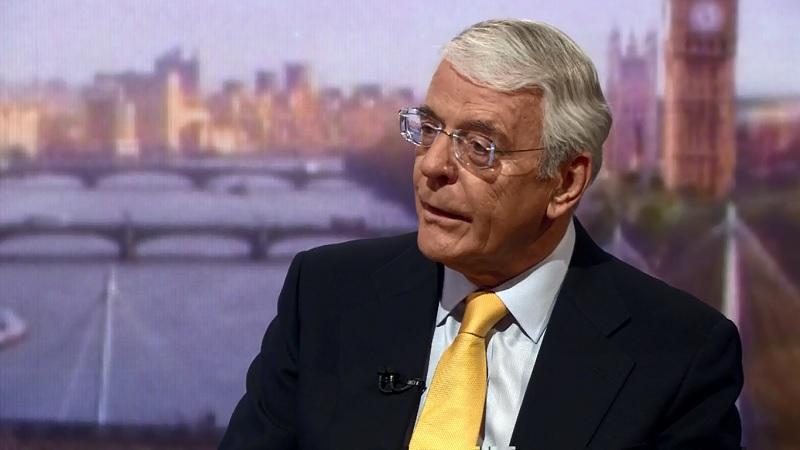
Margaret Thatcher’s successor, Sir John Major, has declared that however well we perform over the next half century, we will never again be a first-rate power. He says that, economically, we will be overtaken by other powers with much larger populations.
I find it astonishing that a man who has sat at the very centre of power can reveal himself as being so astonishingly myopic. Despite his seven years in power, he failed utterly to pick up on what his country was really all about. His lack of historical perspective is also equally baffling.
Size of economy and population do not in themselves confer on you front-rank power. Very soon, India’s economy will overtake our own and its population overtake China’s. Is anybody saying India becomes more significant than us at that point?
Let me list a few of the reasons why I believe Britain will remain a force to be reckoned with and very much a front-rank power. We are the founder member of the Anglo-Saxon diaspora, comprising ourselves, the United States, Canada, Australia and New Zealand. That diaspora formed the cornerstone of the post-war world order and the multitude of organisations and affiliates operating under the auspices of the United Nations – itself a body created by its two leading members. So close and trusting of each other are these five countries that the Five Eyes, as they call themselves, share intelligence to the very highest level and admit no others to their closed order.
The common language these countries share has become so ubiquitous and necessary in the world of international diplomacy, science, medicine, business, the web and the arts that, without any agreement between the world’s 195 nations, it has become the world’s lingua franca.
Britain is the inventor of the modern world. It is a tolerant, law-driven, property-owning, democratic society in which the executive is answerable to the collective will of individuals who maintain a constant watch on what it gets up to through a free media. It remains an incredibly innovative country with a greater number of Nobel laureates relative to its population. It has schools the rich worldwide like to send their kids to and universities that rank among the world’s best.
Also, John Major takes no account of that great empire that formerly straddled the world which has morphed into a free association of nations – fifty-four of them – and forms today such a magnet that some countries which were never part of that empire want to join. That association – or club, as it often likes to refer to itself – seeks to promote democracy and decency among all its members and will reject any state who egregiously fails to meet its standards. In many ways it is like a mini United Nations – though not one which will tolerate tyrants – and it has a touching, almost family aspect to it. All the Commonwealth’s members positively love to meet up every two years and party with no interpreters in sight.
Despite the aberration of the Trump presidency – one quite survivable, as we see, in a democratic society – the United States remains the most dynamic society on earth. The country most admired and trusted by that state enjoys, by definition, a special status as well as an advantage. It has the ear of its best pal as no one else does. Note that, despite a serious difference with Boris Johnson over Brexit and disparaging words spoken earlier about the British prime minister, he was still the first leader Biden picked up the phone to after his confirmation as the president elect.
Then there is our physical proximity, cultural and historical links with the great power which will one day be the United States of Europe. These ties will not go away. We will always need and want each other. Great Britain was just not a proper fit for the EU’s aspirations. Quite apart from this, it would never want to upset us too much for fear that we would retaliate by using our newly repatriated powers to seek economic advantage.
I do believe that Britain has the most polished and effective diplomatic service in the world. This is enhanced by the world’s most respected broadcaster, the BBC. Its World Service is the most trusted of any and listened to avidly even by its enemies. Its documentaries, dramas and period pieces entrance millions.
All these assets come under the heading of Soft Power. It is the only power, realistically, which can deployed in the 21st century. Unlike tanks, planes and warships, it passes under the radar and makes you friends – not enemies. Hard Power is a wasting asset; it is hugely expensive and ruinous to maintain. The ever-increasing restraints of an ever increasingly activist UN make it almost impossible today to go to war without UN authorisation. The war against Saddam Hussein may well have been the last in which that could be done without a mandate.
As for nuclear weapons, the only thing that can be said about them is that they free you from fear of invasion, which is almost certainly why North Korea has impoverished itself to acquire them and their delivery system. Otherwise, they are unusable – so being armed to the teeth is truly a drag anchor. Dynamic as it is, imagine how much more the United States would be capable of were it not burdened with supporting its colossal military-industrial complex. That is the foolish road that authoritarian China is presently going down. While it is true that we ourselves are not free from displaying military muscle – we have submarines that can deliver a nuclear strike anywhere in the world and two aircraft carriers of immeasurable power – we do not let ourselves be carried away.
John Major downplays the country that allowed him, the son of a circus man, to rise to the top – as well as a grocer’s daughter. But among so many other questions, he needs to ask himself what is the attraction of our nation that desperate people will borrow thousands from people traffickers to come and live among us? What makes a man willing to die to reach our shores?
The fact is that we are seen a tolerant nation as well as a successful one. The quality of our judicial rulings brings litigation to London from all over the world. In theatre, drama and music, Britain turns in a matchless performance. Many consider London the coolest city in the world with the City of London the beating heart of an enormous chunk of global financial transactions.
Even the shenanigans of our Royal Family are a source of endless fascination for the entire planet. And when it comes to a state visit, a royal wedding or a funeral, who can put on a show to match one of ours? Brexit may have driven us mad, but the theatre of it all in the mother of parliaments – especially that of its outrageously partisan speaker, Bercow, who so loved the sound of his own voice – made for riveting viewing worldwide. The complexities of the arguments deployed made even the US electoral process look straightforward.
So wake up John Major! You haven’t been right about very much these recent years and you’re certainly not right about this.
Time’s up for Vaz
Now that the Parliamentary Standards Committee has concluded that the allegedly sick Keith Vaz is restored to health, we hope it can get a move on in investigating his predilection for rent boys. He has, after all, been happily, and by all accounts healthily, swanning around the world while his case has been put on hold.
There never was, with the possible exception of Cyril Smith, a grosser example of a parliamentarian letting that august institution, his constituents and most of all his wife and family, down. The jury in this case can hardly be said to be out when there is video evidence to confirm the whole squalid affair.
Here is a middle-aged man who was assiduous in cultivating a caring, wholly decent image of himself while habitually engaging with young men barely out of their teens for sex. It’s ironic that the young men captured in the recordings were from the same country, Romania, that Vaz rushed to welcome off the plane in 2014 in that much-publicised photo op.
Every aspect of the case appals. The sex was unprotected so that, in selfishly gratifying himself, Vaz put at risk of life-threatening disease his unsuspecting wife. He lied about who he was, passing himself off as Jim, an industrial washing machine salesman. Then, in what I believe to be a serious criminal offence, he encouraged the youngsters to obtain Class A drugs, even offering to pay for them – as long as they hurried up as he declared himself anxious in the recordings to “get the party started”. That, in my book, is known as aiding and abetting.
Most of us want to believe that our parliamentary representatives are high-minded and honourable people. Certainly they like to be addressed as such. But what are we to make of a situation when, against all expectations, following the shocking revelations concerning him that weekend, Vaz nonchalantly and brazenly waltzed into the chamber of the House of Commons the next working day as though nothing had happened. Equally shocking was the reception he received. Instead of a hushed, disbelieving House, there were words of consolation and even back-patting. Were these from understanding and perhaps like-minded colleagues?
Vaz’s smarmy, polished mode of delivery speaks of someone anxious to be thought a thoroughly establishment, Anglicised figure. Unusually for someone born into a Muslim family, his father chose a galaxy of non-Muslim first names. Did dad think that his little boy would more easily gain acceptance by being called Nigel Keith Anthony Standish Vaz? It’s clear Keith never felt any embarrassment as he carried the pretentions and posturing to new heights with his obsessive grandstanding, networking and search for the photo op.
Vaz represents a constituency with one of the highest proportion of Muslims in Britain, Leicester East. In the light of this new scandal, how do his constituents square their faith with their unwillingness to deselect an MP who has betrayed them so outrageously?
And let’s not forget that, as Vaz was engaging in sordid, illegal activities, he was chairing the House of Commons Select Committee on Home Affairs while it was considering changes to the law relating to prostitution and drugs. Was there ever a case more screaming for the Mother of Parliaments to divest itself of an individual who has brought it into such disrepute? Judging from the welcome Vaz received that Monday morning in the Commons, it seems not.
As for that not-small-matter of the police ignoring prima facie evidence of ‘Aiding and Abetting’ a crime, is it that they’re running scared of going after a high-profile figure, especially if he’s not white, a Muslim and an MP? Does Vaz enjoy the same kind of immunity that has served rogue elements of his fellow Muslims so well in the sex grooming scandals in Rochdale, Rotherham, Oxford and Telford (and who knows where else)?
Amazingly, in view of all the many shenanigans of recent times starting with the expenses scandal, we still want to hold onto that long-standing belief that British parliamentarians are a cut above the rest: men and women with the highest of principles who believe in setting an example. But how can we hold onto these hopes when such a character as Vaz is still not only tolerated, but welcomed and indulged in parliament as “the Honourable Member for Leicester East”?
We are currently embarked on a route and branch investigation of sexual abuse in all its forms. We are also determined, once and for all, to deal with sexual exploitation of women and men in the workplace. One gets the impression that parliament would like, in its own case, for this nasty, criminal business concerning Vaz to go away. But we must not allow it. The man has taken us all for fools. We have allowed him to stretch the limits of our patience to an extraordinary extent. The time is long overdue to stop indulging him. The police should reopen its file, his Leicester East constituency party should examine itself and Parliament should get on with booting Vaz out.
Press freedom in Britain still cannot shake off the malign shadows of Max Mosley and other celebrities

Sir Brian Henry Leveson PC
Celebrities are unable to put behind them the exposure of their peccadillos – and worse – to a sometimes amused, but increasingly exasperated and angry public. Furious that government efforts to control the flow of information concerning them does not seem to be working, the Leveson-inspired Royal Commission on the Press comes back for another bite to the precious, 300-year-old cherry of press freedom.
The Independent Press Standards Organisation (IPSO), a genuinely independent press regulator set up and managed by the press itself, is making a perfectly good fist of the job it has taken on. A huge majority of dailies and periodicals support it; only a timorous, browbeaten rump tow the government and Mosley-financed line. However, this is not acceptable to the proponents of government-approved IMPRESS, whose very name smacks of coercion (that is what we called civilians press-ganged from the streets and impressed into the anti-Napoleonic Royal Navy). Perhaps someone in the government service is into black comedy and hopes we ignoramuses will not be smart enough to see how they mock us, nor recognise their superior wit in demonstrating it.
The discredited Royal Commission regulatory body refuses, absolutely, to go quietly into the night and let the press get on with it. It’s as if it is outraged that any non-governmental body should have the temerity to stand up for itself and, worse, insist that it can do the job better and at no cost to the taxpayer. This last, though, would be the least of its concerns. The latest strictures involve tabling an amendment to the Data Protection Bill currently going through parliament, whose effect will be to make it easier for the rich and powerful to avoid being held to account. For all its occasional slip-ups, the venerable, 160-year-old former News of the World remains sadly missed. How many were the truly outrageous scams, scandals and criminal conspiracies uncovered during its long pursuit of wrongdoers?
Something deeply incongruous lies in the fact that, while the governing class is determined to raise the press and broadcasting bar of exposure of wrongdoing higher and higher, the internet is allowed to go on its merry way unregulated. But here’s the rub! Nothing in today’s world of Internet communication can be covered up either by High Court gagging orders or anything else. One lowly, public-spirited, disgruntled or mischievous whistle-blower, anywhere in the world, can blow the lid off at any time. Within minutes the whole farrago goes viral. When will an out of touch governing class realise that muzzling the press simply redirects a desperate-to-know public elsewhere? That elsewhere is the Internet, where pretty much anything can be said.
Perhaps in the Internet there is hope for the press and the public generally. Truth, as they say, will out. Though in times past the rich and powerful often saw to it that it didn’t, that no longer holds true. With the Internet there is no hiding place. Since our world became reliant on this form of communication, no one can ever again feel safe in their dirty little secret.
So last year it was the Panama Papers. This year the Paradise ones. Even our poor Queen has been dragged into the off-Shore expose, though I don’t doubt for a second that she had the least knowledge of what her thoughtless financial advisors were up to. But someone like Bono is different. That haloed advisor to kings and presidents, gullible enough to believe him sincere with something worth listening to, now knows differently. Both the halo and the ubiquitous, trademark shades have slipped. Perhaps at last the movers and shakers will stop paying homage to the Bonos and Geldofs of this world and press them to get back to the only thing they’re good at: their music.
As for the press, we must pray it continues to stand fast. Once the towering beacon of hope to editors worldwide, it is today the most heavily regulated in the democratic world. How typical that in the relatively trivial matter of a few press excesses – almost all later dismissed in the courts – the government jumped in with the sledgehammer of a Royal Commission. Where is the Royal Commission for that vastly more damaging banking scandal that threw so many millions worldwide out of work and from which we are still suffering. Outright criminality was at the heart of it and it involved trillions of pounds. And as for Royal Commissions themselves? They are nothing more than a convenient leftover – handy for a government seeking to show it is doing something – from the undemocratic days of king power.
If these latest amendments to the bill from that paragon of democratic values, the House of Lords, are allowed to pass then Mosley and his crew will have won. Whether or not IPSO’s heroics keep it out of the clutches of the government-approved IMPRESS, the press will be effectively muzzled. Under the guise of Data Protection and personal privacy laws, they will have found the back door to achieve their purpose. This cannot be allowed to happen.
Police aid Vaz and his MP chums to stick two fingers up to the rest of us

We deserve so much better than slippery Keith Vaz.
What are we to make of the police’s decision not to proceed against the former Minister of State for Europe and ex-chairman of the Home Affairs Select Committee?
The police dropped their investigation into Labour MP Keith Vaz, known to his parliamentary colleagues and the wider public as “Vazeline” for his extraordinary ability to extricate himself from any hole, despite his behaviour clearly being reprehensible in the extreme and questionable as to its legality.
One of the things which most shocked us about the MPs’ expenses scandal was the sheer mean-spiritedness and hypocrisy of it all. Here were lawmakers happy to break the law even in the most mundane and petty of matters. All the time they wanted the rest of us to hold them in high esteem and believe them virtuous. That, indeed, is what we wanted to believe and the reason we were so shocked. We wanted to feel that they represented the best of our country: men and women whose examples we should strive to emulate.
All this is what draws me back to Keith Vaz, a man whose whole career has been mired in a succession of questionable activities. This last episode concerning rent boys is only the latest. Vaz is a man puffed up beyond belief who thinks nothing of intruding on private grief to gain publicity for himself or doing all manner of weird and wonderful things to get into our newspapers and onto our small screens (remember him turning up at Luton airport to welcome Romanian arrivals on the day they could seek work in Great Britain?). Yet for all his grandstanding, ingratiating behaviour – particularly to speaker Bercow whom he relies on to give him excessive Commons airtime – and smarmy talk he is held in the highest esteem by his parliamentary colleagues.
On the very first sitting of his Commons chums following those sensational disclosures concerning drugs and rent boys, he was warmly received when he waltzed in as though nothing had happened. Brazenness cannot begin to describe such an entrance. There were mutterings of sympathy and even back-slapping by various of his colleagues. Indeed, the whole atmosphere seemed resonant of a witch-hunt by a pitiless media out to destroy a good man.
One could almost be forgiven for thinking that many in that chamber may themselves have shared Vaz’s predilection for rent boys.
Few of us will ever have witnessed such a shameful and squalid performance by members who like to address one another other as “Honourable”. For all that, I do not believe that any one of the other 649 members would have had the effrontery to show themselves on that particular day. But this is Vaz. Having bare-facedly brazened it out in the Commons so soon after the story broke, it was to be expected that he would do the same a few weeks later at Labour’s annual party conference. And so he did. It will be interesting to see if his Leicester East constituents show their distaste for the way he has let them, and above all their faith, down by pricking his massive bubble of self-esteem and deselecting him.
As news of the scandal broke, Vaz was Chair of the influential Home Affairs Select Committee which recently had been deliberating on prostitution. That conflict of interest in his febrile moment of exposure was too much even for Vazeline to escape. He stood down.
But squalid and undignified as his exploitation of young, vulnerable rent boys was, something even worse was revealed. At the very time he was heading up the committee investigating harm caused by illegal Class A drugs, he solicited a Romanian prostitute to trot off and bring back some Class A drugs. He even offered to pay for them. Now, if that doesn’t constitute criminal activity I’d like to know what does. Isn’t “aiding and abetting” a crime? Vaz was complicit both before and after the fact. The whole affair was confirmed by video footage – prima facie evidence if ever there was. (Vaz’s wealth has long been a matter of public curiosity. He is rich beyond what his parliamentary stipend would suggest and it would be interesting to learn where his unaccounted for wealth comes from.)
Shameless Vaz, with amazing sangfroid, sees absolutely nothing untoward about what he has done to his family, the House of Commons and the wider public. Incredibly, within weeks of stepping down as Chair of the Home Affair Select Committee he put himself forward for the Justice Select Committee. Did this prove too much, or at least too soon, even for his normally indulgent parliamentary chums? You bet it didn’t. Now he’s back pontificating in his own inimical, self-important way on what is just and what is not. Pomposity begins and ends with Vaz. To use a clichéd but in this case totally justified phrase, you really couldn’t make it up.
Am I alone in thinking that Vaz’s parliamentary colleagues, by continuing to indulge his fantasies, display a huge contempt for what the rest of us think?
The police must re-examine the evidence. Are they afraid of the establishment? Do they need to be dead like Janner and Savile before they will act? Perhaps it is that same kind of reluctance which caused them to hold back for so long in the Rotherham grooming of young girls; maybe Vaz’s faith and ethnicity has acted as a protective shield. That, perhaps – and the establishment’s own efforts to defend one of their own – may explain why this most terrible of scandals has slipped below the radar.
Brexit, Cameron’s demise, Trump, Europe’s travails and, most of all, the terrible tragedy unfolding in Syria have all fortuitously come to Vaz’s aid by moving the spotlight away from him. No better time, from the police’s point of view, to bury bad news.
Are we to stand by and let Vazeline get away with it again? For all our sakes we must hope not. Our Mother of Parliaments deserves better than that. The one I feel most sorry for in all this is Vaz’s poor wife. He felt so little love for her that he thought nothing of endangering her life by having unprotected sex with a male prostitute.
Quite apart from the scandal of no police action, with all this and more known by his ‘honourable’ parliamentary colleagues and the institution of parliament being brought into disrepute in a serious infringement of its rulebook, how is it that he has not been suspended from the Commons?
Brexit and Trump are only the beginning
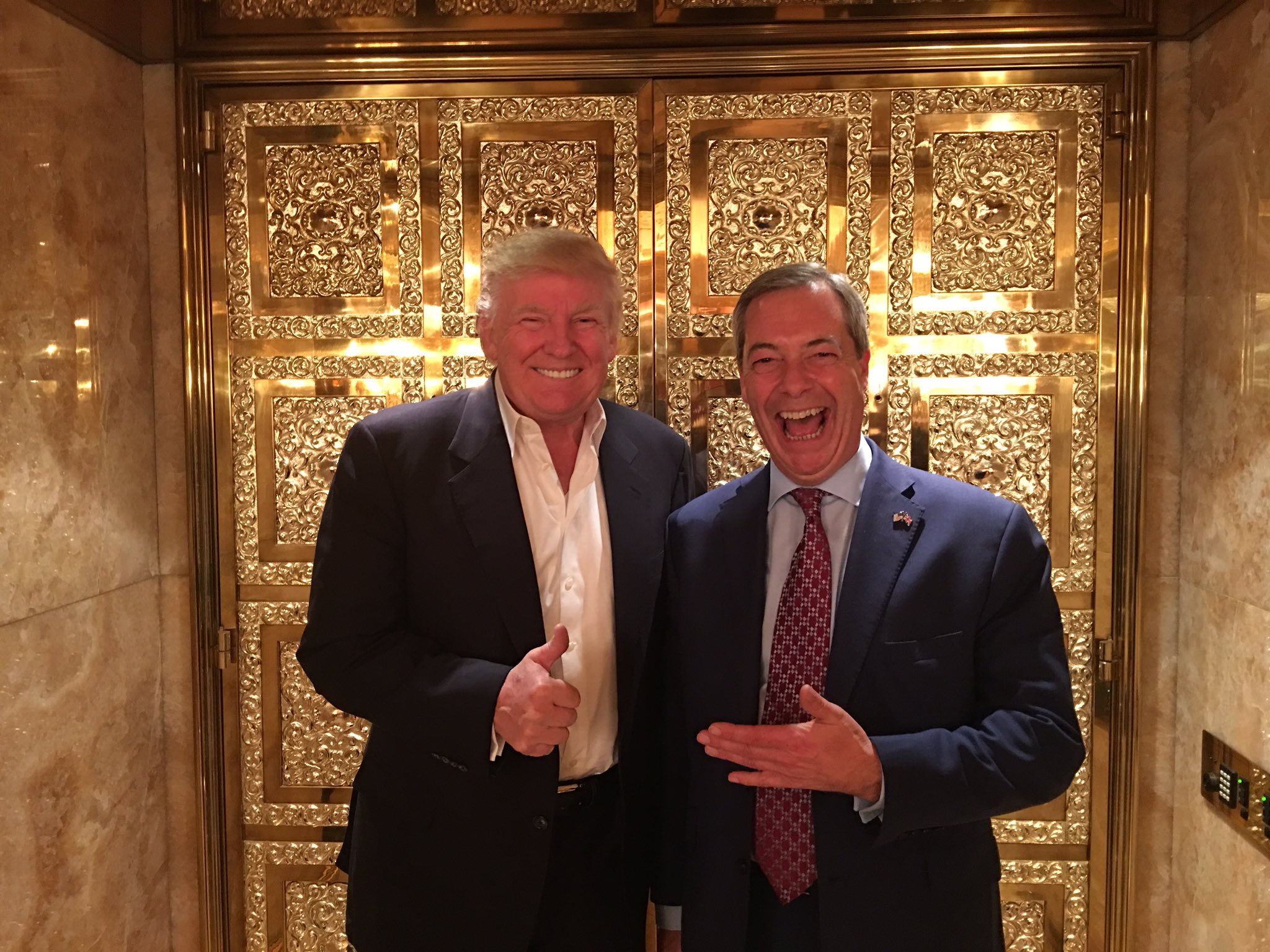
Best buddies looking forward to a golden future
I cannot move into another week without recording my thoughts concerning the one which has just passed. Something astounding happened.
A man was democratically elected to the most powerful job on the planet who defied all the norms of what is considered to be acceptable behaviour. This man made no concessions whatsoever to the sensibilities of the electorate he was appealing to and came right out to lay before it his brazen take on the world. In view of the outrage caused in so many quarters, how did such a man persuade that electorate to set aside the shock of his message and, most of all, the way it was delivered? He has now not only been handed the keys to all our futures, but he will be given the nuclear codes as well.
The story goes back a long way, perhaps half a century. At that time a world existed of nation states and of families within those states. Most had functioned for a long time – Germany was the exception – and people had grown surprisingly fond of them. They saw them as an extension of their own, close family and it gave them a strong sense of belonging. Almost without exception they were immensely proud of them. When troubled times came, it turned out they were prepared to die for them, much as a mother would die for her child.
Then came those two terrible world wars which, with the help of perverted science, made war deadly to the point of being suicidal. Humanity recoiled in horror and said never again. Agencies were put in place, starting with the United Nations and followed up by a multitude of other such as the World Bank, IMF, WTO, various NGOs, NATO and many, many more, all designed to govern the conduct of man and his disputes in a peaceable manner.
The bogeyman identified as being behind past conflicts was the selfish, jingoistic nation state. That, along with its borders, had to be downgraded and erased, over time, into irrelevance. Europe began the charge with what morphed, with the utmost stealth, into the European Union.
Also a new, more humane way had to be found to deal with individual misfortune and the Welfare State was born. The old were to receive decent pensions and they, along with everybody else, were to be medically cared for. The four great plagues of want, idleness, poverty and disease identified in the Beveridge Report were to be tackled wholesale for the first time.
But this was not enough. The architects decided that they must complete the work with what became known as political correctness. They must criminalise beastliness towards minorities – all minorities – however obscure. Eventually this extended to the very utterances which people made. A revolution was in the making and, like all revolutions, it needed its cadre of zealots to force it through. Step forward to carry out this work the intellectuals, the academics, the lawyers, the industrialists, the politicos, the entertainment luvvies and eventually the bulk of the media itself. Oh, and don’t let’s ever forget, perhaps the most culpable of the lot, the bankers.
The EU proved the perfect vehicle for making this revolution possible. It also made it respectable even though, indeed, most of it was anyway. While noble in its concept, the EU began the process of subsuming its patchwork of nation states into a homogenised whole. Globalisation and multiculturalism became the new buzzwords and the developed world was urged to indulge in an orgy of consumerism. This had the effect of ratcheting up debt to unsustainable levels and soon the bubble burst with the financial crisis of 2008 – the worst in living memory. Luckily lessons had been learned from the last catastrophic crisis, the 1929 Wall Street crash, and a much more joined up world was able to climb out of it with a fraction of the misery of before.
But, like all things, it came at a price and that price is the one which propelled Trump to power and is propelling us out of the EU. The little man who had listened to his “betters” for fifty years had had enough. He had developed a deep and bitter antipathy for those whose greed had brought the misfortune upon him yet walked off smelling of roses and richer than ever. He had watched, with silent rage, the power brokers ship his jobs to sweatshops abroad and saw his warm and loving communities decimated and turned into wastelands. All the while the men who had done it grew richer by the billion while the poor bloody infantry saw their wages frozen and their living standards plummet. Adding salt to the wound, as the little man saw it, was the multiculturalism which the know-alls had forced on him.
What unites the two seismic events of Trump and Brexit is a deep disdain, felt by many ordinary people in the Western world, for a ruling class which, without consultation, sought to change forever the very nature of their societies. But it has not gone unnoticed that this privileged elite have never been an active or even visible part of the societies they are busily changing. Theirs is a cloistered world of high gates and security guards where the hoi polloi are well and truly kept at arm’s length.
Their insular world now trembles before the forces currently ranged against it. But watch this space: Trump and Brexit are only the beginning. Fresh earthquakes can be expected right across Europe in the months ahead.
Why we should not fear a Trump presidency

President Trump would be constrained by the Senate and House of Representatives.
The race for the US presidency is now coming into its final furlong and, against odds which would have seemed impossible even six months ago, Donald Trump is within a whisker of entering the Oval Office. It is therefore incumbent upon on us to ask what sort of presidency we would be looking at were this to happen.
First, let us be clear about one thing: this admittedly bizarre man is a man gifted with huge abilities. Yes, he is a showman of the most extraordinary kind; a loudmouth, many would argue, yet also thin skinned. He is capable of cruel invective and even crueller put-downs. He also espouses policies – his great wall and ban on Muslims – which would be sudden death to any conventional politician. But then again he isn’t a conventional politician. He is a businessman and a very successful one at that. He says things that are thought by many but are unsayable by the Washington elite. And it is that Washington elite that most fears his arrival in the White House.
“I’m going to drain the swamp,” is Trump’s colourful yet terrifying promise. In classical terms, that’s a vow to ‘clean the Augean Stables’, the definition of which is to ‘clear away corruption’ or to ‘perform a large and unpleasant task that has long called for attention’. Hercules is the one said to have carried it out so perhaps that’s where we get the term ‘the labours of Hercules’.
Anyway, Trump says that the little man is trodden underfoot and his interests are completely subordinated to those of the ruling classes. By these he means the politicians, the bankers, the captains of industry and, indeed, all the country’s decision makers – be they in the law, the military, the town or county halls, academia or even the church. There is, he says, a vast gang-up by all those he considers view themselves as superior, a cut above the common herd. We may have arrived, he argues, after centuries of struggle at a one person, one vote system of government in a system where the movers and shakers have contrived to make it seem otherwise.
Once upon a time, the people who put themselves forward for public office were high minded – or at least seemed so – and were driven by factors other than those of enriching themselves. More often than not they were worldly people, middle-aged and sometimes old who had already proved themselves in their chosen field and were esteemed by their peers. Among their successors, however, venality reigns supreme and you have the spectacle of presidents and prime ministers – Tony Blair is a case in point – using the prestige of their former office to tout for business among the world’s most unedifying rulers and all to join the ranks of the mega-rich themselves.
It is a moment of high irony that the dragon which threatens to slay this cabal of self-servers is as rich as Croesus himself. Yet he has never viewed himself as part of the mega-rich’s charmed circle and they, despite his riches, would never have admitted him to it. His brash vulgarity, no-holds-barred rhetoric and giant ego did not lend itself to their view of the world. That view might be one that tolerated all manner of low-life activities – business or otherwise – but they had to be masked in a veneer of respectability and kept from the public view. It was many of Trump’s sentiments which drove our own recent Brexit campaign.
So what are we to make of a looming Trump presidency? Should we fear this devil-may-care outsider, who threatens to hit the establishment like a tsunami? I think not. There are so many checks and balances in the world’s greatest democracy that, were he to run amok – which he has not done in business – he could be contained. And there is just a chance that he could succeed and ‘make America great again’. (Actually, in my view it has never ceased to be great.) In spectacular fashion with this latest Hillary FBI expose, a 10-point Clinton lead has narrowed in two days to one point.
This crazy election of two incredibly flawed candidates is now Trump’s to lose. If he stays on message for one week, avoids scandals of his own and puts a zip on his mouth he might just do it.
Hillary’s most dangerous stumble

Hillary can clearly be seen collapsing before being placed in the van at the 9/11 ceremony. Her head shaking and foot dragging point to a possible seizure. Could this be linked to her blood clot in 2012?
Trump has called Hillary many things in times past. He maintains she is ‘crooked’ and can never be straight with the American people, either in her business dealings or her period as Secretary of State. He believes, as we Brits like to say, that she is not a ‘fit and proper person’ to have charge of the destiny not just of her own nation, but that of the entire free world. He also holds that she represents the dark heart of the politico-economic system that he believes so oppresses the American nation. Now The Donald has found his ace in the hole: her very fitness to govern in the literal sense.
When called to the colours long ago as a humble National Serviceman, my countrymen proposed putting a gun in my hand with a license to use it against our country’s enemies – of which at that time there were many. But first they were going to ensure my competence, both mentally as well as physically. To that end I had to undergo a rigorous medical. They needed to know that I would be up to supporting my comrades, whose lives might depend on my actions. Any suspicion that I could fail at the crucial moment would have disqualified me.
The President of the United States operates on an altogether different plane. He or she, as Head of State as well as Commander-in-chief, has the lives and well-beings of countless millions as a responsibility. Physical as well as mental health is a crucial job requirement. The finger that hovers over the nuclear button must be up to it.
After this weekend, Hillary Clinton would be foolish to think that she can wave it all away with an unfunny joke, as she has done in the past over health issues. She is asking, on the strength of her say-so, that the American people trust her in the matter.
These are perilous times we are living through. The end of the imagined peace dividend that victory in the Cold War would bring us now seems a distant chimera. An ever more assertive Putin in the Kremlin is joined by an almost deranged Kim Jong-un in North Korea, who in quick succession last week loosed off three ballistic missiles, while Syria burns. Hillary has been gung-ho for years to impose a no-fly zone over that country. While that might have made sense three years ago, with Russian jets now crisscrossing its skies daily such an imposition at this time could unleash a big power conflagration. The stresses of such a build -up of tensions would almost certainly bring on one of Hillary’s fits.
The truth is that it is just not good enough that the Americans and all the rest of us should have such worries concerning one individual’s health and fitness for purpose. Hillary must be prevailed on to submit herself to an independent panel of health experts or, at the very least, make her very latest, up-to-date medical records available for inspection.
In my view it is an open question whether she can survive the next two incredibly gruelling months of presidential campaigning. I said as much back in May when I wrote about Hillary and her questionable health on my blog. Now it is out in the open. If she steps down, or is forced to do so, who will take her place? Would good ol’ Joe Biden, Obama’s Vice President, step up to the plate to save the nation and possibly all the rest of us? Although there was talk of him throwing his hat into the ring during the primaries, I wouldn’t bet on that one. Bernie Sander’s devoted and almost messianic followers would be incandescent with rage were that to happen. Quite rightly, they would argue that, democratically, their man is the heir apparent. So Ultra-Left Bernie – the US’s own Jeremy Corbyn – would end in the ring against The Donald.
In that event would anyone care to place a bet against the world waking up one November morning, just a few weeks from now, to a President Donald Trump?
Ken IS a Nazi apologist – Hitler wasn’t “mad,” he was evil
Amidst all the who-ha over Ken Livingstone’s assertions about Hitler being a Zionist, one thing seems to have escaped the commentariat: he appears to be absolving Hitler from responsibility for the crimes committed after his election success in 1932. He does so by claiming that “Hitler supported Zionism” in 1932 “before going mad” following his entirely legal and success pursuit of power. The clear implication here is that we must accept that Hitler didn’t know what he was doing when he launched World War II or secretly ordered the lethal eradication of European Jews.
Across the entire world it is accepted that an insane person cannot be held responsible for his or her actions, however heinous. To be culpable, humanity has long held the view that a person must know the distinction between right and wrong – goodness and evil. That is why, also, there is a limit in a child’s case of criminal responsibility (in our case 10 years of age). If Livingstone is to be believed, even if we had captured Hitler we could not have put him on trial because he was a victim of a diseased mind. He was crazy. Perhaps Livingstone has convinced himself that the enormity of what Hitler did is in itself proof positive that he was mad. If that yardstick were to be applied more generally, then we were wrong to put Serbia’s tyrant, Slobodan Milosevic, on trial. Such a yardstick would also have excused Pol Pot of Cambodia and just about any other tyrant who ever lived.
The fact is that Hitler was the leader of a criminal gang of misfits who knew perfectly well what they were doing. Look no further than their efforts to conceal their murder of the Jews. This tells you that they knew what they were doing was wrong. Indeed, not one single paper relating to the Holocaust bares Hitler’s signature. All was communicated to his underlings verbally. This great and meticulous nation of record keepers kept no record of the biggest crime in human history. Livingstone’s own crime is to act as an apologist for such a man as Hitler.
‘Collective’ madness in the Labour Party
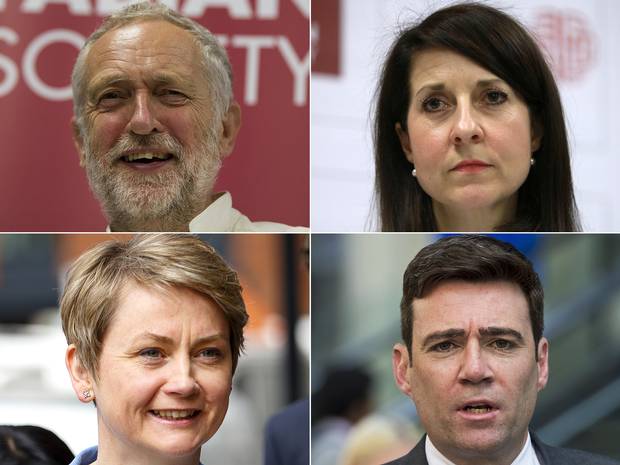
There is a complete absence in the Labour leadership contest of what we like to call the ‘big beasts’. They are all minnows.
How can we explain the ‘Collective’ madness that has taken over the Labour Party? I have just returned from lands of former Collectives (mega farms set up by the Communists) in Latvia and Lithuania, and I can tell you that Jeremy Corbyn’s much admired legacy to those once Communist countries is a nightmarish one.
The man might come across as a sincere idealist – not at all like the serried ranks of the career politicians so many disdain today – but the likes of Jeremy are the ones to fear the most. They are the zealots, cast in the mould of that ‘sea-green incorruptible’, Maximilien Robespierre, of the French Revolution. While on the subject of the quiet, softly spoken, hard-to-rile idealist, was not ‘Uncle Joe’ Stalin exactly that sort of man? He, however had a term for the likes of sweet natured, but for us dangerous, men like Jeremy Corbyn; useful idiots.
And while an old geezer, myself, isn’t it a bit odd that so many young people appear so much in love with old geezer Corbyn? It’s all a little perplexing. If I were to make a guess as to part of the reason – and in life there are, more often than not, many reasons – I would say it is illustrative of the depth of public disenchantment with the political class. And when a man comes forward, however misguided, who is clearly a man of conviction and seems authentic, the young grab at him.
Another factor, surely, is the complete absence in the Labour leadership contest of what we like to call the ‘big beasts’. They’re all minnows. Alan Johnson might have qualified for that sobriquet, but he doesn’t want to know. Perhaps he’s canny enough not to risk losing his sanity in trying to bring together such a disparate band of brothers in what he might view as a poisoned chalice.
Then there’s that totally toxic Blair legacy. We won’t speak of the horrors of the Iraq war or the dodgy dossier that deceived us into sanctioning an illegal war, but there is such a litany of other failed measures that found their way on to the statute book that I might cause you to develop apoplexy half way through were I to attempt to list them all.
His favourite ‘Blair Babe’, Tessa Jowell, loves pontificating and acting as cheer leader for the Bambi project, but she would be better advised finding some stone to crawl under. It was she, who as Culture Secretary, allowed round-the-clock drinking, which has turned all of our city centres into no go areas for the majority of people at weekends. Worst of all the things she did was to promote online casino gambling – that egregious, family-wrecking Act which flies in the face of everything the titans of Old Labour stood for. These titans were high-minded men of probity, who among their other fine and compassionate qualities was a determination to uphold individual dignity and family life. Gambling was anathema to them.
Despite Corbyn’s phenomenal rise against the odds, one or other of his pigmy opponents may yet come through in the race to succeed disastrous Ed Miliband. But even if that were to happen, what does the whole business tell us about the present state of the Labour Party? Could a split prove terminal?
We have grown so used to a duopoly of political power that we could be forgiven for thinking that Tories and Labour are a permanent part of the political landscape. But even in the 20th century this was not the case. The party of Lloyd George seemed just as permanent on the eve of World War One. For much of the previous century, that Liberal giant of principled government, William Gladstone, bestrode the political firmament. Then, after Lloyd George, the party became an irrelevance. Following their brief re-appearance and engagement with power under the recent Coalition, they have again sunk back into irrelevance. Is it now, as a result, a return to business as usual? Not necessarily.
Whether Corbyn succeeds or not, what his extraordinary success has shown is the deep schism within the Labour Party. It may prove unbridgeable. Certainly it will take more than any of the lightweights on offer to heal the wounds of what is turning out to be a bitter, acrimonious fight. Tories may gloat over what is going on, but they would be wrong to do so. Any properly functioning democracy needs an effective Opposition. You cannot expect the media to perform this role alone, splendid though it is in exposing maladministration and wrongdoing. (How incredibly right it was to resist Leveson’s proposals to muzzle it. Do you seriously think the establishment would have allowed itself to be investigated for child abuse had those proposals gone through?)
There is now, as I see it, a chance for a regathering of the forces of the sensible Left to challenge an overweening government. Essentially the Liberal Democrats are a left-of-centre party. Were they to throw their lot in with similarly minded elements in the Labour Party, it could consign forever to the dustbin of history that Trotskyite wing of Labour that so bedevils its chances of regaining the trust of the British people.
It might, in the process, appeal to those many citizens north of the border and in Wales who still have faith in a Union which has shone so brightly for so long and raised us, a small people, so high among the nations of the earth.
Poor, hapless Miliband and his Ed Stone
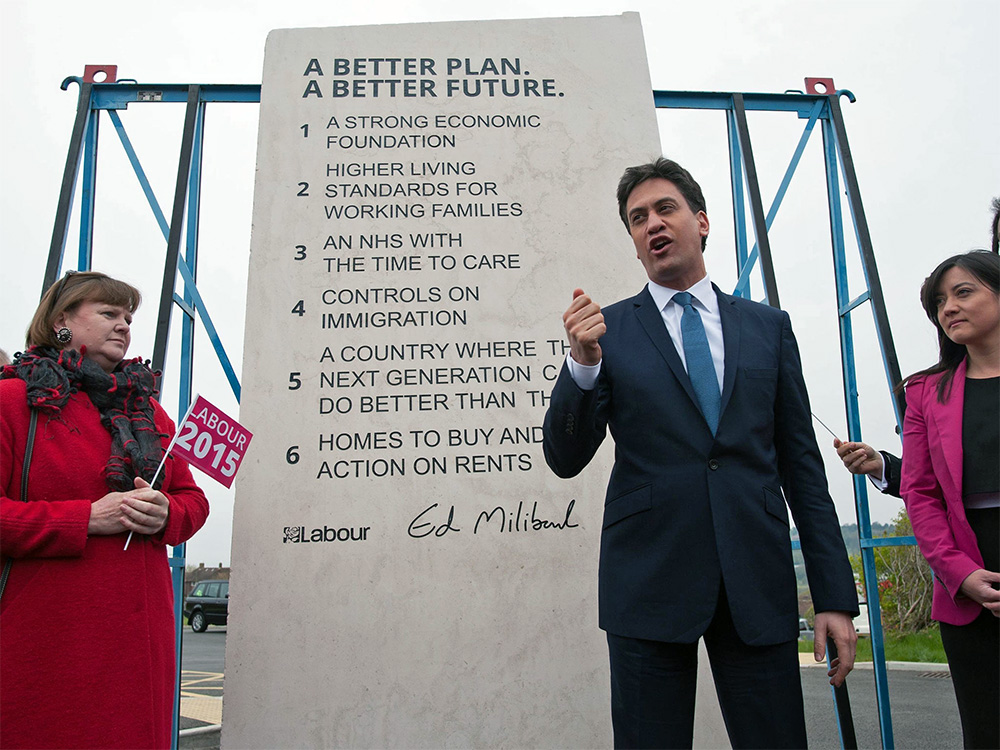
The Ed Stone must have been ordered weeks before it was unveiled, all 2.6 metres and £30,000 worth of it. And the monster wasn’t going to be installed at Labour party headquarters, but in the rose garden of Downing Street, for God’s sake.
How to explain last Thursday? Reading people’s minds is far from the exact science the pollsters would like to pretend they have made it. And reading British people’s intentions may be the toughest nut of them all to crack. G.K. Chesterton had it right when he wrote:
Smile at us, pay us, pass us; but do not quite forget,
For we are the people of England, that never has spoken yet.
Hells bells, the people spoke alright last Thursday. They did it in the privacy of the polling booth. It was almost in the nature of a raised finger to those battalions of know-it-alls who told them how they were going to vote. There may also have been an element of bloody-mindedness in that decision which ended up stunning the world. Yet it wasn’t, in my view, an innate shyness to tell or an enjoyment of being a spoiler that was at work, but a cold hard appraisal of what was at stake.
Harold Wilson may have said that “a week is a long time in politics,” and so it is. But for all that, people weren’t readily going to forget an event of even six years before – when the cash points were within forty-eight hours of running dry and salary transfers could not have been made to banks. It was as dire a situation as it is possible to imagine. That same government of Gordon Brown had not long before given them an almighty fright by getting into a dispute with tanker drivers so that food, itself, was also within forty-eight hours of running out in the supermarkets. We got to realise, for the first time, how slender were the stocks they held and how utterly dependent they were on a fast turnaround.
Now they were being asked to give their trust to the same group of people who were at the helm at that time and who had gone on to display a level of fiscal incontinence unique in British politics. They thought about the man who was asking us to make him prime minister and the Damascene conversion he had made at the last minute to fiscal rectitude. The difficulty was that they had trouble believing him; he was still so purblind that, to the very end, he couldn’t bring himself to concede that the previous government, in which he had played an important part, had borrowed too much (it was all the fault of those damned foreigners he intoned ad nauseam… the worldwide credit crunch and all those wicked bankers). Every country had suffered, so he maintained.
The problem was that those countries which had not got themselves into debt were able, largely, to cope with the crisis without massive programmes of austerity. These and many other thoughts went through voters’ minds in the run up to the big day and even in the polling booth itself. A huge question mark hung over Miliband in particular as he just did not seem prime minister material – and certainly not when compared to the smooth, polished Cameron. This perception was reinforced by his opportunistic and silly decision to go and talk to Russell Brand. That garrulous, machinegun-like spouter of nonsense was the last person in the world calculated to reassure a worried public. And then there was that Ed Stone. ‘Oh, dear,’ thought the electorate. Where were the armies of special advisors that let that one go through?
It may have been some silly Yank’s idea, but gullible, unworldly Ed thought it a great one. What was he thinking? Talk about hubristic presumption. It must have been ordered weeks before it was unveiled, all 2.6 metres and £30,000 worth of it. And the monster wasn’t going to be installed at Labour party headquarters, but in the rose garden of Downing Street, for God’s sake.
Did he seriously think that future prime ministers – and, hell, we had not made him that yet – would want their lovely, sweet-smelling roses cast into perpetual shadow by such ‘monumental’ nonsense? And what about planning permission? Had he thought about that? After all, Downing Street is a listed building. Perhaps after he’d brow-beaten them into submission he intended to take it with him at the end of his long, glorious term of office and have it installed on the unused plinth at Trafalgar Square. How the episode plays to the blog post I once wrote 3 ½ years ago about the fall of Dominic Strauss Kahn titled ‘The Foolishness of Clever Men‘.
At the end of the day the great British public saw no sense in imperilling the undoubted progress that had been made in stabilising the economy, and they certainly didn’t want a cantankerous tartan army descending on London, gurning all the time about how hard done by they were and demanding ever more Danegeld. Nor did that public relish the thought of the slippery, cocksure Alex Salmond appearing once more out of the Scottish mists like the ghost of Banquo. It would have been unbearable were he to have ended up de facto deputy prime minister, slipping in and out of Downing Street at will and browbeating a hapless Miliband.
Finally, in an ever more competitive world people did not see that it made sense to drift back into left-wing policies that had been tried umpteen times and always found wanting. Not a single Labour administration had ever left office without the public finances being in an unholy mess. The people understood that, for the security of their jobs and the wellbeing of their country, a business-friendly mind-set was key.
So convinced was I, as well as another member of my family, that these ‘neck and neck’ polls were nonsense that we placed a £50 bet each on a clear Conservative majority (at 15:2 odds) and won a total of £830. Our mantra should always be to trust the people; they get it right most times, whether it be General Elections, Strictly Come Dancing or X-Factor.
There is a clear choice in this election
It is a strange thing to reflect on the fact there were once people who would have killed me if they could and that as a young man I was shot at. It was the last lot of the ‘Troubles’ with the IRA before the final bout broke out which ended with the ‘Peace Process’. Then civilians were not targeted – just the police and the military – and I was a National Serviceman.
After that I returned to the cut-throat world of commerce (managed to get sacked three times) before, at twenty-seven, going into business on my own and remaining there to the grand old age of seventy-five whence I am still contributing my penny’s-worth. In that period before I struck out on my own, I worked for nine different employers.
What causes me to return to those times is what strikes me as the glaring contrast between my own round-the-block experience, shared in varying degrees by many (though not perhaps the shooting and sackings) and the utter lack of worldliness between us and the very many callow people who govern us. Apart from having, in so many cases, little to draw on, they come up with plans to spend umpteen billions of pounds in a manner that suggests our money is almost monopoly money. Few, if any, have any serious costing experience, much less have run large companies be it their own or other people’s.
In my ideal world no person should be able to put themselves forward for public office such as an MP below the age of thirty-five nor do so without experience of a genuine job outside the world of politics. No person could, for instance, become Minister of Defence without a military background, nor Chancellor of the Exchequer without accountancy skills, nor Health Minister without medical or health service expertise, nor take charge of education if he or she knows nothing of the world of academia. Strangely, the one area where we do apply such thinking is the law. Lord Chancellors, Attorney Generals and Justice Ministers have all had to be lawyers.
What I would never allow to happen is for a student of politics or any other university discipline to be parachuted straight into the Westminster bubble of a think tank, policy unit, special advisor or any other similar make-work prop. Most bizarrely, as many people thought at the time, we once had a transport minister (Barbara Castle) who didn’t know how to drive. I realise that such rarefied thinking may be thought by many to be unattainable, unrealistic and even naive, but it seems sensible to me to aim towards drafting people into a job who are already half way to understanding it and who have acquired hard-won expertise in the field.
If they come to the job with the right background, they should be left to get on with it. Constant reshuffles – which have been a feature of governments of all hues – is inimical to rapid progress. In this respect Cameron’s administration has been unusual. Real expertise has been built up in many important departments of state with ministers left in situ for an entire parliament. Look at the long-serving and successful Theresa May at the Home Office, long regarded as the graveyard of the aspirant politician. See, too, Vince Cable, the Business Secretary, and Ian Duncan Smith, the Minister of Work and Pensions. Then there is Eric Pickles, the Communities Secretary, and most famously the Chancellor, George Osborne. Even the controversial Michael Gove at education was left long enough to get on top of his brief and effect his own mini revolution.
Considering the constraints which coalition government by their nature impose, it is surprising how much has been achieved. Welfare, education and the economy – with the independent Office of Budgetary Responsibility – can be said to be entering a new era.
What do the government’s opponents have to offer? The latest is rent control. I am no friend of landlords, but I have to accept that we can’t do without them and that, in fact, rental forms an essential cog in our housing needs. Ed Miliband’s populist wheeze here is a busted flush. It’s been tried before and it doesn’t work. First it sets up a whole new expensive bureaucracy and all to no avail since his proposals can be easily circumvented. His interference in the market would, however, be guaranteed to worsen the situation of the very people he purports to help, in the same way as his capping of energy bills when oil and gas was at an all-time high. It was like when Gordon Brown sold off half our gold reserves only to see the price of gold double within months. Socialists, sad to say, are not strong on economics even if their hearts, in most cases, are in the right place.
As for Miliband himself, he daily reveals himself to be in the Michael Foot mould. Just look at the ridiculous stone monolith he plans to erect in the garden of Number 10, no doubt inspired by his new anti-capitalist pal Russell Brand. Perhaps it was all those years at the knee of his Marxist father who turned his house into a debating parlour for Communism, inviting the likes of Foot, Benn, Eric Hobsbawn as well as the traitorous – as it later turned out – union baron, Jack Jones, who was in the pay of the KGB.
David Cameron is lacking in many things, but he’s much less dangerous to the economic wellbeing of our country than the unreconstructed son of the LSE Marxist lecturer whom we rescued from the Nazis (he was Jewish) and who then went on to warp the thinking of a generation of young people including, it appears, his own son.
No one has better reason to hate the heartlessness, secrecy and institutionalised privileges of the ruling classes of this country than I do, but I’ll tell you this: if we place our future in the hands of such a master opportunist and dissembler as Ed Miliband then we will have taken leave of our senses. He refuses, even now, to concede that the government in which he played an important part borrowed too much. (I am not interested in how he looks or sounds; we have had great leaders who scored on neither front.)
My own business has been punished grievously and, after twenty-one years, I find myself holding on by the skin of my teeth. We do not want, nor can afford, left-wing experiments at a time like this, especially when we have so narrowly escaped a catastrophe which he and his master’s policies inflicted on us only five short years ago and which have been the cause of so much suffering.
I will finally, and unapologetically, make this observation: I do not think it was outrageous that a minister made reference recently to the younger Miliband’s behaviour towards his brother. It was what most people thought and the ‘appalled’ reaction of Labour apologists as well as certain sections of the media I consider was entirely contrived. There are not many brothers who would do to their sibling what he did to his. In my view it speaks of something I do not find edifying. It had a devastating effect on their aging mother and he must have known that would be the case.
The immigration debate
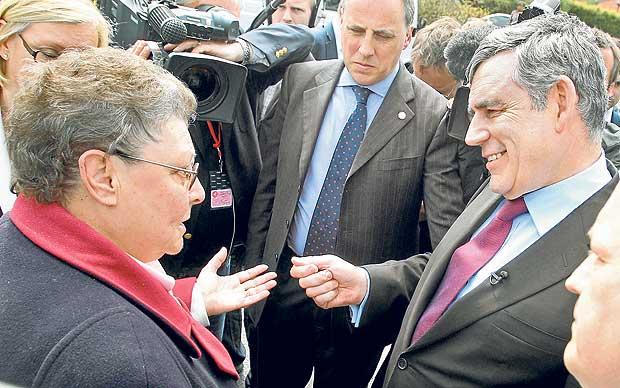
Gordon Brown clearly demonstrated the disconnect between politicians and the public when he labeled lifelong Labour supporter Gillian Duffy a bigot for broaching the subject in 2010.
Among the forgetful Ed Miliband’s omissions at his party’s annual conference was any mention of immigration. Considering that it ranks currently as number two of the public’s national concerns and that finally it is deemed respectable to speak of it, that omission must be classed as a failure as lamentable as that other one of not referring in the same speech to the deficit. The recent brain shutdown of the Green Party’s leader, Natalie Bennett, in her Q&A sessions with Andrew Neil and Nick Ferrari can be forgiven since she has no prospect of taking charge of our ship of state, but for it to happen to Ed? Oh, dear.
Ed has a problem, so it seems, not just with his gormless appearance – which, admittedly, he can’t help – but worryingly with his little grey cells. Personally, I view it as regrettable that in today’s shallow world you have to be telegenic to have any chance of being elected your nation’s leader. That requirement seriously impacts your ability to draw on the full range of your nation’s talent. Had we been like this seventy years ago, we would have lost Churchill and probably with him the war. We certainly would have turned our backs on his mouse-like successor, the great Clement Attlee, and risked losing, in his case, the NHS and the Welfare State. Apart from being the antithesis of telegenic – one was fat and the other weedy – they both were terrible public speakers.
The same cannot be said of the present, glib PM who won his spurs with a single show-off party speech, disdaining the use of the autocue. He was lucky to get away with it because later with the US broadcasting anchor-man, David Letterman, the Eton and Oxford-educated whiz kid could not remember what either Magna nor Carta stood for. Being that this was on the eve of the 800th anniversary of that momentous event, and that neither of those august places of learning appear to have knocked it in to the young Cameron’s head, you’d have thought that he’d have done his homework first. Inexplicably, it was history he studied at Oxford and just as inexplicably they awarded him a First. How so many of us back home winced at the spectacle of our own prime minister displaying such appalling ignorance.
We have to ask ourselves whether his party made as monumental a mistake in selecting him on the strength of that single – admittedly virtuoso – performance as Labour made in allowing the unions to foist the Ed brother on the party over its much preferred other brother, David.
For the Conservative Party leadership the shoo-in, prior to the posh boy’s performance, was the one-parent, council estate, SAS veteran, David Davis. Are we seriously saying that the present perception of a cabinet of rich, privileged elite would have held true under a Davis leadership? And do you think that the present, lamentable state of Britain’s armed forces would have been allowed to happen on an SAS man’s watch?
It may be that the US made a similar mistake in preferring the cerebral Obama to the Vietnam, POW-tortured veteran, John McCain. McCain, the son of an admiral, had been offered his freedom by his Viet Kong captors, but he turned it down because they would not free his less-exalted comrades. Time has demonstrated that he is no swivel-eyed, Tea Party head banger, but a thoughtful, measured observer of the world scene. I do not see that McCain would ever have allowed the mess to develop in the Middle East as has, and I’m equally sure that he would have provided the leadership which would have kept Putin in his box.
In fact, with Davis in charge on this side of the pond – a friend remarked to me recently – perhaps something of the ‘magnificent’ (his words) partnership that grew between Reagan and Thatcher might have developed with McCain. He was firmly of the opinion that a different and more secure world would exist today. But that’s conjecture for you. And the world of what might have been. But it did get me thinking a little.
Returning to immigration, we have always been among the luckiest of nations in that respect. In a very real way, the world has been our oyster. Because of our historic engagement overseas our people have been free to flee these shores and settle almost anywhere they wished. Now the world is more tightly controlled, with independent states zealously guarding their borders. Yet still our options are vastly better than almost anyone else’s. So we should not be too hard on people who wish to do what we have been doing for centuries. At least we were not fleeing tyranny and brute barbarism.
A recent BBC programme discussing the urgent need to expand the number of school places referred only to a rapidly expanding population while disingenuously failing to mention what had brought about this expansion. The broadcaster was at this point free to mention, what previously had been the unmentionable, but still it chose not to.
Immigration has hugely benefited this country in years past and if handled astutely is likely to continue to do so. Huguenots fleeing catholic persecution in France, weavers from the Low Countries escaping Spanish oppression and Jews from the pogroms of eastern Europe all have brought valued skills and business acumen. Even banking, in its modern form, we learned from the Dutch. And what a success story the arrival of 20,000 Asians fleeing in the seventies, from the murderous Idi Amin’s Uganda, has been. Children of empire, carried by us from our Indian territories to Africa under contract as indentured labourers to help build the railways, they have truly prospered here. Their number boast an amazing clutch of millionaires. Most of them had opted to stay on in Africa after the railways had been completed and had become traders and shopkeepers. A jealous Amin could not wait to get his hands on their properties and businesses. Then there is the debt we owe the Irish. If we were first in the field with railways, as well as canals, that is because our networks were built with their brawn and sweat. Hundreds died in the process.
What we did not, however, need, was Tony Blair’s sly, unfocused rush of immigrants to these shores in numbers we could not properly handle. Hospitals, transport, houses, infrastructure and, yes, schools all have come under almost unbearable pressure.
Blair knew the people were entitled to be consulted in such a matter, yet, as with the Iraq war, he chose to deceive them. In order to shut down any discussion he encouraged a culture that linked any talk of immigration to racism, and he wanted to make perfectly decent people feel almost dirty in mentioning the subject. We saw that revealed graphically when a lifelong Labour supporter took up the matter with Gordon Brown, only to be labelled a bigot.
Blair also calculated that they would become grateful, client voters who would help maintain him in power. His mantra was ‘multiculturalism’. He was more than happy for the new arrivals to keep to themselves and form what amounted to ghettos. He saw no need to encourage them to become loyal Britons and was even content for them not to learn the language of their adopted country. Worst of all, he paid no heed to the ever present risk that his policies might erode the very character of his people. The whole exercise, and the way it was conducted, was almost criminal in its intent.
After years of being a non-subject to all parties and the media, immigration emerged into the sunlight as being a subject we could legitimately talk about. Now, it appears to have disappeared back into purdah. Despite being at the top of people’s concerns, David Cameron has joined with Ed Miliband and Nick Clegg to make scant mention of it in their election stomping. Is it that they think us a mean-minded people who cannot be trusted to dip our toes into such contentious waters? I believe that we are bigger than any of the pygmies who think such thoughts and who clearly have such a low opinion of us. We are a just, tolerant and fair-minded people, grown up beyond what our rulers give us credit for. Perhaps they should do a bit more of what the TV panellists do these days on such programmes as X Factor and Britain Has Talent: trust the people to get it right.
Why is Labour doing so well in the polls?
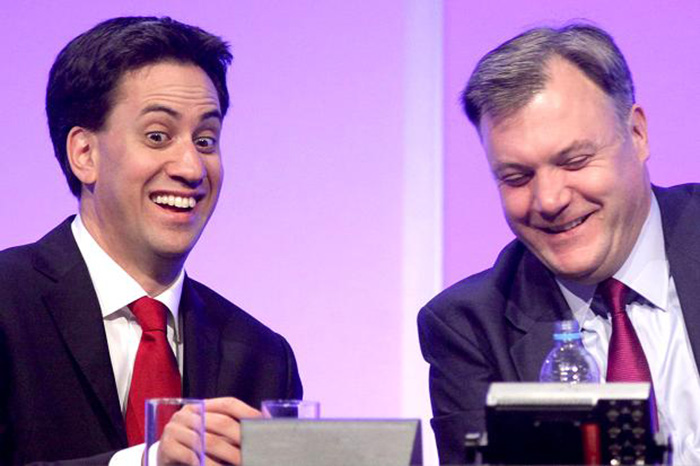
Our own Laurel and Hardy are chasing your vote.
It seems to me that we have no other credible option but to return the current government to power in May. The alternative imperils the undoubted progress that has been made and just seems too much like a leap in the dark. As to whether we return the Conservatives with a working majority or oblige them to seek an accommodation with their present partners… that, for the moment, cannot be predicted. They may be forced – hold your breath on this one – to seek an accommodation with Labour if that party, as seems likely, is obliterated in Scotland. Oddly, for a coalition, it has been surprisingly radical in the hot potato issues it has tackled. The Liberal Democrats may have helped keep the more swivel-eyed Tories in check and were certainly right in making it a condition of signing up that the lower paid be taken out of tax altogether. It was always an affront to justice that tax was levied at such an obscenely low level of income. But now we learn that the fully converted Tories are planning to take the process a step further in the forthcoming budget and steal some of the Lib Dem’s clothes by taking the same people out of National Insurance contributions and paying for it by reducing concessions to better off pension contributors. That looks like a surprisingly egalitarian measure which will help allay the perception that the Tories only look after the rich.
If it is true that elections are decided first and foremost on the state of the economy, then we would be hard put to gainsay the achievements of the present incumbents. They came to office in about as dire a situation as it possible to imagine. In fact the country was teetering on the edge of economic catastrophe.
For years we had allowed ourselves to live beyond our means, forgetting that age-old truth that you cannot spend more than you have the guts to raise in taxation. A balanced budget was never, so to speak, a lifestyle choice and sound money should always have been at the heart of any government’s considerations. Once it has taken care of these then it should go hell for leather for an enterprise economy.
In thinking where we are to cast our vote in May, let’s take a look at some of the core issues and see if we can make a balanced judgement. Business is not everything, but it is something we have to get right if we are to become prosperous enough on a personal level and yet have enough left over to fund a compassionate society.
Recently the Organisation for Economic Co-operation and Development (OECD) – one of the world’s most respected forums – positively gushed at our efforts, lavishing praise on the economic turnabout we have enjoyed over the past five years. Far from being the basket case that our perilous situation seemed set to consign us to, we are, so it seems, a “textbook” example for economic success: the most go-ahead enterprise economy currently in the developed world.
Moreover, it isn’t just the OECD saying these things – it’s just about everybody, including the International Monetary Fund. Christine Lagarde, its CEO, has said that “Britain is an example to the world and is leading it in a very elegant and convincing way.” That’s praise indeed, especially coming from the woman who only two years ago trembled at the possible consequences of what the Chancellor was doing. So gutsy ‘Boy George’ has been vindicated and proved right all along. I don’t remember so many economic pundits getting it so wrong since 364 wrote to Mrs Thatcher predicting certain doom for her policies back in the early eighties.
And balancing the books? Well, we’ve got some way to go on that but the direction of travel is the right one and the deficit is on the way to being halved. With business confidence soaring and GDP expanding, tax receipts will balloon and we will find ourselves in a virtuous circle in which even paying down the national debt will become easy.
What about our currency? Well, it doesn’t get more trusted than when you have convinced the money markets that you are a “textbook” example and “leading the world both elegantly and convincingly”. In these circumstances your purchasing power remains strong and national borrowing costs nosedive, along with the dole queue. Against all received wisdom, job creation in the UK has leaped ahead during this recession, with jobs created running at twice the rate of lay-offs in the public sector. Here, again, Osborne’s prediction has confounded critics. Perhaps the most graphic proof that you now enjoy a strong currency is to be found when you next go abroad. Your money will go an unbelievably long way. Also, the imported goods you buy will mysteriously start getting cheaper as less and less of your precious dosh needs to be handed over to Johnny Foreigner. And all this hasn’t been brought about – as it usually has been – at the price of being forced by poor management of the economy to hike your interest rates. Indeed, the reverse is true: they are at an all-time low and likely to remain so for some time yet.
Then there’s the ever important matter of inflation. Like all the rest, we are in a very good place here. And while some people worry about the dangers of deflation, this seems unlikely to happen in our case. The reason is that pay rises are now running – thank goodness – well ahead of inflation (six times) and this will edge inflation up and so prevent a downward spiral of falling prices which cause people to hold back purchases in the belief that things will get cheaper still. In Europe, with growth remaining stagnant, only a minority in the efficient north is getting a pay rise (and then not much) and so there is not the pressure from this direction to force inflation to rise. While ours can be said to be a virtuous circle, theirs is a vicious one.
So, in all these extraordinary circumstances, why is the governing party not seeing the benefit in the polls? It is a very great mystery. On the face of it, getting re-elected should be a shoo-in. In normal circumstances, economic success translates into electoral victory. However, these are not normal circumstances and this is not an iron rule. Ask John Major. When he faced Tony Blair in 1997 we were doing so well we were even paying down the national debt and – until Gordon Brown sold off half at fire sale prices – our gold reserves stood almost at a post-war high. Gold, then, had hit rock bottom, but within no time had shot through the roof. What made the man do it? Nobody knows and Brown won’t tell us. Perhaps we should ask the would-be Chancellor, Ed. Balls. Ed was his hatchet man at the time. Anyway, the upshot of it all was this little exercise cost us billions.
Before that happened – and when New Labour took over – their inheritance was, in the truest sense of the word, a golden one. Blair and his surly, Heathcliff-like Chancellor, then proceeded to throw it all away. To reassure the country and the City to trust their fiscal rectitude, they pledged to keep to Tory spending plans for two years. When, later, New Labour called time on that irksome arrangement, Brown, together with his side-kick – who hopes to move into the Treasury again in May – went on an epic spending spree. Borrowing like never before, they displayed a level of fiscal incontinence rarely if ever seen in British politics.
With unmatched hubris, Brown – the man who doubled the size of the Revenue and Customs guide book so that only the largest and most expensive accountancy firms could fathom its complexities – shouted to the rafters, budget after budget, that he had solved one of the economic cycle’s greatest mysteries: how to avoid boom and bust. Later on he would let slip in the Commons how he had ‘Saved the World’ during the time of the credit crunch. The wonder is that some fool in Scandinavia didn’t find a Nobel Prize to award him… one as daft as that Save the Children award to Tony Blair, which was, actually, hugely insulting.
While we may find much to criticise in the ‘posh boys’ who make up much of the present cabinet, they have in most respects delivered. Quite apart from the economy, we all knew that the welfare system was a busted flush in desperate need of root and branch reform. It had encouraged a malaise of worklessness in which many had come to believe that they had a perfect right to live off their neighbour’s taxes if they were daft enough to get up on a cold winter’s morning and go off to graft for the stinking, exploitative capitalists. It also turned a goodly proportion of fundamentally honest people into cheats and fraudsters. Then, again, in education we each knew that our parents had enjoyed a sounder education in the basics than we had, and that all the certainties which had made that possible had been thrown out of the window by the fanciful, misguided notions of the teachers’ training colleges and their ilk. Discipline was also a casualty of all that trendy thinking. Meanwhile our kids slipped ever further down the international league table of academic excellence.
Another thing we all knew was that an insatiable public sector was not only looking after itself too well at the rest of the nation’s expense, but that it was gobbling up an unsustainable amount of its wealth.
It therefore is a puzzle that a government which has successfully bitten so many unpalatable bullets is struggling to get its message across. They were bullets so toxic that no government before had had the balls to bite on them. Perhaps the coalition was stiffened in its resolve to do so by the opportunities presented by the worst recession in 100 years.
Finally… what about fixed term parliaments? Another of the measures brought in by this unexpectedly reformist government. They may have many drawbacks, but one decided advantage is that there is ample time to examine the record and forensically explore the proposed alternatives. Springing a surprise election when things are temporarily looking good, but you know they are not going to stay that way was an old trick. A three-week campaign denies your opponents the time needed and allows you to work a flanker. That ruse is now firmly off the table.
The house shortage conspiracy
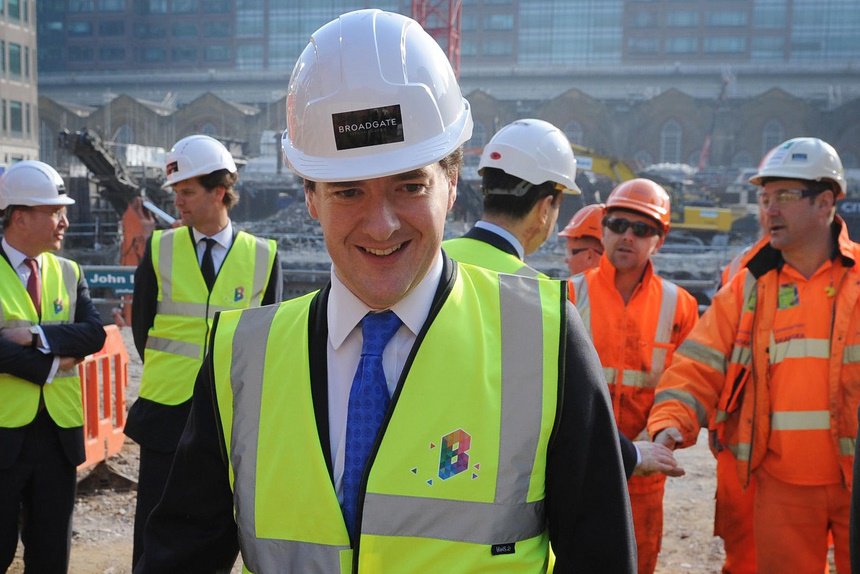
The chancellor talks about helping people get on the housing ladder, but other than helping them get into more debt he has done very little. He knows which side his bread is buttered.
Conspiracies abound and conspiracy theorists make a good living pandering to our natural suspicions. The vast majority, including those surrounding Marilyn’s and Diana’s deaths, are nonsense. They persist because we find it hard to accept that famous people are subject to the same chance, and often malign, forces as the rest of us.
But that there are out there a fair few I have no doubt. I believe them to be almost a part of the human condition – from the tiny trader, like myself, who might wish for a private arrangement with a fellow trader not to undercut each other to a mighty conglomerate who might wish to do the same. OPEC is a perfect example. It has also to be accepted that the great majority are successful and that, as a result, we never get to hear about them.
I am a natural born sceptic – which perhaps has something to do with being called Thomas – and while I try to maintain an open mind, I have to admit that some theories are outlandish to the point of being funny. A couple which immediately spring to mind are that the pyramids were built by aliens and that the photos of the moon landings were trick photography.
I do, however, believe that the universe is teeming with ETs. With 100,000 galaxies in this universe – and science is starting to believe that there may be many universes – it surely is down to numbers. However rare may be the incidence of all the important factors coming together to make life possible – the so-called Goldilocks Effect – I find it inconceivable, with such numbers, that it only happened once. Furthermore, I believe that when these factors do coalesce, sooner or later, life is the inevitable consequence.
But returning to Earth and our penchant for conspiracies, I believe I have cottoned on to one which may go a long way to explaining why, when there is a clear need for many more houses, it never seems to happen. It is because the politicos are terrified of bringing about a downward spiral in the value of houses. It is not a conspiracy in which a handful of people have got together, but rather an acknowledgement that one’s home is typically his only significant asset.
Meantime, millions languish in rented, overcrowded and often substandard accommodation, desperate to buy their own homes but unable to do so because house price inflation has advanced at three times the rate of general inflation and as a result the deposit required is beyond their reach.
No one can argue against our desperate need to build more houses. Unlike Japan with fewer divorces, a falling birth rate and zero immigration, we are high on all three; people splitting from their partners need separate homes, a rising birth rate requires more houses (down the line), and millions moving to your country will require places to live.
During the recession the construction industry was the hardest hit. Didn’t it strike you as odd that its legions of unemployed were not put to work building this extra accommodation? The 100k houses built last year was less than half of what was required. What would happen if supply at long last rose to meet demand? The iron law of economics says prices would fall. What pushed house prices up to their present level, racing ahead of general inflation at a crazy rate? Easy credit and too many would-be buyers chasing too few houses. The real question is: if all the political parties are agreed on the need for more houses, why doesn’t it happen? After all, builders would set-to with a gusto and buyers would have not just a house but one at a more affordable rate.
Cameron and Osborne promised a relaxation of planning laws in 2010 and pledged to free up more land for development, but this government has so far failed miserably to deliver. Why is this? The answer, I fear, is that present mortgage holders have an interest in not just maintaining prices but contriving to force them up still further. They love a situation in which they are getting richer by doing nothing. Many are making more on their house annually than they are getting paid, with the difference being that living eats into their salary while nothing eats into their unearned capital gains. So just let a politician come along who threatens this nice little arrangement. That greatest of all feel-good factors would disappear down the plughole. To prick that love affair with rising wealth would make them incandescent with rage.
But in many ways crazy house prices might be compared to fools’ gold. Unless you’re going to flee abroad to a cheaper domicile or downsize, which most don’t want to do, then there are no tangible benefits. So how do the politicos keep them happy in this delusional state and excuse themselves from doing their duty to the homeless? First they acquiesce in keeping planning laws fiendishly difficult and listening too much to the ‘not in my back yard’ arguments. Then they waffle on ad nauseam about converting brown field sites. Then they pedal the greatest fiction of all: that our island is in danger of being concreted over.
Next time you fly over our green and pleasant land, look down and see what proportion of our lovely acres remain green. The Office for National Statistics have produced some very interesting figures on this. I invite you to read a BBC News article titled ‘The great myth of urban Britain‘. You will be happily stunned by the stats provided. It turns out only 2.27% of England’s landscape is built on. Just look out of your airplane window if you’re in any doubt.
Have the years in Downing Street addled the PM’s brain?
I am glad the government has banned that sinister-looking council vehicle going round with a camera on the top. We all had deep misgivings about Google trundling round photographing everything in sight, but at least that wasn’t a means of filching money out of our ever more depleted pockets and there were many clear positives to the whole operation.
Ours is the most spied on country in the whole world and, to our shame, that includes N. Korea. What is it about those in authority over us that they treat us as they do? Is it that they don’t trust us? They’ll have plausible answers of course – they always do. Not the least of them is that catch-all one of ‘combating terrorism’. But we combated IRA terrorism for thirty years without compromising our essential liberties.
We have to be very careful about going down the path of the surveillance state. The powers-that-be, including the town halls, seem to relish lording it over us – watching our every move, socially engineering us, politically correcting us, and nannying us with a patronising ‘you know it’s all for your own good… don’t get yourself worked up’ sort of attitude. The fact is we are right not to trust them; all the time they are taking liberties with our liberties.
The Cameron government promised more openness. ‘Transparency’ was the word. And all the while the Court of Protection – another Blairite invention – continues on its merry way (except that it isn’t at all merry). Terrible injustices are daily taking place behind closed doors with social workers being treated as if they are expert witnesses and who, in too many cases, are themselves operating behind closed minds. Even the President of the Family Court has expressed his extreme disquiet and called for less secrecy, but still the injustices go on.
David Cameron has called for Magna Carta to be taught to every kid. Is this the same David Cameron who wanted recently, for the very first time in English jurisprudence, to hold a trial so secret that even the very fact that there was to be a trial at all was not to be disclosed? Magna Carta, indeed. Who can forget that cringe-making, toe-curling interview with America’s most famous interviewer, David Letterman, in which the British PM didn’t know what Carta stood for. Eton educated, was he? With a first-class honours degree from Oxford thrown in for good measure? Something went badly wrong there. Even little old me, educated in the Foundling Hospital and at work at fifteen, knew that. Perhaps it is the years in Downing Street that have addled his brain. That hothouse of intrigue and backstabbing must take its toll.
But don’t think me ungracious to our Dave. For all his many deficiencies, he has turned the economy round and we must give him credit for that mighty achievement. There is also a real chance that our kids will stop sliding down the international education league tables and begin the climb northwards. Then there’s that pernicious client state of welfarism that Gordon Brown positively pushed which is being dismantled and a sensible one – such as the Welfare State’s founder, William Beveridge, wanted – being reinstated (but still in a far more generous form than ever he envisaged). So each of these important areas which will determine our nation’s future we must give the present incumbent of Down Street credit for.
Putin is no a fool
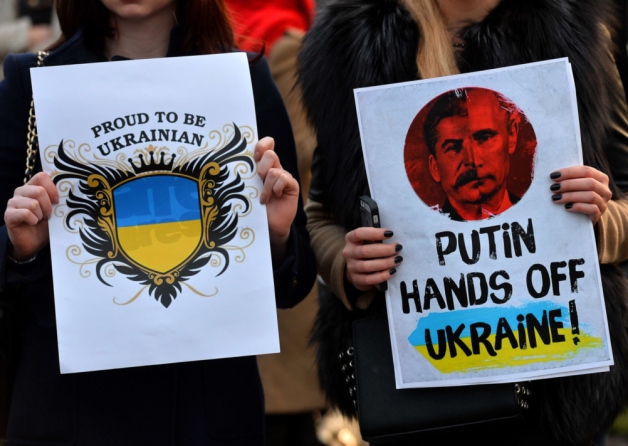
A great opportunity was thrown away by the West when Putin first came to power.
What are we to make of developments in Eastern Europe? It is one thing to have a squabbling clutch of Balkan countries at each others’ throats, as we saw in the breakup of the former Yugoslavia, but quite another to have the Russian bear stomping around with what looks like a very sore head. Europe, historically, never expected anything sensible coming out of the powder keg of the Balkans. After all – at its worst – it gave us the First World War, but since then Europe has never had to worry too much about that region disturbing the peace of the continent as a whole – only its own.
The chief reason for its instability were those many hundreds of years that it lay under the yoke of the Turkish sultan who did his best to turn as many of them as he could into Muslims. So in that corner of Europe you have not just a religious divide, such as we still have between Protestants and Catholics in Northern Ireland, or Sunni and Shia in Syria, but a divide of Faiths itself: Islam and Christianity.
But none of this exists where the bear is concerned. He belongs to the Christian community of the West. His trouble is that, unlike us, he has not yet come to terms with the loss of empire. It is, after all, only twenty years since the Soviet republics – there were thirteen of them – gained their independence. Russia still believes, deep down, that those countries rightfully should belong to it or at the very least should be under its sway.
Putin, the Russian leader, knows that the warm water ports of the three Baltic republics will never be his again; they are too close to the West and with long historical ties to it. But, more to the point, they now enjoy the protection of NATO – the best life insurance policy they could have taken out. Even now NATO planes, including our own, are sweeping Baltic skies daily. The message there is ‘thus far and no further’.
A great opportunity was thrown away when Putin first came to power. He wanted desperately to gain acceptance from the West, but foolishly his overtures were spurned. Even as late as his second presidency he offered to open up his vast country into a free trade area which would extend from Lisbon in the extreme west to Vladivostok in the far east. Instead of looking seriously at this, what did the West do? It pooh, poohed the notion and even provocatively poked the bear by offering deals to Russia’s former vassal states, Moldova, Armenia and Georgia – the latter two far from Europe’s heartland.
Undoubtedly, down the ages, Russia has been Europe’s perennial headache – and I’m not just talking about the seventy years of the Communist era. For almost all of its history it has been a delinquent state and now resembles something of a corrupt gangster state. But it needn’t have been this way. An understanding tutelage by the West after the failed experiment of Communism would almost certainly have worked wonders.
When Russia lost the Crimean war in the middle of the 19th century and the Russo/Japanese war in 1905 it came to a full appreciation of how backward it was, politically and economically. It set about changing this at a fast and furious pace and, by the outbreak, a hundred years ago, of the First World War, it had very largely succeeded. Only the curtailing of the Tzar’s autocratic powers remained.
It was the foolish mobilisation by Tzar Nicholas II of his army – much like what Putin is doing today on Ukraine’s border – which brought the whole process of modernisation to a halt. It gave Germany the excuse she sought to smash her militarily before she became too powerful for even the Prussian-led German army to defeat easily. But for the Tzar’s crazy action in plunging Russia into WWI and losing it there would never have been a Bolshevik revolution and no wasted seventy years pursuing the fantasy of a workers’ paradise under Communism.
The Duma – Russia’s parliament – would have long since clipped the Tzar’s powers and turned him into a constitutional monarch, much like our own. She would by now have genuine democratic institutions and, probably, with all her vast natural resources, be the world’s leading economic power instead of running an economy smaller than Italy’s.
Putin, although a bully, is not a fool. He is in fact an intelligent man. He knows that in the long-term his 145 million people cannot hope to get the better of the European Union’s 485 million. He also knows that his armed forces are miniscule compared to NATO’s.
It must be made plain to him that the postwar borders of Europe are sacrosanct and if he insists on challenging them there will be consequences – damaging and unpleasant ones. Chancellor Merkel of Germany is the one best placed to talk turkey to him. He learned fluent German during his years as a KGB operative (a colonel) in East Germany.
Then, when he quietens down, she must tell him that his gifted people – great in the sciences, literature, sport and music – will not be spurned and belittled anymore but will be embraced by the West and led into the comity of nations, so completing the mission which Peter the Great began all those years ago.
Our greatest 20th century premier
Yesterday we buried a titan and she was a woman. Not since Churchill’s bravery when he took the awful decision to sink his French ally’s fleet in WWII, rather than let it fall into enemy hands, have we seen such a brave leader. I even think that Churchill might have blanched at the idea of sending the hugely depleted Fleet that Margaret Thatcher had at her disposal to rescue the Falkland Islands, 8,000 miles away.
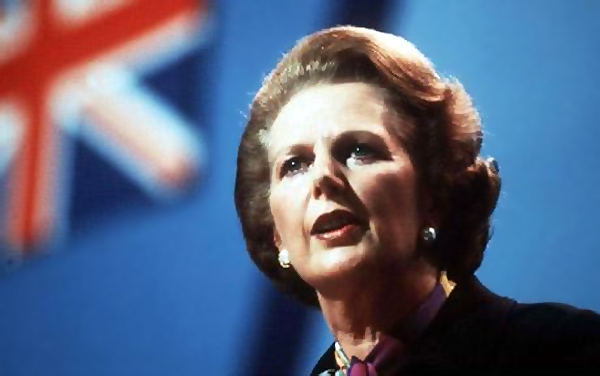
Thatcher has for all time proved – with her competence, drive, bravery and vision – that women are truly the equal of men.
But her bravery extended well beyond the battlefield – something that Churchill’s did not. She took on and defeated ‘the enemy within’, as she called them: the Arthur Scargills, Derek Hattons and Ken Livingstones of this world. ‘Union Barons’, one by one, fell upon her lance until the wheel had turned full circle and we had the fewest strikes in all Europe.
Churchill had his own bitter enemies among the working classes as well as the establishment, but somehow their vehemence had faded under the glow of his magnificent conduct of the war and the glory of his rhetoric in its early days, urging his countrymen to stand fast and not be seduced by peace ‘with honour’ offer which he knew would turn out to be humiliating. But Margaret Thatcher’s enemies never left her in peace, not even in death. Whole swathes of industrial England, Scotland and Wales died on her watch. Most of them were dying anyway (as they had been under Labour), but she did nothing to slow the process.
Yet much the same was happening all over the industrialised West. Mines were closing and shipyards were losing out to cheap labour in the East; steel was being produced in the same areas at Mickey Mouse prices. Long-established and close communities who had come to rely on a single industry became a wasteland. Standing guardian over these nationalised and loss-making industries was a union hierarchy more powerful, many argued, than the state itself. It was said that no law could be enacted without their approval.
Thatcher believed herself to be on a mission to restore Britain’s governance, finances and greatness. She believed she saw a very sick patient whom only surgery could cure. The medicine, she knew, would be bitter and the recuperation hard. But she insisted it would be all be worth it. Some said she was stubborn, and she was. But she could be flexible when she needed to be; she could duck and dive with the best of them in politics, but on core issues, as she saw them, she would not budge. You don’t stay on the way to twelve years at the top (almost as long as Hitler’s Reich) without heavy doses of pragmatism.
Also she was not above using her sex either to get her way. Flirtatious Mitterrand, the French president, thought her coquettish and remarked that she had “the eyes of Caligula and the mouth of Marilyn Monroe.” He fell in love with her ballroom dancing skills. In another world he would have had her – or at least tried.
For all this, Thatcher was an earnest woman, almost devoid of humour (jokes had to be explained to her). She had an almost childlike certainty that she knew what to do to lift the economy out of the pit of despondency into which it had fallen. When 360 of the country’s leading economists signed a letter to tell her that her policies were doomed, she ignored them. Once she was the boss she would brook no backsliders. She was dictatorial, but luckily she was compelled to operate within the constraints of a liberal democracy. But she got the essentials right and, remarkably, that army of doomsayers were proved wrong.
Personally, she was very kind to her staff and to the little people, the ones without power – but she could be brutal to those who wielded it. However, her all-consuming ambition made it impossible for her to be a hands-on mother; perhaps that wasn’t her style anyway. But in her extreme old age she did feel pangs of guilt. She shed more tears over her lost boys in the South Atlantic than ever she did for her own children. It is said that she never went to bed during the three months of the Falklands conflict, dozing instead on a chair, waiting to hear the telephone ring to tell her of more boys lost in the latest sinking. She took it all very personally. Churchill seldom did. An eyewitness told of her sobbing for 40 minutes non-stop when news reached her that another ship had been hit by a missile. When her own torpedo slammed into the cruiser Belgrano and sent Argentina’s sailors to the bottom of the icy south Atlantic, I have no doubt that her mother’s heart felt for those other mothers in far away Argentina. But if ‘cruel necessity’ – Cromwell’s justification for cutting off his own king’s head – called for its sinking to save her own precious boys, she would not hold back.
She was tough beyond belief – far tougher than any of the men who surrounded her. She would not yield to IRA hunger strikers, no matter what. It was a case of an irresistible force meeting an immovable object. It took ten emaciated corpses before the IRA conceded defeat. They repaid her by destroying her hotel and almost her.
Her toughness and certainty of the correctness of her policies followed through to the economic woes which beset the country; her monetarist measures brought record inflation to low levels; her privatisation of loss-making, nationalised industries stopped the haemorrhaging and put shares into millions of pockets, becoming a model for virtually the whole world; her sell-off of council houses made property owners of millions; her ‘Big Bang’ financial liberalisation in the City made London the world’s leading capital market; and her curbing of restrictive union practises such as flying pickets and the closed shop brought order to the factory floor. It is an impressive list and there is more.
But she made mistakes. She believed too much in the service economy and failed to realise sufficiently the importance of manufacturing. She was plain stupid in doing a dry run of the Poll Tax in, of all places, prickly Scotland – even though its principals were sound. (She never had any admirers in that part of the kingdom and still doesn’t.) And she should never have allowed herself to be talked into signing up to the ERM at a rate that shadowed the Deutschmark. Her earlier signing of the Single European Act cost her many of her cherished powers of veto. Also her closure of Grammar Schools exceeded even that of her Labour predecessors. It infuriated great numbers of her own followers.
Too long in power, and with the inevitable hubris setting in she finally gave the game away when she used the ‘royal we’ to announce the birth of a grandchild. Her patronising treatment and her public put-downs of her loyal chancellor and foreign secretary, Geoffrey Howe, were not pretty to watch and her hectoring style got worse the longer she remained in office.
But for all her faults and mistakes, she was nevertheless a force of nature that moved the economic firmament. There was no going back, even for an incoming Labour government. She also moved the political centre ground. It might be said that if you seek her monument, as Sir Christopher Wren once famously stated, “look around you”.
Nothing is the same. She was not interested in spin doctors, focus groups, think tanks, legions of special advisers or even the nasty things the papers said about her. She had a job to do and she would do it come what may. There is a certain courage here also. But if we still have difficulty in recognising her greatness then we have to cast our eyes around the world. All of its leaders are in awe of her achievements. They know a colossus when they see one. They were not distracted by the smoke and din of battle as we were here at home. They could see more clearly where she was headed. Their universal opinion was that Great Britain was a more respected nation than it had been at the start of her reign. Flags flew in many countries at half mast when her death was announced and most of all across the broad expanses of North America. There her name, alongside Ronald Reagan, is revered – as it is too across Eastern Europe, as the liberator from Communism. It was she who brought Gorbachev in from the cold and told her friend, the president, “this is a man we can do business with”. Together, their steely resolve and willingness to do whatever it took, brought the Cold War to a triumphant end. It might justly be said that had she accomplished nothing else, that alone would stand as a fitting testament.
Finally there is the no small matter of a grocer’s daughter – a woman – scaling the heights of a man’s world to achieve the highest office in the land. Women everywhere, and that encompasses the whole world, owe it to her that she has for all time proved – with her competence, drive, bravery and vision – that women are truly the equal of men and that there is no office of state that they cannot handle. In the great scheme of things I do believe that history will place her before Churchill – who, after all, was born to privilege – as our greatest 20th century premier.
Canny Scots should see through Salmond’s humbug
Alex Salmond, Scotland’s First Minister, has now entered the final leg of his seven-year effort to destroy the British Union.

Alex Salmond is not a man of high principal, but rather one who fancies a grander title than that of First Minister.
In September of next year he will throw the most almighty spanner into the works of our 300-year-old marriage. If he is successful the English and Scottish nations will be back to where they were in 1707 and the universally acknowledged happiest coming together of two former foes will be over.
Without a single Sassenach anywhere in my bloodline that I am aware of, I very much value things Scottish and have a natural urge to wish her well. On the other hand, having been sheltered by the English for much the greater part of my life I have come to an appreciation of the many fine qualities which reside in that nation. As a consequence I choose to regard myself as an Anglo-Scot. Both nations, before they joined, had boundless potential, but it could never be fully realised while they spent their time and energy, bickering, eyeing each other reproachfully and often leaping at each other’s throat.
When, finally we made a deal to end the lunacy the results were truly astonishing. An industrial revolution was unleashed upon the world and an empire created the like of which had never been seen in the whole of human history. While maintaining their distinctiveness both nations have cut a dash in just about everything they have put their hand to and, along with Wales, have made a wonderfully harmonious union.
Mr Salmond will also find that separation, if he achieves it, will come at an eye-watering cost. All the institutions which form the modern state will have to be disentangled and new ones re-created north of the border, including (absurdly) fresh armed forces. The Scots should not assume that they will gain automatic entry to the EU as, by their own admission, they will be the resurrection of an old state that had never applied to Brussels to join. It is difficult to see how customs barriers and other niggling absurdities could be avoided were Scotland to go its separate way.
We are in the midst of the longest recession since the Napoleonic wars and Scotland would be unwise to take for granted continued English goodwill if she goes ahead. She should be mindful of the fact that it was English money that saved her from implosion during the Royal Bank of Scotland banking crises presided over by Scotsman ‘Fred the Shred’. The Libor manipulation of interest rates, for instance, was pure criminality. Scotland would also do well to remember that when she was poorer than England during the 70s the ‘Barnet Formula’ was invented to balance out incomes. Scotland has long since ceased to be poorer, but the annual payments go on.
They amount to £1,600 more per head of population than England. Justice suggests this arrangement be ended, but the English are not anxious to pick a quarrel with what some believe is their cantankerous neighbour, who can be counted on to resist fiercely. Many will take the view that the ungrateful Scots are biting the hand which feeds them and when exasperation sets in they might start to say that they would be better off without them anyway; at least financially. They do not forget that Scotland is greatly over-represented in Parliament and that it is the Scottish socialist vote that has kept Labour in power for so many years in England and look where that got us all. They will point out that the public sector in Scotland is hugely greater proportionately than in England and more social benefits are handed out there. In addition they get free university education and prescriptions along with free care in old age. I just hope that these salient facts are not too much to the fore as the arguments rage back and forth during the coming months and that insults do not begin to be traded.
My own view is that Alex Salmond is not a man of high principal, but rather one who fancies a grander title than that of First Minister; one like Prime Minister. For the moment, he proposes to keep the Queen as head of state, but then soon might not hubris drive him on to displace her and become president?
In order to whip up anti-English sentiment Salmond has timed his referendum with the 700th anniversary of Scotland’s greatest military triumph over the English at the Bannock Burn. Also he hopes to benefit from the afterglow of chauvinism following the Commonwealth games in Glasgow a few weeks earlier. Lowest and most desperate of all, in my view, is his insistence that 16-year-olds should be allowed to vote. Clearly he believes that these immature minds are easy fodder for his manipulation and will be swayed by all his nationalistic angst. But does anyone, including Salmond, seriously believe that such weighty issues, which have the potential to change our political landscape forever, be properly understood by people with so little experience of the world? As one Scotsman to another I say to Mr Salmond you are a humbug. Now there’s a good old-fashioned word, but one that in my eyes sums him up perfectly.
Those who have not rumbled him already will surely do so when all the arguments are laid before them and they will send him packing. I know, like Tony Blair, he has the gift of the gab and has an answer for everything, but his people have something much more valuable and big going for them: they are CANNY.
Mid Staffs is a man-made scandal
I have not written about anything that causes me so much pain as this article does. This is because as a Briton, proud of what my country has achieved down the ages, I am ashamed of the shocking scandal unfolding in what was meant to be our pride and joy: the NHS. Nothing in my experience begins to compare with the sheer magnitude of it all; the needless deaths, through wanton neglect, of almost certainly thousands of people in our hospitals.

SIR DAVID NICHOLSON: Fish rot from the head
Fish rot from the head and any man – and we speak of Sir David Nicholson – who believed that the totalitarian system that was once the USSR was a good thing should never have been put in charge of such an organisation as the NHS. Apparently his hero was the gruesome Soviet leader, Leonid Brezhnev. It shocked me how readily and swiftly the PM and Heath Secretary sprang to his defence. Perhaps it was because Nicholson had a reputation, when ordered to do things, of carrying out those orders. While that may be so, the consequences, as whistleblowers made clear to Nicholson, was an unfolding tragedy of epic proportions. But orders are orders and Nicholson ploughed on, heedless of the human misery he was unleashing. In order to achieve his purpose and and keep to his ‘good’ name as a man who could be relied on to deliver, a climate of fear was created throughout the NHS. How very USSR-like.
I will not detail the horror stories which have emerged: you are all familiar with them. But instead of being reassured, looked after and returned to health, where possible, people died in their hundreds, indeed – across the NHS – in their thousands. A single hospital stands accused of up to 1,200 deaths.
We all remember the unconscionable time we often waited for routine operations and A&E. The last government decided to do something about it. Everything was done with the best of intentions, but as we all know, the road to hell is often paved with good intentions. When it became apparent that their action plan was not working out, another well known maxim kicked in: the law of unintended consequences. At that point Nicholson and his Labour masters should have paused and taken stock. But they did not.
So what has become of us that we have failed in almost the most fundamental of all our duties, the care of our old? When our troops burst in on Belson concentration camp they found a level of horror – of man’s inhumanity to man – not known in the whole of human experience. We put the perpetrators on trial and hanged them. At their trial they pleaded that they were obeying orders. What they did not plead – though they might have done – was that they had been conditioned for years to see their victims not as human beings, but as the lowest of the low – a sub-species – not worthy of using up precious resources. I fear that when our old people – be they in care homes or hospitals – fall into frailty, incontinence or dementia, something of a similar attitude takes hold in disquieting numbers among those charged with looking after them. Yet in their case they do not even have the excuse of saying that their government had told them their charges were worthless. So, what is it that allows lethal, criminal neglect, which were it directed at a child or even a dog would send us into paroxysms of fury ending in stiff prison sentences but does not do so with our old and helpless? I truly do not understand it!
What is incredible is that the unfeeling apparatchik who presided over it all was not only not held to account, but promoted to the top job in the NHS. How very public sector-like. And this man – would you believe – is judged by himself (and Cameron) to be the best person to sort it all out even though he admitted to a Commons Select Committee that he had no idea what was going on in the wards. Well, it’s a funny kind of CEO – in whom 90 per cent of his own workforce have no faith – that hasn’t a clue what the troops are up to. And even funnier that such a level of incompetence should inspire the political leadership to think that in this broad land of 63 million there is none better.
The Francis Report into the failings of the Mid Staffordshire Hospital Trust wanted to name names, but using, as ever, our money – just like the BBC – the ‘fingered’ individuals engaged the sharpest, most expensive lawyers in the business to threaten Robert Francis with law suits. After three months of arguments and delay, he buckled. It all, thereafter, magically became the fault of ‘the system’. Nothing, said the chastened Francis, was to be gained by ‘scapegoating’. Sorry, Robert, but people did this thing and people must answer. Start with David Nicholson and move down to ward level. It cannot be too strongly emphasised that the whole farrago involves multiple, pitiless deaths which on a head count makes the Harold Shipman outrage look like a trifling matter. And at least Shipman’s victims were despatched painlessly and their road to Calvary travelled with great expedition.
A chief characteristic that distinguishes our species from every other in the animal kingdom is our sense of dignity. From the moment we get up in the morning to the moment we go to bed, we carefully nurture the image of how we wish the world to perceive us. Take that away and you have inflicted the cruelest of hurts. So being careless of people’s nakedness and forcing them into adult nappies because it is too much trouble to help them to the toilet is unforgivable; to leave them in soiled, cold, soaking sheets covered in their own dried excrement caked in overgrown nails which nurse graduates feel too grand to cut is beyond my powers of description; to force them to struggle to reach for water and food which is beyond reach is totally criminal.
Death is the single most difficult event that any of us will have to handle. To meet it in squalor, neglect and suffering over a protracted period with all dignity stripped away is impossible to equate with a civilised society. In my view we are all guilty, every last one of us – just as the entire German nation was guilty of the Holocaust. In both cases we allowed it to happen on our watch. We strut the world stage fixated on our favourite hobby horse, Human Rights, lecturing anyone unfortunate enough to cross our path on the virtues of compassion, yet we show nothing of it on too many of our wards. Shouldn’t Charity begin at home?
Those charged with looking after the fathers and mothers who fought two World Wars for us, and whose sacrifices in the years following brought us social security and prosperity, have a sacred duty to perform. They should remember that they were not always the sad, helpless individuals they see before them, but once vibrant men and women who held down jobs and brought up children. If it would help them to understand this, let a photo be affixed to the head of every bed to show their carers how they looked in their glory days and let a caption tell the story of who they were and what they did.
A poisonous legacy
History will not be kind to Tony Blair. He found Britain a prosperous place – having recovered spectacularly from the ERM disaster – and left it virtually bankrupt and mired in two unwinnable wars.

History will not be kind to Tony Blair
Some might say this is a strange thing to claim concerning a prime minister who won three successive elections and even today is held in sufficient international regard to be appointed by the quartet of EU, USA, Russia and Britain to act as Middle East peace envoy. So why do I take issue with these two salient facts? It is my belief that our former prime minister succeeded in taking in not only ourselves, but a great part of the world beyond.
Blair took little old me in back in 1997. Indeed, if we cast our minds back to that now distant time it seems extraordinary that a government should be thrown out of office when it has got the economy into a rock solid position (so solid, as I recall, that it was starting to pay down the national debt).
Received wisdom tells us that it is the state of national finances that decides elections, yet the ‘grey man’, John Major, went down to a resounding defeat. Why was this? Partly because he was that ‘grey man’ and lacked charisma, whereas his opponent had oodles of it and was young as well as good-looking. And there had also been a series of huge embarrassments for the Conservative government: ‘cash-for-questions’; the armed forces procurement minister having his Paris hotel bill paid by a Arab Sheik; the gaoling of Jeffrey Archer; sexual shenanigans from a government that preached ‘back to basics’ (nobody knew at the time that the PM himself had had a dalliance with Edwina Currie); and then there was the mighty cock up of our ejection from the ERM which did so much to destroy the Tory’s reputation for economic competence.
Often forgotten is the fact that all three parties, along with the CBI, the Institute of Directors and just about everybody else was gung-ho for entry to the Exchange Rate Mechanism. It was therefore rank hypocrisy later for the opposition to use this as a stick with which to beat the government.
But I believe the biggest of all factors in Tony Blair coming to power was the national weariness of seeing the same old faces in place for 18 years. Blair seemed like a breath of fresh air; and how could we know that we were about to embrace the Nigel Havers of politics? But the one factor which still made the nation hesitate was Labour’s own reputation for fiscal incontinence. Indeed, every one of its administrations had gone down in a welter of financial mismanagement. To allay these last remaining doubts, Tony and his glowering, thwarted would-be leader Gordon Brown pledged faithfully to hold to Tory spending plans for the next two years.
So the die was cast and ‘Call me Tony’ took up residency in Downing Street. We used to call him ‘Bambi’ early on as he seemed to have no enemies, promising all things to all men with the most winning smile that had ever beamed out to the nation from Downing Street.
My own doubts began with the squalid Bernie Ecclestone affair very early on when all cigarette advertising was banned from sporting events except – mysteriously – from Bernie’s Formula One. For me it was downhill ever after as sleaze piled upon more sleaze, and all from the man who promised a government that would be ‘whiter than white’.
When the two years of financial rectitude was up, a spending splurge of awesome proportions was announced. There was to be no more ‘fixing the roof while the sun was shining’: it was to be spend, spend, spend.
The national debt went through the roof and no attempt was made to ensure taxpayers got value for money. It was just assumed that if you threw enough dosh at a problem it would go away. Instead, it went largely into the pay packets and pension pots of the new elite – the public sector, which was allowed to expand dramatically.
The upshot of it all is that we find ourselves today in the most dire condition that it is possible to imagine. Even private debt has gone through the roof. The spendthrift ‘Prudence’ Brown at the treasury seemed almost relieved to have someone else join him in the bankruptcy stakes. The growing credit bubble – which Gordon called growth – seemed like a never ending jolly, but like the puppet master in Downing Street it was a cruel illusion – all smoke and mirrors. Every pound Gordon borrowed he insisted was an ‘investment in the future’. Some future!
When he was in Brussels, he liked to turn off his headset so he couldn’t listen to what his peers had to say. But when it was his turn, he couldn’t resist lecturing them – in particular the Germans – on sound economics. All the while his bête noir boss left him to it so he could swan around the world offering his own advice and attempting to nation-build with armed forces Gordon constantly denuded of the equipment necessary to carry out his grandiose schemes. It was all very frustrating for the man who ‘felt the hand of history on his shoulder’.
While it’s fair to say the mess that the world finds itself in today would still be there, even without the contribution of Blair and his Chancellor, it is also fair to say that for us in the UK it would be manageable – as it is for Germany, Canada and others who handled their affairs with Gordon Brown’s once favourite word, prudence.
Bill Clinton, another out of the charisma stable of politicians, started it all back in 1998 when he urged Alan Greenspan, the then Chairman of the Federal Reserve, to help poor Americans become home owners – even those with no obvious means of repaying their debt. Thus began the sub-prime tragedy which spread around the world in concealed financial packages. But what did it for us and turned a problem into a disaster was that wild, decade-long spending jamboree.
As for our Tony, he doesn’t see or acknowledge any of this. He’s lost now in his own little bubble. He wanted to be President of Europe, but instead has settled – uniquely and rather unedifyingly for a Labour leader – on becoming stinkingly rich as well as continuing to offer pearls of wisdom to anyone who’ll listen. It worries me that his current successor in Downing Street is one who will. It worries me also that he has always been one of Tony’s fans, and despite everything remains so. What does this tell us about Cameron? Is this yet another judgement issue of his?
As an avowed Christian, it seemed for a while that faith might intrude on the Blair business of governance. There seemed often to be a touch of messianic fervour to his pronouncements. But his spin master, Alastair Campbell, slapped him down on this one, insisting that New Labour ‘didn’t do God’. Some might argue that Tony’s present ambition (he owns seven homes and counting) to join the mega rich club hinders his ultimate passage to celestial regions, and that he should remember his master’s admonition of how it is ‘easier for a camel to pass through the eye of a needle than for a rich man to enter the kingdom of heaven’.
Don’t be a Little Englander
It is likely that I’m going to ruffle a few feathers here, but before I do I would like to say sincerely that I hope my readers have enjoyed their Christmas. The good news is that there is more celebration to come as New Year looms.
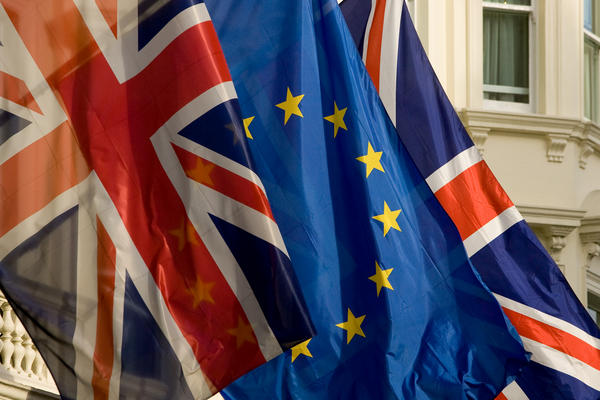
We cannot hope to control which direction the Union moves in from the sidelines.
None of us can say whether there will be more good news as the year progresses, however. We know there is unpleasant belt-tightening up ahead. But will our sacrifices start to pay off? I believe they will. We, unlike Uncle Sam, are pressing most of the right buttons, though more on growth is necessary. What we have to do is hold our nerve on shrinking the state’s share of GDP.
An economy cannot take off if the state grabs too much. The great imponderable, apart from said Uncle Sam’s actions – or inactions, which might push him over the fiscal cliff with who knows what consequences for us all – is Europe. Will its terrible economic travails rain seriously on our, hopefully, improving parade? Again, no one can say.
Europe has been sticking its nose in our affairs for a very long time now. It started with the Romans; then it was the Angles, Saxons and Jutes; then the Vikings; and then the Normans (who weren’t actually French at all, but a gang of settled down Vikings). It ended there – at least where foreign occupation was concerned. After that it was our turn; the boot was on the other foot. Indeed, we have been sticking our nose in their affairs now for almost a thousand years – much strengthened, I have to admit, by this mongrel-mixing that we had to endure – and most effective our interference has been.
It has been our cardinal aim never to allow a single dominant country to conquer and overawe the rest, and so present us with an accumulation of power to which, notwithstanding our island status, we would have no answer. Many times we came close to disaster. Philip of Spain – with his Armada – almost overwhelmed us. Louis XIV, the ‘Sun King’, nearly pulled it off but Churchill’s famous ancestor, the Duke of Marlborough, did for the Sun King and smashed his hopes at Blenheim in Austria. Then came the terrible Napoleon; but Herculean efforts – aided by our burgeoning Industrial Revolution – spread over twenty years, which almost bankrupted us, finally brought him to ruin at Waterloo.
For a hundred years after no power on earth could threaten our supremacy and we went on to build the greatest empire known to man. But nothing lasts forever. A powerful rival in the form of the Kaiser’s Germany came up on us and the accumulated wealth of two hundred years and a bloodletting on a scale never before experienced had to be deployed to frustrate his hopes. Twenty-one years later, what was left of that once incredible wealth, plus more blood, was expended to crush Germany’s revanchist ambitions once and for all. And that is where we are today. We have no more treasure to deploy and we will not send our young men to their doom anymore in such numbers. Luckily, neither will any of the others. All of us have had enough; hence the European Union.
We all wish to prosper in a continent of harmony. We wish to concentrate our energies on getting richer as well as fairer and more compassionate. And as with Japan, the appetite for large-scale war has been successfully eradicated. So far so good.
We on this island, with some understandable difficulty, have come to accept that we cannot any longer play the world’s diva. We are, as a consequence, prepared to join forces with our European neighbours to resurrect Europe’s power and prosperity in the world which it foolishly threw away. But this is conditional on this great union being fully democratic, truly accountable and non intrusive in sensitive areas best handled at home. That is not what we see. This octopus which operates out of Brussels seeks to spread it tentacles into every nook and cranny of our national life. Its servants run a gravy train of quite stupendous generosity and corruption seems to be endemic. For eighteen years its auditors have refused to sign off its accounts. And the worst of it all is that we seem unable to control it. A reckoning is overdue.
Proud nations cannot be dictated to in matters which properly should be decided at national level. In this take on the Union’s shortcomings, we are not alone. We have natural allies in Scandinavia, the Netherlands and, most of all, moneybags Germany. They are desperate for us to stay. Our problem is that with our frustration we allow ourselves to flounce off, with all the terrible risks attendant on being out of the loop.
Outside of the Union, we cannot hope to control which direction it moves in. With such an accumulation of population, wealth and power, its development could be inimical to our interests; and it could even end up threatening us. As the most successful, internationally, of all the European powers, we must have confidence to know that our voice will be heard. Things cannot go on as they are. We have, for instance, finally brought sense to the Common Fisheries Policy which was decimating our fish stocks. Forward now to the Common Agricultural Policy which so harms the poor nations of the world and keeps food prices at home higher than they need be. Forward also with repatriating those many powers which should never have left these shores.
I glory in the diversity of our continent and am confident it will never go away. Italy will always be Italy and France, France. If I mix with the boisterous crowd wearing lederhosen at the Munich Beer Festival, they look (lederhosen excepted) just like me. Our church-driven culture down the centuries has made us – despite our fascinating differences – one civilisation with a single European culture and we cannot, indeed must not, marginalise ourselves and walk away into the sunset. And how gratifying it should be to us that the multilingual family of nations we are fashioning our future with have looked to our language to be their language of choice in order to make our latter day tower of Babel function smoothly. What an advantage that gives us.
So my plea is this: have confidence and believe in yourself. Just as through your earth-shattering Industrial Revolution you touched the face of humanity and left an indelible mark, go out and do the same in Europe. Only please, please don’t be a ‘Little Englander’. It doesn’t become you.
Mind those plebs, Thrasher!
Concerning ‘Thrasher’ Mitchell, the Chief Whip, we seem to have moved backwards in electing ourselves governments of all talents. I am not saying we should discriminate against public school boys, yet at seven per cent of total school population they are grossly over-represented in government comprising over 50 per cent of the cabinet. Sixty years ago the Attlee cabinet was much more representative of the people it governed. But here we are today, all these years on, with one which would not have looked out of place in Downton Abbey days.
 Although Cameron is a personable enough chap himself – one you perhaps wouldn’t mind having a pint with – he seems not to have the wit to see any of this. He understands that the nation’s finances are in dire need of sorting out, along with welfare dependency and educational shortcomings, but he seems to think that only a cabinet stuffed full of stinkingly rich public school boys can be relied on to see it through. The irony is that the two crucial success stories of his administration are likely to be the very ones not piloted by his public school chums: welfare reform and education.
The display of petulance, arrogance, threats and not to say downright abuse that the Chief Whip showed his police guardians – in the very week of grief, would you believe, for fallen comrades – opened a window into the mindset of these privileged individuals who really do believe that we are here to serve them, not they us. Theirs, it would seem, is a god-given right to rule and we should get used to it. The public does not like what it sees.
All of this is disastrous to the man who spent years trying to massage the image of the Tory party into a kindlier, voter-friendly mode. In a little over two years’ time he is going to have to asks the ‘plebs’ if they will give him and his pals a fresh run. It is lucky in the extreme that he faces such a deeply unattractive and discredited Opposition, but that won’t necessarily save him. If there is visceral hatred for his class, fanned by the likes of the ‘Thrasher’, that might be enough to sink him.
In addition to all this, Tory foot soldiers have neither forgotten nor forgiven for the fact that Cameron failed to win an outright majority against the most disastrous government of modern times led by the most unpopular prime minister ever. The fact that he failed in these circumstances and was obliged to put himself in hock to a party that hates his own and spends its time sabotaging so many of its most cherished policies rankles still further. And then there are the multiple instances of poor judgement in his appointments. It ill behoves Cameron, therefore, to adopt all too often a high-handed approach with his backbenchers which can be taken a a sign of perceived class superiority. Dollops of humble pie and signs of genuine contrition should be more the order of the day.
But Cameron’s troubles don’t even stop with those outlined; women (half the electorate) have gone off him too. They have concluded that – Samcam excepted – he doesn’t much like them and that Bullingdon attitudes still lurk beneath the surface. There is real anger that he has shortchanged them, having promised them a third of cabinet seats. The recent reshuffle was his last chance to make good on that promise and he failed miserably.
So for the prime minister there is much to do and little time to do it in. It worries me also that he doesn’t seem much concerned at the drip, drip hemorrhaging of his party to UKIP. Had disaffection not driven so many into their camp he may well have had that precious majority at the last election and the process continues apace. As I see it only one thing stands a chance of bringing large numbers of them back into the fold: he must give them an unequivocal pledge, written in blood, that there will be an in/out EU referendum immediately after the election. Then he must make it clear to them that if they do not respond they will have only themselves to blame for a fresh dose of Labour, but with even more of a Leftish lean. That, together with a hopefully recovering economy, troops home from Afghanistan, robust law and order policies and falling immigration should be enough. Welfare and Education success would be the clincher.
In the meantime he must get all his appointments carefully scrutinised beforehand, stop patronising women (or anyone else for that matter) and put the equivalent of a chastity belt on the mouths of certain of his ministers. As for the ‘Thrasher’ himself, he must go – but not before he has has received a damn good thrashing himself, to encourage les autres.
It was always delicious irony that Rugby School (of Tom Brown’s Schooldays fame) should spawn a character who would go on to be known as the ‘Thrasher’ and that that same character would go on to be awarded the Chief Whip’s job in government. That same whip must now be used on him. ‘Flashman’ Cameron is just the man to wield it. He’s got the perfect credentials.
Our PR-obsessed leaders today don’t cut the mustard
Last week was a disastrous week for the Cameron government, not because of anything the opposition did to it, but what it did to itself. An issue was presented to parliament of such importance that ninety-one of the Prime Minister’s normally loyal supporters could not, in all conscience, back the government line.
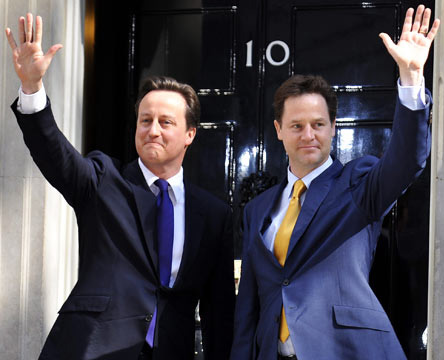
The rebellion concerned reform of the House of Lords. Should we get this wrong – as ‘devolution’ has so tragically shown – and all sorts of genies would be out of the bottle which could never be put back. The Lib Dem’s proposed reforms would land us with an unworkable setup between the two legislative houses and a second chamber, stuffed full of third-rate has-beens who couldn’t cut the mustard in the first house: the Commons. Patronage – itself one of our crippling ills – would, as a result, have been reinforced even further.
No one argues that the House of Lords (which, we should not forget, does a surprisingly effective job) does not need sorting out to make it more democratic. But the great conundrum is how, and we have been pondering that question for a hundred years. All we know is that if we get it wrong there will be the most grievous consequences, as we now realise with devolution, which threatens the very integrity of our country.
The Liberal Democrats want the reformed House of Lords to adopt the very system of proportional representation which was so soundly rejected by the public a year ago with – you may not be surprised to learn – beneficial results for themselves.
We would end up with two forms of democracy in our country, with the new one claiming a more genuine mandate. It seems a given that there would be serious clashes between the two house with each claiming the greater legitimacy; we would end up with the same sort of paralysis which so blights the life of Congress and the Senate in the US today.
Why does the PM test his party in the way he does? Why does he not realise that in a matter of such monumental importance he cannot expect party loyalty to override what so many in his party are convinced is for the greater good of the country? Is keeping the Lib Dems onside worth splitting his party for?
Little by little the evidence piles up that our leader – despite his good intentions – is not over-blessed with sound judgement. And the same applies to his chancellor, his deputy and so many more of his appointees. Remember Andy Coulson, the Downing Street photographer, and Liam Fox’s antics?
For a start, it was foolish – when people were feeling incredibly angry at what the moneyed classes had done to them – to stuff his cabinet with millionaires and public schoolboys, some from his own alma mater Eton College. It was Bullingdon brought to Whitehall, as many perceived. Didn’t he realise that his own privileged background raised eyebrows for some, and that to surround himself in cabinet with more of the same sent out the wrong signals? To reinforce this whole perception of privilege was crass in the extreme.
The government we have today is the most out of touch with ordinary concerns since Palmerston was sending out his gunboats. I’d put money on half the cabinet not knowing within 30 per cent the price of a loaf of bread, a pint of milk or a litre of petrol. Indeed, the Deputy Prime Minister was over 50 per cent adrift as to what a pensioner got. What a shower!
The trouble is that hardly any of them have first-hand knowledge of the workaday world the rest of us inhabit. They move seamlessly from Russell Group universities into think tanks and policy institutes before beginning their journey up the greasy pole. Once ensconced in the Westminster bubble they purport to know and understand the issues that concern the rest of us.
They disburse gargantuan sums of public money without suitable qualifications and experience, with none ever having headed up a public company; and they legislate on matters of which, in so many cases, they have no real experience. They live in the British equivalent of walled communities and don’t know within a million miles what it is to live on a sink estate.
On top of these shortcomings, they are too young. Occasionally, a boy like Alexander the Great or Pitt the Younger can confound the norm, but history is exceedingly short on such prodigies. (Both, as a matter of interest, had incredible fathers.) What is needed in our rulers is men of proven ability who have made their mark in the world.
Here, in our neck of the woods, we have such a man in Gary Streeter: son of a farmer, former solicitor and once Chair of Plymouth City housing. In defence of what he saw as an overriding public interest (rejecting the proposed Lords reform) he waved goodbye to any preferment in the Cameron government, which he could reasonably have expected as a senior MP and former Shadow Minister. That’s what I call guts. It is also high-minded and noble.
Everything today is so shallow. We even require our leaders to look telegenic, be bubbly and have a Tony Blair perma-smile, if possible. Say goodbye to ever getting a Churchill or an Attlee again, the miserable sods. May the Lord preserve us! How will we ever get out of the sort of crises they got us through? We could do with one such right now. But remember: he can’t be ugly, fat or have a speech impediment – like Churchill – or a clipped, staccato delivery like Attlee. No, no, they must be of the sort that can entertain us on breakfast television.

Growing ourselves out of a hole
There is no better way to get yourself out of the kind of hole we find ourselves in today than to grow your way out.
All the emphasis to date has been on the debt which hangs round our neck like an albatross. But while it was right to worry about this and to take measures to bring it under control, now we must get an engine fired up whose sole purpose is growth.
Where can this growth come from? It is easier first to identify areas where it cannot and should not come from; namely the self-indulgent areas such as we had known for the decade before the credit crunch hit us in 2008.
More than any other sector, the construction industry has taken the brunt of the recession. Once, it was commonplace to see giant cranes at work in every city centre, out of town shopping development and business park. Not anymore.
All is quiet on the Western Front, yet at the same time we have a crisis in housing. Millions of newcomers have flooded into our country and they all need accommodation. And while this moribund industry is virtually at a standstill, millions of our young people cannot get on to the housing ladder because prices are still too high.
Nothing is more likely to bring these prices down than a massive programme of building which closes the gap between supply and demand.
More housing means more carpets to be fitted; more furniture and electrical appliances to be bought; more soft furnishings; more blinds; more kitchen utensils; more visits to DIY stores – the list goes on and on. So here is one area crying out for a massive growth strategy.
With interest rates at an historic low there was never a better time to take out a mortgage, if only the product was there at an affordable price.
What about infrastructure projects to which we are already committed? Surely these could be fast-tracked. The Olympic project has shown us what can be slung up in a remarkably short time frame.
And then there’s Boris Johnson’s pet project: the Thames Estuary Airport to complement Heathrow. The estuary project would not only send a powerful signal to the world that Britain is determined to get ahead of the curve business-wise and continue to host the world’s number one airport; it would also be a faith restoring project as well as, hopefully, the world’s most exciting and, perhaps even beautiful, airport. Even the green lobby would have to have all its boxes ticked.
In our efforts to get energy prices down – a very necessary prerequisite for growth – why don’t we and the rest of the struggling West release a large part of those strategic reserves of oil we all built up to fight the Cold War in the event that it became hot? And why, for that matter, are we pussyfooting about getting up the massive reserves of oil which lie all around the Falkland Islands? At a stroke it would make us oil self-sufficient and even allow us to make the European Union independent of Russian or any other single country’s oil. Imagine what clout that would give us in Brussels!
We could set up ‘Enterprise Zones’ in depressed areas with special tax breaks. There could also be NI exemptions for new start-ups as well as firms employing fewer than 50 who take on new employees.
Yet underpinning it all should be massive, irresistible pressure on the banks to make it all possible. And funnily enough, quite apart from the massive liquidity injected into the banking sector via quantitative easing (money printing), Britain’s big and medium-sized companies are sitting on a huge stash of cash, too frightened to spend it. Rather than wasting political capital debating House of Lords reform or gay marriage, the government must develop a more coherent business strategy to inspire confidence in the business community.
With the pound so much more competitive than before the crisis and historically low interest rates provided by our recapitalised banks, we are in so much better a place than our continental rivals who have yet to bite this most difficult of bullets. Altogether we have very much going for us, if only we could be brought to see it.
Growth can also come from the world beyond Europe which occupies 60% of our export market – some of which in the developing world is not in recession at all. In this regard we have a competitive advantage since much of what we have kept of our once mighty industrial capacity is now at the cutting edge – and consequently difficult for foreigners to poach – such as Rolls Royce aeroplane engines and other high-tech earners such as our renowned computer software sector.
While we do not exercise that hard power that we once deployed around the world any longer, we still deploy plenty of soft power. We punch far above our weight everywhere.
There is a huge amount of warmth and goodwill to be found towards us in the world. You have only to look at that great gathering of the Commonwealth of Nations every four years to see that. Nowadays you even have countries which were never part of the empire applying to join the grouping.
I do not see it as fanciful that one day Uncle Sam himself will wonder why he has not re-joined his original family. Perhaps there is some truth in what George Santayana, the famous Spanish-born American philosopher, poet, and humanist, said when he opined in the nineteenth century: ‘Never since the heroic days of Greece was the world ruled by such a sweet, just, boyish master’.
We are mad not to capitalise on all this. And the wheels have been greased for us by the world choosing to speak our language before any other. We don’t even have to take an interpreter with us.

Leading by example
For society to work we must have people whom we can respect and admire.
Every now and then we need a titan, and if the Nobel prize is any measure we’ve had them in disproportionate numbers. In former times, such people were to be found in the sciences, academia, the Civil Service, town halls, the Westminster village, hospitals, the military, the legal profession, the utilities – and yes, of course, the banks.
Of all of these – and there are still many more – only the military today continues to inspire our admiration. But today even our famed ‘James Bond’ Secret Service has been found seriously wanting (i.e. the spook in the bag scandal).
It is a sad state of affairs when we have come to conclude that they are all in it for themselves and are letting us down in the process. At the heart of it all is a me-me culture leading to the devil take the hindmost outlook. Is it not surprising, therefore, that there is a cynicism about such as we have not known before. The turnout at the recent by-elections does no more than reflect that.
Proposals for elected city mayors and police chiefs – which in ordinary circumstances ought to promise so much – have been greeted by a sceptical public as little more than another devious ploy to distract us and deflect our anger. We are not in a mood for more tinkering, and prefer to leave well alone rather than risk additional mayhem from people whose motives we have come to suspect.
Had these proposals come from leaders we had come to admire and trust, does anyone doubt that they would have been received differently? It would have been more a case of ‘well, if this is what they believe is for the best, then we ought at least to consider it seriously’.
Returning to the subject I covered last week – the continuing offensive behaviour of bankers – we are being forced to watch perfectly good businesses being allowed to go down the swanny because banks won’t help. Refusing to use taxpayers’ money – with which we’ve stuffed their gullets so full they are in danger of constipation – to fulfil their moral obligation to save small businesses from the recession they created, they insist on using it to recover from their gambling-induced hangover to begin another binge anew.
We have gone from the sublime to the gawd blimey. One minute they were throwing money at us as though it was of going out of fashion – we all remember the credit cards once raining down on us like confetti – and the next they are sitting on it like mother hens nursing their eggs. Such extreme gyrations were never going to be anything other than disastrous for the general public.
If business activity and growth are now in a trough of despondency, this is because people have finally wised up to reality and are now anxious to pay down the debts that the banks have profited on so greatly. But now that the party has stopped, the banks are being allowed to have their cake and eat it, too.
Having said all this about the banks, we should not forget our own shortcomings; how eagerly and irresponsibly did we succumb to their blandishments to ratchet up our own personal debt levels by taking out second mortgages and spending much more than we earned. And although many have come to realise they cannot continue living beyond their means, we can only hope and pray that once personal debts have been paid off people will not have lost the habit of spending!
But human nature being what it is – and the average chap being no match for these whizz kids of finance – it is not difficult to see who was going to win the argument of persuasion. This is where the government, and in particular the Bank of England and FSA, should have stepped in.
With personal debt levels higher as a proportion of GDP than any country in the developed world, and house prices rising at a rate much greater than wages, the signals were all on red alert.
With all the gloating over Labour’s local election successes this week, the public must not forget that the last government bears a great deal of responsibility for our present woes. How could ministers warn Joe Public against the dangers of excessive debt when they themselves were the standard bearer of borrowing to the hilt? Had they shown ‘prudence’ – Gordon Brown’s now pricelessly ironic sobriquet – then they could have warned against the dangers and taken measures to restrain it.
But as well as borrowing like there was no tomorrow, the last government increased the burden of the public sector payroll by no less than 64% during its time in office.
All we can say is that these hard times are teaching us some very hard truths. History, however, does show us one encouraging thing: there never was a recession that sooner or later did not yield to better days.
The financial crisis has all given us no end of a reality check. Let’s hope that in so doing it has taught us no end of a lesson.

The weighty matter of elected police chiefs
Nothing has filled me with despair recently so much as the news that that tired old retread John Prescott is to throw his hat into the ring to become the new Sheriff of Uddersfield. You come up with a good idea, and who leaps in to ruin the whole concept but the man we all thought had been finally put out to pasture: the former prize fighter/deputy prime minister.
The idea of elected police chiefs is for us to get a form of payment by results. That is to say, the chief increases the clear up rate of crime, brings order to our streets and thus enables us to sleep easier in our beds. And in return for performing this valuable service, he or she is awarded (and paid) with a fresh mandate and a continuance of his (or her) £70,000 stipend. It does sound like a good arrangement to me to me! So let’s look at this particular applicant’s CV.
He’s certainly been a busy boy during his long career – although, at 72, I worry a bit that that it’s just too long. His cheeky-chappie approach would undoubtedly go down well with the binge drinkers of a Friday night (the same people he’s promised to sort out). And his beer belly should also appeal to many, allowing him to empathise – always a most important consideration in this touchy-feelie age. But against this there’s the risk that if he’s provoked he might strike out. After all, he has got form in this department and a GBH charge is not something that would sit well on a police commissioner’s record.
But let’s get serious for a moment and look at Two Jags’ actual record. It is acknowledged that he was appointed deputy prime minister not just as a sop to the unions, but in order to keep peace between the warring prime minister and his chancellor… a sort of honest broker. Ten years of backstabbing and plotting between the two made a mockery of that and proved even beyond Prezza’s giant abilities.
Ever resourceful, and looking for something meaningful to do, he came up with the idea of regional authorities. What an ineffectual and horrendously expensive exercise in futility that turned out to be. But not to be deterred, he pressed on.
His next idea was to knock down street upon street of houses right across the land which his office deemed not fit for human habitation. It later emerged that they could have been renovated for a fraction of the cost of replacements and kept vibrant communities from disintegrating. But Two Jags, as he will freely acknowledge himself, was never very good at sums in school.
He wanted more development, so his next ‘Big Idea’ was to allow rejected planning applications (often sent back for good reasons) to be sent to his office where his expert eye could peruse them and tell whether the planners had got it wrong. As a result, large numbers of outrageous appeals were sent back to the planners with instructions to allow the development. Prescott could never leave it – nor for that matter some of his office staff – alone. He could never accept that he was, in fact, a man of limited talents.
It adds to the gaiety of nations for every administration to have its own court jester, and ‘Prezza’ was happy to fulfil that role for New Labour – although he never fully understood how much they were all taking the you-know-what.his own side included.
His opposite number in the Tory Party is Boris Johnson. But there is one very big difference between the two of them: Boris is superbly educated. Plus he comes up with ideas like getting rid of London’s hated bendy buses and returning to the much-loved jump on/jump off version. Then there’s freezing of congestion charges and, best of all, the world-beating, environmentally friendly replacement for Heathrow: the Estuary Airport. Most of his ideas make a lot of sense and are in accord with the public opinion. I’m personally looking forward to Boris stepping forward as Master of Ceremony for the London Olympics. Quite what Johnny Foreigner will make of him I wouldn’t like to guess, but I think there’s a good chance that, like so many of us, they’ll love him. At the very least we can be sure that he’ll create a sensation of some sort.
But returning to the hoped-for revolution in policing: this is a once in a lifetime chance to get the system sorted. The last thing we need is for a plethora of failed has-beens to prove all over again how useless they are; it is desperately important that we have people of proven track record and of the highest calibre if we are to have any chance of success.
We have strayed so far from policing as we would like it to be, and in many respects the Force no longer commands the respect which should be its due. We spent well over a million pounds on a state of the art police station in my suburb of Plymouth just a few years ago and it’s not any longer open to the public. You can only visit by appointment. Many officers, sad to say, couldn’t even give chase to a baddie. With all their Inspector Gadget accessories and body-armour weighing them down – not to mention their Prescott-style waists which so many seem to be developing – it’s small wonder police chiefs recently dismissed a move to introduce compulsory annual fitness tests for serving officers.

The war on motorists is far from over
Few things impact on our lives more than the car. It is our friend, our refuge, almost our starship. So when Philip Hammond, the newly appointed coalition transport secretary, declared that ‘the war on motorists is over’ we all heaved a collective sigh of relief. Here, at last, was recognition of what the car meant to us.
For years we motorists had felt ourselves a beleaguered section of society: milked for all we were worth; told that we were anti-social for not using public transport; told we were a menace to life and limb; and told also that we were polluters of the planet. Never once did the-powers-that-be recognise what the car meant to the public and how we found them such a marvellous means of conveyance – and how we valued that it kept so many of us in work. So twenty months into this government, we are entitled to ask of the evidence that it intends to make good on its welcomed promise of a cessation of hostilities.
Motoring back from my Burns Night supper near Lincoln this weekend, I was struck by the number of newly installed average speed cameras: dozens and dozens of them. We were told that the whole matter of cameras and much else besides was going to be looked at, and that they were going to be confined to genuine accident blackspots – as was their original intention.
Nothing discredits a government more than broken promises. They do, after all, form the basis on which our elected politicians got their jobs in the first place, so it is little different from lying in a job interview.
Almost immediately on my arrival back in Plymouth I learned that Hush Puppy-booted Kenneth Clarke, the Justice Secretary, is to raise spot motoring fines by 66% to £100. What a kick in the teeth that represents. And what a duplicitous example of government two-timing its electors. What’s more, it demonstrates a total disregard for the financial pain people are suffering right now and only provides further evidence of how utterly out of touch with reality the political elite really are.
We deserve better than this. As I have said before in this blog, our motorists are among the most considerate in the world and our death rate reflects this fact. But here in Plymouth I continue to feel quiet fury at the way the transport authorities behave.
Take the Cattedown roundabout East End Development as an example. Long drawn-out and hugely over-budget, it has recently been completed. They have, however, built a superb slip road bypassing the Embankment shopping thoroughfare. It is smooth and congestion-free, without a single house flanking it, nor cross road or pedestrian crossing. Yet it is not fast. Absurdly, they have applied a thirty-mile speed limit and, just in case you are inclined to ignore this piece of nonsense and travel at forty, they have installed average speed cameras.
In the approach to this development coming from the city centre along Exeter Street, there was a road which allowed motorists to safely escape a hundred yards of nose to tail traffic leading up to Cattedown roundabout. Motorists have been taking this exit for years to no ill effect, but with the great benefit that it reduces the tailback of traffic leading to the roundabout. Now they are suddenly banned from this because it has been made one way.
How many streets, I ask myself, across the city have suffered a similar fate? Were the people who live in these streets asked for their thoughts on the matter? Were there accidents or fatalities that forced the planners into action?
I have spoken to people living in the street mentioned above, and they are furious that they cannot enter it any more from both directions. Yet all over the city things have been done to the annoyance of the people who have to suffer the inconvenience. And why? Because some pencil-pushing jobsworth thinks it’s a good idea, I imagine.
It was once possible to save time and relieve traffic on the busy Plymouth Road by passing through the Woodford estate. But now vast numbers of road bumps – which are exceedingly difficult to be taken properly and are often taken dangerously because of parked cars – make this route a nightmare. Again, locals say their views counted for nothing. It was imposed on them from on high – from our masters who know best.
I can only suppose that all over the city, and indeed all over the land, you would hear similar stories of ‘solutions’ foisted on communities with neither proper consideration of their feelings nor proper consultation with them. After all, they are the ones having to live on a daily basis with these foolish, not to say costly, changes. And when mistakes are plain for all to see there is invariably an arrogant refusal on their part to acknowledge them as such, much less to make restitution.
Far away in their ivory towers they hold to the view that the man in the town hall knows best.

The Scots are bigger than Salmond supposes
Scotland deserves better than the opportunistic, smarmy Alex Salmond. He may be hard to pin down on television and have an answer for everything, but he is deceitful and disingenuous.
You do not lightly throw away something which took 300 years to build. And for what? A bunch of self-serving wide boys (and girls) bent on power, privilege and self-aggrandisement; people who care little for the greater good of the people living in these islands.
It is true to say that the take-off point for Great Britain was the union of the crowns followed, a century later, by the union of the parliaments. It set aside animosity and warfare that stretched back to Roman times and seriously weakened both countries. Under the new dispensation, and together with Wales and Ireland, it burst upon the world scene in a frenzy of technological, cultural, inventive and, yes, military/maritime brilliance. It changed the world forever ensuring that the language we all spoke became the lingua franca of the whole globe.
It was disgraceful that under history-lite New Labour the 300th Anniversary of that Union – the most successful ever established – was allowed to pass without national celebrations of any kind, not even a national holiday. So much for Gordon Brown banging on about the virtues of Britishness. He even suggested that more of us should take up the American liking for flying the flag in our gardens. How little New Labour knew about us. That kind of showy patriotism is not the British way. Our love of country runs deeper than they could ever imagine: it is almost spiritual in depth.
Politicians today seldom look to the big picture. They concentrate on short-term advantage, mainly economic. Very well then, let us go down that myopic road a little distance. In 2008 an independent Scotland would have found itself in the position of Iceland: bankrupt and humiliated. Bailing out The Royal Bank of Scotland alone would have been beyond their capabilities, never mind HBOS as well. Only the combined financial power of the United Kingdom saved it from the mad follies of Fred the Shred. Alex Salmond’s silly talk of an arc of ‘Tiger Economies’ stretching from Ireland through Scotland to Iceland would have been shown to be the ludicrous nonsense that it was.
I feel myself to be in a good position to see the merits of both sides. My Scottish mother turned to an English charity to care for her illegitimate baby when Presbyterian bigotry would offer her no shelter in her own country. For fifteen years that charity cared for me, and its influence – along with the many years spent living in England – have turned me into what might be described as an Anglo-Scot.
I see the English as a tolerant, fair-minded people who will resist to the utmost their hackles being forcibly raised. How else do you account for their tolerance of the Barnett Formula which allocates annually £1,624 more per head to the Scots than the English? It was introduced to balance out poorer regions over the more affluent ones. But Scotland today has moved up-scale and no longer qualifies, though England continues to nod through the payment with little more than a sigh. It does not wish to cause an argument with its sometimes feisty neighbour. And how else also do you explain England’s tolerance of free Scottish university places which are even extended to foreigners but not to the English? Or free prescriptions or free care home provision? All that, and much else besides, is courtesy of the 85% of tax payers who are English (yet feel they cannot afford these desirable benefits for themselves).
Slippery Alex Salmond’s sinister game is to ratchet up the ante, slyly and incessantly, so as to provoke the English and set them against their northern neighbour. He is even intent on using the squalid device of timing the referendum to coincide with Scotland’s most famous victory over the English at the Bannockburn 700 years ago so that he can whip up sentiment against the ‘auld enemy’. Imagine if England were to do the same in an argument with the French by resurrecting Agincourt, or in the case of the Scots the Battle of Dunbar! It is all so juvenile, but dangerous nonetheless. Some might regard Salmond as a traitor and it would be easy to sympathise with that view.
The British state is now a venerable institution and its Scottish sons were happy to serve in its glory days in disproportionate numbers as pro-consuls and even prime ministers. Do they feel no affection for the long journey we have made together, nor care for the blood we have jointly shed? Is Britain’s diminished state no longer appealing to them? Did they only want to belong to it while the world was in awe of it?
I think the Scots are bigger than Salmond supposes. He uses a precious gift – an articulate tongue – to low and unworthy ends. And the worst of it all is that he knows perfectly well what he is summoning up: it is called nationalism. And among that scourge’s many defects (some terrible) is his doubtless desire to create lucrative jobs for the boys: Scottish Prime Minister, Chancellor, Foreign Secretary, you name it – a carbon copy of the entire Westminster set-up. But let us not forgot that nationalism has been the curse of Europe and indeed much of the world. It has propelled us into the two most destructive wars in human history and is what the European Union was designed to eradicate forever. In this the EU has been triumphantly successful and I, for one, am mighty grateful that my generation has been spared the blood-letting of the recent past. So in this regard, too, we need to think carefully before we go down the separatist road.
In two weeks time my wife and I will travel north to Newark to attend a Burns Night Supper. After pestering me for years for me to join him, my brother has finally got me to make the effort. I am sure I will have a good time, though with my English accent and no kilt I worry about looking a tad conspicuous – despite being more of a Scot (my father was also of the tartan) than any of the be-kilted Sassenachs pretending to Scottish antecedents. My brother and brother-in-law have lived and worked in England for many years and have never felt disadvantaged or witnessed prejudice. I wish I could say the same about Englishmen working in Scotland.
The English will always root for the Scots in any sporting event in which they themselves have been knocked out, but oh how I wince when the Scots root for the foreigner, even when, during the Cold War, that foreigner was a communist. I understand how minorities have to make rather more noise than their numbers would justify in order to be heard above the din in a union. But the truth is that most Englishmen would actually quite like to be able to boast some Scottish ancestry. When will my fellow Scots stop girning, knock away that chip from their shoulder and acknowledge that they, almost more than anyone, have done quite well out of the union, and continue to do so. They are renowned for being canny. Let them show this admirable trait in the coming referendum.

Not so fast, Huhne
It is unusual for the police to press the Crown Prosecution Service to go ahead and charge a Minister of the Crown. But this is what they have done with the Energy Secretary, Chris Huhne. It is encouraging, too, that they insist they have enough evidence also to proceed against his wife who, allegedly, took his speeding points. I have no doubt that were the matter not to concern two high profile figures – Vicky Pryce, Huhne’s estranged wife and a leading media economist – a decision would have been made many months ago.
What the people of our fair-minded country have always insisted on down the centuries is even-handed justice. I venture to suggest that if the CPS do not decide to press charges there will be a storm of protest. In that event David Cameron could expect a very rough ride at Prime Minister’s Question Time in the House of Commons.
One could begin to understand the government’s reticence if Chris Huhne were a popular figure, doing a good job at his ministry – as Dr Liam Fox was at Defence – but Huhne is widely despised at Westminster and beyond. He gains no brownie points either by insisting that the country has 3,500 wind turbines foisted on it at huge public expense, in denial in the face of the mountain of evidence which shows that they are not cost effective. Desecrating some of our prettiest landscapes seems of no account to him.
The country has not forgotten, either, that here is a man who spent his life rubbishing nuclear power, only to experience a Damascene conversion all of a sudden when he gets his ministerial chauffeur-driven car and realises that there is no way the country can keep the lights on as well as meet its environmental commitments without it.
As for the police recommending that Huhne be brought to book, the government – which might not wish for a third ministerial resignation since, in Oscar Wilde’s immortal words, it will start to look ‘careless’ – should tread carefully. After all, it certainly did itself no favours by refusing to comply with the law of the land by denying an inquest into the suspicious death of Dr David Kelly, the arms inspector. When 19 eminent medics say that Kelly could not have died in the way the government claims he did, then we should be worried – especially when they point out that the inquiry into his death failed to address a series of important unanswered questions. The public smelled a rat most definitely when it later learned that a 70-year gagging order had been slapped on the proceedings. It was the first time in British jurisprudence that an inquest was refused.
This matter has not gone away, so if the government/CPS thinks it can again, within months, insult the intelligence of the British people by saying that there is not enough evidence to prosecute the Energy Secretary, then it had better think again.
***
Germany: hero of the hour?
It used to be said that when America sneezed, Europe caught a cold. Now it’s the other way round, except that Europe has done a great deal more than sneezed; it’s almost taken to its bed. The reason for this is that Europe today is, despite appearances – the world’s economic powerhouse. It has on the way to twice America’s population and accounts for well over 40% of the world’s trade. But it has mismanaged its affairs to the point where the markets have had enough.
We must not blame the markets; they are only a reflection of how the guardians of our pension funds and insurance companies view future prospects. It is their job to identify risk and so protect people’s savings. They do not worry about the Scandinavians, Swiss, Dutch, Germans, or even us (now that we are in the process of balancing our budget and bringing our deficit under control). What they look for are not fine words and good intent – welcome as they are – but action.
They have seen it from us, but they have not been getting it in any meaningful way from Europe. From bestriding the world like a colossus in the lifetime of people still alive (not many, admittedly), Europe has seen its position twice destroyed by the two German wars.
The European Project was designed to ensure that this never happened again. For 50 years, Europe has painstakingly climbed back on its feet. Its people realised that old style nationalism was not the way forward, and today it is a beacon of cooperation and prosperity admired around the world. But all this is now threatened. Ruin, recrimination and bad – if not spilt – blood faces the continent unless it acts fast and decisively
It is to Europe’s great good fortune that it has one economy big enough and strong enough to silence the markets. But the leaders of that economy must step up to the plate. While we all understand why Germany is so paranoiac about printing money, no extra notes are actually printed – it’s just an electronic exercise in today’s world. And that is the point.
Today’s world is very different from the financial circumstances which brought Hitler to power. First, we now know that beggar thy neighbour, protectionist policies are counterproductive. Second, we are a much more joined up, globalised world, with powerful computers assisting our fragile brain capacities. Third, there are the great institutions such as the World Bank, the IMF, the World Trade Organisation, G20, and many, many more which were not in place when Germany’s Weimar Republic wrestled with its horrendous problems. (Not the least of these were the foolish and ruinous Reparations imposed by the victorious Allies in the Versailles Treaty). So Germany can take a more relaxed view today.
While it is important to learn the lessons of history, it is equally important not to be spooked by them. Germany has an historic opportunity to save Europe which its previous militarism helped to destroy. Germany must realise that if its fears and parsimoniousness allow the Euro to collapse, it will be among the greatest losers; its export-dependent economy would reel under the weight of a super valued Deutschmark. Nobody would be able to afford its goods. And that’s another thing! Nobody has benefited more from the reasonably priced Euro than have the Germans.
Poor, benighted Greece, (along, I might add, with the rest of us) has indulged itself on German products and that’s part of the reason it owes so much. There’s an irony in there somewhere, surely. Another irony is that this crisis has ended a British foreign policy which has been central to it for 500 years – even propelling it into any number of pre-emptive wars – never to allow a continental power bloc to develop which would overshadow us.
When our Prime Minister and Chancellor of the Exchequer urge Germany forward into a fiscal union, of which we will not be part, they are doing just that: putting the final building blocks in place which will lead to a united Europe.
It is a measure of the extraordinary trust which has built up that they feel safe to do so. So Fritz now has his chance to be the hero of the hour. Let him look at the big picture and rise to the challenge. Europe will be forever in his debt (literally). The European Central Bank must be the vehicle of his largess. It must be beefed up to the point where it can act like the Federal Reserve or the Bank of England – the lender of last resort.
The consequence of Germany opening up the coffers on all its hard earned dosh will not be without benefit in other ways. Systems will be put in place to ensure that such a drama never happens again; the feckless will be compelled into good housekeeping; corruption will be rooted out; Spanish practices in the workplace will be curtailed and Europe will have the fiscal union which, but for the crisis, it would never have had.
South Europe, despite all these measures, will always need a little forbearance, much like the poorer regions of Britain. We northerners will have to accept that with all that heat you will never get the Club Med countries to beaver away quite like us. But if they are unable to implement the austerity requirements – and they should not be too draconian (remember Versailles) – then they should be let go.
One thing, though, is certain. Either we all do our best to all hang together or we will surely all hang separately.
The foolishness of clever men
I never cease to be amazed by the foolishness of clever men. And I’m not only talking about Conservative posterboy Dr. Liam Fox, the ex Defence Secretary. I could equally be talking about the previous head of the IMF, Dominique Strauss Kahn, and so many, many more public figures.
Our own Prime Minister – a public relations man, would you believe – is not above his own share of foolishness: cycling to work to show his green credentials with the ministerial car carrying his papers following; trying, in these immensely straightened times, to get his personal photographer on to the public payroll; and taking on the editor of the now defunct News of the World against all the advice of people who knew better. These, and other things, perhaps, explain his tolerance of the bizarre goings on of a man he was not particularly fond of.
Are we not entitled, therefore, to suspect that throughout the Westminster Village there is so much foolishness and taking-the-public-for-a-ride-is-OK-as-long-as-you-don’t-get-caught that were we to know the full extent of it all we would throw up our arms in horror and think the expenses scandal a small matter? My own feeling is that while there are still many good and true men in politics and the public service, the dross which rises to the surface is only the tip of a very nasty and deep iceberg.
And in this matter of getting to hear about what we do, imagine how little we would know were it not for an untrammelled press. If this knee-jerk demand of Cameron’s for an inquiry into the press results in the shackles being applied, we will all be the poorer and frighteningly exposed. The rich and powerful will be licensed to do virtually as they please.
The Prime Minister wasn’t so keen on an inquiry into MPs’ expenses (in fact we didn’t get one) and many suspect that the political class see this as payback time since it was the press which rumbled them and took them to task. There is a tremendous urge to protect their own and this crosses party divides.
Why, when 19 distinguished doctors declared their dissatisfaction with the findings of the weapons inspector Dr. David Kelly’s mysterious death did we not get a proper post mortem as the law says we should have done? It took a decade of never ending pressure to get one for Diana. But this ‘transparency, transparency, transparency’ government will still not match its words with deeds where Dr. Kelly is concerned. Are they protecting someone or something? But that unusual gagging order does at least mean that we will eventually get answers. Pity though we have to wait 70 years when everyone concerned is dead. Nice one, don’t you think?
And while we’re talking about protecting their own, why is it that the CPS is taking so very long to decide whether there is a case to answer in the matter of whether the Energy Secretary got his wife to take his speeding points? I would have thought that what with her not having wings to get her to the place where the incident occurred, and a telephone recording of their own son allegedly urging his father to come clean – plus all the other circumstantial evidence – makes for what should be an easy and quick case for the CPS to decide.
The surprising thing is that the immensely unlikeable and oily Chris Huhne is widely hated across all classes, political included. But it may be that a second ministerial resignation from the LibDems (remember David Laws?) would rock the Coalition boat too much. And now with Fox gone, that would be a third cabinet member gone in only 17 months. Not good! Watch this space! We will see if the CPS is truly independent or is prepared to do its master’s bidding. Don’t forget if they charge Hughne they must also charge his two timed, angrily estranged Greek economist wife for aiding and abetting as well as perjury. What a mess! But at least is has the potential, briefly, to distract us from our present woes.
Moving on from the subject of our esteemed rulers, I think the thing that concerns all of us most is what is going to become of our economy and jobs. OK, the years of New Labour’s ‘Cool Britannia’, throwing away a golden economic inheritance, are, happily, now behind us. However, the malign hole that it dug for us is still deep. But at least we’ve chucked out the diggers and have stopped mining. And we’re trying our damnedest to climb out of it.
We’ve already done a lot of the necessary things, including recapitalised – at horrifying public expense – the banks and we’re now the Market’s good boy with stars to prove it. They see us as the one and only reformed sinner and predict a happy ending for us. But how do we see ourselves? All the signs are that we’ve talked ourselves into such a doom and gloom mindset that the prognosis is in danger of becoming self-fulfilling.
So much of life and business is perception. In fact, there are as many, if not more, positive signs as there are negative, unlike in most of the rest of the developed world. But you wouldn’t think so listening to the Jeremiahs all around us.
Unemployment at 7.1 % is two whole percentage points below the US and light-years below poor Spain’s 20%. And it is below the EU’s average. Big business is awash with cash if only it could be persuaded to invest it. But there’s the rub: it won’t if it believes that people are too frightened to spend.
All this talk comparing the situation to that of the 1930s must be shown to be the nonsense that it is. Just look at the condition of the Jarrow Marchers. The poorest in the land live like kings compared to them! We must chill out, as the young people say, and start to believe in ourselves. And start spending! If you don’t spend, the bosses will hold back their investments until you do. And if you still refuse then you can whistle goodbye to any growth to pay down our debt and create new jobs. We’ll be flat lining till the end of time. And we might even push things into deflation as the bosses seek to maintain profits with ever greater productivity (i.e. even fewer jobs). Then we’d really have something to complain about, like owning house having halved in value in less than a decade and still stuck with the original mortgage!
After nothing but a succession of body blows, casino banking, mountainous debts and corruption in high places, we can be forgiven for not being in the jolliest of moods. But cheer up! Next year the feel good factor will return big time, at least for Great Britain. We will be truly great again, if only fleetingly, with the double whammy of the Olympics and the Diamond Jubilee. Perhaps then we will start spending.

 The Last Foundling