Category Archives: UK

The Flags Are Rising
The national awakening on September 13th represents a very strange statement being made by significant elements of the British people. Frustrated, and eventually driven to fury by the refusal of the governing classes to honour promises made to gain their vote, hundreds of thousands of flags of the four nations of the UK will suddenly make an appearance.
Flags for other countries are a cause of little comment. I was in Lithuania recently, and they were everywhere. Even our former colony across the pond will seek out every opportunity, or none, to raise the standard, proudly and unashamedly proclaiming its nationhood. Not so the British. For them there has to be a good reason, one which even unfriendly nations would seem churlish not to acknowledge. Ours are brought out sparingly, even judiciously, one might say. The reticent Brits are never anxious to over-egg their presence, even if their own flag once held sway across a quarter of the planet.
So what has caused this sudden about-turn? It was the bone-headed action of a local authority in cutting down British flags, put up to counter the appearance of a rash of foreign flags of a proscribed terrorist organisation, while leaving the proscribed flags in situ. It was the straw that finally broke a very patient camel’s back. To add insult to injury, the flags of the home country were unceremoniously binned like so much rubbish.
But the London Freedom Festival protest on September 13th, in reality, is about very much more than that bone-headed council. It is about long years of what amounts to abuse of the electorate: lies and bad faith, venal behaviour and pandering to the wishes of foreign states, many of which wish us harm, while all the time ignoring the wishes of the people who trusted them with their vote. No better example of the latter is the Chagos Islands fiasco. We end up giving something we own to someone who never owned it, and then paying that someone billions to lease it back. Tell me that I must have that wrong; but I haven’t. At the very same time we put our national security in peril, as well as that of our closest ally, by handing over the archipelago to a minnow of a state busily cosying up to the biggest threat the democratic world faces in the 21st century: expansionist and militarising China.
Also among the grievances are the years that a small minority of our people have preached to the rest of us of the wickedness of our ways. I speak of the fanatics of the woke brigade, the holier-than-thou bigots, the people who have allowed the tyranny of Stonewall to infect government, the law, academia, big business, the Town Halls – in fact, every agency which is in a position to make our lives a misery. Not only is their bigotry destroying lives, careers, marriages, you name it, but they are busy imprisoning people for voicing their opinions. Today, spontaneous talk is disallowed, since it must first run through the filter of: will it offend someone?
These same sanctimonious know-it-alls even have the gall to tell our young people that they should be ashamed of what their forefathers did around the world, and that a part of their hard-earned income should be handed over by way of restitution. The established church has even made a start on this absurdity by earmarking the first tranche of £100m. Where once our young people were encouraged to laud and seek to emulate the stupendous achievements of those who went before, these contemptible denigrators peddle an altogether different narrative and seek to instil a deep sense of guilt.
But what goes round comes round, and a reckoning is in the making. These young people who are now to be given the vote at 16 by this pork-barrel government are not, it seems, of a mind to vote for what they see as a band of losers. They do not buy into the prophets-of-doom narrative and the Britain-haters. Deep in their bones they know what a massive contribution their ancestors have made to the happiness of humankind. For the truth is their countrymen and women have made the modern world we know today, winning more Nobel prizes per capita than any other nation.
If we go to work in factories, it is because they showed us how to do it. If we trade across the broad expanses of the world, it is because they sought out markets for the products of those factories. If a rules-based order protects those products, it is because they put that order in place. If capital can be raised to produce and grow those products, it is because they became both bankers and insurers par excellence. And when all the toils of making an honest living are done, and it is time to play, who gave the world football? Who gave it golf? Who gave it cricket?
And when China calls its own recent summit of ‘friendly’ countries, was it a multiplicity of national costumes that we saw? No, not a bit of it! It was the English suit, even on our sworn enemies. Finally, when the Great Hall of the People echoed to the voices of hundreds of delegates from far-flung lands, was it Mandarin Chinese we were hearing? No, it was our own sceptred tongue.
So, bearing all these things in mind, and so much more that there isn’t space nor reader’s time for, does it not make utter fools of those who seek to belittle us? And the ones who should be truly ashamed of themselves are those who come from within our own ranks.
Britain’s Role in Shaping the Modern World
Britain has been so lucky. It was perfectly placed for the Industrial Revolution. As an island, it had short lines of communication and transportation with plentiful rivers. Where these were lacking, it dug canals and, forty years later, took trains to the remotest parts of the kingdom. No town or city was more than seventy miles from the sea. Despite its smallness, it had huge reserves of coal and iron. It had displaced despotic kingship with a parliamentary system and had finally become a settled state. Excellent universities worked with inventors and entrepreneurs. Even the factory system and workers turning up at a set time for a set number of hours was their idea. Previously, they had relied on the church bells or a man walking along a street knocking on doors to know the time. Now, thanks to Adam Smith and people like him, they all had affordable timepieces. Hard taskmasters as they were, they were also the first to introduce Bank Holidays.
Commerce was the big driver, even with empire, of which they were often reluctant participants. It even saw itself from the early 19th century as doing God’s work. Its queen, with her dedicated, hardworking German husband, strove to set an example of family life. Is it surprising that before long, they came to believe that the Almighty Himself had appointed them to be a light to the nations? They went out, Bible in hand, to bring the blessings of the scriptures and modernity to distant lands. Their hymns, ‘Jerusalem’ and ‘Greenland’s Icy Mountains’, encapsulate their thinking. All this, and much more, combined with a good business ethos and an all-powerful navy, allowed it to forge ahead to create the world we know today.
How misbegotten it was when I was young to ridicule someone by calling them a Victorian. They were an astonishing breed. However, having said all that I have, any nation blessed with so many advantages would have achieved the same.
The Divergent Paths of Angela Kelly and Susan Hussey in the Royal Household
It still rankles with me, the contrasting treatment of Angela Kelly, the late Queen’s dresser, and Susan Hussey, her Lady-in-Waiting. Angela was ousted from her grace-and-favour home on the Windsor estate, while Susan was reinstated posthaste following her unfortunate dismissal. One, a docker’s daughter; the other, an establishment figure – the wife of a former director-general of the BBC.
During the last twenty years of the late Queen’s life, Angela transformed her couturier image from a lacklustre, dare one say, frump-like one to a colourful, stylish one. For that alone, she should have been awarded a Damehood. But more than this, she became such a close companion – enjoying TV and walks together – that the monarch is said to have exclaimed, “We could be sisters.”
Why on earth did the late Queen not anticipate how the establishment would turn on her friend once she was gone and safeguard her future? She knew the nature of the beast that stalked the corridors of her palaces. Despite the awesome position she occupied, the late Queen was of a humble disposition and should have made it impossible for her friend to be treated badly after her passing. I would like to think – though we shall never know, since royal wills are never published – that she left her a few million in gratitude.
Brexit and Beyond: Uniting the Old Commonwealth
On the seventh anniversary of Brexit, it is both disheartening and exasperating that the project remains shrouded in negativity, with scant attention paid to the opportunities it presents. A dazzling prospect lies in wait for the British government. By overwhelming majorities, the citizens of our erstwhile Commonwealth allies – Canada, Australia, and New Zealand – have signalled their wish for a revival of the kinship that united us at the dawn of the 20th century.
While steadfastly maintaining their sovereign parliaments, these nations envision sharing with us a common defence, security, and foreign policy. They also aspire to enable freedom of movement, commerce, recognition of qualifications, and much more. This collective interest embodies a potential union that could function exceptionally well. Our levels of employment and standard of living are broadly comparable, and almost all aspects of our societal framework; our values, culture, history, parliamentary system, law and language, are remarkably similar. If realised, this would form the largest union globally, and provide a sturdy pillar of support to a beleaguered Uncle Sam.
Objectively, such an endeavour could be considered a straightforward decision and one that should draw cross-party backing. So, why does Westminster hesitate to seize this momentous opportunity? Could Brexit yield a more significant dividend than to reunite our familial ties in such a monumental development? The renewal of this close relationship, now known as CANZUK, holds a promising future.
Our Queen impressed all humanity
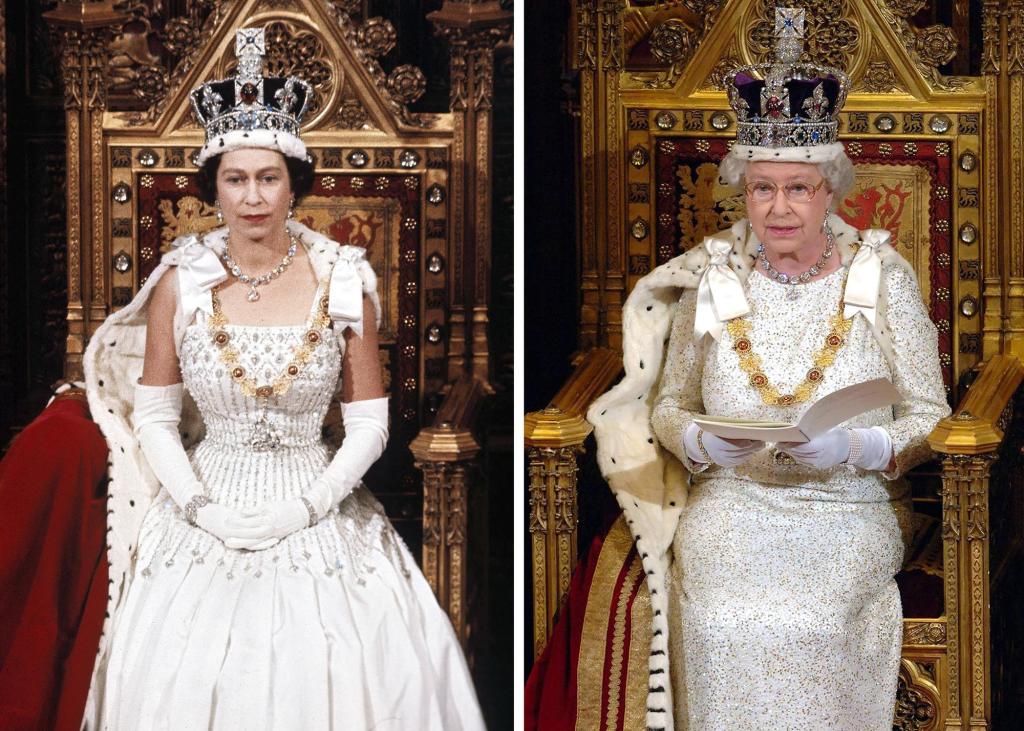
One day in February 1952 when I was thirteen, a man came into my classroom and said that he had an important announcement to make. “The King is dead,” he said. I cannot remember what else he said before he left, but that day has been fixed in my memory all these seventy years. I had known death before, when my beloved foster father had died when I was three and that sorrowful memory was etched too in my memory, especially when we used to visit that sinking mound of earth which was his grave.
Remembered also was where I was – Fulham Road in London – when I saw the newspaper billboard that announced President Kennedy had been shot. Next was the moon landing during which, in the last frantic seconds before Neil Armstrong descended the ladder on to its surface, I was adjusting the aerial on my home’s roof (I made it in time). Fast forward then twenty-eight years to 1997 and you had my young son at 6.30am on a Sunday morning when I got up early to keep an eye on him telling me that Diana, Princess of Wales, was dead. Finally, you had that surreal image set against a bright blue September sky of the Twin Towers billowing out plumes of blackened smoke, and people leaping from great heights to avoid being burned alive.
Now, the whole world – and not just the British people – stand in shock at sudden death again; not this time of thousands, but of a single individual, our Queen. For almost all of everyone’s lives, she had been a constant presence, almost as though she was one of the stars in the firmament. Now that star had not just faded, but suddenly vanished from the night sky. For seven decades she had been head of a still significant country which even in her grandfather’s time had been the superpower of its age. Just five years earlier, and she would have been Empress of India – albeit briefly – had she come to the throne then. The hard power which it had once exercised had been seamlessly inherited by a former colony which shared identical ambitions. That power valued its old boss’s support in the application of the unavoidable nastiness of hard power.
But Elizabeth’s country then set about the accumulation of massive reserves of soft power, perceiving that to be the only power that works in today’s world and does not garner opprobrium. It had the perfect vehicle to achieve this in the Commonwealth. Three centuries now of the Anglo-Saxon diaspora, with its universal language, setting the world agenda and reordering its workings has brought us to where we are now. All this is not lost on humankind.
Queen Elizabeth II was a very homely person who happened to enjoy – if that’s the word – a very exalted position. She was a shy woman brought up with old-fashioned values. She liked nothing better than that everyone should keep the peace, and that included her own family. She was a gifted mimic who could see the funny side of much that was around her, including pompous people who made a fool of themselves in their efforts to do the right thing in her presence. All of us in doing our job, however much we like it, eventually become jaded, but she never did.
More Scottish than English by ethnicity, she loved the songs of Scotsman Harry Lauder. One of his best known and loved was Keep Right On to the End of the Road. And that is exactly what she did. And this simple fact impressed all humanity.
Soon we shall see the greatest assemblage of its high and mighty that the world has ever witnessed; not for an Alexander or a Nobel Prize Winner who saved humanity from cancer, but for a very ordinary human being with a kind heart. Unnervingly for many, especially the old, we live in a fast- moving world which accelerates by the year, but our Queen seemed to embody those aspects of a lost world which we still pine for and hanker after. Like a permanent fixture for all people everywhere.
Heading into irrelevance
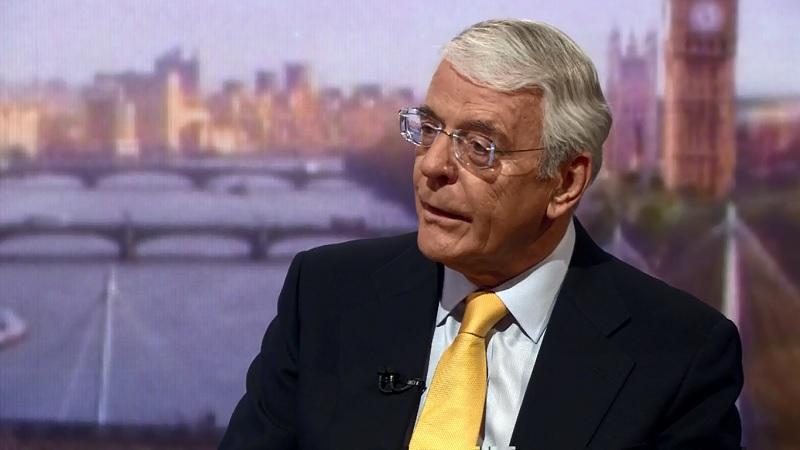
Margaret Thatcher’s successor, Sir John Major, has declared that however well we perform over the next half century, we will never again be a first-rate power. He says that, economically, we will be overtaken by other powers with much larger populations.
I find it astonishing that a man who has sat at the very centre of power can reveal himself as being so astonishingly myopic. Despite his seven years in power, he failed utterly to pick up on what his country was really all about. His lack of historical perspective is also equally baffling.
Size of economy and population do not in themselves confer on you front-rank power. Very soon, India’s economy will overtake our own and its population overtake China’s. Is anybody saying India becomes more significant than us at that point?
Let me list a few of the reasons why I believe Britain will remain a force to be reckoned with and very much a front-rank power. We are the founder member of the Anglo-Saxon diaspora, comprising ourselves, the United States, Canada, Australia and New Zealand. That diaspora formed the cornerstone of the post-war world order and the multitude of organisations and affiliates operating under the auspices of the United Nations – itself a body created by its two leading members. So close and trusting of each other are these five countries that the Five Eyes, as they call themselves, share intelligence to the very highest level and admit no others to their closed order.
The common language these countries share has become so ubiquitous and necessary in the world of international diplomacy, science, medicine, business, the web and the arts that, without any agreement between the world’s 195 nations, it has become the world’s lingua franca.
Britain is the inventor of the modern world. It is a tolerant, law-driven, property-owning, democratic society in which the executive is answerable to the collective will of individuals who maintain a constant watch on what it gets up to through a free media. It remains an incredibly innovative country with a greater number of Nobel laureates relative to its population. It has schools the rich worldwide like to send their kids to and universities that rank among the world’s best.
Also, John Major takes no account of that great empire that formerly straddled the world which has morphed into a free association of nations – fifty-four of them – and forms today such a magnet that some countries which were never part of that empire want to join. That association – or club, as it often likes to refer to itself – seeks to promote democracy and decency among all its members and will reject any state who egregiously fails to meet its standards. In many ways it is like a mini United Nations – though not one which will tolerate tyrants – and it has a touching, almost family aspect to it. All the Commonwealth’s members positively love to meet up every two years and party with no interpreters in sight.
Despite the aberration of the Trump presidency – one quite survivable, as we see, in a democratic society – the United States remains the most dynamic society on earth. The country most admired and trusted by that state enjoys, by definition, a special status as well as an advantage. It has the ear of its best pal as no one else does. Note that, despite a serious difference with Boris Johnson over Brexit and disparaging words spoken earlier about the British prime minister, he was still the first leader Biden picked up the phone to after his confirmation as the president elect.
Then there is our physical proximity, cultural and historical links with the great power which will one day be the United States of Europe. These ties will not go away. We will always need and want each other. Great Britain was just not a proper fit for the EU’s aspirations. Quite apart from this, it would never want to upset us too much for fear that we would retaliate by using our newly repatriated powers to seek economic advantage.
I do believe that Britain has the most polished and effective diplomatic service in the world. This is enhanced by the world’s most respected broadcaster, the BBC. Its World Service is the most trusted of any and listened to avidly even by its enemies. Its documentaries, dramas and period pieces entrance millions.
All these assets come under the heading of Soft Power. It is the only power, realistically, which can deployed in the 21st century. Unlike tanks, planes and warships, it passes under the radar and makes you friends – not enemies. Hard Power is a wasting asset; it is hugely expensive and ruinous to maintain. The ever-increasing restraints of an ever increasingly activist UN make it almost impossible today to go to war without UN authorisation. The war against Saddam Hussein may well have been the last in which that could be done without a mandate.
As for nuclear weapons, the only thing that can be said about them is that they free you from fear of invasion, which is almost certainly why North Korea has impoverished itself to acquire them and their delivery system. Otherwise, they are unusable – so being armed to the teeth is truly a drag anchor. Dynamic as it is, imagine how much more the United States would be capable of were it not burdened with supporting its colossal military-industrial complex. That is the foolish road that authoritarian China is presently going down. While it is true that we ourselves are not free from displaying military muscle – we have submarines that can deliver a nuclear strike anywhere in the world and two aircraft carriers of immeasurable power – we do not let ourselves be carried away.
John Major downplays the country that allowed him, the son of a circus man, to rise to the top – as well as a grocer’s daughter. But among so many other questions, he needs to ask himself what is the attraction of our nation that desperate people will borrow thousands from people traffickers to come and live among us? What makes a man willing to die to reach our shores?
The fact is that we are seen a tolerant nation as well as a successful one. The quality of our judicial rulings brings litigation to London from all over the world. In theatre, drama and music, Britain turns in a matchless performance. Many consider London the coolest city in the world with the City of London the beating heart of an enormous chunk of global financial transactions.
Even the shenanigans of our Royal Family are a source of endless fascination for the entire planet. And when it comes to a state visit, a royal wedding or a funeral, who can put on a show to match one of ours? Brexit may have driven us mad, but the theatre of it all in the mother of parliaments – especially that of its outrageously partisan speaker, Bercow, who so loved the sound of his own voice – made for riveting viewing worldwide. The complexities of the arguments deployed made even the US electoral process look straightforward.
So wake up John Major! You haven’t been right about very much these recent years and you’re certainly not right about this.
The British public are desperate for Boris to be the man we felt we knew
Not in living memory has the entire world been gripped by a fear as great as that which holds it in thrall at the present time.
In this COVID-19 crisis, it seems to me that what is needed more than anything is a sense of proportion. In the lifetime of people still walking the earth, a pandemic struck which killed fifty million of the planet’s inhabitants.
I refer, of course, to Spanish flu. It was a nasty, virulent strain which targeted the young – male and female children and those of military age. These were the ones it liked to sink its cellular teeth into. It wasn’t interested in the old.
Furthermore, you were over one hundred times more likely to die of Spanish flu than you are of the current malignancy. The saddest irony was that millions who had survived four years of shell and shrapnel in the trenches fell victim to this unseen killer wearing no uniform and against which they had no defence.
The ones who perished were the ones society could least afford to lose. Much less was known in those days of the nature of viral spread and reproduction and even less on how to combat it. In that much less regulated and interventionist world, no lockdowns took place.
With COVID-19, it was apparent early on that you were at risk – not just by being old, but if you were obese and/or with underlying health issues. The very young would often hardly know that it had come and gone with them.
Any sensible approach should, therefore, have taken these factors on board with targeted policy measures. People in a high-risk category should have had a protective shield thrown around them and the rest left to go about their business, mindful of the dangers while exercising due diligence. Test and Trace should have been an early priority.
Had this been done, it would not have been necessary to inflict such catastrophic economic harm and all the attendant collateral damage associated with these national lockdowns. Nor would we have mortgaged our children’s’ future with debt levels never before seen outside of world wars. It is likely, in the final reckoning, that as many will have died from delayed treatments for heart disease, cancer, strokes and a multitude of other conditions as have succumbed to this coronavirus.
The country in Europe which has come closest to what I regard as a measured and proportionate approach is Sweden. Their one obvious failure, which was joined by our own litany of failures, was not to have protected their care homes. But at least their economy will have emerged largely unscathed and treatments for other more numerous life-threatening conditions continue on track.
The Swedes are, by nature, a calm people – as once we were – and their appeal has been to people’s good sense. The instinct to stay alive has been sufficient to persuade their socially minded people to do the right thing, and they will reap a rich dividend as a result.
Britain’s own unenviable record of the highest death total in Europe can be largely explained by our Prime Minister, Boris Johnson, dithering over lockdown and our appalling levels of obesity and associated poor health. It seems no coincidence that our even fatter cousins across the Atlantic lead the field in fatalities.
Our country’s latest catastrophic error was Boris allowing himself to be terrorised by alarmist and grossly exaggerated figures of likely fatalities. Four thousand daily were predicted by 20th December. If this was in anyway plausible, 1,000 daily should be dying at this time of writing. The figure is actually 167. Thus the country will be plunged, on the basis of pure scaremongering and out-of-date prognostications, back into an even more economic and mental misery, predicted by many to be even more damaging than before.
Our prime minister’s scientific advisers, Chris Witty and Patrick Vallance – not to mention the government’s myopic scientific advisory group, SAGE – have so much to answer for. Their blinkered, doom-laden tunnel vision would entertain no opinions other than their own.
The British public are desperate for Boris to be the Boris we elected. He can make a start by respecting the opinions of thousands of medics and Nobel laureates whose credentials are quite the equal to his current advisers in the form of the Great Barrington Declaration.
What is it with banks?
Banks are the only firms on high streets still consistently causing queues. Why are they continuing to operate short hours while other businesses are opening as normal? And why do they close on Saturdays and insist on cutting their high street presence even further, against huge public opposition?
A little over a decade ago, their scandalous activities drove the world almost to the point of meltdown, yet they have shown no contrition nor gratitude for what the taxpayer did for them nor rendered up any guilty scalps. And notice, please, how no Royal Commission was ever put to work to investigate that most monumental of scandals. Today, in this world of COVID, the banks continue on their merry way.
As a shopkeeper, I need change. I had to wait twenty minutes on my high street to gain entry yesterday and only one out of four counters was operational.
Part of the problem is that Brits are too polite. We stand in quiet acquiescence to the nonsense the banks are subjecting us to. It is not in our nature to make a fuss. Politicians will not come to our rescue because too many of them look to the banks for lucrative jobs when their days at Westminster are over.
One big mistake was not to let a couple of the big banks go down the Swanee as the US did with Lehman Bros. Considering banks ‘too big to fail’ made cowards of us. Now we must force them to accept their social responsibilities. Easy access to money should be a start and right. Abandonments of dreams to make us a cashless, at least for the foreseeable future, should be another. A little humility would also help.
How the world has changed for Britain in the eighty years since I was born
The United Kingdom was then a world superpower with, by far, the largest navy on the planet and the largest empire known to history. Within a year of my birth, it confronted, on its own, in a Thermopylae-like last stand, the Nazi tyranny which had enslaved all Europe and which was bent on world conquest. It seemed to all to have embarked on a suicide mission.
Roosevelt cabled its war leader in that darkest hour the words of Longfellow:
Sail on, O Ship of State!
Sail on, O Union, strong and great!
Humanity with all its fears,
With all the hopes of future years,
Is hanging breathless on thy fate!
In these troubled times we do not ask our fellow Europeans to repay this debt of blood and treasure, only to remember that when they needed us most, we were there for them.
Only an intelligent and proactive response to the root causes of knife crime will work
Once regarded as an exemplar of decency and civilised living, parents in suburbs of Britain’s capital now fear for the lives of their children going out to meet their peers or even popping down to the nearest corner shop.
Week after week, the stabbings continue. Violent death stalks the young of our cities like a bacillus ready to strike at random. It is amazing that we have stood back and watched this wretched tide of misery rise with almost a detached equanimity. But something happened a few days ago which seemed to shake us out of our torpor. Last week, in quick succession, two seventeen dear old white children – a girl and a boy – died.
It is a terrible thing to suggest, but I believe society gave every impression of not wanting to over-exercise its concerns because the killings have very largely been confined to the non-white community. It was black on black, and mainly part of a gang culture which had developed. How mortifying that must seem to the families of all those other kids who have died to hear the alarm bells suddenly ring and note the attention which the two recent deaths have attracted. Were their children not as worthy of equal attention?
I do not think it fanciful to suggest that if this epidemic of stabbings were happening to white children, the army would be on the streets by now.
There was an echo in all this of the working class public’s justified rage at the efforts and astronomic sums dedicated to the search for the high profile and professional class’s child, Madeline McCann. Were their children not also going missing? Why was Madeline so special? And where was the fairness in a system that only took notice and opened its purse-strings when it happened to the favoured ones in society.
Now that the wider public have finally woken up to what is happening in its cities, we have to pose the question: what is to be done? First, we have to identify the drivers of knife crime. There is no single cause – there seldom ever is – but in my book, lack of prospects must feature highly. Any youngster not benefiting from a stable family life, a decent education and challenging/enjoyable extracurricular activities is fodder for the gang leaders.
No single factor contributes more to a youngster going off the rails than the lack of a father figure in family life. And no community in the country suffers more from this of this than people of Caribbean ethnicity. Sadly, people in this community are the very ones hardest hit by the killings.
If you do not accept this argument about the importance of a father figure, ask yourself this question: how many Jewish mothers are left to get on with it because papa has done a runner? And when was the last time you heard of a Jewish boy being arraigned in court for a knifing, or indeed for any anti-social activity? That is because family life is so cohesive and all-embracing. You could almost say suffocating. The sheer shame of letting down not just your family but your community is enough.
When there is a father figure, why doesn’t dad do his own Stop and Search before his boy steps out on to the street? I know that if I lived in one of the affected areas, I couldn’t live with the thought that my boy might be armed and dangerous. I would have to satisfy myself.
Then there is the matter of policing the streets. If a cast iron assurance were to be extracted from every one of the forty-three constabularies in England and Wales that those twenty thousand cuts in police numbers would be reinstated on condition that every last one went into front line service, we could expect something quite dramatic. Even the peddling of drugs would take a severe hammering. The new officers swamping the streets would come to be seen as the nation’s protectors. They could be expected in their role to accumulate from a grateful populace veritable mountains of evidence as to where the baddies were hanging out. When arrests came, they should be processed in double quick time instead of the hours each arraignment presently takes. That in itself puts a lot of officers off making arrests.
Then we must reinstate the youth clubs and all the related facilities, which were so ubiquitous in former times. When a young person at a loose end leaves the house knowing that his mates are just down the road at the youth club, rather than hanging about on the street corner, he is much less likely to see someone he can pick a fight with to impress his peers.
Of course, so much of the downward spiral begins with school exclusions. While a disruptive pupil cannot be allowed to erode the life chances of his classmates, equally he must not feel that society has washed its hands of him, like in so many cases the father has. Funds must be made available to schools to manage such pupils in a positive and inclusive way. Being chucked out of school and bumping into classmates on the streets later is almost certain to foster a burning resentment that can only lead to trouble, as well as humiliation, for the one that society regarded as a reject. If he cannot gain acceptance anywhere, he will seek it from the last redoubt of what we unkindly regard as the loser: the gang. There he will set about burnishing his credentials by doing something dramatic. A killing in that world would do very nicely. One way or another, a young person will seek the respect of their peers, even if has to be gained at the point of a knife.
What is needed on the part of society is an intelligent and proactive response to all the issues. Compassion for what has gone wrong in the lives of the perpetrators should lie at the heart of it.
Little Harbour is childcare at its finest

Grant has been visiting Little Harbour to teach Jacqui Sweet, Activities Co-ordinator, and children like Jake how to use their new 3D printer.
I recently visited the Little Harbour Children’s Hospice in Cornwall with my son, Grant, who has been giving his own time on weekends to teach staff and children how to use their new 3D printer.
Having spent my own childhood in care at the Foundling Hospital in more disciplinarian times, it was wonderful to see a real-life example of how childcare should be delivered. Unlike the children of my institution, who enjoyed good health in the main, tragically all of the young people passing through Little Harbour’s doors are afflicted with a range of life-limiting conditions. However, thanks to the love and dedication of the staff there, and the truly wonderful facilities and activities made available, these unfortunate children are enabled to live to the absolute full within the limitations of their conditions. The loving staff provide stimulating activities and organise daytrips for the children, and parents are able to stay there too for respite.
Little Harbour, along with many other children’s hospices, benefits from no state funding. The whole operation depends entirely on the generosity of members of the public. This generosity began at Little Harbour with a farmer who donated several of his precious acres to the cause of enhancing life-limited children’s quality of life.
I will be following this blog post up with a more in-depth look at the very fine work that takes place at Little Harbour, made possible by its many benefactors. In the meantime, if you are contemplating donating to a worthwhile cause, you really could do no better than Children’s Hospice South West.
Time’s up for Vaz
Now that the Parliamentary Standards Committee has concluded that the allegedly sick Keith Vaz is restored to health, we hope it can get a move on in investigating his predilection for rent boys. He has, after all, been happily, and by all accounts healthily, swanning around the world while his case has been put on hold.
There never was, with the possible exception of Cyril Smith, a grosser example of a parliamentarian letting that august institution, his constituents and most of all his wife and family, down. The jury in this case can hardly be said to be out when there is video evidence to confirm the whole squalid affair.
Here is a middle-aged man who was assiduous in cultivating a caring, wholly decent image of himself while habitually engaging with young men barely out of their teens for sex. It’s ironic that the young men captured in the recordings were from the same country, Romania, that Vaz rushed to welcome off the plane in 2014 in that much-publicised photo op.
Every aspect of the case appals. The sex was unprotected so that, in selfishly gratifying himself, Vaz put at risk of life-threatening disease his unsuspecting wife. He lied about who he was, passing himself off as Jim, an industrial washing machine salesman. Then, in what I believe to be a serious criminal offence, he encouraged the youngsters to obtain Class A drugs, even offering to pay for them – as long as they hurried up as he declared himself anxious in the recordings to “get the party started”. That, in my book, is known as aiding and abetting.
Most of us want to believe that our parliamentary representatives are high-minded and honourable people. Certainly they like to be addressed as such. But what are we to make of a situation when, against all expectations, following the shocking revelations concerning him that weekend, Vaz nonchalantly and brazenly waltzed into the chamber of the House of Commons the next working day as though nothing had happened. Equally shocking was the reception he received. Instead of a hushed, disbelieving House, there were words of consolation and even back-patting. Were these from understanding and perhaps like-minded colleagues?
Vaz’s smarmy, polished mode of delivery speaks of someone anxious to be thought a thoroughly establishment, Anglicised figure. Unusually for someone born into a Muslim family, his father chose a galaxy of non-Muslim first names. Did dad think that his little boy would more easily gain acceptance by being called Nigel Keith Anthony Standish Vaz? It’s clear Keith never felt any embarrassment as he carried the pretentions and posturing to new heights with his obsessive grandstanding, networking and search for the photo op.
Vaz represents a constituency with one of the highest proportion of Muslims in Britain, Leicester East. In the light of this new scandal, how do his constituents square their faith with their unwillingness to deselect an MP who has betrayed them so outrageously?
And let’s not forget that, as Vaz was engaging in sordid, illegal activities, he was chairing the House of Commons Select Committee on Home Affairs while it was considering changes to the law relating to prostitution and drugs. Was there ever a case more screaming for the Mother of Parliaments to divest itself of an individual who has brought it into such disrepute? Judging from the welcome Vaz received that Monday morning in the Commons, it seems not.
As for that not-small-matter of the police ignoring prima facie evidence of ‘Aiding and Abetting’ a crime, is it that they’re running scared of going after a high-profile figure, especially if he’s not white, a Muslim and an MP? Does Vaz enjoy the same kind of immunity that has served rogue elements of his fellow Muslims so well in the sex grooming scandals in Rochdale, Rotherham, Oxford and Telford (and who knows where else)?
Amazingly, in view of all the many shenanigans of recent times starting with the expenses scandal, we still want to hold onto that long-standing belief that British parliamentarians are a cut above the rest: men and women with the highest of principles who believe in setting an example. But how can we hold onto these hopes when such a character as Vaz is still not only tolerated, but welcomed and indulged in parliament as “the Honourable Member for Leicester East”?
We are currently embarked on a route and branch investigation of sexual abuse in all its forms. We are also determined, once and for all, to deal with sexual exploitation of women and men in the workplace. One gets the impression that parliament would like, in its own case, for this nasty, criminal business concerning Vaz to go away. But we must not allow it. The man has taken us all for fools. We have allowed him to stretch the limits of our patience to an extraordinary extent. The time is long overdue to stop indulging him. The police should reopen its file, his Leicester East constituency party should examine itself and Parliament should get on with booting Vaz out.
We should embrace Britain’s future with optimism
I voted to remain in the referendum of 2016. I did so because I believed that reform of the European Union would inevitably come and that, as a heavyweight insider, we would be one of its principal drivers. I believed that the world was moving towards bigger and bigger power blocks until all, in a distant future, morphed into a world government. I still consider, provided we manage not to self-destruct, that to be the likely outcome.
So why do I now believe that Brexit must be made the best of? First, it was the democratic will of the people. Second, for anyone with an understanding of history, there is no reason to believe that Brexit will be Britain’s undoing; indeed, it may very well achieve the reverse and force it to raise its game. Third, it is the one country in Europe which, because of the peculiarity of its circumstance, could take such a step with a better than reasonable chance of making a success of it. It may not seem so right now, but there is a self-confidence that exists nowhere else among its neighbours. Not one of them would dare contemplate a life beyond Mother Europe. Its perceived embrace smothers them to the extent that they will endure endless pain, à la Greece, and still cling to its coattails.
Why do I take this view? The reason is that Britain’s development has been significantly different. We are an island nation, much like Japan. While influenced hugely by what has happened on our adjacent continent – indeed, regularly interfering to prevent what we perceived as overmighty tyrants developing on our doorstep – we have insisted, nevertheless, on keeping our distance, once the business was done.
Europe’s strength, and its half-millennia dominance of the world, began when it broke the monopoly of the Silk Road’s route into and out of the continent to trade goods. It did this by acquiring maritime expertise and building ships which could withstand three-year voyages and the heaviest seas the natural world could throw against them. This allowed it to trade goods in bulk and without umpteen middlemen taking extortionate cuts along the way stations of the overland route. While this was going on, its fiercely competitive nation states benefited from an overarching and temporising religion, as well as a cultural and scientific breakout led by the city states of Italy which it called the Renaissance. Also, the creation of centres of learning in the universities along with their independence helped speed the process towards the Age of Reason. The rivalry between those city states held much in common with the rivalry that propelled the city states of classical Greece to greatness.
The race across the oceans to explore new riches and bring home old ones naturally favoured the countries with easy access to the Atlantic. That explains why the great maritime empires which came about consisted only of them: Portugal, Spain, England, Holland and France. The next race was to see which of them could become top-dog. In turn it was each. When the dust had finally settled it was England – now fortuitously called Great Britain because of its union with Scotland – which emerged triumphant.
With a revolution in both industry and commerce, a population explosion, vast trading networks and a navy which could see off all others, it is not surprising that Britons came to see themselves as a case apart. Because of their island protection, they had escaped the continental upheavals of rampaging armies and had become quite distinctive – again, much like Japan.
One of Britain’s great strengths is that it was always a pragmatic country. If it worked, adopt it; if it didn’t, ditch it. It was never much interested in dogma or political theorising. That is why it returned to monarchical government after the eleven miserable years of the Cromwell republic. But it made sure that the royal power knew, as a condition of its return, it could never again step out of line in the way the previously executed king had. The lesson was well learned.
Britain’s relative isolation, which fostered evolutionary rather than revolutionary progress – allied to its Protestant work ethic – was one of the reasons its efforts at establishing new countries was so much more successful than its Latin rivals. Compare, for instance, the outcomes for Spain and Portugal’s South American colonies to those of North America, Australia and New Zealand. Even when Britain went to work on existing countries, the institutions and infrastructure it left behind outclassed anything the Latins left in place, and that includes France.
Above all, Britain’s language had become ubiquitous, as had its ‘Beautiful Game’. That game, however, struggled in the heat of the Indian plains so another British game, cricket, is now played in many hotspots instead. Its playtime activities proved almost as alluring as the rest.
All of these and many more are reasons why we Britons should embrace our new future with optimism. Our forebears have sown an amazing legacy. Now is the time to harvest it.
Press freedom in Britain still cannot shake off the malign shadows of Max Mosley and other celebrities

Sir Brian Henry Leveson PC
Celebrities are unable to put behind them the exposure of their peccadillos – and worse – to a sometimes amused, but increasingly exasperated and angry public. Furious that government efforts to control the flow of information concerning them does not seem to be working, the Leveson-inspired Royal Commission on the Press comes back for another bite to the precious, 300-year-old cherry of press freedom.
The Independent Press Standards Organisation (IPSO), a genuinely independent press regulator set up and managed by the press itself, is making a perfectly good fist of the job it has taken on. A huge majority of dailies and periodicals support it; only a timorous, browbeaten rump tow the government and Mosley-financed line. However, this is not acceptable to the proponents of government-approved IMPRESS, whose very name smacks of coercion (that is what we called civilians press-ganged from the streets and impressed into the anti-Napoleonic Royal Navy). Perhaps someone in the government service is into black comedy and hopes we ignoramuses will not be smart enough to see how they mock us, nor recognise their superior wit in demonstrating it.
The discredited Royal Commission regulatory body refuses, absolutely, to go quietly into the night and let the press get on with it. It’s as if it is outraged that any non-governmental body should have the temerity to stand up for itself and, worse, insist that it can do the job better and at no cost to the taxpayer. This last, though, would be the least of its concerns. The latest strictures involve tabling an amendment to the Data Protection Bill currently going through parliament, whose effect will be to make it easier for the rich and powerful to avoid being held to account. For all its occasional slip-ups, the venerable, 160-year-old former News of the World remains sadly missed. How many were the truly outrageous scams, scandals and criminal conspiracies uncovered during its long pursuit of wrongdoers?
Something deeply incongruous lies in the fact that, while the governing class is determined to raise the press and broadcasting bar of exposure of wrongdoing higher and higher, the internet is allowed to go on its merry way unregulated. But here’s the rub! Nothing in today’s world of Internet communication can be covered up either by High Court gagging orders or anything else. One lowly, public-spirited, disgruntled or mischievous whistle-blower, anywhere in the world, can blow the lid off at any time. Within minutes the whole farrago goes viral. When will an out of touch governing class realise that muzzling the press simply redirects a desperate-to-know public elsewhere? That elsewhere is the Internet, where pretty much anything can be said.
Perhaps in the Internet there is hope for the press and the public generally. Truth, as they say, will out. Though in times past the rich and powerful often saw to it that it didn’t, that no longer holds true. With the Internet there is no hiding place. Since our world became reliant on this form of communication, no one can ever again feel safe in their dirty little secret.
So last year it was the Panama Papers. This year the Paradise ones. Even our poor Queen has been dragged into the off-Shore expose, though I don’t doubt for a second that she had the least knowledge of what her thoughtless financial advisors were up to. But someone like Bono is different. That haloed advisor to kings and presidents, gullible enough to believe him sincere with something worth listening to, now knows differently. Both the halo and the ubiquitous, trademark shades have slipped. Perhaps at last the movers and shakers will stop paying homage to the Bonos and Geldofs of this world and press them to get back to the only thing they’re good at: their music.
As for the press, we must pray it continues to stand fast. Once the towering beacon of hope to editors worldwide, it is today the most heavily regulated in the democratic world. How typical that in the relatively trivial matter of a few press excesses – almost all later dismissed in the courts – the government jumped in with the sledgehammer of a Royal Commission. Where is the Royal Commission for that vastly more damaging banking scandal that threw so many millions worldwide out of work and from which we are still suffering. Outright criminality was at the heart of it and it involved trillions of pounds. And as for Royal Commissions themselves? They are nothing more than a convenient leftover – handy for a government seeking to show it is doing something – from the undemocratic days of king power.
If these latest amendments to the bill from that paragon of democratic values, the House of Lords, are allowed to pass then Mosley and his crew will have won. Whether or not IPSO’s heroics keep it out of the clutches of the government-approved IMPRESS, the press will be effectively muzzled. Under the guise of Data Protection and personal privacy laws, they will have found the back door to achieve their purpose. This cannot be allowed to happen.
What are the prospects for Britain outside the European Union?
The UK joined the Common Market, the predecessor of the European Union, from a position of weakness in the early seventies – the sick man of Europe, so the country was called at the time. The package sold to Britain was that of a trading arrangement. Beyond the inner circle of continental Europe’s political elites, there was little to no talk of the true direction of travel, which has always been a United States of Europe.
The first signs of where the so-called European Project was really headed was the Maastricht Treaty in British prime minister John Major’s premiership. The final curtain raiser, during that of Gordon Brown’s, was the Lisbon Treaty. (Who can forget the unedifying way he waited to be the last to sign and went through the back door so as not to be photographed signing away his nation’s rights?)
Since the Maastricht Treaty, Brits increasingly formed the opinion that they were losing control of their country. As a once trickle of Brussels directives – which took precedence over British law – turned into a flood, Brits began to question the whole concept of EU membership. It was the erosion of sovereignty which I believe formed the bedrock of the opposition which finally stunned the world last year with their decision to quit.
High among the concerns of the Brexiteers, as those seeking to leave the project have come to be known, was their inability to determine who should come to live among them and how many. It was like saying that you had a house but no say in who could pitch up to stay in it and in what numbers. Just like that flood of pettifogging Brussels directives came a new flood, but one that took jobs from the least skilled and most disadvantaged in society. Cheap, plentiful labour was great for the professional and governing classes and, of course, the bosses, but not so great for those struggling to make ends meet.
Then there was the concept that a group of jurists in the European Court of Justice – many with apparent questionable legal experience – could impose their foreign, codified set of laws on the UK’s English common law legal system. English common law, built up assiduously over a thousand years, has become the most common legal system in the world and today covers 30% of the world’s population in 27% of its 320 legal jurisdictions. It should be no surprise then that Brits, with no little justification, were proud of their legal system and took offence at the idea that the European Court of Justice knows best.
This, I believe, was at the heart of concerns over Europe. For sovereignty covers almost everything, including who comes to live among us and who makes our laws.
Much as the British feel free to criticise their own parliament, they still find it objectionable that others from outside their borders can order them around – especially when those others have never subjected themselves to a British ballot box. Where democratic, sovereign nations are concerned, citizens should have the chance to turf their politicians out if there is a failure to perform or if they wish to try something different. There must be accountability.
So can the UK prosper outside the European Union? Although I voted to remain because I believed we could better influence reform of the EU from the inside, I have taken the view nevertheless that we can prosper outside. If there is any nation whose DNA shrieks global trade, it is Britain. The world’s first multinational company was founded by the British in India, growing so prosperous that it had to create its own army to protect its interests. Even the great Napoleon acknowledged that we were a nation of traders (he used the word shopkeepers, but in essence it’s the same).
I can understand why the countries of mainland Europe cleave together with none daring to contemplate a future outside the bloc. Theirs has been a distinct experience from that of the British. All have suffered the horrors of defeat and occupation down the centuries. We have not.
Brits may not bestride the world with hard power in the way they did a hundred years ago. But hard power in today’s world, as our American cousins have come to realise, does not work in quite the way it used to. Soft power is a different matter, however, and Britain has oodles of that. It reaches into every corner of the globe and the widespread adoption of English in official business helps to grease the wheels. The Commonwealth, which represents 31% of the world’s population – united by language, history, culture and their shared values of democracy, free speech, human rights and the rule of law – never wanted Britain to join the European Union in the first place. So, yes, it is entirely possible that we can thrive outside.
The same bracing winds which once filled the sails of Britain’s ocean-going merchant fleets may be just the winds needed to force us to raise our already decent game to new levels. We must fervently hope that is the case, for Britain is the one country in Europe whose situation has allowed it to stick two fingers up to the oppressive EU elites with any hope of getting away with it.
Don’t blame immigrants for our problems, blame the authorities
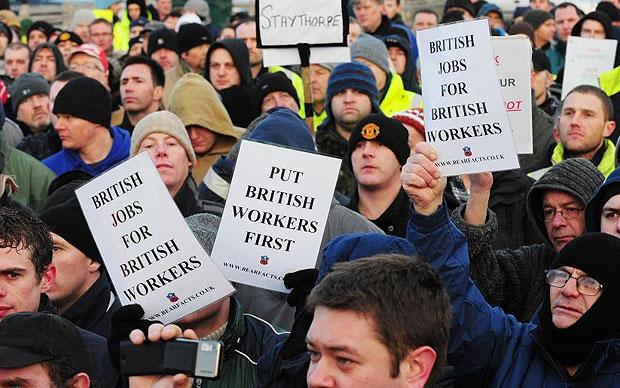
Where was the government’s strategic planning?
In the great debate about immigration, which at long last we are allowed to have, it comes down to a few basics. The grievances the public feel do not primarily concern where immigrants come from, the colour of their skin, their ethnicity or even their religion. It is about numbers.
When the Romans arrived two thousand years ago, it is thought that the population was a little under two million. It took 1,500 years for it to double. Since then – a period of five hundred years, beginning with the first Queen Elizabeth – it has risen sixteen-fold to 65 million. Just imagine if this were to go on. In the same relatively short period, it would have grown to a little over one billion, all packed on to this one small island. Apart from the absurdity of this idea, where would the resources come from to sustain such numbers when we cannot even resource the number we already have and are totally dependent on imports.
When Blair and his cohorts opened the floodgates to the whole world – not just Eastern Europe – he did so surreptitiously by branding anyone who dared to question what was going on a racist. He himself committed what his very own government had passed into law, a ‘hate crime’. Calling someone a racist who is not is just about as bad as it gets.
What, then, are we to do about the escalating numbers? Clearly we cannot continue admitting, annually, the equivalent of a city the size of Coventry or Leicester. Where will we find the money to provide for such numbers? There was never very much slack built into our public services. If we find ourselves struggling in so many areas, may that not be in large part because what slack there was has long since been used up?
Everyone needs access to hospitals, schools, public infrastructure and transport systems, and, yes, a roof over their head. If our young find it next to impossible to get on the housing ladder, it is largely because demand had outstripped supply and forced up prices to unaffordable levels.
I am a great believer in the benefits of immigration, as long as it is managed intelligently. I do not blame immigrants for our problems. I would certainly want to seek a better life for myself within this fortunate continent, especially if I were a member of the huddled, unskilled masses milling beyond Europe’s borders (their desire to come here actually stands as a huge compliment to what Europe has to offer). And isn’t that exactly what we did when we peopled so much of the world with our own, desperate millions?
Many insist that unless we admit large numbers of the young and fecund, we will rapidly have too small a workforce to provide for an aging population that is living longer than ever. There is also an argument to be made that immigrants help to address our refusal to have more babies and so fuel the drive to grow our economy.
But the answer to this must lie elsewhere, namely in raising our productivity. Ours, historically, has been very low and if we get to grips with this and are also selective in admitting clever, qualified people, then we will not need to crack the problem by importing ever more people. One way or another, the inflow has to be reduced. If we fail, then our quality of life will surely fail also. We absolutely have to go down the productivity route. Personally, I find it humiliating that so many abroad outproduce us. It was not always so.
One thing which may come out of this Brexit business is that the cold winds of standing alone again may release in us those forces which have served us so well in times past.
I still cannot get over the bravery it took to defy the massed ranks of the ‘experts’ who told us that we were about to commit the next best thing to suicide. The last time I can recall the experts getting it so horrendously wrong was when 365 economists wrote to Margaret Thatcher predicting doom for her policies. In fact, those very policies made it boom. May not Brexit do the same?
Had the Labour government of the day, when it took the decision to open the floodgates, embarked on a massive programme of infrastructure spending – at a time when we could afford it, 20 years ago – to accommodate the extra demands placed on the system then things would be very different today. But there should, first, have been a national debate to decide whether this was indeed what the nation wanted and whether it was prepared to see its national identity compromised. (There is also the small matter of whether a relatively small island was already crowded enough.) The fact is, the political classes were uncaring of what the public thought about these matters and, actually, were contemptuous of the answers they feared might come back. As always, they thought they knew best. But look at us now!
Police aid Vaz and his MP chums to stick two fingers up to the rest of us

We deserve so much better than slippery Keith Vaz.
What are we to make of the police’s decision not to proceed against the former Minister of State for Europe and ex-chairman of the Home Affairs Select Committee?
The police dropped their investigation into Labour MP Keith Vaz, known to his parliamentary colleagues and the wider public as “Vazeline” for his extraordinary ability to extricate himself from any hole, despite his behaviour clearly being reprehensible in the extreme and questionable as to its legality.
One of the things which most shocked us about the MPs’ expenses scandal was the sheer mean-spiritedness and hypocrisy of it all. Here were lawmakers happy to break the law even in the most mundane and petty of matters. All the time they wanted the rest of us to hold them in high esteem and believe them virtuous. That, indeed, is what we wanted to believe and the reason we were so shocked. We wanted to feel that they represented the best of our country: men and women whose examples we should strive to emulate.
All this is what draws me back to Keith Vaz, a man whose whole career has been mired in a succession of questionable activities. This last episode concerning rent boys is only the latest. Vaz is a man puffed up beyond belief who thinks nothing of intruding on private grief to gain publicity for himself or doing all manner of weird and wonderful things to get into our newspapers and onto our small screens (remember him turning up at Luton airport to welcome Romanian arrivals on the day they could seek work in Great Britain?). Yet for all his grandstanding, ingratiating behaviour – particularly to speaker Bercow whom he relies on to give him excessive Commons airtime – and smarmy talk he is held in the highest esteem by his parliamentary colleagues.
On the very first sitting of his Commons chums following those sensational disclosures concerning drugs and rent boys, he was warmly received when he waltzed in as though nothing had happened. Brazenness cannot begin to describe such an entrance. There were mutterings of sympathy and even back-slapping by various of his colleagues. Indeed, the whole atmosphere seemed resonant of a witch-hunt by a pitiless media out to destroy a good man.
One could almost be forgiven for thinking that many in that chamber may themselves have shared Vaz’s predilection for rent boys.
Few of us will ever have witnessed such a shameful and squalid performance by members who like to address one another other as “Honourable”. For all that, I do not believe that any one of the other 649 members would have had the effrontery to show themselves on that particular day. But this is Vaz. Having bare-facedly brazened it out in the Commons so soon after the story broke, it was to be expected that he would do the same a few weeks later at Labour’s annual party conference. And so he did. It will be interesting to see if his Leicester East constituents show their distaste for the way he has let them, and above all their faith, down by pricking his massive bubble of self-esteem and deselecting him.
As news of the scandal broke, Vaz was Chair of the influential Home Affairs Select Committee which recently had been deliberating on prostitution. That conflict of interest in his febrile moment of exposure was too much even for Vazeline to escape. He stood down.
But squalid and undignified as his exploitation of young, vulnerable rent boys was, something even worse was revealed. At the very time he was heading up the committee investigating harm caused by illegal Class A drugs, he solicited a Romanian prostitute to trot off and bring back some Class A drugs. He even offered to pay for them. Now, if that doesn’t constitute criminal activity I’d like to know what does. Isn’t “aiding and abetting” a crime? Vaz was complicit both before and after the fact. The whole affair was confirmed by video footage – prima facie evidence if ever there was. (Vaz’s wealth has long been a matter of public curiosity. He is rich beyond what his parliamentary stipend would suggest and it would be interesting to learn where his unaccounted for wealth comes from.)
Shameless Vaz, with amazing sangfroid, sees absolutely nothing untoward about what he has done to his family, the House of Commons and the wider public. Incredibly, within weeks of stepping down as Chair of the Home Affair Select Committee he put himself forward for the Justice Select Committee. Did this prove too much, or at least too soon, even for his normally indulgent parliamentary chums? You bet it didn’t. Now he’s back pontificating in his own inimical, self-important way on what is just and what is not. Pomposity begins and ends with Vaz. To use a clichéd but in this case totally justified phrase, you really couldn’t make it up.
Am I alone in thinking that Vaz’s parliamentary colleagues, by continuing to indulge his fantasies, display a huge contempt for what the rest of us think?
The police must re-examine the evidence. Are they afraid of the establishment? Do they need to be dead like Janner and Savile before they will act? Perhaps it is that same kind of reluctance which caused them to hold back for so long in the Rotherham grooming of young girls; maybe Vaz’s faith and ethnicity has acted as a protective shield. That, perhaps – and the establishment’s own efforts to defend one of their own – may explain why this most terrible of scandals has slipped below the radar.
Brexit, Cameron’s demise, Trump, Europe’s travails and, most of all, the terrible tragedy unfolding in Syria have all fortuitously come to Vaz’s aid by moving the spotlight away from him. No better time, from the police’s point of view, to bury bad news.
Are we to stand by and let Vazeline get away with it again? For all our sakes we must hope not. Our Mother of Parliaments deserves better than that. The one I feel most sorry for in all this is Vaz’s poor wife. He felt so little love for her that he thought nothing of endangering her life by having unprotected sex with a male prostitute.
Quite apart from the scandal of no police action, with all this and more known by his ‘honourable’ parliamentary colleagues and the institution of parliament being brought into disrepute in a serious infringement of its rulebook, how is it that he has not been suspended from the Commons?
Brexit and Trump are only the beginning
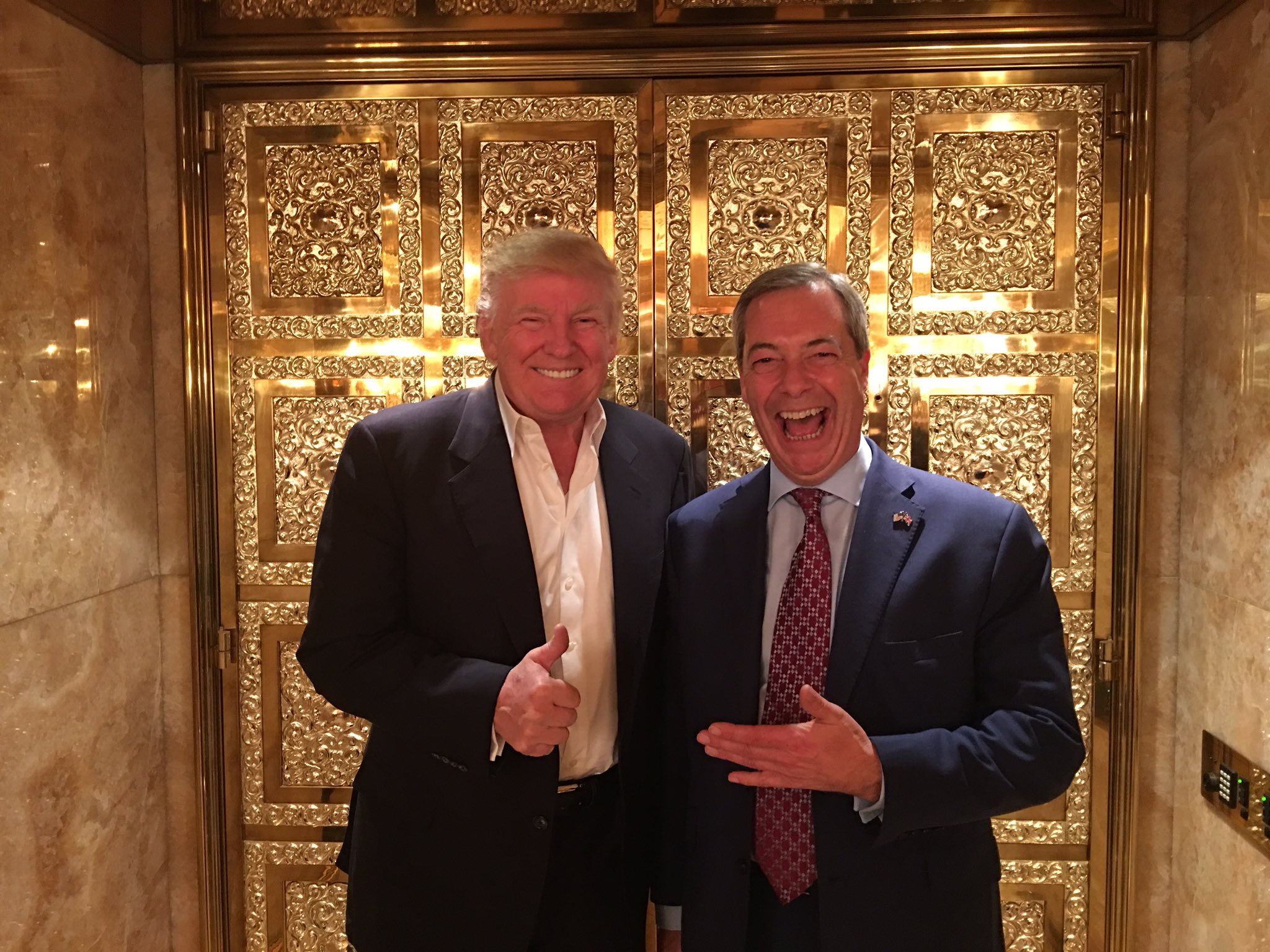
Best buddies looking forward to a golden future
I cannot move into another week without recording my thoughts concerning the one which has just passed. Something astounding happened.
A man was democratically elected to the most powerful job on the planet who defied all the norms of what is considered to be acceptable behaviour. This man made no concessions whatsoever to the sensibilities of the electorate he was appealing to and came right out to lay before it his brazen take on the world. In view of the outrage caused in so many quarters, how did such a man persuade that electorate to set aside the shock of his message and, most of all, the way it was delivered? He has now not only been handed the keys to all our futures, but he will be given the nuclear codes as well.
The story goes back a long way, perhaps half a century. At that time a world existed of nation states and of families within those states. Most had functioned for a long time – Germany was the exception – and people had grown surprisingly fond of them. They saw them as an extension of their own, close family and it gave them a strong sense of belonging. Almost without exception they were immensely proud of them. When troubled times came, it turned out they were prepared to die for them, much as a mother would die for her child.
Then came those two terrible world wars which, with the help of perverted science, made war deadly to the point of being suicidal. Humanity recoiled in horror and said never again. Agencies were put in place, starting with the United Nations and followed up by a multitude of other such as the World Bank, IMF, WTO, various NGOs, NATO and many, many more, all designed to govern the conduct of man and his disputes in a peaceable manner.
The bogeyman identified as being behind past conflicts was the selfish, jingoistic nation state. That, along with its borders, had to be downgraded and erased, over time, into irrelevance. Europe began the charge with what morphed, with the utmost stealth, into the European Union.
Also a new, more humane way had to be found to deal with individual misfortune and the Welfare State was born. The old were to receive decent pensions and they, along with everybody else, were to be medically cared for. The four great plagues of want, idleness, poverty and disease identified in the Beveridge Report were to be tackled wholesale for the first time.
But this was not enough. The architects decided that they must complete the work with what became known as political correctness. They must criminalise beastliness towards minorities – all minorities – however obscure. Eventually this extended to the very utterances which people made. A revolution was in the making and, like all revolutions, it needed its cadre of zealots to force it through. Step forward to carry out this work the intellectuals, the academics, the lawyers, the industrialists, the politicos, the entertainment luvvies and eventually the bulk of the media itself. Oh, and don’t let’s ever forget, perhaps the most culpable of the lot, the bankers.
The EU proved the perfect vehicle for making this revolution possible. It also made it respectable even though, indeed, most of it was anyway. While noble in its concept, the EU began the process of subsuming its patchwork of nation states into a homogenised whole. Globalisation and multiculturalism became the new buzzwords and the developed world was urged to indulge in an orgy of consumerism. This had the effect of ratcheting up debt to unsustainable levels and soon the bubble burst with the financial crisis of 2008 – the worst in living memory. Luckily lessons had been learned from the last catastrophic crisis, the 1929 Wall Street crash, and a much more joined up world was able to climb out of it with a fraction of the misery of before.
But, like all things, it came at a price and that price is the one which propelled Trump to power and is propelling us out of the EU. The little man who had listened to his “betters” for fifty years had had enough. He had developed a deep and bitter antipathy for those whose greed had brought the misfortune upon him yet walked off smelling of roses and richer than ever. He had watched, with silent rage, the power brokers ship his jobs to sweatshops abroad and saw his warm and loving communities decimated and turned into wastelands. All the while the men who had done it grew richer by the billion while the poor bloody infantry saw their wages frozen and their living standards plummet. Adding salt to the wound, as the little man saw it, was the multiculturalism which the know-alls had forced on him.
What unites the two seismic events of Trump and Brexit is a deep disdain, felt by many ordinary people in the Western world, for a ruling class which, without consultation, sought to change forever the very nature of their societies. But it has not gone unnoticed that this privileged elite have never been an active or even visible part of the societies they are busily changing. Theirs is a cloistered world of high gates and security guards where the hoi polloi are well and truly kept at arm’s length.
Their insular world now trembles before the forces currently ranged against it. But watch this space: Trump and Brexit are only the beginning. Fresh earthquakes can be expected right across Europe in the months ahead.

Brexit was a brave act by a brave nation
Stunned, gobsmacked, incredulous, horrified. All of these adjectives have been expressed around the world at Britain’s decision to quit the European Union. If Britons doubted that theirs was still a nation of consequence, they need only consider the world’s reaction to the referendum result last Friday.
I have to say that I can think of no braver an act of the working man since 1940 when, faced with what seemed like the overwhelmingly successful Nazi juggernaut, he chose to stand and fight rather than accept what many of his leaders considered to be an honourable and generous peace.
This time it was not military might that he defied, but the massed ranks of the political, business, banking and academic classes who told him that he would be committing economic suicide to quit the EU. Though he did not put his person at risk, he certainly – if they were to be believed – put his job and his family’s finances on the line.
But he is a stubborn creature, the British working man, and he is not easily cowed. Over the years he has developed an increasing distrust and deep antipathy to those who consider themselves his better. And as the fanciful figures were daily trotted out to warn of the doom which awaited him, he did not harken to their warnings but instead dug in his heels even further and effectively defied them to do their worst. Magnificent, I call it, even though I voted to remain. It reminds me of Churchill’s snorted response when he was invited to deplore a well-known military man’s alleged act of buggery: “In this weather! Good God, man, it makes you proud to be British!”
Not in over a hundred years has British politics been in such a state of turmoil. Civil war rages in the Labour Party while the Conservatives are in disarray with their leader, the prime minister, forced to quit fourteen months after winning a stunning electoral victory. In the other party, the leader has had two thirds of his shadow cabinet walk out and 170 of his MPs back a ‘No Confidence’ motion with him retaining the loyalty of a mere 40. A hundred-plus-year-old party is, as a result, on the brink of oblivion.
All this is taking place at a time when, like in 1940, it is us now against the world as a result of Brexit casting us adrift into uncharted waters. As if this isn’t enough mighty England has been ignominiously put out of the UEFA European Championship by the minnow, Iceland, playing for the very first time in the tournament.
What are we to do? What has become of us? First, let us remind ourselves of those many centuries when we operated as an independent, sovereign nation. Did we make a decent fist of it? I’ll say we did! We became the richest nation on the planet. We pioneered free trade, set up the first factory systems, launched the Industrial Revolution, carried our products to the far corners of the earth and along the way saved Europe from tyranny in two world wars which we could have stayed out of. It ill behoves, therefore, those ingrates across the water to forget this.
So it can fairly be said, in answer to my question, that we did pretty well for ourselves as Britain plc and we can do so again. My own feeling is that what we have done will encourage others to champion their rights, which are in danger of being subsumed in a Brussels despotism. Meantime, the shadow of an ever more assertive Germany hangs over Europe. Nothing, it now seems, can be done without first clearing it with Berlin.
I have no doubt that other nations will, as a result of Brexit, be encouraged to call for their own referendums. This will be the point at which Brussels will take a long hard look at itself. What it fails to recognise is the incredible pride and patriotism which exists in each of its member states. You only have to look at the flag waving at Eurovision and other such gatherings to catch a glimpse of this. Being subsumed and having their national identities eroded is not what they want.
When a new Europe emerges we may be prepared to look again at re-joining. There is no objection to Europe punching its weight in this emerging world of giants, but it must do so in a less intrusive, respectful and democratic way.
Whatever is decided on 23rd June, the show will go on

Referendums may seem like a good idea and, doubtless, they have their place in a working democracy, but they have a way of polarising society in a manner that general elections do not.
On both sides of the Atlantic there is a dangerous disconnect between the rulers and the ruled. That is why, I suspect, such unlikely characters as Jeremy Corbyn and Donald Trump have confounded all expectations and caused us to believe that, in the current febrile atmosphere, virtually anything in politics can happen. The same disconnect can be said of the unelected and unaccountable gnomes of Brussels. At the moment we are cynically digesting the latest piece of hyperbole concerning the coming EU referendum and await with trepidation the next shocking apocalyptic revelation.
Genocide and war, they tell us, is a possible consequence if we make the wrong decision, as is a five-million rush to these crowded shores to swell our already ballooning numbers. The ten plagues of Egypt must surely be in the pipeline as the next possible item on the agenda. Which side will jump in with its own 21st century version of these horrors to scare the living daylights out of us is anybody’s guess. Is the public buying any of this nonsense? I suspect not.
Forecasts are notoriously unreliable. We spend billions worldwide trying to predict the weather and still we get it wrong. In the seventies, National Geographic featured scientists forecasting another ice age. In the 1920s, economists were convinced that a return to the gold standard would cure our economic woes. It made them worse. When Mrs Thatcher proposed her remedies, 364 leading economists signed a letter to say they would not work. They did. When the three party leaders, the entirety of the establishment and almost all the chattering classes said we should join the European Exchange Rate Mechanism in the early 1990s, the ERM, they were wrong again. Many of the same group of know-alls also wanted us sign up to the euro and predicted doom if we did not. How lucky for us that we declined to listen to them. “We would be able to do our business in Afghanistan without loss of life,” said the defence minister. Nearly 500 died. 13,000 would come to us from Eastern Europe, said Labour. Over 1,000,000 did. When George Osborne proposed austerity, Christine Lagarde, the head of the IMF, rushed in saying he was “playing with fire.” We ended up with the highest growth rate in the western world and over 2 million new jobs created. The governor of the Bank of England said it would be necessary to put up interest rates when employment fell below 7%. It was not.
So much for the “experts” knowing what will happen. Why should we take any of their forecast seriously?
Referendums may seem like a good idea and, doubtless, they have their place in a working democracy, but they have a way of polarising society in a manner that general elections do not. Perhaps it is because they concern huge and generational issues, the results of which cannot be unpicked five years down the line when you realise you got it wrong. Whatever the reason, they seem to generate a level of bitterness unique to themselves. Remember the nastiness of some of the SNP zealots in 2014? Had I been a unionist at that time, I certainly would have thought it prudent to keep my head down and definitely not put a poster in my Glasgow flat window.
The truth is that whatever is decided on 23rd June, the show will go on and the good ship Great Britain Plc. will plough on much as it did throughout all those centuries before the European Union was even heard of.
At this moment in history it cannot be denied that the EU is going through a rough patch. The euro may yet implode; even moneybags Germany has not enough to save beleaguered Spain, never mind troubled Italy if the markets call time on them. The single currency was certainly ill-conceived and has massive problems which have yet to be addressed. As for the Schengen Zone – that great leap of idealism – it poses a huge security risk in this volatile, post-9/11 world and it could be dynamite, literally. The EU’s policies are driving extremism in Europe leading to the rise of neo-Fascist parties. In terms of job creation, the EU is currently a disaster area and its growth rates is abysmal (on both of these counts we are an exception). A good case, you might argue for the Brexit. Why cling to a loser?
At the same time, you might equally argue that to cut ourselves loose might be to put ourselves on the wrong side of history. As well as staying at peace, a continent united is obviously going to be able to make its voice heard loudly in the world and its trade deals carry enormous clout.
Europe’s whole history since Rome fell apart has been to find a way of getting back together again. Various of its more powerful states have sought to do it under their own hegemony, but that has been unacceptable to the rest. Europe’s glory, and you have to say achievement, today is that it has found a way of doing so largely by consent rather than by coercion. Yet unfortunately in many important areas it has messed up and its democratic credentials are seriously flawed.
Perhaps a vote to leave might provide the system with the jolt it needs to make it acceptable, not just to us but to others who do not wish to see their identity subsumed in a monolithic super state which wishes to homogenise them all into a blandness and make all Europe seem the same. If Europe is to succeed a way must be found to preserve its charming idiosyncrasies as well as a meaningful level of sovereignty for its nation states.

To Brexit or not to Brexit?
The Europe which we put our signature to almost two generations ago is not the Europe we are being asked to vote on in a few weeks’ time. Then it was all about trade, except that is wasn’t.
The European Common Market began its life as something of a confidence trick. The political classes knew from the very beginning that it was a political project designed to relegate the nation states of Europe to a subservient role. They had concluded that they were nothing but trouble and were the biggest single cause of its terrible wars.
Just the same they knew that the peoples of Europe were, almost without exception, lovers of the lands which bore them and felt a deep attachment to the cultures which had developed within their borders. Talk at that stage of a European Union might have frightened the horses and run the risk of it being still-born. So they had to tread carefully. A mighty trading bloc though? Well, who could object to that? We all want to improve our standard of living.
Thus was born the Common Market. Europe had always been strong on markets and the use of that word was perfectly designed to allay suspicions. They were content to play the long game. Stage one was to lock the lot in lucrative trade arrangements, recognising that nations doing the bulk of their business with each other could not, thereafter, easily break free.
Actually, the whole business had begun even before the Treaty of Rome with the creation of the Iron and Steel Community of France, Germany and the Benelux countries. The idea there was that you couldn’t go charging off with a secret re-armament programme, as Hitlerite Germany had done, if all your iron and steel came from a common source.
Europe had had enough of war and a system, so they reasoned, had to be created whereby future outbreaks would be next to impossible. Although there was nothing wrong about that, hadn’t the setting up of NATO nine years earlier achieved that? As Europe grew richer – helped in no small part by the generosity of Uncle Sam with his Marshall Aid programme – it became safe to move on to stage two of the project and chuck overboard that boring old, and grudgingly conceded title, Common Market. Now it became the European Community.
Still no feathers were ruffled, but the more discerning of us could see where the project was headed. Not long afterwards came the great European Union and all was plain to see. With that came the burgundy coloured passports that let us all know – in case naively, a few of us nursed any continuing illusions of national independence – that we were now part of a burgeoning superstate. The Euro was meant to be the final brick in the wall.
The reason all the member states, with the exception of Britain, had been so accepting of the project was that they believed that the nation state, through its inability to protect them from the ravages of war, had been discredited. Only Britain’s island status had saved it from occupation. It therefore had no reason to lose faith in the nation. It stood proud of its institutions and the fact that its Industrial Revolution had changed the face of humanity. Also its exalted former position as the world’s greatest empire made it harder for it to become just another brick in the wall.
But now we must decide: do we cut loose and regain that independence which has been lost, or do we stick with it and with the confidence of a major player work within the system to bring it to the democratic accountability which we Anglo Saxons insist on? We are far from being alone in wishing this.
The world is increasingly moving in favour of what may be called the Anglosphere with our language and business models reigning supreme. I do not doubt that Britain PLC could cut a swathe in the world, but do we want a mighty power on our doorstep which we are unable to influence?
Nevertheless, worries abound concerning immigration, which apart from putting all our public services under strain, has the power to change the character of our country forever. Much of the fury and distrust of the political class which drives the Trump presidential campaign in America is at work here in Britain. They never asked us, say the doubters, about immigration and they never asked us if we were willing to cede sovereignty. They seem only interested in looking after themselves. And as to what Europe was really all about that, well that too, was founded on a lie.
Although the EU was a work of the utmost deceit, we are where we are and we should not necessarily quit because of that. Perhaps the best reason to stay is a geopolitical one. Out of the EU, however brilliantly we handle our affairs, with a population of 64 million ours might end up being a forlorn voice crying in the wilderness.
It is not an easy choice to make. But then who ever said life was easy?
We must stop flagellating ourselves over the sins of the past and learn to live with them

The man who wanted British rule from the Cape to Cairo.
Remember Blaire’s apology for the Irish potato famine? Or Brown’s apology for our treatment of the Bletchley Park codebreaker, Alan Turing? How about his apology to the families of the 306 executed ‘cowards’ of WWI? This furore over Cecil Rhode’s Oxford University statue is another prime example of our breast-beating tendencies today. What nonsense it is to maintain that because ethnic minority students walk past a high-up – and out of the way – statue of the arch empire builder they are suffering a form of violence. Let’s grow up a little; this surely is over-egging it.
I am not saying that we should not be aware of what was done by us long ago around the world and, indeed, that much of it was wrong. It was even sometimes brutal. But that is to see it through today’s prism. George Washington was a slave owner and Elizabeth II tortured Catholics. Churchill excoriated Gandhi and the whole notion of Indian independence. He positively gloried in the British Empire. Are all his statues, worldwide, to be taken down, including the one in Parliament Square?
I can list many examples of terrible things done by our nation. I can also quote you many more carried out by other nations. Of course, that doesn’t make any of them right. It is simply to contextualise them.
The retreat from empire in the British case was orderly and largely peaceable. In France’s it was bitter and bloody. The First World War brought about an upsurge of nationalism. The genie was partially put back in the bottle after that war, but it burst out with a vengeance following the Second World War and there was no putting it back. Bankruptcy and the need to rebuild Europe convinced us that the imperial game was up. Others were slower to realise it.
Those undergraduate agitators should pause for a moment and reflect on the fact that their privileged Oxford education came courtesy of one of the undoubtedly good things that Rhodes did with his life: he donated an immense sum to the university. I know his detractors will leap in and say that it was wealth accumulated on the backs of poor, benighted Africans, and to an extent, this is true. But we are where we are and numbers of them are at least seeing some of it coming back to them. The fact is we cannot undo the past.
Nowadays we are much taken to apologising for our forefathers’ misdeeds and though I see no great harm coming from that I have to ask myself where it ends. Should Rome apologise to us for its soldiers flogging our Queen Boudicca and raping her daughters? It may, for all I know, be that it makes a few of our ‘victims’ feel better for our having owned up and taken sack-clothe. Perhaps the idea is not that at all, but to make us feel better about ourselves. The question then is whether we are actually achieving anything meaningful at all. Does it help to rake over old coals and give ourselves an unhelpful guilt complex?
If we were such a shower of cruel oppressors, why are our former colonies so anxious to maintain their links with us? Why do they play an active part in the Commonwealth club and travel from the far corners of the earth for its bi-annual jamboree? It is telling that the French have not been able to form such a club.
It can be argued that while we took much – especially from India in the early years – we also gave much. We irrigated huge swathes of the country which hitherto had never been brought under the plough by constructing 40,000 miles of canals. We gave it, too, the largest railway system in all Asia (another 40,000 miles.) We also built and surfaced roads and constructed the 2,000-mile Grand Trunk Road east-west with trees either side to shield its travellers from the Indian sun. We gave our former subjects throughout the Empire the rule of law. We gave the Indian subcontinent parliamentary government. We also saved myriad constructs and temples, including the Taj Mahal, and its ancient language, Sanskrit, by setting up the School of Oriental Studies. We gave them an education system, which they maintain with all its rigours to this day, and we gave them a free press. Oh, and we also gave them the greatest love of their lives, cricket. It has become the poor boy’s hoped-for route out of poverty; their equivalent of our premier league.
In the last century of our rule there we developed a strong conscience so that, when we stood in mortal peril in the two World Wars, they martialled the largest volunteer armies the world has even known to help us win them.
As well as the profiteers and exploiters of the early years, we later sent the brightest and best that our country has ever produced to govern it. The special public school, Haileybury – set up to train those administrators in the languages and culture of the sub-continent – was second to none with, created in its wake, the Indian Civil Service, the most dedicated ‘sea-green incorruptible’ system ever devised. Its entry examination had no equal on earth.
Without exonerating Rhodes for his excesses, he, like many others of his time, believed fervently that they had a duty to mankind to spread British values across the world. It may seem presumptuous, even arrogant to us today, but because the Industrial Revolution had so changed the face of humanity they believed, with their strong Christian faith, that they were the elect of God, chosen to lead the world to a better future. It was an understandable enough trap to fall into and any country finding itself in that position might well have believed similarly. In truth they did mean well.
So let the callow hot-heads who will take away that priceless Oxford degree show a little humility themselves. They are young and, for the moment, know little of the world. For our part we are content to stand on the record and let history be the judge.
‘Collective’ madness in the Labour Party
There is a complete absence in the Labour leadership contest of what we like to call the ‘big beasts’. They are all minnows.
How can we explain the ‘Collective’ madness that has taken over the Labour Party? I have just returned from lands of former Collectives (mega farms set up by the Communists) in Latvia and Lithuania, and I can tell you that Jeremy Corbyn’s much admired legacy to those once Communist countries is a nightmarish one.
The man might come across as a sincere idealist – not at all like the serried ranks of the career politicians so many disdain today – but the likes of Jeremy are the ones to fear the most. They are the zealots, cast in the mould of that ‘sea-green incorruptible’, Maximilien Robespierre, of the French Revolution. While on the subject of the quiet, softly spoken, hard-to-rile idealist, was not ‘Uncle Joe’ Stalin exactly that sort of man? He, however had a term for the likes of sweet natured, but for us dangerous, men like Jeremy Corbyn; useful idiots.
And while an old geezer, myself, isn’t it a bit odd that so many young people appear so much in love with old geezer Corbyn? It’s all a little perplexing. If I were to make a guess as to part of the reason – and in life there are, more often than not, many reasons – I would say it is illustrative of the depth of public disenchantment with the political class. And when a man comes forward, however misguided, who is clearly a man of conviction and seems authentic, the young grab at him.
Another factor, surely, is the complete absence in the Labour leadership contest of what we like to call the ‘big beasts’. They’re all minnows. Alan Johnson might have qualified for that sobriquet, but he doesn’t want to know. Perhaps he’s canny enough not to risk losing his sanity in trying to bring together such a disparate band of brothers in what he might view as a poisoned chalice.
Then there’s that totally toxic Blair legacy. We won’t speak of the horrors of the Iraq war or the dodgy dossier that deceived us into sanctioning an illegal war, but there is such a litany of other failed measures that found their way on to the statute book that I might cause you to develop apoplexy half way through were I to attempt to list them all.
His favourite ‘Blair Babe’, Tessa Jowell, loves pontificating and acting as cheer leader for the Bambi project, but she would be better advised finding some stone to crawl under. It was she, who as Culture Secretary, allowed round-the-clock drinking, which has turned all of our city centres into no go areas for the majority of people at weekends. Worst of all the things she did was to promote online casino gambling – that egregious, family-wrecking Act which flies in the face of everything the titans of Old Labour stood for. These titans were high-minded men of probity, who among their other fine and compassionate qualities was a determination to uphold individual dignity and family life. Gambling was anathema to them.
Despite Corbyn’s phenomenal rise against the odds, one or other of his pigmy opponents may yet come through in the race to succeed disastrous Ed Miliband. But even if that were to happen, what does the whole business tell us about the present state of the Labour Party? Could a split prove terminal?
We have grown so used to a duopoly of political power that we could be forgiven for thinking that Tories and Labour are a permanent part of the political landscape. But even in the 20th century this was not the case. The party of Lloyd George seemed just as permanent on the eve of World War One. For much of the previous century, that Liberal giant of principled government, William Gladstone, bestrode the political firmament. Then, after Lloyd George, the party became an irrelevance. Following their brief re-appearance and engagement with power under the recent Coalition, they have again sunk back into irrelevance. Is it now, as a result, a return to business as usual? Not necessarily.
Whether Corbyn succeeds or not, what his extraordinary success has shown is the deep schism within the Labour Party. It may prove unbridgeable. Certainly it will take more than any of the lightweights on offer to heal the wounds of what is turning out to be a bitter, acrimonious fight. Tories may gloat over what is going on, but they would be wrong to do so. Any properly functioning democracy needs an effective Opposition. You cannot expect the media to perform this role alone, splendid though it is in exposing maladministration and wrongdoing. (How incredibly right it was to resist Leveson’s proposals to muzzle it. Do you seriously think the establishment would have allowed itself to be investigated for child abuse had those proposals gone through?)
There is now, as I see it, a chance for a regathering of the forces of the sensible Left to challenge an overweening government. Essentially the Liberal Democrats are a left-of-centre party. Were they to throw their lot in with similarly minded elements in the Labour Party, it could consign forever to the dustbin of history that Trotskyite wing of Labour that so bedevils its chances of regaining the trust of the British people.
It might, in the process, appeal to those many citizens north of the border and in Wales who still have faith in a Union which has shone so brightly for so long and raised us, a small people, so high among the nations of the earth.
Poor, hapless Miliband and his Ed Stone
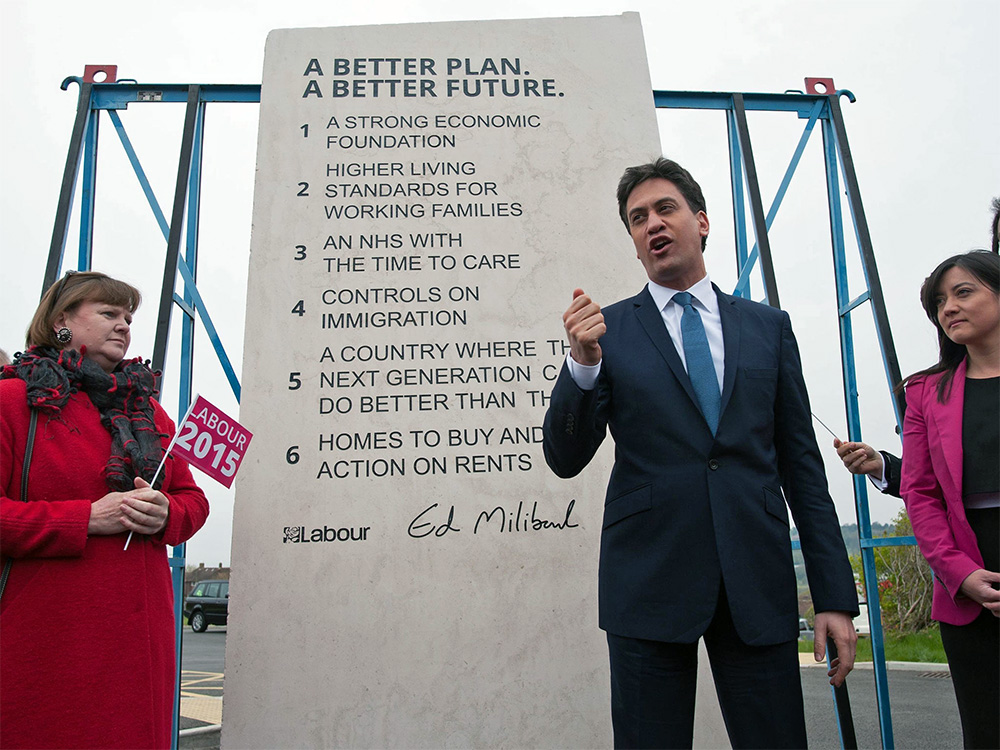
The Ed Stone must have been ordered weeks before it was unveiled, all 2.6 metres and £30,000 worth of it. And the monster wasn’t going to be installed at Labour party headquarters, but in the rose garden of Downing Street, for God’s sake.
How to explain last Thursday? Reading people’s minds is far from the exact science the pollsters would like to pretend they have made it. And reading British people’s intentions may be the toughest nut of them all to crack. G.K. Chesterton had it right when he wrote:
Smile at us, pay us, pass us; but do not quite forget,
For we are the people of England, that never has spoken yet.
Hells bells, the people spoke alright last Thursday. They did it in the privacy of the polling booth. It was almost in the nature of a raised finger to those battalions of know-it-alls who told them how they were going to vote. There may also have been an element of bloody-mindedness in that decision which ended up stunning the world. Yet it wasn’t, in my view, an innate shyness to tell or an enjoyment of being a spoiler that was at work, but a cold hard appraisal of what was at stake.
Harold Wilson may have said that “a week is a long time in politics,” and so it is. But for all that, people weren’t readily going to forget an event of even six years before – when the cash points were within forty-eight hours of running dry and salary transfers could not have been made to banks. It was as dire a situation as it is possible to imagine. That same government of Gordon Brown had not long before given them an almighty fright by getting into a dispute with tanker drivers so that food, itself, was also within forty-eight hours of running out in the supermarkets. We got to realise, for the first time, how slender were the stocks they held and how utterly dependent they were on a fast turnaround.
Now they were being asked to give their trust to the same group of people who were at the helm at that time and who had gone on to display a level of fiscal incontinence unique in British politics. They thought about the man who was asking us to make him prime minister and the Damascene conversion he had made at the last minute to fiscal rectitude. The difficulty was that they had trouble believing him; he was still so purblind that, to the very end, he couldn’t bring himself to concede that the previous government, in which he had played an important part, had borrowed too much (it was all the fault of those damned foreigners he intoned ad nauseam… the worldwide credit crunch and all those wicked bankers). Every country had suffered, so he maintained.
The problem was that those countries which had not got themselves into debt were able, largely, to cope with the crisis without massive programmes of austerity. These and many other thoughts went through voters’ minds in the run up to the big day and even in the polling booth itself. A huge question mark hung over Miliband in particular as he just did not seem prime minister material – and certainly not when compared to the smooth, polished Cameron. This perception was reinforced by his opportunistic and silly decision to go and talk to Russell Brand. That garrulous, machinegun-like spouter of nonsense was the last person in the world calculated to reassure a worried public. And then there was that Ed Stone. ‘Oh, dear,’ thought the electorate. Where were the armies of special advisors that let that one go through?
It may have been some silly Yank’s idea, but gullible, unworldly Ed thought it a great one. What was he thinking? Talk about hubristic presumption. It must have been ordered weeks before it was unveiled, all 2.6 metres and £30,000 worth of it. And the monster wasn’t going to be installed at Labour party headquarters, but in the rose garden of Downing Street, for God’s sake.
Did he seriously think that future prime ministers – and, hell, we had not made him that yet – would want their lovely, sweet-smelling roses cast into perpetual shadow by such ‘monumental’ nonsense? And what about planning permission? Had he thought about that? After all, Downing Street is a listed building. Perhaps after he’d brow-beaten them into submission he intended to take it with him at the end of his long, glorious term of office and have it installed on the unused plinth at Trafalgar Square. How the episode plays to the blog post I once wrote 3 ½ years ago about the fall of Dominic Strauss Kahn titled ‘The Foolishness of Clever Men‘.
At the end of the day the great British public saw no sense in imperilling the undoubted progress that had been made in stabilising the economy, and they certainly didn’t want a cantankerous tartan army descending on London, gurning all the time about how hard done by they were and demanding ever more Danegeld. Nor did that public relish the thought of the slippery, cocksure Alex Salmond appearing once more out of the Scottish mists like the ghost of Banquo. It would have been unbearable were he to have ended up de facto deputy prime minister, slipping in and out of Downing Street at will and browbeating a hapless Miliband.
Finally, in an ever more competitive world people did not see that it made sense to drift back into left-wing policies that had been tried umpteen times and always found wanting. Not a single Labour administration had ever left office without the public finances being in an unholy mess. The people understood that, for the security of their jobs and the wellbeing of their country, a business-friendly mind-set was key.
So convinced was I, as well as another member of my family, that these ‘neck and neck’ polls were nonsense that we placed a £50 bet each on a clear Conservative majority (at 15:2 odds) and won a total of £830. Our mantra should always be to trust the people; they get it right most times, whether it be General Elections, Strictly Come Dancing or X-Factor.
There is a clear choice in this election
It is a strange thing to reflect on the fact there were once people who would have killed me if they could and that as a young man I was shot at. It was the last lot of the ‘Troubles’ with the IRA before the final bout broke out which ended with the ‘Peace Process’. Then civilians were not targeted – just the police and the military – and I was a National Serviceman.
After that I returned to the cut-throat world of commerce (managed to get sacked three times) before, at twenty-seven, going into business on my own and remaining there to the grand old age of seventy-five whence I am still contributing my penny’s-worth. In that period before I struck out on my own, I worked for nine different employers.
What causes me to return to those times is what strikes me as the glaring contrast between my own round-the-block experience, shared in varying degrees by many (though not perhaps the shooting and sackings) and the utter lack of worldliness between us and the very many callow people who govern us. Apart from having, in so many cases, little to draw on, they come up with plans to spend umpteen billions of pounds in a manner that suggests our money is almost monopoly money. Few, if any, have any serious costing experience, much less have run large companies be it their own or other people’s.
In my ideal world no person should be able to put themselves forward for public office such as an MP below the age of thirty-five nor do so without experience of a genuine job outside the world of politics. No person could, for instance, become Minister of Defence without a military background, nor Chancellor of the Exchequer without accountancy skills, nor Health Minister without medical or health service expertise, nor take charge of education if he or she knows nothing of the world of academia. Strangely, the one area where we do apply such thinking is the law. Lord Chancellors, Attorney Generals and Justice Ministers have all had to be lawyers.
What I would never allow to happen is for a student of politics or any other university discipline to be parachuted straight into the Westminster bubble of a think tank, policy unit, special advisor or any other similar make-work prop. Most bizarrely, as many people thought at the time, we once had a transport minister (Barbara Castle) who didn’t know how to drive. I realise that such rarefied thinking may be thought by many to be unattainable, unrealistic and even naive, but it seems sensible to me to aim towards drafting people into a job who are already half way to understanding it and who have acquired hard-won expertise in the field.
If they come to the job with the right background, they should be left to get on with it. Constant reshuffles – which have been a feature of governments of all hues – is inimical to rapid progress. In this respect Cameron’s administration has been unusual. Real expertise has been built up in many important departments of state with ministers left in situ for an entire parliament. Look at the long-serving and successful Theresa May at the Home Office, long regarded as the graveyard of the aspirant politician. See, too, Vince Cable, the Business Secretary, and Ian Duncan Smith, the Minister of Work and Pensions. Then there is Eric Pickles, the Communities Secretary, and most famously the Chancellor, George Osborne. Even the controversial Michael Gove at education was left long enough to get on top of his brief and effect his own mini revolution.
Considering the constraints which coalition government by their nature impose, it is surprising how much has been achieved. Welfare, education and the economy – with the independent Office of Budgetary Responsibility – can be said to be entering a new era.
What do the government’s opponents have to offer? The latest is rent control. I am no friend of landlords, but I have to accept that we can’t do without them and that, in fact, rental forms an essential cog in our housing needs. Ed Miliband’s populist wheeze here is a busted flush. It’s been tried before and it doesn’t work. First it sets up a whole new expensive bureaucracy and all to no avail since his proposals can be easily circumvented. His interference in the market would, however, be guaranteed to worsen the situation of the very people he purports to help, in the same way as his capping of energy bills when oil and gas was at an all-time high. It was like when Gordon Brown sold off half our gold reserves only to see the price of gold double within months. Socialists, sad to say, are not strong on economics even if their hearts, in most cases, are in the right place.
As for Miliband himself, he daily reveals himself to be in the Michael Foot mould. Just look at the ridiculous stone monolith he plans to erect in the garden of Number 10, no doubt inspired by his new anti-capitalist pal Russell Brand. Perhaps it was all those years at the knee of his Marxist father who turned his house into a debating parlour for Communism, inviting the likes of Foot, Benn, Eric Hobsbawn as well as the traitorous – as it later turned out – union baron, Jack Jones, who was in the pay of the KGB.
David Cameron is lacking in many things, but he’s much less dangerous to the economic wellbeing of our country than the unreconstructed son of the LSE Marxist lecturer whom we rescued from the Nazis (he was Jewish) and who then went on to warp the thinking of a generation of young people including, it appears, his own son.
No one has better reason to hate the heartlessness, secrecy and institutionalised privileges of the ruling classes of this country than I do, but I’ll tell you this: if we place our future in the hands of such a master opportunist and dissembler as Ed Miliband then we will have taken leave of our senses. He refuses, even now, to concede that the government in which he played an important part borrowed too much. (I am not interested in how he looks or sounds; we have had great leaders who scored on neither front.)
My own business has been punished grievously and, after twenty-one years, I find myself holding on by the skin of my teeth. We do not want, nor can afford, left-wing experiments at a time like this, especially when we have so narrowly escaped a catastrophe which he and his master’s policies inflicted on us only five short years ago and which have been the cause of so much suffering.
I will finally, and unapologetically, make this observation: I do not think it was outrageous that a minister made reference recently to the younger Miliband’s behaviour towards his brother. It was what most people thought and the ‘appalled’ reaction of Labour apologists as well as certain sections of the media I consider was entirely contrived. There are not many brothers who would do to their sibling what he did to his. In my view it speaks of something I do not find edifying. It had a devastating effect on their aging mother and he must have known that would be the case.
The immigration debate
Gordon Brown clearly demonstrated the disconnect between politicians and the public when he labeled lifelong Labour supporter Gillian Duffy a bigot for broaching the subject in 2010.
Among the forgetful Ed Miliband’s omissions at his party’s annual conference was any mention of immigration. Considering that it ranks currently as number two of the public’s national concerns and that finally it is deemed respectable to speak of it, that omission must be classed as a failure as lamentable as that other one of not referring in the same speech to the deficit. The recent brain shutdown of the Green Party’s leader, Natalie Bennett, in her Q&A sessions with Andrew Neil and Nick Ferrari can be forgiven since she has no prospect of taking charge of our ship of state, but for it to happen to Ed? Oh, dear.
Ed has a problem, so it seems, not just with his gormless appearance – which, admittedly, he can’t help – but worryingly with his little grey cells. Personally, I view it as regrettable that in today’s shallow world you have to be telegenic to have any chance of being elected your nation’s leader. That requirement seriously impacts your ability to draw on the full range of your nation’s talent. Had we been like this seventy years ago, we would have lost Churchill and probably with him the war. We certainly would have turned our backs on his mouse-like successor, the great Clement Attlee, and risked losing, in his case, the NHS and the Welfare State. Apart from being the antithesis of telegenic – one was fat and the other weedy – they both were terrible public speakers.
The same cannot be said of the present, glib PM who won his spurs with a single show-off party speech, disdaining the use of the autocue. He was lucky to get away with it because later with the US broadcasting anchor-man, David Letterman, the Eton and Oxford-educated whiz kid could not remember what either Magna nor Carta stood for. Being that this was on the eve of the 800th anniversary of that momentous event, and that neither of those august places of learning appear to have knocked it in to the young Cameron’s head, you’d have thought that he’d have done his homework first. Inexplicably, it was history he studied at Oxford and just as inexplicably they awarded him a First. How so many of us back home winced at the spectacle of our own prime minister displaying such appalling ignorance.
We have to ask ourselves whether his party made as monumental a mistake in selecting him on the strength of that single – admittedly virtuoso – performance as Labour made in allowing the unions to foist the Ed brother on the party over its much preferred other brother, David.
For the Conservative Party leadership the shoo-in, prior to the posh boy’s performance, was the one-parent, council estate, SAS veteran, David Davis. Are we seriously saying that the present perception of a cabinet of rich, privileged elite would have held true under a Davis leadership? And do you think that the present, lamentable state of Britain’s armed forces would have been allowed to happen on an SAS man’s watch?
It may be that the US made a similar mistake in preferring the cerebral Obama to the Vietnam, POW-tortured veteran, John McCain. McCain, the son of an admiral, had been offered his freedom by his Viet Kong captors, but he turned it down because they would not free his less-exalted comrades. Time has demonstrated that he is no swivel-eyed, Tea Party head banger, but a thoughtful, measured observer of the world scene. I do not see that McCain would ever have allowed the mess to develop in the Middle East as has, and I’m equally sure that he would have provided the leadership which would have kept Putin in his box.
In fact, with Davis in charge on this side of the pond – a friend remarked to me recently – perhaps something of the ‘magnificent’ (his words) partnership that grew between Reagan and Thatcher might have developed with McCain. He was firmly of the opinion that a different and more secure world would exist today. But that’s conjecture for you. And the world of what might have been. But it did get me thinking a little.
Returning to immigration, we have always been among the luckiest of nations in that respect. In a very real way, the world has been our oyster. Because of our historic engagement overseas our people have been free to flee these shores and settle almost anywhere they wished. Now the world is more tightly controlled, with independent states zealously guarding their borders. Yet still our options are vastly better than almost anyone else’s. So we should not be too hard on people who wish to do what we have been doing for centuries. At least we were not fleeing tyranny and brute barbarism.
A recent BBC programme discussing the urgent need to expand the number of school places referred only to a rapidly expanding population while disingenuously failing to mention what had brought about this expansion. The broadcaster was at this point free to mention, what previously had been the unmentionable, but still it chose not to.
Immigration has hugely benefited this country in years past and if handled astutely is likely to continue to do so. Huguenots fleeing catholic persecution in France, weavers from the Low Countries escaping Spanish oppression and Jews from the pogroms of eastern Europe all have brought valued skills and business acumen. Even banking, in its modern form, we learned from the Dutch. And what a success story the arrival of 20,000 Asians fleeing in the seventies, from the murderous Idi Amin’s Uganda, has been. Children of empire, carried by us from our Indian territories to Africa under contract as indentured labourers to help build the railways, they have truly prospered here. Their number boast an amazing clutch of millionaires. Most of them had opted to stay on in Africa after the railways had been completed and had become traders and shopkeepers. A jealous Amin could not wait to get his hands on their properties and businesses. Then there is the debt we owe the Irish. If we were first in the field with railways, as well as canals, that is because our networks were built with their brawn and sweat. Hundreds died in the process.
What we did not, however, need, was Tony Blair’s sly, unfocused rush of immigrants to these shores in numbers we could not properly handle. Hospitals, transport, houses, infrastructure and, yes, schools all have come under almost unbearable pressure.
Blair knew the people were entitled to be consulted in such a matter, yet, as with the Iraq war, he chose to deceive them. In order to shut down any discussion he encouraged a culture that linked any talk of immigration to racism, and he wanted to make perfectly decent people feel almost dirty in mentioning the subject. We saw that revealed graphically when a lifelong Labour supporter took up the matter with Gordon Brown, only to be labelled a bigot.
Blair also calculated that they would become grateful, client voters who would help maintain him in power. His mantra was ‘multiculturalism’. He was more than happy for the new arrivals to keep to themselves and form what amounted to ghettos. He saw no need to encourage them to become loyal Britons and was even content for them not to learn the language of their adopted country. Worst of all, he paid no heed to the ever present risk that his policies might erode the very character of his people. The whole exercise, and the way it was conducted, was almost criminal in its intent.
After years of being a non-subject to all parties and the media, immigration emerged into the sunlight as being a subject we could legitimately talk about. Now, it appears to have disappeared back into purdah. Despite being at the top of people’s concerns, David Cameron has joined with Ed Miliband and Nick Clegg to make scant mention of it in their election stomping. Is it that they think us a mean-minded people who cannot be trusted to dip our toes into such contentious waters? I believe that we are bigger than any of the pygmies who think such thoughts and who clearly have such a low opinion of us. We are a just, tolerant and fair-minded people, grown up beyond what our rulers give us credit for. Perhaps they should do a bit more of what the TV panellists do these days on such programmes as X Factor and Britain Has Talent: trust the people to get it right.
The reburial of Richard III draws near
King Richard III’s bones will be placed in a tomb in a remodelled Leicester Cathedral.
I have written four articles on the ‘King under the Car Park’ – Richard III – and this must surely be my last. The juxtaposition between a car park and a medieval king is a strange one. In his wildest dreams the dead king could not have imagined such a scenario. For a start, neither he nor anyone else at that time could have got their heads round car parks, much less the horseless carriages which were stabled there. As for those carriages being able to hurtle forward at unimaginable speeds, it would all have been too much for him. Just as amazing would be the fact that almost all the future subjects of his realm would own one and would be able to travel in perfect comfort and quiet on surfaced roads from one end of his kingdom to the other in hours. His bumpety, bump, clacktity, clack journey would have taken weeks.
It was the longest of long shots that led Philippa Langley, the Scottish Secretary of the Richard III Society, to Leicester’s city centre car park. For years she had obsessed about finding the only English king with no known burial place. They knew he wasn’t buried on Bosworth Field, the battlefield where he was cut down following his Victoria Cross-like heroics. His body was stripped naked and slung over a horse and paraded the fifteen miles to Leicester. That much was known.
Rumour had it that he may have been interred in a long vanished monastery. Others said that his body had been thrown in the river Stour. Yet more, that it was a mystery which would never be solved.
Philippa Langley – the hero of our tale – backed the monastery theory. I imagined she reasoned that although they weren’t going to give him a king’s funeral – usurper and murderer of his child nephews as they alleged him to be – they were most likely to hand his brutalised remains over for burial in consecrated ground such as a monastery.
Furthermore, Henry Tudor, the Lancastrian winner of the battle that unseated him, knew that if he was going to keep his newly won crown he would need to reach an accommodation with the Yorkists. Denying one of their own, a Yorkist prince of the realm – and an anointed king at that – a Christian burial was going to make that next to impossible. There would have been outrage in the Yorkist camp. Even a sinner, if that is what he was, was entitled to the sacraments and Richard’s frenzied, pitiless killers knew that. And even the meanest in the land took their Catholic faith extremely seriously at that time. Hell and damnation awaited anyone who offended against God’s law in a matter like that.
So Philippa’s hunch had a good chance of being the right one. By great good fortune the whereabouts of the monastery – although it was entirely gone – was known to the city authorities. By equally great good fortune – since it was city centre – it had no buildings over the site. That would have totally scuppered any excavation.
Philippa set about raising the considerable sums needed for a major archaeological dig. She also set about rallying the support of city authority who owned the car park, as well as its university which had the disciplines in all the relevant fields to cover the extensive research needed if she was to succeed in finding and authenticating the missing king.
It was all not so much a ‘whodunit?’ as a ‘where is it?’ affair. Both Leicester City and the university realised that success would bring massive rewards in terms of PR and tourism and put both on the map worldwide like nothing they had ever done before.
Even so, a very big if hung over the whole enterprise and a fiasco seemed much the likeliest outcome. Heavy industrial plant moved in on the site ready for the opening day of the dig. All stood prepared to excavate the entire car park if necessary. Every square metre of ground material would have to be carefully sifted. No one expected a quick result. All were steeled for plentiful egg on their faces.
Step forward our hero. “Where shall we begin?” asked the foreman of works. “There, where it says R,” indicated Philippa, pointing her finger. She had months before said, “the first time I stood in that car park the strangest feeling washed over me. I thought I am standing on Richard’s grave.”
In a particular part of the car park was a bay with a big R for reserved marked on it and it seemed as good a place as any to begin. Minutes passed after the tarmac was lifted and the subsoil carefully brought up. And like something yanked straight out of fiction, that very spot yielded a result. At only about three feet down a femur came into view. Though gratifying, that in itself was not cause for jubilation. The evidence was strong that this was where the monastery had been and that this was the area where bodies most likely had been laid to rest.
Following the sighting of the femur, more earth was removed. This time not by plant but gingerly by trowel. Then more excitement as the spine came into view. As the troweling moved up the spine from its base, a shriek was heard. The spine was veering off to one side from the vertical. It carried all the hallmarks of scoliosis – a curvature of the spine – just like Richard was said to have.
This was all too good to be true, even though their hopes were tempered by the knowledge that scoliosis was not that rare. They had managed to establish that it was a man. But did this man die violently? Then the skull was reached and there was exultation. Clear, unmistakable signs revealed that the deceased had died in battle. It was a Eureka moment for everyone, but most of all for Philippa. Tears welled up in her eyes.
Much had yet to be done forensically to authenticate beyond all question, but she had no doubt that her long search was over. A man, born in Canada, would later prove through DNA that the skeleton was of Plantagenet origin. The rest is history. One of the greatest hunts in all of archaeology had come to an end.
Four days of ceremonies will begin on 22nd March. There will be an honour guard of mounted soldiers and a 21-Gun Salute at the battlefield; two hundred children will display medieval, pennants they’ve designed; and four horses will draw the brake on its final journey to the cathedral where it will go on display before the final laying to rest of a monarch who fell in battle 530 years before. How the Tudors would have hated it all.
As for the TV broadcaster covering the event, it has gone bonkers. It’s been said there will have been nothing quite like it since television hit the airwaves. Britain’s reputation for eccentric, yet moving, theatre will have received a mighty shot in the arm. Quite what the rest of the world will make of it no one knows. They’re gobsmacked at it all, yet captivated. And they’ll all be watching.
The present monarch should have attended the reinterment. That much will be very apparent when she sees how her people have risen to the occasion. Richard’s own vile treatment in death will at least have been washed away by a £2.5 million effort of repentance by a remorseful people.
Why is Labour doing so well in the polls?
Our own Laurel and Hardy are chasing your vote.
It seems to me that we have no other credible option but to return the current government to power in May. The alternative imperils the undoubted progress that has been made and just seems too much like a leap in the dark. As to whether we return the Conservatives with a working majority or oblige them to seek an accommodation with their present partners… that, for the moment, cannot be predicted. They may be forced – hold your breath on this one – to seek an accommodation with Labour if that party, as seems likely, is obliterated in Scotland. Oddly, for a coalition, it has been surprisingly radical in the hot potato issues it has tackled. The Liberal Democrats may have helped keep the more swivel-eyed Tories in check and were certainly right in making it a condition of signing up that the lower paid be taken out of tax altogether. It was always an affront to justice that tax was levied at such an obscenely low level of income. But now we learn that the fully converted Tories are planning to take the process a step further in the forthcoming budget and steal some of the Lib Dem’s clothes by taking the same people out of National Insurance contributions and paying for it by reducing concessions to better off pension contributors. That looks like a surprisingly egalitarian measure which will help allay the perception that the Tories only look after the rich.
If it is true that elections are decided first and foremost on the state of the economy, then we would be hard put to gainsay the achievements of the present incumbents. They came to office in about as dire a situation as it possible to imagine. In fact the country was teetering on the edge of economic catastrophe.
For years we had allowed ourselves to live beyond our means, forgetting that age-old truth that you cannot spend more than you have the guts to raise in taxation. A balanced budget was never, so to speak, a lifestyle choice and sound money should always have been at the heart of any government’s considerations. Once it has taken care of these then it should go hell for leather for an enterprise economy.
In thinking where we are to cast our vote in May, let’s take a look at some of the core issues and see if we can make a balanced judgement. Business is not everything, but it is something we have to get right if we are to become prosperous enough on a personal level and yet have enough left over to fund a compassionate society.
Recently the Organisation for Economic Co-operation and Development (OECD) – one of the world’s most respected forums – positively gushed at our efforts, lavishing praise on the economic turnabout we have enjoyed over the past five years. Far from being the basket case that our perilous situation seemed set to consign us to, we are, so it seems, a “textbook” example for economic success: the most go-ahead enterprise economy currently in the developed world.
Moreover, it isn’t just the OECD saying these things – it’s just about everybody, including the International Monetary Fund. Christine Lagarde, its CEO, has said that “Britain is an example to the world and is leading it in a very elegant and convincing way.” That’s praise indeed, especially coming from the woman who only two years ago trembled at the possible consequences of what the Chancellor was doing. So gutsy ‘Boy George’ has been vindicated and proved right all along. I don’t remember so many economic pundits getting it so wrong since 364 wrote to Mrs Thatcher predicting certain doom for her policies back in the early eighties.
And balancing the books? Well, we’ve got some way to go on that but the direction of travel is the right one and the deficit is on the way to being halved. With business confidence soaring and GDP expanding, tax receipts will balloon and we will find ourselves in a virtuous circle in which even paying down the national debt will become easy.
What about our currency? Well, it doesn’t get more trusted than when you have convinced the money markets that you are a “textbook” example and “leading the world both elegantly and convincingly”. In these circumstances your purchasing power remains strong and national borrowing costs nosedive, along with the dole queue. Against all received wisdom, job creation in the UK has leaped ahead during this recession, with jobs created running at twice the rate of lay-offs in the public sector. Here, again, Osborne’s prediction has confounded critics. Perhaps the most graphic proof that you now enjoy a strong currency is to be found when you next go abroad. Your money will go an unbelievably long way. Also, the imported goods you buy will mysteriously start getting cheaper as less and less of your precious dosh needs to be handed over to Johnny Foreigner. And all this hasn’t been brought about – as it usually has been – at the price of being forced by poor management of the economy to hike your interest rates. Indeed, the reverse is true: they are at an all-time low and likely to remain so for some time yet.
Then there’s the ever important matter of inflation. Like all the rest, we are in a very good place here. And while some people worry about the dangers of deflation, this seems unlikely to happen in our case. The reason is that pay rises are now running – thank goodness – well ahead of inflation (six times) and this will edge inflation up and so prevent a downward spiral of falling prices which cause people to hold back purchases in the belief that things will get cheaper still. In Europe, with growth remaining stagnant, only a minority in the efficient north is getting a pay rise (and then not much) and so there is not the pressure from this direction to force inflation to rise. While ours can be said to be a virtuous circle, theirs is a vicious one.
So, in all these extraordinary circumstances, why is the governing party not seeing the benefit in the polls? It is a very great mystery. On the face of it, getting re-elected should be a shoo-in. In normal circumstances, economic success translates into electoral victory. However, these are not normal circumstances and this is not an iron rule. Ask John Major. When he faced Tony Blair in 1997 we were doing so well we were even paying down the national debt and – until Gordon Brown sold off half at fire sale prices – our gold reserves stood almost at a post-war high. Gold, then, had hit rock bottom, but within no time had shot through the roof. What made the man do it? Nobody knows and Brown won’t tell us. Perhaps we should ask the would-be Chancellor, Ed. Balls. Ed was his hatchet man at the time. Anyway, the upshot of it all was this little exercise cost us billions.
Before that happened – and when New Labour took over – their inheritance was, in the truest sense of the word, a golden one. Blair and his surly, Heathcliff-like Chancellor, then proceeded to throw it all away. To reassure the country and the City to trust their fiscal rectitude, they pledged to keep to Tory spending plans for two years. When, later, New Labour called time on that irksome arrangement, Brown, together with his side-kick – who hopes to move into the Treasury again in May – went on an epic spending spree. Borrowing like never before, they displayed a level of fiscal incontinence rarely if ever seen in British politics.
With unmatched hubris, Brown – the man who doubled the size of the Revenue and Customs guide book so that only the largest and most expensive accountancy firms could fathom its complexities – shouted to the rafters, budget after budget, that he had solved one of the economic cycle’s greatest mysteries: how to avoid boom and bust. Later on he would let slip in the Commons how he had ‘Saved the World’ during the time of the credit crunch. The wonder is that some fool in Scandinavia didn’t find a Nobel Prize to award him… one as daft as that Save the Children award to Tony Blair, which was, actually, hugely insulting.
While we may find much to criticise in the ‘posh boys’ who make up much of the present cabinet, they have in most respects delivered. Quite apart from the economy, we all knew that the welfare system was a busted flush in desperate need of root and branch reform. It had encouraged a malaise of worklessness in which many had come to believe that they had a perfect right to live off their neighbour’s taxes if they were daft enough to get up on a cold winter’s morning and go off to graft for the stinking, exploitative capitalists. It also turned a goodly proportion of fundamentally honest people into cheats and fraudsters. Then, again, in education we each knew that our parents had enjoyed a sounder education in the basics than we had, and that all the certainties which had made that possible had been thrown out of the window by the fanciful, misguided notions of the teachers’ training colleges and their ilk. Discipline was also a casualty of all that trendy thinking. Meanwhile our kids slipped ever further down the international league table of academic excellence.
Another thing we all knew was that an insatiable public sector was not only looking after itself too well at the rest of the nation’s expense, but that it was gobbling up an unsustainable amount of its wealth.
It therefore is a puzzle that a government which has successfully bitten so many unpalatable bullets is struggling to get its message across. They were bullets so toxic that no government before had had the balls to bite on them. Perhaps the coalition was stiffened in its resolve to do so by the opportunities presented by the worst recession in 100 years.
Finally… what about fixed term parliaments? Another of the measures brought in by this unexpectedly reformist government. They may have many drawbacks, but one decided advantage is that there is ample time to examine the record and forensically explore the proposed alternatives. Springing a surprise election when things are temporarily looking good, but you know they are not going to stay that way was an old trick. A three-week campaign denies your opponents the time needed and allows you to work a flanker. That ruse is now firmly off the table.
Ashya King and a heavy-handed state

We must hope now that the little boy wins through and is able once again to regain health and happiness.
How extraordinary that plod, in pursuit of what he thought was criminality, obtained a search warrant to raid and look for clues in the flat of the grandmother of the littler brain tumour boy who had been carted off to a Spanish hospital where he lay all alone with a policeman at his door.
If there was criminality at work it is that of the British and Spanish states in sanctioning the separation of a desperately ill five-year-old from the only people in a position to provide comfort and love. While his siblings, too, were included in the no contact ban his parents languished in a Spanish gaol three hundred miles away in Madrid whence they were whisked from Malaga at dead of night.
Sounds like a modern day horror story, doesn’t it? But this is the reality when a heavy-handed, insensitive, all-powerful state apparatus gets to work when it believes its aims are being thwarted. Just think for a moment. Here is a five-year-old child in the grip of a life-threatening condition who has never for a moment been without the comfort of his loving family. Suddenly they are ripped apart and he is adrift in a world of foreign voices which he does not understand. What is he to make of it except to feel blind terror and abandonment? This, in my view, is where the true criminality lies.
As for his grandmother’s flat, how very incredible – and stupid, I might add – that plod should think he had a good chance of coming upon incriminating evidence there. What this case illustrates so perfectly is the excessive use of state power and the mindless, blundering way it often goes about exercising that power. We saw it in action with Cliff Richard recently. In the process grieves and sometimes irreparable damage can be done. Which of us can forget that dawn descent on a Scottish island in 1991 when nine children were taken into care on a false abuse premise (satanic rites were mentioned) and kept separated from their parents for years, in one case five?
With regard to today’s Hampshire couple, it looks very much as though no law was broken. The parents had custody of the child and had a perfect right to take him back into their care – just as that daughter recently was minded to remove her father from the unhappiness of a care home. What does come across in all this is the arrogance of a medical profession furious that its judgement should be called into questioned and, even worse, defied. For long years it has enjoyed operating in an unquestioning world of miasma in which the patient often has little understanding of what is going on and feels compelled to bow to their expertise and superior intellect.
But now an enormously valuable communications tool has come to the patient’s rescue – the Internet – and they don’t like it. Patients can now consult world-renowned, leading authorities in the field and often find that they have been misdiagnosed or that there are other solutions to their problems out there. In other words, for the first time in history the patient has been empowered. It is no longer possible to bamboozle him in quite the way they had grown accustomed. Now the frustrated medics, who see themselves as authority figures, turn to another arm of the oppressive state – the police – who are only too respectfully eager to spring into action on their behalf. They, in turn, turn to another arm – the judiciary – who tell them to involve another arm – the town hall who can get a custody order from one of its judges who will then get yet another arm – the Crown Prosecution Service – to issue a European Arrest Warrant.
What chance does the little man have in the face of such an accumulation of state power? Only a free press – which that same power would dearly like to muzzle – can cause an outraged public, whose vote the man at the top will shortly need in the coming election, stand a chance of getting him to call off the hounds.
Thankfully common sense and human kindness have finally prevailed and these terrible events have now been resolved. We must hope now that the little boy wins through and is able once again to regain health and happiness.
It’s time to rewrite the history books
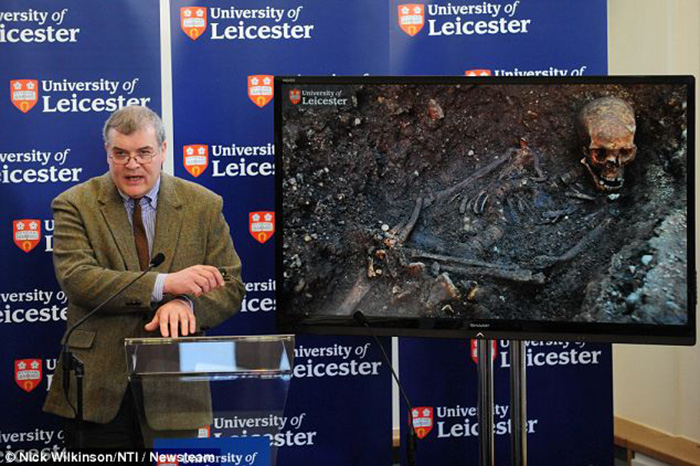
Time and science have laid bare the truth and now it should be spoken loud and clear.
It is not often you get to bury a king of England. The last time we did so was sixty two years ago. The next one will be in seven months’ time when the whole world’s eyes will be on Leicester cathedral. Then we will be burying, in befitting manner, a monarch who died 530 years ago – the only one with no known resting place; who was the last true English king; the last to lead his soldiers from the front and die as a consequence; the last of a 330-year dynasty and the last king of the Middle Ages. We speak, of course, of Richard III, Shakespeare’s ‘crookback Dick’.
More controversy has swirled around this king than perhaps any in our island’s long history. When he was originally buried by monks, they were so frightened and intimidated by the people who had killed him – and under such compulsion to get a move on – that they had no time even to find a coffin. Imagine that. A king of England who, earlier that day, had been their anointed sovereign dumped naked in an unmarked grave like so much flotsam. Minutes before, the badly hacked about, naked body had arrived on a donkey after a fifteen-mile journey from the battlefield of Bosworth and the populace had been invited to abuse it as it went by. One had even driven a dagger deep into an exposed buttock, striking the pelvic bone.
Richard died in 1485 in what we regard as the last of the many battles of the thirty-year dynastic struggle known to us as the Wars of the Roses. He was thirty-two years old. No monarch in all of English history has been so thoroughly traduced and demonised. What has led to this? We know he was utterly loyal to his brother Edward IV – a Yorkist – fighting his battles fearlessly and with great distinction. So trusted was he that at the age of nineteen he was asked to govern the turbulent north of England as a virtual Vice-Roy, which he did so successfully for the next eleven years that they came to love him and regard him as one of their own, hence York Minster’s own fierce battle to have him interred amidst its ancient cloisters.
That total trust of his brother, the king, even extended, when he was dying, to asking Richard to look after his two infant sons rather than their mother. The princes were housed in what was then a royal palace, the Tower of London, and it is their later disappearance which has landed Richard with the heinous charge, even for those brutal times, of murdering his own nephews, aged nine and twelve, in order to usurp their right to the throne. This has been the justification for the victor of Bosworth to set about vilifying Richard for posterity. But what are the facts?
Unfortunately for Richard’s detractors there is not one scrap of evidence to show that their deeply religious and loyal uncle killed them. Yes, he had the opportunity, but then so did several others. What if when Henry Tudor, after killing Richard, had arrived at the Tower to find the boys still alive? He would have been appalled. Rumour had it that they were dead and Henry would certainly have wished it so. Their continued existence would have posed a terrible threat to his rule, in fact it would have removed all legitimacy. May it not be that, when he made a show of looking for the bodies, he knew that they were not there but felt it necessary to make it look as if he believed they were by digging around? Murder, later of the princes, would have been his only option. Strange it was, if Richard was the killer, that Henry never did find the decomposed bodies. That would have damned Richard for all time and been perfect justification for Henry taking the throne. As it happened they were later discovered under a staircase, one of the first places to look, one would have thought. It would have suited Richard’s successor, Henry Tudor, very well on taking over to have found the decomposed bodies as it would have totally validated his killing of the king.
The fact of the matter is that Henry Tudor had a much stronger motive for disposing of the boys than their uncle. While they lived there was no way he could rightfully claim the kingship. His closeness in the line of succession was so remote it was almost laughable. One genealogist has placed him 16th in line.
Now comes the reason why Richard had no great reason to kill the boys. Rumour had widely circulated for years that they were illegitimate – that the king had married bigamously. Then, after he had died, the bishop of Bath and Wells came right out and, like another bishop would do, hundreds of years later, concerning the Duke of Windsor’s affair with Wallace Simpson, he blew the whistle and preached this openly in a sermon. The evidence was that strong for him to do so. The upshot was that Richard, as a consequence, was the rightful heir.
The entire nobility as well as the church rallied behind Richard. Apart from anything else they wanted no boy king. They had the good of the nation to think about. After thirty years of turbulent bloodletting they wanted a wise and proven administrator, a man of action to settle the affairs of state. England had been torn apart during those years and the aristocracy decimated. In one battle alone, Towton – fought during a blizzard – 28,000 men had been slain, the greatest number ever to fall on English soil. It represented 8% of the country’s population, as high a percentage in a single day as four years of World War l clocked up. No wonder there was enthusiasm for Richard. His coronation was the best attended in the whole of the Middle Ages.
The Tudors, after their victory at Bosworth, knew they had an uphill struggle to gain legitimacy in the face of Richard’s watertight claim to the 330-year Plantagenet line. History, as we know, gets largely written by the victors and finally, after a hundred years, the Tudors had the Bard, no less, to finish the job for them; and my, how he did it with his Richard III! ‘Crookback Dick’ became England’s true devil incarnate – and a twisted and deformed one at that; one even dogs barked at as he went by.
Unfortunately for the propagandists, after five hundred years, the wheel has come full circle and the truth is out. He was not a hunchback and he had no withered arm. He did have curvature of the spine (scoliosis), but people would have barely noticed the condition – just a slight stoop to one side. But what forensic science has also shown with this incredible find of the king under the car park is that Richard battled a painful infirmity just as heroically as he fought his brother opponents in battle. It is truly remarkable that he was able to function well under the weight of over sixty pounds of armour and wield a massive broadsword. His slight frame conformed more to that of a woman and his height was barely 5’5”. In today’s world, we would have nothing but praise for such magnificent stoicism. He would at all times have been in acute arthritic pain and, because of compressed lungs, only capable of short bursts of maximum energy before he became breathless.
When he finally succumbed in battle to his enemies, he did so in such a manner – and with so many witnesses – that even the great Tudor propaganda machine could not hide the truth of his incredible bravery. It was Victoria Cross stuff. He came within inches of killing Henry Tudor, having charged him from a thousand yards away, hacking his way to the pretender and cutting down his standard bearer, England’s leading jouster, a massive beast of a man. No English king in history ever led such a heroic charge – not even the magnificent Henry V or Richard the Lionheart – but even in this his detractors still had to have a dig, saying that it was really the mad frenzy of the defeated devil at work. But now time and science have laid bare the truth and it should be spoken loud and clear. Perhaps the Bard’s work should not be performed in future without a disclaimer along the lines of ‘Any resemblance to persons living or dead is purely co-incidental…’ Certainly we must rewrite our history books.
There is, however, one note of puzzlement to me in all this. In view of the massive interest both here and abroad, how is it that we have not, to my knowledge, heard a single word from any of the royals? Are they not in the slightest interested? He was, after all, one of their own and an anointed head of state. Is it their intention to boycott the internment? We must hope not. That would be an act of the crassest folly. A proper response would be for the present sovereign to pay her respects and acknowledge that a terrible wrong has been done to her ancestor. It would be a way of saying sorry on behalf of all of us.
Ensuring a sustainable economic recovery
Are we really out of the mess we got ourselves into six years ago? Can it be true that we are the fastest growing economy in the developed world? It would seem so, according to the statistics. But how are we achieving this? It is certainly not coming from the manufacturing sector, an area which Mrs Thatcher as well as her successors neglected in favour of the keep-your-hands-clean service economy. It’s coming from two quarters. First is an increase in investment from business.
At the height of the recession, when there was no money for anything, medium and large businesses were sitting on £75 billion of liquidity – twice the defence budget – which in the right climate they were ready to release. That climate, which is principally one of confidence, has finally come. The second factor which was depressing the whole of the economy was a moribund housing market. When houses start moving again it has a tremendous knock-on effect right across the board. Tired old carpets are thrown out; new kitchens and bathrooms installed; more stylish furniture acquired; dodgy roofs repaired; gardens landscaped and solar panels ordered; double glazing resumed; painting and decorating starts; the DIY stores hum; the list goes on and on.
But important as houses are, we mustn’t obsess about them. There are other things – like the ones which would earn us shed loads of foreign exchange, i.e. manufactured items. We were once so good at manufacturing and can be again. But if there is one area where there is huge room for improvement it is productivity: it is our Achilles’ heel. Why we are so sluggish here beats me. If we can get this up this summer of rejoicing – weather-wise and economy-wise – may open the sluice gates and propel us into a new era of prosperity.
That high risk policy of quantitative easing – essentially printing money – appears to have worked for us, but it didn’t work for the Japanese. They left it too late to begin and as a result entered what has been called the ‘lost decade’ of the nineties. In fact it has been more like two lost decades. They’ve never recovered their old elan. Our own emergency package to survive the financial crisis was more deftly handled, first by Mervyn King (though he was somewhat late dropping interests rates) and then by Mark Carney, both governors of the Bank of England. Perhaps our success has been part due to the City of London’s historic financial expertise
But alongside this, and despite their other cataclysmic failings, we must give credit to Gordon Brown and his chancellor, Alastair Darling. Once they realised the enormity of the crisis – on the Monday following that dire weekend when it struck and the ATMs would have dried up – they moved quickly and decisively to recapitalise the banks. As Wellington said after Waterloo: ‘It was the closest run thing you ever saw in your life’.
Brown’s successor in Downing Street was on a steep learning curve after his chancellor’s earlier silly mantra of ‘sharing the proceeds of growth’, and when he eventually wised up the results were there for all to see. But interest rates cannot stay as they are – it is so unjust to the prudent saver who for years has been bailing out the feckless spender. They must rise, and soon. When it comes it must be small and incremental, like a quarter of a per cent every couple of months; a policy of slowly, slowly catchy monkey, so to speak. This will help cool the overheating housing market.
We don’t have to worry too much about irresponsible lending as in the past, leading to wholesale repossessions, because the criteria today to get a loan and the deposit required has been massively tightened. Some complain that the hoops you have to jump through are as many as to adopt a child.
But two things, above all, are needed to sustain the recovery: first, a massive house-building programme to meet the demand that years of unrestricted immigration have imposed. This, too, will cool house price inflation and re-balancing our economy by boosting manufacturing; and second, markets should then be found for those goods beyond the still Doldrums-plagued Euro area. The obvious target ought to be that vast zone of good will to us, the former empire. With our shared history, common institutions and legals systems and, of course, language, it is calculated that we have a 21% financial advantage over our competitors.
Incivility in the 21st century

A strange thing happened to me the other day, but on reflection perhaps not so strange. I went to say hi to the chairman of my old tennis club as I was travelling close by his house. We were never close but for ten years we were both active participants and would talk between matches . That was twenty five years ago. About five years back he dropped into my shop, not to buy anything but to renew acquaintances, or so I thought. Now I believe it more out of curiosity than anything.
Expecting a civilised reception I was kept on his doorstep just long enough for him to make a factitious remark and for him to say that his wife, Joan, who was also a club member, was doing something on the computer. Here was one old man of long-time acquaintance, reaching out to another old man, only to be given the brush off. Why I say this bleak reception was not so strange is that it speaks perhaps of our inability to relate to each other as we should.
The old club chairman was always given to the patronising put-down, so I was not unduly perturbed that he remained the old unreformed Dave. But, just the same, it got me thinking about the level of incivility that our country so often exhibits in this the 21st century. Once upon a time, each of us knew the names of our close neighbours – surname as well as Christian. As for those mutual visits for ‘cuppas’, they went out of the window eons ago. We really did make an effort to be friends. Gossip used to be rife in those days, most of it harmless stuff but the fact is that it helped to grease the wheels. In truth, people were genuinely interested in their neighbours. It is hard to imagine that so many of these awful present day cases of child abuse as well as neglect would have passed unnoticed. Perhaps another reason we don’t get to know our neighbours is that we don’t bump into them on our walks to the shops. We simply exit our houses at high speed, leap into our car and race off at even higher speed. Rarely a wave do we trouble ourselves with.
So what is it that makes us so distant and seemingly uninterested in those about us? I suspect it has a lot to do with the independence which rising prosperity has given us. It is both a blessing and a curse. The fact is we don’t need each other as once we did, or at least we imagine we don’t. It is interesting to note that the poorer a society is, the closer people are with each other. It is as though adversity brings them together. People of a certain age will often tell you how great the camaraderie was in the years of war and how everybody was everybody else’s friend. Even social class distinctions came close to vanishing. All at that time stood in mortal peril – at least in the cities – and shortages of everything were acute. Even in the years following, when there were only the shortages to deal with, people still went to each other’s help where they could.
But gradually the consumer society took over. In the old days, acquisitiveness was virtually non-existent and ‘keeping up with the Joneses’ unheard of. Today, the green eyed monster looms over every neighbourhood and further divides people. My wife, who endured many more years of deprivation (under Communism) than we did in the West, tells me that one of the saving graces – and there were not many – of the old USSR was that right to the end people helped one another. They knew their problems and provided that most essential of palliatives: a shoulder to cry on.
If possessions and acquisitiveness is part of the problem – perhaps the major part – it is hard to see things getting better any time soon. It is a fact that the larger the city, the lonelier you can feel. In that case more is very much less. Perhaps we in Plymouth should take comfort from the fact that we are not too big and blessed with a great mix of attractions both natural and manmade. For my own part, I have never regretted picking Plymouth from 25 other cities in 1967 to set up my health club. All of the cities I shortlisted had populations over 200,000 and, at that time, had no health club. I felt certain that that sort of number would guarantee me a good living and so it proved. You should have seen some of those other grim industrial abodes that were on that list. I’m so glad I gave them a miss!
Finally, a grateful thanks to the kind and civic-minded person who, following my most recent column in The Plymouth Herald gave us back those lamented flowers in Ridgeway’s five tubs.
Must the axe fall on our flowers?
 Our five large council plant tubs on Plympton Ridgeway have remained undressed as late as 1st July. A few weeks ago they came and cleared the weeds and sprinkled pellets preparatory to their usual floral display, but bare earth remains and the season grows late. I rang the parks manager querying the lateness. “Ah,” says he, “it’s the cuts. It isn’t just Plympton, it’s all the suburbs.” I came away saddened, before anger took over.
Here we are, the fastest growing economy in the Western world, now at the end of a long recession during which we have kept up our spirits as well as the flowers which brighten our lives. But Joe Council comes along and says he must make cuts. I could have part understood it had he said this five years ago, when we knew we were going to have to tighten our belt. But now?
He will make the usual excuses. We’ve heard it all before. It will go something like this: He has spent these five years trimming in every direction until all that is left are the the flowers. What nonsense. Every one of us could identify areas in which there is disgraceful waste as well as inefficiency. I give you one tiny example. Each evening a man and his equally expensive van goes round the Hoe area locking up toilets. Doubtless they do this in other areas of the city too. Why don’t they slip a few bob to one of the householders living close by to do the job? That way the toilets could stay open longer. It is farcical that in the city’s prime tourist area they close at such a ridiculously early hour.
Is it not possible – with a bye-law or something – to make householders responsible for cutting the grass verges fronting their properties? In Germany they are fined if they do not clear the snow from the pavement fronting theirs. Think of the money this would save. I well remember, just a few years ago when they came along and concreted over a lovely flower bed that fronted where cars parked at West Hoe. Stupidly they had built a wall just high enough to block out the driver’s view of our splendid Plymouth Sound, but at least they compensated somewhat with a beautiful display of begonias. Then in the name of cuts they took even that away. Now you sit there staring at a wall (why they spent precious money building it in the first place is beyond me) when just beyond that wall is one of the most spectacular views in the world. First prize to the dunderhead who thought that one up.
I remember also what I wrote of at the time as ‘civic vandalism‘, when they demolished the Hoe diving boards which our kids for generations had such fun on – and safely on the whole, I might add. Our city fathers had spent a lot of money on that facility for youngsters. All they had to do was maintain them, but they couldn’t even be bothered to do that. What would those fathers have thought of their successors’ treatment of their legacy? No, the headsman’s axe was the easier option. Always, always it’s the soft, ill-thought-through option. So, how now do the kids have their fun – for they will, and indeed must have ways of getting rid of their youthful exuberance. They move a few yards up the road and go in for the highly dangerous ‘tombstoning’. As if to complete their killjoy vandalism, the department responsible then went on to concrete over a couple of pools which also the kids had fun in. As well as the kids letting off steam the promenading public also had the pleasure of watching the younger generation enjoying themselves and remembering their own childhood.
Have the years in Downing Street addled the PM’s brain?
I am glad the government has banned that sinister-looking council vehicle going round with a camera on the top. We all had deep misgivings about Google trundling round photographing everything in sight, but at least that wasn’t a means of filching money out of our ever more depleted pockets and there were many clear positives to the whole operation.
Ours is the most spied on country in the whole world and, to our shame, that includes N. Korea. What is it about those in authority over us that they treat us as they do? Is it that they don’t trust us? They’ll have plausible answers of course – they always do. Not the least of them is that catch-all one of ‘combating terrorism’. But we combated IRA terrorism for thirty years without compromising our essential liberties.
We have to be very careful about going down the path of the surveillance state. The powers-that-be, including the town halls, seem to relish lording it over us – watching our every move, socially engineering us, politically correcting us, and nannying us with a patronising ‘you know it’s all for your own good… don’t get yourself worked up’ sort of attitude. The fact is we are right not to trust them; all the time they are taking liberties with our liberties.
The Cameron government promised more openness. ‘Transparency’ was the word. And all the while the Court of Protection – another Blairite invention – continues on its merry way (except that it isn’t at all merry). Terrible injustices are daily taking place behind closed doors with social workers being treated as if they are expert witnesses and who, in too many cases, are themselves operating behind closed minds. Even the President of the Family Court has expressed his extreme disquiet and called for less secrecy, but still the injustices go on.
David Cameron has called for Magna Carta to be taught to every kid. Is this the same David Cameron who wanted recently, for the very first time in English jurisprudence, to hold a trial so secret that even the very fact that there was to be a trial at all was not to be disclosed? Magna Carta, indeed. Who can forget that cringe-making, toe-curling interview with America’s most famous interviewer, David Letterman, in which the British PM didn’t know what Carta stood for. Eton educated, was he? With a first-class honours degree from Oxford thrown in for good measure? Something went badly wrong there. Even little old me, educated in the Foundling Hospital and at work at fifteen, knew that. Perhaps it is the years in Downing Street that have addled his brain. That hothouse of intrigue and backstabbing must take its toll.
But don’t think me ungracious to our Dave. For all his many deficiencies, he has turned the economy round and we must give him credit for that mighty achievement. There is also a real chance that our kids will stop sliding down the international education league tables and begin the climb northwards. Then there’s that pernicious client state of welfarism that Gordon Brown positively pushed which is being dismantled and a sensible one – such as the Welfare State’s founder, William Beveridge, wanted – being reinstated (but still in a far more generous form than ever he envisaged). So each of these important areas which will determine our nation’s future we must give the present incumbent of Down Street credit for.
A city close to my heart
Although Plymouth has been my home – by choice – now for forty-seven years, there is and will always be another city close to my heart. It is that great throbbing metropolis of London.
I was born there on Grays Inn Road which, on a quiet Sunday, may still be within sound of Bow Bells. If so, that would make me a true Cockney – a born, though not bred, one. Unfortunately the not-bred part renders me incapable of fathoming most of those strange yet endearing Cockney terms.
When I was born in May 1939, London stood on the edge of a cataclysm which would test its metal as much as the plague, the great fire or that earlier fire when Boudicca’s enraged followers torched the Roman city in AD 60. Luckily, when the bombers came, I was safely ensconced forty miles north in the lovely little Essex market town of Saffron Walden. From that area would be assembled the mighty armada of bombers which make good on Churchill’s promise to repay the Luftwaffe with interest tenfold.
When I returned to the city as a sixteen-year-old in 1955 to find a job, it was a sad place. It was not long since its skies had been darkened by Hitler’s bombers. My job was to take news photographs to the art editors of all the leading periodicals and newspapers of the day to see if they were interested in featuring them. The agency was based in Fleet Street. When I stepped out on my rounds I could see the massive structure of St. Paul’s cathedral 500 yards away on the top of Ludgate Hill. To the right and left as you walked up that famous hill was a wasteland of bombed out buildings. Feral cats and other creatures had made the ruins their home. All over Central London, which was my stomping ground, were similar sad sights. I could never quite understand how, amidst such destruction, Wren’s masterpiece had survived. (Later I learned that, apart from an element of luck – which some might prefer to regard as divine intervention – this was because orders had gone out from on high (not that high) that, whatever happened elsewhere, the great cathedral must be saved. The firefighters, therefore, made it their business to prioritise it.)
When I was born, London was the largest city in the world which, perhaps, befitted the world’s largest empire ever. Though today thirty one other cities have overtaken it in numbers, it is still Europe’s largest if you exclude Moscow, which is a Johnny-come-lately having ballooned since the fall of Communism. Before this it was only half London’s size and you needed a permit to go and live there.
When I took up my job, a pall of gloom hung over the city. It was only a decade before that the doodlebugs and V2 rockets had come visiting. We talk of austerity today, but those times knew the real thing: a biting hard period of real deprivation which makes today’s talk sound something of a joke. There was simply not the money to give people a decent life, never mind make good all that bomb damage.
It was a dirty city, too. Those building which had survived were encrusted with a thick, black layer of industrial grime. And the grime was still coming down. Once, I had to get off a bus in Harrow and take my turn to walk in front with a torch to help the driver to avoid mounting the kerb. The smog was so thick you could barely see your feet from a standing position. It was actually quite scary. The dear old Thames, which today is alive with every kind of fish and aquatic creature, was then a dead river.
Unlike Berlin and so many other shattered cities of Europe, London, despite everything, still had a pulse – even a beating heart. But it was weak and its population shrank as so many of its citizens migrated to the leafy suburbs and the new garden cities erected close by. And while all this was going on, the great empire, whose imperial will had reached out from the city across the world, was being disbanded. Truly, it seemed, London’s glory days were over. It would have been a brave pundit who would say it would ever rise again to its former pre-eminence.
Yet hey, that is exactly what has happened. Few would say it was exaggerating to call it the coolest city on the planet. In 2012, with the Olympics, it had the chance to showcase itself like never before in its history. And what a success it made of it. Athletes and visitors alike were stunned at how well that most challenging and complex of events was managed and how beautiful the city had become. Even the sun made a brief appearance, as though to bless our endeavours. London may not exercise hard power to the extent it once did, but it projects soft power by the shedload.
When I treat myself to a visit, as I like to do every three months or so, I look around and marvel at the transformation that has taken place since I trod it walkways as a youth. As its skyline grows ever more interesting, it remains the financial centre of the world, beating New York, Hong Kong and Singapore to the spot. And its many great parks and myriad little squares have grown even more beautiful. Racial bigotry has all but gone, with no more signs to be seen in landlords’ windows saying ‘No Dogs, Irish or Blacks’. Couples of mixed race walk hand in hand and its streets echo to the sound of dozens of languages. Street cafes are everywhere and British cuisine has been turned on its head. It is now right up there with the best. The city has a multiplicity of world-class chefs.
It is at last a truly cosmopolitan place. Not only is the shopping the best to be had anywhere in the world, but, glory be, London now hosts its best fashion houses. Now there’s a surprise for all of us. Perhaps that all began long ago in a non-descript place called Carnaby Street.
So there we have it, my second favourite city. One which, along with our hopefully-reviving economy, we can all celebrate.
The Germany-UK axis and the long-awaited rescue of Europe
The long awaited rescue of Europe, along with its badly put together single currency, gets under way now that the German chancellor no longer has the distraction of an election to worry about.
Angela Merkel aspires to a business-minded Europe
Angela Merkel, the pastor’s daughter from the former Communist east, will get down to a lot of serious business. Her mission, no less, is to save the continent from imploding. In doing this she will seek help from her new best friend, David Cameron. Many of us here at home have gone off him, particularly the women, but he makes a good impression abroad. Even neo socialist Barack Obama gets on well with the ‘posh boy’ from Chipping Norton. He is mannerly, brimming with self-confidence and knows how to talk the talk. What else would one expect from an Old Etonian, that breed of Brits who once believed that they were born to rule. Incredibly, it seems that even in 21st century Britain they still have grounds to believe this.
Angela Merkel aspires to a business-minded Europe: caring but frugal; hard working, but at ease with itself. The last thing she wants is a Europe in tatters. Whether or not it was wise to create the euro in the form they did, we have to accept it is a fact of life. It certainly has benefitted German exporters, whose massive sales to the rest of Europe is part of the reason they are in such debt. If Germany were to go back to the deutschmark its exports would be so incredibly expensive that their export dependent economy would be in danger of crashing. So save the euro they must. But they must also save it for another reason: if it collapses, or even fragments, the whole European Project will as likely as not come off the rails and Germany will take the blame. For the third time in a century, people will say Germany has left Europe in ruins.
The simple truth is that the political and financial establishment have too much at stake to allow their dream project to collapse. The consequences would be seismic and coming at this time, when recovery seems underway, it would be unthinkable. Only Germany has the financial clout to save the Euro.
But Fritz does not want to open up his coffers – especially to what he perceives as lazy and corrupt southerners – but neither does he want to become Europe’s baddy all over again. He will drive a hard bargain which will involve some pretty nasty medicine when he takes responsibility for all that toxic debt and he will seek a powerful, respectable ally to share the howls of protest with. France is no longer willing to be that ally. She seems not to understand the scale of the problem. Perhaps that’s because she is herself part of the problem. That leaves only one ally available to Germany and it is not even in the euro. That ally is us.
Germany views Britain as a business-minded country, like herself, and it makes sense, in her view, to get Britain onside in her chancellor’s drive for reform because Cameron wants reform too. But his reform is not just in monetary matters. As it happens, Germany, as well as others, doesn’t much like a lot of what is coming out of Brussels so he could find himself pushing at an open door.
I am convinced Germany will do all that it can, within reason, to give Cameron what he needs from Europe rather than lose a necessary and valued ally. Merkel is said to be ready to discuss anything, so long as Cameron does not ask her to chose between Britain and Europe. She knows that if he cannot repatriate powers then Britain is a goner from the EU. That would be a body blow to the whole European Project and it would set a most unwelcome precedent. It would send shock waves throughout Europe and indeed the world.
Even before her re-election, when she had to be careful, she began her courtship of David Cameron. That weekend soiree to her country home in which Samantha and the kids were invited, was in my view, extraordinary. It spoke volumes. She has never asked any other political leader to visit her at home, never mind bringing the whole family. So even if the women on Dave’s home patch have abandoned him in droves, Angela most certainly has not. She thinks he’s lovely – ‘My naughty nephew’, she calls him, and can’t wait to team up with him in sorting out Europe. In all the photo shoots of recent times she makes a point of standing next to him, and the body language is very telling.
All in all, it causes me to think that we are in the early stages of seeing a new, powerful axis being formed… a resurgent Britain alongside its fellow Teutonic power Germany. That axis will be an outward-looking one keen to harness the enormous potential of half a billion Europeans, but moving to direct their energies to the world beyond Europe. Britain, for its part, is already travelling very successfully down that road and with its vast connections worldwide, its goodwill from its former empire and its universal language, it is peculiarly well placed to profit from it all.
Uncle Sam worries about the threat posed by the emergent Eastern economies – we all do – but he does not worry about Europe. Rather he wants to team up with it in a North Atlantic trade partnership. Such a partnership is a very real prospect; it will hugely benefit all of us and give the whole world a tremendous fillip.
I do not subscribe to the view that this century will necessarily be the Asian century. Yes, it will do well, but all the countries concerned have tremendous structural and political problems which the West overcame long ago. Endemic corruption and a lack of trustworthy institutions will also act as a break. Human Rights issues will plague them because justice, as we know it, does not exist. They have got a lot of work to do and are not in a position to give their undivided attention to coining a buck, as the West is. For a start, they are going to have to take better care of their people and that means creating something of a welfare state – and we know how ruinously expensive that will be.
As for Cameron, he has a great opportunity, but if he does not put forward some female friendly policies and quickly, he won’t be there after the election to take advantage.
It’s time to home in on a recovery
Are we seeing the first signs of confidence returning? We must earnestly hope so. Even that prophet of doom, Sir Mervyn King – the newly retired Governor of the Bank of England – is getting excited.

Our housing stock has greatly to be increased.
Houses prices, which never quite went into the tailspin of the US, are starting to rise again and mortgages are increasing. On balance, I think it was right to kick-start the badly hit building industry by government underwriting of mortgages. But this must be of limited duration. The last thing we need is for another bubble to start inflating. Hopefully the painful lessons of what happened before will act as a cautionary tale.
The fact is that our housing stock has greatly to be increased. The reason why house prices grew to such levels was that a fundamentally sound economic model of price determination was broken: supply was hugely below demand. And when that is put into reverse, the opposite price movement will happen: prices will fall. Last year we built 100,000 new houses, when most experts said it should have been 250,000. And it should have been at this level for years.
Those millions of immigrants that Tony Blair ‘sent out his search parties’ for have to live somewhere, as do the increasing number of people needing to be separately housed due to divorce and other factors. The point to remember is that when you build a house, you not only put builders, plumbers and electricians back to work but you create orders for carpets, furnishings, double glazing, electrical goods, furniture and much else besides. The knock-on effect is tremendous. Big infrastructure projects are all very well, but they are few in number, take years to process and are localised anyway. Huge swathes of the country see no obvious activity and don’t much benefit – if at all. But houses popping up from Lands End to John O’Groats do get noticed.
People’s income has been squeezed these past five years almost like never before. They have been subject to pay freezes, cuts, short time working and even lay-offs. And throughout all this time, the relentless march of inflation has eroded their disposable income. Even their taxes were going up. And while all this was going on, people desperately sought to pay down their horrendous debt levels. No wonder confidence went out the window and they felt unable to spend. When they looked around the world, the picture was just as grim – and in some cases much worse. Fear begets retrenchment and that, until this moment, is where we have been.
But now, with the stock market reaching its highest level since the turn of the century, banks being brought under control and being required to rebuilt their balance sheets (albeit at the expense of lending), medium and large size companies sitting on £70 billion and ready to go, houses shifting, mortgages easier to get and hundreds of thousands of new jobs being created, things are changing. Those straining-at-the-bit companies will feel encouraged to invest. Now the final – and critical – part of the jigsaw to be put in place is for people to get out there and start spending. And if they start to feel that the worst is over, they will. The rest will take care of itself. People, after all, do like to spend.
We have learned one hell of a lesson these past five years, and hopefully both government and people will act more responsibly next time round. But some real good will have come out of it all – as it always does: we are emerging leaner and meaner. The recession has forced us to address issues which we all knew had to be addressed, but which, while the good times rolled, we found excuses for putting off. We, individually, have been forced to examine every item of our domestic expenditure – but so too has the public sector. Now, at last, we are cutting away the fat which we allowed to accumulate in the public sector and, boy, was there a lot of it. Everything has to be justified. Any firm will tell you that, if it had to, in order to survive it could effect colossal savings. I, myself, have seen my shop takings drop by 25%, but I am still here. I cannot take much more, but my customers have not suffered. If anything, they are getting a better deal than ever and I am doing my level best to be even sweeter to them. But when central and local government were asked to do the same thing – very belatedly I might add – they squealed like stuffed pigs. And they had vastly more fat on them in the first place.
But, as they say, it’s an ill wind that blows no good. Soon, hopefully, we will have schoolchildren entering the job market with an education which can compare favourably with those hungry tigers in the East which are seeking to steal our thunder. Also we will have a workforce that knows and appreciates the necessity of becoming more competitive. Exports have already shown strong signs of picking up – although this has been mostly due to a weakened pound rather than anything else. Maybe, too, we will have put an effective break on those vast numbers of unskilled workers flooding into our little country who have put, unwittingly, such a strain on all our services. Even the NHS reforms may start to deliver, for as much as we love it, it cannot stay forever a holy cow which cannot be touched. We spend, now, as much as the European average, but we have nowhere like their standard of care. Where did all those scores of billions disappear? We doubled its budget in real terms in a decade. Perhaps it will improve now that it is to be under new management and not under the baleful control of that unrepentant apparatchik who presided over those scandalous deaths in North Staffordshire and who knows where else. And, finally, there is that lumbering giant, the Welfare State, who so many took for a ride. That, too, is being brought under control. Perhaps now we can get back to helping the genuinely needy, even alleviating their suffering more than we have previously been able. That would be good. So we do, very much, have positive things on the horizon. We must hope now that the Germans will continue to hold the eurozone together and stop the continent from imploding. That will give us even greater reasons to be hopeful.
We are busily re-orientating our services and export drive toward the still booming East – something which we should have done years ago. Even formerly-basket-case Africa is on a powerful upward trajectory. Uncle Sam, too, is showing distinct promise and is growing again at a healthy 2% with rising employment. He does, however, have some big problems which he has not addressed and only gets away with it, for the moment, because he stewards the world’s reserve currency – as we once did for so very, very long.
But, for our part, we must continue to hold our nerve with our own reforms. Only the police, it seems to me, remain a loose cannon among the great institutions of state. Though they have had cuts forced upon them, like almost everybody else, they still behave as though they a law unto themselves. More about that later.

Britain’s most spectacular WWII op
DAMBUSTERS
On the mighty dam men guarding it knew
That a reckoning was coming by air;
The hum, it grew, as the terrified crew
Followed the bomber with which it was paired;
Never was a venture as bold as this,
To blow up a thing so massive and strong;
Only a plan with a devilish twist,
At the centre of which was a bouncing bomb;
Flyers were needed with critical skills,
Matched with a bravery few could muster;
Then with much luck they could go for the kill,
Bestowing on them well-deserved luster;
Ruhr workshops were on the hit-list that day:
Much ordinance for the war they did make;
Across factory floors would floodwaters lay:
German war efforts would falter and shake;
Destruction was wrought on a frightening scale:
Nigh half the flyers would never come home;
’Twas a mission beside which others would pale:
Their glory written on tablets of stone.
A shift of power in EU corridors
It seems clear to me that a major link-up between the two top Teutonic powers of Europe – Britain and Germany – along with lesser like-minded powers to the north and east is taking place. The tectonic plates of Europe are on the move in a way that may prove irreversible. This will certainly be viewed with horror in Paris.
Merkel’s whole philosophy of life gels with that of the foreign leader she is said to have once described as her “naughty, but charming, nephew”.
That invitation from Angela Merkel for David Cameron to come and visit her at her home north of Berlin a few weeks ago and to bring his wife and children has, I believe, great implications. She even wheeled out her hermit husband for the weekend soiree.
It had all the characteristics of a love-in. No other European leader has had such an invitation or been accorded such warmth and hospitality. It is known that the pastor’s daughter holds Cameron in the highest esteem – perhaps that Eton grooming helps – and it will have been reinforced, I’m sure, by the shy, but charming, Sam Cam – and her equally delightful children. Such personal chemistry and bonhomie really does matter. The invite, in my opinion, speaks volumes.
But equally importantly her whole philosophy of life gels with that of the foreign leader she is said to have once described as her “naughty, but charming, nephew”. Naughty because, at a time of huge difficulty for her beloved Euro Project, he has rocked the boat by demanding fundamental changes to the way the EU goes about its business.
It is not as if she disagrees with much of what he committed to put before the British people in a 2017 Referendum, should he retain power, but because it’s complicated and will take a lot of what she does not have: time. As it happens, most of her fellow countrymen agree with David Cameron. They, too, dislike much of what is coming out of Brussels and would like to see things done differently. But she wants to keep her eye on the Euro ball, whose solution – if there is one – is also complicated. She feels she cannot afford the distraction of a major renegotiation of EU treaties at this time. There is also the added factor that she is up for re-election in September and has all that circus ballyhoo to worry about. Cool and detached, as Angela famously is, she is in danger of becoming stressed and Davy boy, right now, isn’t helping.
What with France’s weak and hopelessly left-leaning ‘leader’ – distracted as he is with woman problems and who cannot see the necessity for tough measures in France – she is at her wits’ end. The Franco-German axis, which has been the engine of the EU since its beginning, is unravelling.
France, under Hollande, seems destined to be the flag-bearer of a southern rim of EU countries which will put up with no more belt-tightening. Merkel admires little Ireland’s heroic acceptance of the need to pay off its debts, but she is fast losing patience with the other PIGS (Portugal, Greece and Spain, that is). She is full of praise for Cameron’s recognition that sound money and balancing the books is central to everything. Also his open trading outlook and market philosophy equates exactly with her own. She has no truck with spending your way out of debt. She sees David Cameron as an economic soul mate.
Germany herself has still not shaken off the terrible legacy of WWII and she is unwilling to take the lead in Europe on her own for fear of cries of a Fourth Reich being hurled about. She feels she has to have a partner who is ‘respectable’ and can front up everything diplomatically while she can make the running economically. France, for fifty years, has been that partner. Yet now the dice have rolled in another direction and an alignment of Teutonic powers seems in the offing. Is this a good thing? It certainly will not seem so in Paris, which will be outraged at its relegation and see the hand of perfidious Albion at work all over again. As virtually the creator of the EU, which she saw primarily as a means of controlling German ambitions, she has seen her dominance slide inexorably. That is why, originally, she was so keen to keep ‘interfering’ Britain out. But this proved impossible in the end, especially when you had a British leader, in Edward Heath, who was prepared to sell the pass and demean himself as a wretched supplicant, to get in.
Now, more and more countries have been allowed to join the original Club of Six – chiefly at the instigation of Britain – and France’s position has weakened with each new entrant. Most infuriating of all, they seem to want to use English in preference to French in the corridors of Brussels power! Once you could not get a job anywhere – even a lowly one – if you were not fluent in French, but now the point had been reached in which the Brussels power brokers actually had the audacity to appoint a Union foreign minister who spoke no other language but English. That was the ultimate insult.
I have no doubt that Europe has the capability to become the dominant power in the world if only it can get its act together. Its GDP is already way ahead of Uncle Sam’s and it will only widen. In terms of any numbers you care to look at, it is perfectly within its reach to see off competition from the east for the rest of this century. I look to the day when Russia itself comes knocking at the EU door. It is essentially a European country.
Europe’s cultural dominance is already unassailable: its music; its art; its literature; its universities; its history; its multiplicity of matchless ancient cities. Even its science is on a par with the US. I see no reason for us to be downcast. All things come to an end, including this wretched recession.
So will David Cameron get his deal, which will persuade enough Britons to back him in the referendum? I think he will. Angela will see to that, one way or another, and she will be assisted by Britain’s many other friends in Europe. France will be incandescent. Germany does not wish to lose a country which she sees as pivotal to Europe’s future; one that has played so crucial a role in its past. America will be delighted, for she will feel that in the coming difficult world, where after 500 years a resurgent east threatens to displace a weary west, a half a billion people, all speaking its own language – as a back up – and mentored by his closest ally and friend, will be there to stiffen its own resolve. And that same Europe may well be a Europe fashioned after the Anglo Saxon model – one very much to the US liking. Rest assured, too, that Uncle Sam himself is far from finished. He will come bouncing back, I am sure, with all that energy we are so familiar with. Together with Europe, it will be a bloc more than capable of looking after itself in a fast-changing world.
Our greatest 20th century premier
Yesterday we buried a titan and she was a woman. Not since Churchill’s bravery when he took the awful decision to sink his French ally’s fleet in WWII, rather than let it fall into enemy hands, have we seen such a brave leader. I even think that Churchill might have blanched at the idea of sending the hugely depleted Fleet that Margaret Thatcher had at her disposal to rescue the Falkland Islands, 8,000 miles away.
Thatcher has for all time proved – with her competence, drive, bravery and vision – that women are truly the equal of men.
But her bravery extended well beyond the battlefield – something that Churchill’s did not. She took on and defeated ‘the enemy within’, as she called them: the Arthur Scargills, Derek Hattons and Ken Livingstones of this world. ‘Union Barons’, one by one, fell upon her lance until the wheel had turned full circle and we had the fewest strikes in all Europe.
Churchill had his own bitter enemies among the working classes as well as the establishment, but somehow their vehemence had faded under the glow of his magnificent conduct of the war and the glory of his rhetoric in its early days, urging his countrymen to stand fast and not be seduced by peace ‘with honour’ offer which he knew would turn out to be humiliating. But Margaret Thatcher’s enemies never left her in peace, not even in death. Whole swathes of industrial England, Scotland and Wales died on her watch. Most of them were dying anyway (as they had been under Labour), but she did nothing to slow the process.
Yet much the same was happening all over the industrialised West. Mines were closing and shipyards were losing out to cheap labour in the East; steel was being produced in the same areas at Mickey Mouse prices. Long-established and close communities who had come to rely on a single industry became a wasteland. Standing guardian over these nationalised and loss-making industries was a union hierarchy more powerful, many argued, than the state itself. It was said that no law could be enacted without their approval.
Thatcher believed herself to be on a mission to restore Britain’s governance, finances and greatness. She believed she saw a very sick patient whom only surgery could cure. The medicine, she knew, would be bitter and the recuperation hard. But she insisted it would be all be worth it. Some said she was stubborn, and she was. But she could be flexible when she needed to be; she could duck and dive with the best of them in politics, but on core issues, as she saw them, she would not budge. You don’t stay on the way to twelve years at the top (almost as long as Hitler’s Reich) without heavy doses of pragmatism.
Also she was not above using her sex either to get her way. Flirtatious Mitterrand, the French president, thought her coquettish and remarked that she had “the eyes of Caligula and the mouth of Marilyn Monroe.” He fell in love with her ballroom dancing skills. In another world he would have had her – or at least tried.
For all this, Thatcher was an earnest woman, almost devoid of humour (jokes had to be explained to her). She had an almost childlike certainty that she knew what to do to lift the economy out of the pit of despondency into which it had fallen. When 360 of the country’s leading economists signed a letter to tell her that her policies were doomed, she ignored them. Once she was the boss she would brook no backsliders. She was dictatorial, but luckily she was compelled to operate within the constraints of a liberal democracy. But she got the essentials right and, remarkably, that army of doomsayers were proved wrong.
Personally, she was very kind to her staff and to the little people, the ones without power – but she could be brutal to those who wielded it. However, her all-consuming ambition made it impossible for her to be a hands-on mother; perhaps that wasn’t her style anyway. But in her extreme old age she did feel pangs of guilt. She shed more tears over her lost boys in the South Atlantic than ever she did for her own children. It is said that she never went to bed during the three months of the Falklands conflict, dozing instead on a chair, waiting to hear the telephone ring to tell her of more boys lost in the latest sinking. She took it all very personally. Churchill seldom did. An eyewitness told of her sobbing for 40 minutes non-stop when news reached her that another ship had been hit by a missile. When her own torpedo slammed into the cruiser Belgrano and sent Argentina’s sailors to the bottom of the icy south Atlantic, I have no doubt that her mother’s heart felt for those other mothers in far away Argentina. But if ‘cruel necessity’ – Cromwell’s justification for cutting off his own king’s head – called for its sinking to save her own precious boys, she would not hold back.
She was tough beyond belief – far tougher than any of the men who surrounded her. She would not yield to IRA hunger strikers, no matter what. It was a case of an irresistible force meeting an immovable object. It took ten emaciated corpses before the IRA conceded defeat. They repaid her by destroying her hotel and almost her.
Her toughness and certainty of the correctness of her policies followed through to the economic woes which beset the country; her monetarist measures brought record inflation to low levels; her privatisation of loss-making, nationalised industries stopped the haemorrhaging and put shares into millions of pockets, becoming a model for virtually the whole world; her sell-off of council houses made property owners of millions; her ‘Big Bang’ financial liberalisation in the City made London the world’s leading capital market; and her curbing of restrictive union practises such as flying pickets and the closed shop brought order to the factory floor. It is an impressive list and there is more.
But she made mistakes. She believed too much in the service economy and failed to realise sufficiently the importance of manufacturing. She was plain stupid in doing a dry run of the Poll Tax in, of all places, prickly Scotland – even though its principals were sound. (She never had any admirers in that part of the kingdom and still doesn’t.) And she should never have allowed herself to be talked into signing up to the ERM at a rate that shadowed the Deutschmark. Her earlier signing of the Single European Act cost her many of her cherished powers of veto. Also her closure of Grammar Schools exceeded even that of her Labour predecessors. It infuriated great numbers of her own followers.
Too long in power, and with the inevitable hubris setting in she finally gave the game away when she used the ‘royal we’ to announce the birth of a grandchild. Her patronising treatment and her public put-downs of her loyal chancellor and foreign secretary, Geoffrey Howe, were not pretty to watch and her hectoring style got worse the longer she remained in office.
But for all her faults and mistakes, she was nevertheless a force of nature that moved the economic firmament. There was no going back, even for an incoming Labour government. She also moved the political centre ground. It might be said that if you seek her monument, as Sir Christopher Wren once famously stated, “look around you”.
Nothing is the same. She was not interested in spin doctors, focus groups, think tanks, legions of special advisers or even the nasty things the papers said about her. She had a job to do and she would do it come what may. There is a certain courage here also. But if we still have difficulty in recognising her greatness then we have to cast our eyes around the world. All of its leaders are in awe of her achievements. They know a colossus when they see one. They were not distracted by the smoke and din of battle as we were here at home. They could see more clearly where she was headed. Their universal opinion was that Great Britain was a more respected nation than it had been at the start of her reign. Flags flew in many countries at half mast when her death was announced and most of all across the broad expanses of North America. There her name, alongside Ronald Reagan, is revered – as it is too across Eastern Europe, as the liberator from Communism. It was she who brought Gorbachev in from the cold and told her friend, the president, “this is a man we can do business with”. Together, their steely resolve and willingness to do whatever it took, brought the Cold War to a triumphant end. It might justly be said that had she accomplished nothing else, that alone would stand as a fitting testament.
Finally there is the no small matter of a grocer’s daughter – a woman – scaling the heights of a man’s world to achieve the highest office in the land. Women everywhere, and that encompasses the whole world, owe it to her that she has for all time proved – with her competence, drive, bravery and vision – that women are truly the equal of men and that there is no office of state that they cannot handle. In the great scheme of things I do believe that history will place her before Churchill – who, after all, was born to privilege – as our greatest 20th century premier.
Philpott represents all that is despicable about our species
With the approach of the weekend I fret about what topic I can try to interest the reader in next week. But it seems the answer is clear: the Philpott case. A bit like the immigration issue, if you mentioned it you were in immediate danger of being labelled a closet racist, but now we can have an open and honest discussion. So it was too with Welfare.
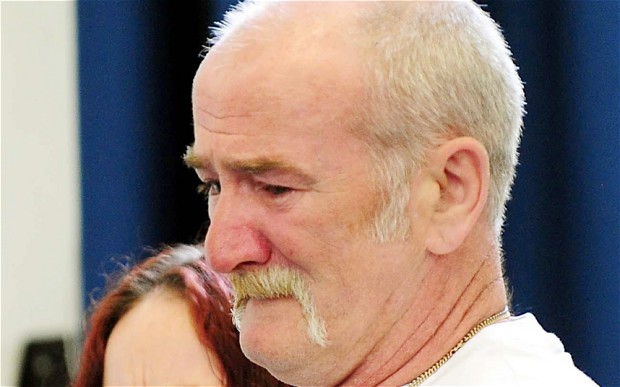
Did it ever occur to Philpott that fire is not so easily controlled as the hapless women who came into his orbit?
In that case you were a stony-hearted – boot on the neck – oppressor of the poor. In both cases the bleeding hearts hoped by such calumnies to shut down the discussion and for generations they succeeded. Now Philpott has breached the dyke in magnificent fashion and the second of these taboo subjects has fallen to the dictates of rational argument.
If Philpott has done nothing else positive in his whole miserable, outrageous life he has, at least, opened the floodgates for a full scale debate on the whole meaning of Welfare. Now, let us be clear from the beginning: all right minded people pity the poor and disadvantaged and are prepared to move heaven and earth to ease their plight. But just as vehemently we feel a mighty anger at those who pretend to be in that category.
Long ago (1988) the British Shoe Corporation closed on me after years of pursuit for the back rent and balance of a 14-year lease for a business whose premises they rented to me. I had sold it in Glasgow six years before. You see, in legal parlance, I was ‘The Leasee of Last Resort’. It is a practice now banned by Parliament. What had happened was that the man I had sold my health club to had got into business and matrimonial difficulties and had done a runner to Australia. Muggins, here, was left to pick up the pieces. The Shoe Corp was finally advised by its sharp lawyers in London that the best way to force my hand was to take out an order in bankruptcy. At that time I was coming to the end of my 21-year lease for my Plymouth city centre health club and was making preparations for a new line of business – the ski centre – and I knew that if they made me bankrupt that was never going to happen. I was forced, as a result, to liquidate all my assets and that included two houses.
As a now homeless person with three children I ended up in a housing association property, but I was enabled, with the help of investors, to continue the ski project and drive it forward to completion.
The reason I tell you all this is that I saw at close quarters the benefits system in action – or at least two significant parts of it. My neighbour on one side was on disability benefit. There was a brand new disability car on the driveway. You can imagine my shock when later I saw that same person’s photo in a local newspaper, having completed a half marathon. My neighbour on the other side used to get up at 5.30am for his six o’clock work start. He told me that out of about 60 housing association properties only three were paying the rent. He felt a deep rage at this. The rest were claiming either to be one-parent families, disabled or unemployed. There were a few pensioners. Daily we could see the so-called unemployed going off to their cash-in-hand jobs or the fellas of the so called one-parent families parking their cars down the road and sneaking in through the back door to spend the night. So let’s not pretend that there is not widespread abuse.
The burden, especially during the longest recession in 200 years, has become intolerable as well as unsupportable and its effects are deeply pernicious.
Next year is a special year for me: I will have been at work for 60 – yes, 60 – years. I did not celebrate my 70th birthday – particularly, as I felt that in today’s world, unless you are unlucky, 70 is no big deal. But the thought has recently occurred to me that next year is different: it represents my own little Diamond Jubilee. You see, I am old school; I am deeply proud of not being a burden to my country and blessed with health that allows me to continue contributing my penny’s worth to its well being. I get up in the morning and walk the mile to work and there I meet the public – to whom I must continue to be nice and disavow what some would say is a normal right to be a grumpy old man. I set to, repairing shoes, cutting keys, servicing watches, engraving trophies, making wooden house and other signs and framing pictures. None of these things could I do before the age of 55, so I think I may have disproved that old dictum that you cannot teach an old dog new tricks.
When I was about to leave school at 15, the idea of not working was not on the radar. There weren’t benefits as we know them today. My foster parents took the view they had done their bit and it was up to me to do mine. Three years after starting I got hauled off to the Army to do my bit there for two years as a National Serviceman and I managed to get shot at by the IRA. Quite sobering it was. But the point of all this is about being useful to society if you can. I was 21 when I heard President Kennedy’s famous line in his inaugural speech when he said “Ask not what your country can do for you, but what you can do for your country”. Did Philpott ever think such thoughts? I think not. Nor, unfortunately, do multitudes of others. That is the trouble. It was right that William Beveridge, in his famous report, sought to abolish the evils of want, hunger, idleness, ignorance and disease. It was wrong that noble concept was hijacked by scroungers and the workshy. We – all of us – are culpable for the stupidity we displayed when we allowed it to happen. Naively we believed in peoples’ essential goodness and probity. Yet it has turned otherwise honest folk, who saw their neighbours getting away with it, into dishonest scroungers themselves. Now, perhaps, the party is coming to an end and we can begin the long climb back to our core values. We may, in the process, start to balance the national books.
As for Philpott himself, he represents all that is despicable in our species. He was a bombastic, narcissistic bully with a deeply cruel streak who even imagined he was fast becoming a celebrity, perhaps eventually a national treasure. He thought he could lead the media by the ears believing it to be something else he could control. He was also very stupid. Did it never occur to him that fire is not so easily controlled as the hapless women who came into his orbit? He may continue to try to play the big man as he has done all his life, particularly with women, but that won’t last five minutes under the rigours of the prison system. I shudder to think what might happen if his fellow inmates gain access to him. Prisoners are infamous for exacting their own kind of primitive justice, especially where crimes against children are concerned. A speedy visit to that same eternity to which his lunatic actions consigned his six innocent children might well end up being a much sought after escape.
Canny Scots should see through Salmond’s humbug
Alex Salmond, Scotland’s First Minister, has now entered the final leg of his seven-year effort to destroy the British Union.

Alex Salmond is not a man of high principal, but rather one who fancies a grander title than that of First Minister.
In September of next year he will throw the most almighty spanner into the works of our 300-year-old marriage. If he is successful the English and Scottish nations will be back to where they were in 1707 and the universally acknowledged happiest coming together of two former foes will be over.
Without a single Sassenach anywhere in my bloodline that I am aware of, I very much value things Scottish and have a natural urge to wish her well. On the other hand, having been sheltered by the English for much the greater part of my life I have come to an appreciation of the many fine qualities which reside in that nation. As a consequence I choose to regard myself as an Anglo-Scot. Both nations, before they joined, had boundless potential, but it could never be fully realised while they spent their time and energy, bickering, eyeing each other reproachfully and often leaping at each other’s throat.
When, finally we made a deal to end the lunacy the results were truly astonishing. An industrial revolution was unleashed upon the world and an empire created the like of which had never been seen in the whole of human history. While maintaining their distinctiveness both nations have cut a dash in just about everything they have put their hand to and, along with Wales, have made a wonderfully harmonious union.
Mr Salmond will also find that separation, if he achieves it, will come at an eye-watering cost. All the institutions which form the modern state will have to be disentangled and new ones re-created north of the border, including (absurdly) fresh armed forces. The Scots should not assume that they will gain automatic entry to the EU as, by their own admission, they will be the resurrection of an old state that had never applied to Brussels to join. It is difficult to see how customs barriers and other niggling absurdities could be avoided were Scotland to go its separate way.
We are in the midst of the longest recession since the Napoleonic wars and Scotland would be unwise to take for granted continued English goodwill if she goes ahead. She should be mindful of the fact that it was English money that saved her from implosion during the Royal Bank of Scotland banking crises presided over by Scotsman ‘Fred the Shred’. The Libor manipulation of interest rates, for instance, was pure criminality. Scotland would also do well to remember that when she was poorer than England during the 70s the ‘Barnet Formula’ was invented to balance out incomes. Scotland has long since ceased to be poorer, but the annual payments go on.
They amount to £1,600 more per head of population than England. Justice suggests this arrangement be ended, but the English are not anxious to pick a quarrel with what some believe is their cantankerous neighbour, who can be counted on to resist fiercely. Many will take the view that the ungrateful Scots are biting the hand which feeds them and when exasperation sets in they might start to say that they would be better off without them anyway; at least financially. They do not forget that Scotland is greatly over-represented in Parliament and that it is the Scottish socialist vote that has kept Labour in power for so many years in England and look where that got us all. They will point out that the public sector in Scotland is hugely greater proportionately than in England and more social benefits are handed out there. In addition they get free university education and prescriptions along with free care in old age. I just hope that these salient facts are not too much to the fore as the arguments rage back and forth during the coming months and that insults do not begin to be traded.
My own view is that Alex Salmond is not a man of high principal, but rather one who fancies a grander title than that of First Minister; one like Prime Minister. For the moment, he proposes to keep the Queen as head of state, but then soon might not hubris drive him on to displace her and become president?
In order to whip up anti-English sentiment Salmond has timed his referendum with the 700th anniversary of Scotland’s greatest military triumph over the English at the Bannock Burn. Also he hopes to benefit from the afterglow of chauvinism following the Commonwealth games in Glasgow a few weeks earlier. Lowest and most desperate of all, in my view, is his insistence that 16-year-olds should be allowed to vote. Clearly he believes that these immature minds are easy fodder for his manipulation and will be swayed by all his nationalistic angst. But does anyone, including Salmond, seriously believe that such weighty issues, which have the potential to change our political landscape forever, be properly understood by people with so little experience of the world? As one Scotsman to another I say to Mr Salmond you are a humbug. Now there’s a good old-fashioned word, but one that in my eyes sums him up perfectly.
Those who have not rumbled him already will surely do so when all the arguments are laid before them and they will send him packing. I know, like Tony Blair, he has the gift of the gab and has an answer for everything, but his people have something much more valuable and big going for them: they are CANNY.
Queen Elizabeth II must set the seal on this final verdict of history
The bones of King Richard III are now awaiting disposal. When permission was sought for the highly speculative dig to uncover them from the Leicester city car park – where they had lain undisturbed for 528 years – the Ministry of Justice gave the nod and indicated that, if authenticated, they should be reinterred in the city’s cathedral.
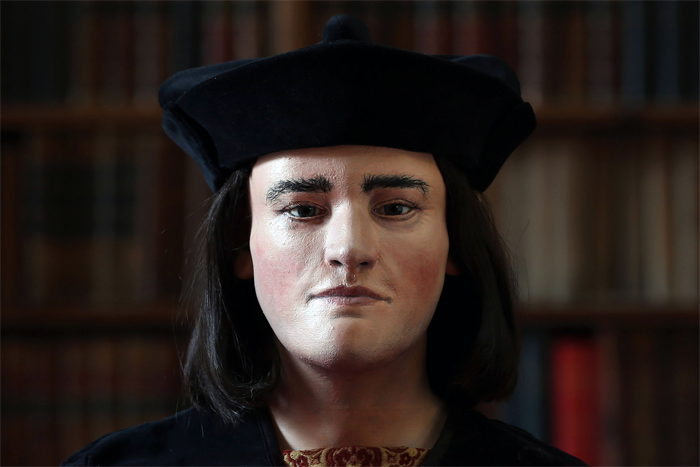
A reconstruction of King Richard III based on his skeletal remains.
First of all, I have to ask: who has rights over a monarch’s remains? I doubt very much if the Ministry of Justice, or indeed any of the secular authorities, have such rights. Were they to exist anywhere – excepting a ‘finders, keepers’ argument – I would have thought they rested with the monarch of the day, under perhaps advice from the ecclesiastical authorities. So, prime minister, please butt out!
Richard III, we now know, was a genuinely good king. Apart from being anointed, and therefore a totally bona fide one with a genuine claim to the throne – unlike his successor – he carried out a whole range of enlightened measures during his two short years as monarch. And forensic examination of the skeleton has told us a great deal – much of it extraordinary. He was neither a freak, as Shakespeare wrote, nor was he ugly (or ‘evil-looking’) as the Bard also insisted. He certainly died violently, but in view of his very slight – almost female-like – frame and physical disabilities, his final sortie into a melee of armoured knights to cut down his usurper rival would have won him a posthumous Victoria Cross in today’s world. So, a hero too!
Let us look at his personality and character – again, hugely disparaged by Shakespeare. Shrinks have examined his whole conduct throughout the thirty two year of his life and they paint a most sympathetic profile. They point to a sad and difficult childhood which, nevertheless, led to an empathetic man with loyal instincts who most certainly knew the difference between right and wrong – and who was extremely pious. Goodbye, we have to say, to the idea that such a man could have murdered his two young nephews, the ‘princes in the tower’.
Nowadays Richard’s disability – his scoliosis and sideways-bent spine – would have evoked great sympathy. Then, however, poor Richard would have been regarded as a pitiable object of scorn rejected by God. But his disability would only have been known to his family – and doubtless the aristocracy (people like to titter) – but not, I suspect, to the general public. Medieval attire of the time, with its raised and puffed-up shoulders, would easily have camouflaged the lower-than-other shoulder. The deeds attributed to this “accursed of God” Richard have him to be a schizophrenic psychopath, yet modern medics insist he was nothing of the sort. Clearly we are going to have to re-write our history books.
We may continue to enjoy Shakespeare’s play for its powerful drama but dismiss its history content. We should do exactly the same with Scotland’s much maligned king, Macbeth. But at least the Bard proved himself even-handed in rubbishing the kings of both kingdoms. (History, we have to acknowledge, was not Shakespeare’s forte.)
As for Richard’s treatment after his heroic death in action, on that occasion the victor, Henry Tudor, let himself down very badly. No chivalric generosity from him to his fallen foe brought down by treachery, but vilification and humiliation. When was ever a king of England stripped naked and slung over an ass for all to see on a fifteen-mile journey from the battlefield to the nearest town, in this case Leicester? Along the way, ignorant locals were encouraged to insult the former king and one went so far as to plunge his dagger so deep into the king’s buttock that it went right through and damaged the pelvis. And when was a king of England was dumped unceremoniously into a hastily dug hole without so much as a shroud to cover his nakedness, much less a coffin? I am sure that the friars who attended had never seen a burial quite like it in their friary – or anywhere else for that matter – and would have wished it otherwise. But they would have been scared stiff of the mailed ruffians who dumped the body on them and of showing the proper respect which was due. They obviously were told to get rid of it quickly and were not minded to disobey or show any form of reverence. Just a few whispered words of the sacraments would have been permitted. Only such a scenario could account for the utter disrespect of it all.
We have much to apologise for to that fallen monarch whose character we then went on to impugn for a full five hundred years with a litany of the most dreadful lies. But now we have a God-given opportunity to make amends, and the eyes of the world are on us.
The dig’s success has excited a worldwide level of interest, with some saying it is among the greatest archaeological finds in the last hundred years. No English king since Richard the Lionheart is better known abroad, and unlike the alleged wickedness of the third Richard, the first (Lionheart) really did do terrible things – like massacre hundreds of Muslim children. There’s an element of black comedy here: one is seen as a hero (he’s even got a statue outside Parliament) and the other as a villain. Yet the truth is that the Lionheart cared little for his English kingdom and preferring his French realm. He didn’t even speak English, and out of his eleven-year reign he spent only months in England. On the other hand, Plantagenet Richard was a first-class administrator who set to with gusto in making England a much more agreeable place for the common man to live.
It seems to me that our Queen is the one best placed to set the seal on this final verdict of history. She is, after all, his successor, and a devout Christian, like him. It will not do for a lesser royal than her to attend the re-interment. To do so would be to suggest that she does not accept the forensic and psychiatric evidence which has exonerated Richard. That would be ungracious, to say the least – even unwise. I feel she is duty-bound to close this final chapter with the dignity it deserves. 538 years is a long time for her ancestor to stand falsely accused.
When the murdered Tsar’s remains were found, the Russian state decided to do right by him by ceremoniously re-interring the bones in the St. Petersburg home of Russian Tsars and the then president, Boris Yeltsin, attended. England can do no less for the last of the Plantagenets, its longest reigning dynasty. This great saga of English kingship can only be brought to a fitting conclusion, in my view, by burial in Westminster Abbey – the most ancient and hallowed resting place of England’s kings and where most of Richard’s ancestors lie. A final, powerful argument for the Abbey is the fact that his beloved wife and Queen – Anne Neville – whose loss he is said to have caused him to cry at her funeral (strange behaviour for a psychopath!) is buried there.
Our Queen is said to have not much liked the Duchess of Windsor, and her mother positively loathed her. But neither denied her right to have her body brought back from exile and laid to rest beside that of her husband, the former Edward VIII. Richard has that right, too.
Finally, the Richard III Society are to be congratulated for their steadfastness over the generations in believing that England never had such a wicked king and that Richard was a good man with the right instincts. Most of all, the young woman who spearheaded the efforts to find Richard, Philippa Langley, is the true heroin of it all.
Mid Staffs is a man-made scandal
I have not written about anything that causes me so much pain as this article does. This is because as a Briton, proud of what my country has achieved down the ages, I am ashamed of the shocking scandal unfolding in what was meant to be our pride and joy: the NHS. Nothing in my experience begins to compare with the sheer magnitude of it all; the needless deaths, through wanton neglect, of almost certainly thousands of people in our hospitals.

SIR DAVID NICHOLSON: Fish rot from the head
Fish rot from the head and any man – and we speak of Sir David Nicholson – who believed that the totalitarian system that was once the USSR was a good thing should never have been put in charge of such an organisation as the NHS. Apparently his hero was the gruesome Soviet leader, Leonid Brezhnev. It shocked me how readily and swiftly the PM and Heath Secretary sprang to his defence. Perhaps it was because Nicholson had a reputation, when ordered to do things, of carrying out those orders. While that may be so, the consequences, as whistleblowers made clear to Nicholson, was an unfolding tragedy of epic proportions. But orders are orders and Nicholson ploughed on, heedless of the human misery he was unleashing. In order to achieve his purpose and and keep to his ‘good’ name as a man who could be relied on to deliver, a climate of fear was created throughout the NHS. How very USSR-like.
I will not detail the horror stories which have emerged: you are all familiar with them. But instead of being reassured, looked after and returned to health, where possible, people died in their hundreds, indeed – across the NHS – in their thousands. A single hospital stands accused of up to 1,200 deaths.
We all remember the unconscionable time we often waited for routine operations and A&E. The last government decided to do something about it. Everything was done with the best of intentions, but as we all know, the road to hell is often paved with good intentions. When it became apparent that their action plan was not working out, another well known maxim kicked in: the law of unintended consequences. At that point Nicholson and his Labour masters should have paused and taken stock. But they did not.
So what has become of us that we have failed in almost the most fundamental of all our duties, the care of our old? When our troops burst in on Belson concentration camp they found a level of horror – of man’s inhumanity to man – not known in the whole of human experience. We put the perpetrators on trial and hanged them. At their trial they pleaded that they were obeying orders. What they did not plead – though they might have done – was that they had been conditioned for years to see their victims not as human beings, but as the lowest of the low – a sub-species – not worthy of using up precious resources. I fear that when our old people – be they in care homes or hospitals – fall into frailty, incontinence or dementia, something of a similar attitude takes hold in disquieting numbers among those charged with looking after them. Yet in their case they do not even have the excuse of saying that their government had told them their charges were worthless. So, what is it that allows lethal, criminal neglect, which were it directed at a child or even a dog would send us into paroxysms of fury ending in stiff prison sentences but does not do so with our old and helpless? I truly do not understand it!
What is incredible is that the unfeeling apparatchik who presided over it all was not only not held to account, but promoted to the top job in the NHS. How very public sector-like. And this man – would you believe – is judged by himself (and Cameron) to be the best person to sort it all out even though he admitted to a Commons Select Committee that he had no idea what was going on in the wards. Well, it’s a funny kind of CEO – in whom 90 per cent of his own workforce have no faith – that hasn’t a clue what the troops are up to. And even funnier that such a level of incompetence should inspire the political leadership to think that in this broad land of 63 million there is none better.
The Francis Report into the failings of the Mid Staffordshire Hospital Trust wanted to name names, but using, as ever, our money – just like the BBC – the ‘fingered’ individuals engaged the sharpest, most expensive lawyers in the business to threaten Robert Francis with law suits. After three months of arguments and delay, he buckled. It all, thereafter, magically became the fault of ‘the system’. Nothing, said the chastened Francis, was to be gained by ‘scapegoating’. Sorry, Robert, but people did this thing and people must answer. Start with David Nicholson and move down to ward level. It cannot be too strongly emphasised that the whole farrago involves multiple, pitiless deaths which on a head count makes the Harold Shipman outrage look like a trifling matter. And at least Shipman’s victims were despatched painlessly and their road to Calvary travelled with great expedition.
A chief characteristic that distinguishes our species from every other in the animal kingdom is our sense of dignity. From the moment we get up in the morning to the moment we go to bed, we carefully nurture the image of how we wish the world to perceive us. Take that away and you have inflicted the cruelest of hurts. So being careless of people’s nakedness and forcing them into adult nappies because it is too much trouble to help them to the toilet is unforgivable; to leave them in soiled, cold, soaking sheets covered in their own dried excrement caked in overgrown nails which nurse graduates feel too grand to cut is beyond my powers of description; to force them to struggle to reach for water and food which is beyond reach is totally criminal.
Death is the single most difficult event that any of us will have to handle. To meet it in squalor, neglect and suffering over a protracted period with all dignity stripped away is impossible to equate with a civilised society. In my view we are all guilty, every last one of us – just as the entire German nation was guilty of the Holocaust. In both cases we allowed it to happen on our watch. We strut the world stage fixated on our favourite hobby horse, Human Rights, lecturing anyone unfortunate enough to cross our path on the virtues of compassion, yet we show nothing of it on too many of our wards. Shouldn’t Charity begin at home?
Those charged with looking after the fathers and mothers who fought two World Wars for us, and whose sacrifices in the years following brought us social security and prosperity, have a sacred duty to perform. They should remember that they were not always the sad, helpless individuals they see before them, but once vibrant men and women who held down jobs and brought up children. If it would help them to understand this, let a photo be affixed to the head of every bed to show their carers how they looked in their glory days and let a caption tell the story of who they were and what they did.
A poisonous legacy
History will not be kind to Tony Blair. He found Britain a prosperous place – having recovered spectacularly from the ERM disaster – and left it virtually bankrupt and mired in two unwinnable wars.

History will not be kind to Tony Blair
Some might say this is a strange thing to claim concerning a prime minister who won three successive elections and even today is held in sufficient international regard to be appointed by the quartet of EU, USA, Russia and Britain to act as Middle East peace envoy. So why do I take issue with these two salient facts? It is my belief that our former prime minister succeeded in taking in not only ourselves, but a great part of the world beyond.
Blair took little old me in back in 1997. Indeed, if we cast our minds back to that now distant time it seems extraordinary that a government should be thrown out of office when it has got the economy into a rock solid position (so solid, as I recall, that it was starting to pay down the national debt).
Received wisdom tells us that it is the state of national finances that decides elections, yet the ‘grey man’, John Major, went down to a resounding defeat. Why was this? Partly because he was that ‘grey man’ and lacked charisma, whereas his opponent had oodles of it and was young as well as good-looking. And there had also been a series of huge embarrassments for the Conservative government: ‘cash-for-questions’; the armed forces procurement minister having his Paris hotel bill paid by a Arab Sheik; the gaoling of Jeffrey Archer; sexual shenanigans from a government that preached ‘back to basics’ (nobody knew at the time that the PM himself had had a dalliance with Edwina Currie); and then there was the mighty cock up of our ejection from the ERM which did so much to destroy the Tory’s reputation for economic competence.
Often forgotten is the fact that all three parties, along with the CBI, the Institute of Directors and just about everybody else was gung-ho for entry to the Exchange Rate Mechanism. It was therefore rank hypocrisy later for the opposition to use this as a stick with which to beat the government.
But I believe the biggest of all factors in Tony Blair coming to power was the national weariness of seeing the same old faces in place for 18 years. Blair seemed like a breath of fresh air; and how could we know that we were about to embrace the Nigel Havers of politics? But the one factor which still made the nation hesitate was Labour’s own reputation for fiscal incontinence. Indeed, every one of its administrations had gone down in a welter of financial mismanagement. To allay these last remaining doubts, Tony and his glowering, thwarted would-be leader Gordon Brown pledged faithfully to hold to Tory spending plans for the next two years.
So the die was cast and ‘Call me Tony’ took up residency in Downing Street. We used to call him ‘Bambi’ early on as he seemed to have no enemies, promising all things to all men with the most winning smile that had ever beamed out to the nation from Downing Street.
My own doubts began with the squalid Bernie Ecclestone affair very early on when all cigarette advertising was banned from sporting events except – mysteriously – from Bernie’s Formula One. For me it was downhill ever after as sleaze piled upon more sleaze, and all from the man who promised a government that would be ‘whiter than white’.
When the two years of financial rectitude was up, a spending splurge of awesome proportions was announced. There was to be no more ‘fixing the roof while the sun was shining’: it was to be spend, spend, spend.
The national debt went through the roof and no attempt was made to ensure taxpayers got value for money. It was just assumed that if you threw enough dosh at a problem it would go away. Instead, it went largely into the pay packets and pension pots of the new elite – the public sector, which was allowed to expand dramatically.
The upshot of it all is that we find ourselves today in the most dire condition that it is possible to imagine. Even private debt has gone through the roof. The spendthrift ‘Prudence’ Brown at the treasury seemed almost relieved to have someone else join him in the bankruptcy stakes. The growing credit bubble – which Gordon called growth – seemed like a never ending jolly, but like the puppet master in Downing Street it was a cruel illusion – all smoke and mirrors. Every pound Gordon borrowed he insisted was an ‘investment in the future’. Some future!
When he was in Brussels, he liked to turn off his headset so he couldn’t listen to what his peers had to say. But when it was his turn, he couldn’t resist lecturing them – in particular the Germans – on sound economics. All the while his bête noir boss left him to it so he could swan around the world offering his own advice and attempting to nation-build with armed forces Gordon constantly denuded of the equipment necessary to carry out his grandiose schemes. It was all very frustrating for the man who ‘felt the hand of history on his shoulder’.
While it’s fair to say the mess that the world finds itself in today would still be there, even without the contribution of Blair and his Chancellor, it is also fair to say that for us in the UK it would be manageable – as it is for Germany, Canada and others who handled their affairs with Gordon Brown’s once favourite word, prudence.
Bill Clinton, another out of the charisma stable of politicians, started it all back in 1998 when he urged Alan Greenspan, the then Chairman of the Federal Reserve, to help poor Americans become home owners – even those with no obvious means of repaying their debt. Thus began the sub-prime tragedy which spread around the world in concealed financial packages. But what did it for us and turned a problem into a disaster was that wild, decade-long spending jamboree.
As for our Tony, he doesn’t see or acknowledge any of this. He’s lost now in his own little bubble. He wanted to be President of Europe, but instead has settled – uniquely and rather unedifyingly for a Labour leader – on becoming stinkingly rich as well as continuing to offer pearls of wisdom to anyone who’ll listen. It worries me that his current successor in Downing Street is one who will. It worries me also that he has always been one of Tony’s fans, and despite everything remains so. What does this tell us about Cameron? Is this yet another judgement issue of his?
As an avowed Christian, it seemed for a while that faith might intrude on the Blair business of governance. There seemed often to be a touch of messianic fervour to his pronouncements. But his spin master, Alastair Campbell, slapped him down on this one, insisting that New Labour ‘didn’t do God’. Some might argue that Tony’s present ambition (he owns seven homes and counting) to join the mega rich club hinders his ultimate passage to celestial regions, and that he should remember his master’s admonition of how it is ‘easier for a camel to pass through the eye of a needle than for a rich man to enter the kingdom of heaven’.
Are you a dog, Irish or black?
Two things caught my attention this week and led me to think that I must write about them. First, we have recently noticed that more females are being aborted in this country than males and, second, that homosexuals want their own Olympics. They are widely disparate subjects, but they have one thing in common: both groups, down the ages, have been victims of discrimination.
If you were going to be born human it has historically always been better for you to be born male. Even in the more enlightened, liberal societies of the West this is still the case – though clearly less so than in times past. We are working hard on the few remaining unaddressed areas of inequality. They tend to be now of the less obvious kind, being more of a subtle nature. But they are there.
That greatest pinnacle of inequality, the aristocracy, is on the threshold of yielding primogeniture – led by the monarch, who has let it be known that she has no objection to a female inheriting the throne, even where there are younger brothers. Why, indeed, should she when she herself is the lucky beneficiary of discrimination on account of the accident of her father having no sons? You might say she became monarch by default. However, history has amply demonstrated that female monarchs can do every bit as good a job as can males; witness Victoria, Elizabeth I and, indeed, the present incumbent.
So if we have learned to value females as much as males, how come we have more females currently being aborted than males? The answer, clearly, must lie with our immigrant population, large swathes of which have brought the malign baggage of boy favouritism with them. (Scans, of course, allow for early identification of gender.)
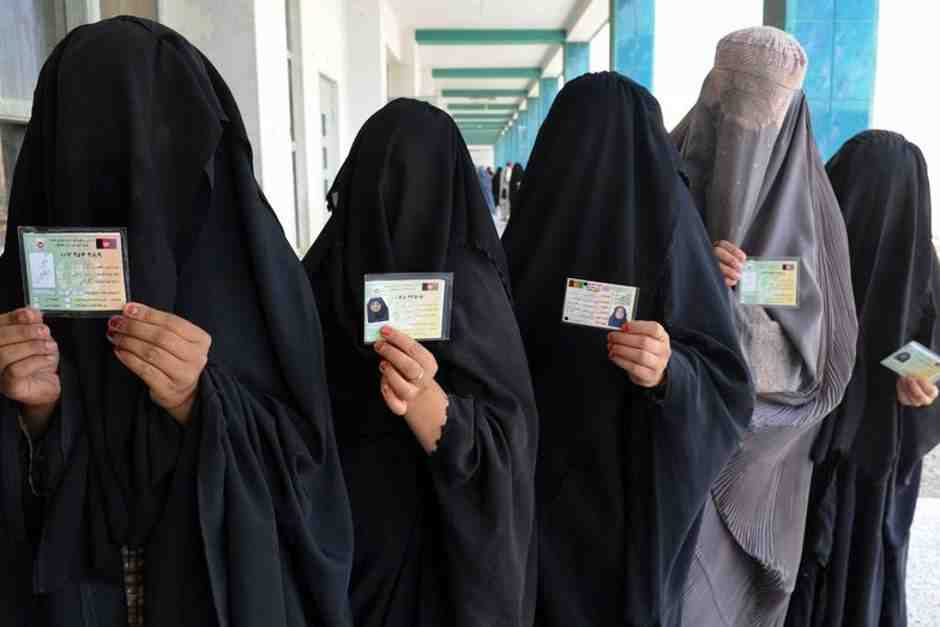
Burqa-clad Afghan women show identification cards as they wait to cast their votes at a school converted to a polling centre in Kandahar, Afghanistan.
It seems to me there is only one way to address this issue. We must discourage the ghetto mentality in our immigrant communities and insist on adopting mainstream values, as the Americans do. The burqa and niqab, for example, strike me as no more than prisons of dark drapes – and like a prison there is no escape. Their sentence is one of life. They must learn to live with it. There is no place in 21st century Britain for medieval mindsets which demean and devalue women, even to the extent of dictating what clothes they wear.
It is economics which dictate why many Muslim men think as they do; they believe that male children have greater earning power and are better able to look after them in their old age. When we have educated and seduced them into wishing for the delights of Western consumerism, which after all produces jobs, they will realise that the only way they will acquire the goodies is by putting their women out to work. And since we are well on the way to equal pay for both sexes, we must hope that economics and self-interest will play a large part in overcoming their medieval mindsets.
It is my belief that, notwithstanding these aberrations brought in from abroad, we live in a kindlier, fairer and more forgiving world in the West than we have ever done. Discrimination, bigotry, prejudice and violence in all their ugly forms are on the run – and rightly so. When I was a boy in the fifties, no one thought it odd, much less outrageous, for a landlord to put up a sign in his window saying ‘No Dogs, Irish or Blacks’. If a wife got beaten at home by her husband, the police would rarely intervene. It was, in the common parlance of the time, ‘a domestic’. Now all of these are criminal matters and rightly so. Who would argue otherwise?
As for landlords not welcoming homosexuals, no notice in the window would be thought necessary. The then generally accepted, ‘disgusting’ nature of the relationship was considered to make their exclusion obvious. And besides, such debauched subjects were best not touched on and certainly not spoken of in print by putting a notice in the window; rather children seeing it would be their worried concern.
Then there was the huge discrimination against disabled people. That too is being addressed. The recent Paralympics has taught us much in this regard, and was a giant step towards goodness and equality. As a nation we can rightly take pride in what was achieved. It can fairly be said that we have set a benchmark for others to follow – a Gold Standard, if you like.
Yet one of the last great prejudices that we have to overcome is our attitude to mental illness. We still do not give it anything like the sympathy and attention it deserves, and millions – yes, millions – suffer as a result, usually in silence and quiet desperation.
However, in our laudable efforts to come to grips with all of these things and undo the wrongs of the past, we are in danger of creating absurdities. This call of Boris Johnson’s – backed by David Cameron, no less – for London to host the 2018 Gay Olympics seems to me a game too far. All it does is suggest that homosexuals are, indeed, different – which surely is not what they intend.
Positive discrimination in jobs and other areas is also something we need to watch carefully. If not, we may be in danger of creating a backlash from the mainstream population. I sometimes think that we have travelled so far in that direction that – with the right qualifications – your life chances in Britain today may be better if you are not Caucasian.
In formulating my thoughts for this article, it came to me that long ago I was myself a victim of a quite pernicious form of discrimination. I grew up in a school which was purpose built for illegitimate children: there were six hundred of us. Society had once been prepared to let such children die on its streets before one day it would come to their rescue. On his visits from the docks to Central London, a merchant sea captain called Thomas Coram would be distressed by the sight of abandoned and dead babies. He decided to make it his life’s crowning achievement to do something about it, and seventeen years of incessant lobbying finally brought him in 1739 a Royal Charter to set up Britain’s first Children’s home for the ‘Abandoned & Destitute’ which he called the Foundling Hospital. It was Britain’s first charity.
But while we children had to be eternally grateful to men like him – and a hundred and thirty-five years later, to Dr. Bernardo – we in the Foundling Hospital had a particular cross to bear. We were the children born in sin – the ‘Untouchables’ of our particular culture. And so it remained until as late as the nineteen fifties, when a foundling girl was dismissed from her job because her boss found out about her origins and would not allow her staff to work with her. One of the consequences of this sad and cruel outlook was that all of us felt the need to hide the circumstances of our birth and upbringing and keep it as our own dark secret; it fostered a sense of inferiority and shame. In one sense we were on a par with the dogs and Irish in those ‘No Dogs or Irish’ signs. We were considered not welcome, even dirty.
Of course, as ever, hypocrisy reigned – in this case literally. The one who should have set an example – the king – could have as many bastard sons as he wished and all doors would be open to them. They would even be ennobled and likely as not receive a Dukedom. The Duke of Monmouth even made a bid for the crown itself before he was defeated in 1685 and executed by his uncle, James II. So I suppose in my own way, deep down, I must have been affected, perhaps even scarred by it all. Of course, unlike those with physical handicaps it was not there for all the world to see, but the emotional and mental damage must have been considerable – especially since we were allowed no contact with our mothers (we had been given different names as babies so that we could never search them out). Equally, the mother could never steal back and reclaim her child.
I have often wondered what a shrink would make of me, though I have endeavoured, despite my many failings, to be a good father and husband. The fact is that we are all born in the same messy way, and king or not, we will all shed this mortal coil in the fullness of time. There is a great justice and equality here. What matters is the period between the two events. All efforts should be directed towards achieving equality here also; a level playing field for all.
Today, when almost half the children being born are illegitimate, looking down on them as second-class citizens is both impractical as well as nonsensical. Personally, I regret the numbers being born out of wedlock since evidence shows that children thrive best in a committed family environment. Just the same, we will not force the non-married mothers into an economic cul-de-sac, as once we did, where they cannot afford to provide for their children. Neither will we saddle those children with a cruel burden of undeserved shame. Mothers and fathers will even escape prison if it felt that their absence would seriously impact on their children.
We are a better society than once we were, of that I am convinced. We may not be frequent Christian church-goers anymore, but we have an infinitely stronger Christian conscience. And we do not hang people. We have ‘listened’, at last, to what that great American president, Abraham Lincoln, once said when he appealed to the “better angels of our nature”.
Plymouth is weathering the storm
A taxi driver friend of mine and I were talking recently about the terrible haemorrhaging of jobs which had taken place in Plymouth since we arrived. He had written down a list of the vanished enterprises, which I’m sure is by no means exhaustive. Glancing down the melancholy column I wondered how it was possible for any city to survive such a culling. The roll-call made for depressing reading.
- Aggie Weston’s
- Clarks
- Comet
- Derry’s Cross Co-op
- Gaumont Palace Cinema
- HM Dockyard
- Hoe Theatre
- Jaeger
- Ladybird Factory
- Millbay railway station
- Navy, Army and Air Force Institute
- Odeon Cinema
- Plymouth Airport
- Popham’s
- Robert Daniel’s Cash and Carry
- Royal Naval Engineering College
- Royal Naval Gunnery School
- Royal Naval Hospital
- Seaton Barracks
- Texas Instruments
- Toshiba
- Woolworths
We talk about austerity times, but if someone with a crystal ball had predicted the certain eclipse of all these enterprises and had been believed, there would have been a mass exodus from what would have been perceived as a doomed city. No one would have thought it possible to survive such a cataclysm.
So how fares the good ship Plymouth after this protracted bloodletting? Not bad! Not bad at all. Amazingly, the city which looks down on us today is little short of a stunning reincarnation. I will not say there are jobs a plenty, but its employment level compares favourably with most of the rest of the country. In my suburb of Plympton it stands at 3 per cent. In five short years much of the city centre was transformed, just in time to beat the credit crunch which brought development to a grinding halt. I have a strong feeling, however, that if you visited many another city a similar list could have been drawn up. But Plymouth, as a garrison city, suffered unduly harshly because of defence cuts due to the rundown of Empire.
Capitalism and the market do work. One way or another, jobs come to fill the void. The doomsayers are seldom right. How prescient that in the one area of the economy which has not been affected by the recession – the world of the super rich – Plymouth has found a response in Princess Yachts.
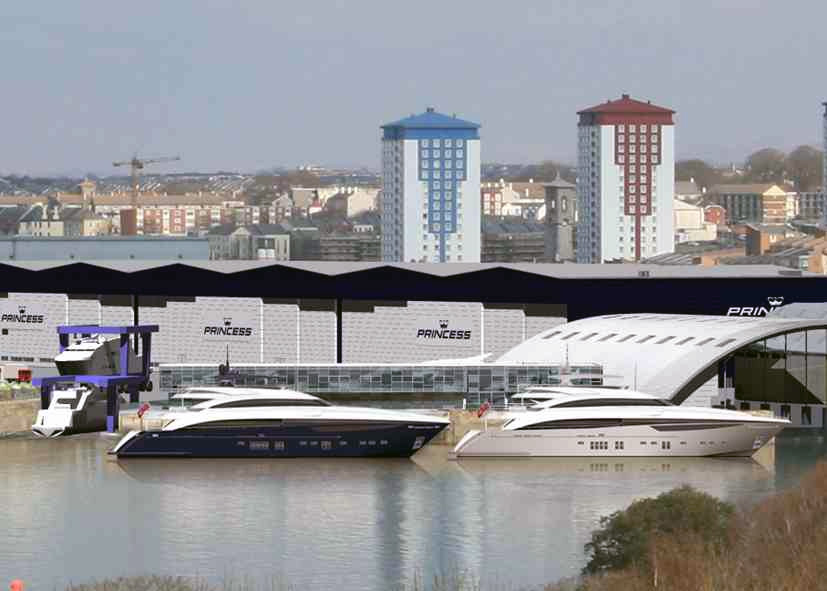
Princess Yachts has proven to be recession-proof
But apart from the acres of luxury, seafront apartments created out of clapped out warehouse and the sparkling, gigantic Drake Circus development, the most stunningly successful of all Plymouth’s new enterprises has been the transformation of its previously lacklustre, old polytechnic. Only a very few of the many polytechnics magicked overnight – to the scorn of many – into universities can aspire to a place at the top table of the long established universities. But Plymouth University is undoubtedly one of them. Its student numbers are vast and are a testament to the high regard in which it is held. It is architecturally new and striking; plum in the centre of the city giving it a real buzz which it has never had before, and much of its student accommodation is second to none. And its academic rigour is impressive. If its onward and upward march continues, I predict it will earn itself one day a place in that select pantheon of the elite universities in the Russell Group (I will write more of this in a later article).
So well done Plymouth. You have looked adversity in the face and have prospered against the odds. You have survived a storm, different in kind, but every bit as furious as any your illustrious seafarers ever met on the oceans of the world. They would be proud of you.
Children need love, not red tape
What are we to do with agencies employed by us to carry out a specific task yet which give every appearance of simply refusing or being incapable of carrying out that task? I have a pretty good idea what industry or commerce would do. In America they would say they’d need to kick ass. This particular task is so important that the Prime Minister himself has joined the fray.
Here I refer to those agencies responsible for getting children out of the care system and into loving and supportive homes.

Black and coloured children are often the hardest of all to place.
Last week OFSTED published some truly shocking statistics. Among the many figures which made such depressing reading was the fact that only one in eight of the people who wished to adopt were approved by social services. From a total of 20,000 adoptions in the mid 1970s, the figure has fallen to a fraction over 3,000 today.
Nobody, apart from that closed circle of social services, knows the breakdown of reasons why so many were rejected and they won’t tell us. What is known is that many of the reasons are varied and extraordinary. So much concerning children these days is conveniently hidden behind a veil of secrecy. That veil permits intolerable things to happen in our name.
Take the latest: the virtual kidnapping of the two orphans of the Alpine murders in France. The dead mother’s sister wants to take care of them, but oh no, social workers say they must be taken into care. Their disdain of the children’s surviving family is so great that they will not even answer their emails or other enquiries. Shocking tragedy is compounded by gratuitous additional tragedy.
UNICEF revealed in a recent report that 60 per cent of children brought up in our national childcare system end up either criminals, homeless or suicidal. How bad is that terrible statistic? It should make us all feel ashamed. So finding children homes and getting them out of care is of the utmost importance.
Unfortunately we live in a box-ticking age. You wouldn’t want to know the number of boxes which have to be ticked before you are given the green light to adopt. Like the driving test it has got harder and harder, though in this case exponentially so. So hard, in fact, that another report said that most of us wouldn’t be able to adopt our own kids. It therefore seems nonsensical for the Government to announce a National Adoption Week calling for thousands more people to apply to adopt. Last year 25,380 did just that, but only a measly 3,048 made it through the multiple hoops and mile-high hurdles that were put in their way. Not exactly an encouragement for more to come forward.
My own advice to Social Services (and this is from someone who spent 15 years in care) is to take your hat off to a person who will take on somebody else’s child. There is no pecuniary incentive to do so, unlike fostering. And they will spend a river of love and treasure over the years in making that child their own. In fact, this should be the default position in of Social Services. In my view it takes a very special kind of person who will set aside the ties of blood.
Evolution makes it easy for the natural parent to bond. To do so in other circumstances is laudable in the highest degree and we should stand in awe of those many who choose to do so. With the way things have developed you could almost be forgiven for thinking they are treated with suspicion by Social Services, as though they must prove themselves first. Yes, of course there has to be proper vetting, but is it right that the bar should be set at such a height that most of us parents would not clear it?
You might say it was great good fortune that because of lucky biology we didn’t have to take the test. Pity the poor would-be parents who were not so lucky. Why should they be double punished by being put through the mill in quite the way they are? And what are the reasons they are rejected?
As I say, Social Services will not give us a straight answer; indeed, they give us no answer at all. But we do know that if one of the applicants smokes that will count against them. Or if they are of a certain age, that too, or if in not-so-good health, or too fat, too poor, too stupid or too messy or too much of anything (a member of UKIP, perhaps); all will be weighed in the balance. Most contentious of all is if they are not of the same race. Black and coloured children, as it happens, are the hardest of all to place. Of course it would be ideal if children could all look the same as their adoptive parents, but are we to take the view that a black or coloured child would be better off staying in care if we cannot find an ethnically perfect match? Again my hat comes off to those couples who will happily take a child from another race, and there are more of those than you would think. And I’ll tell you what! All decent people – who despite the litany of horror stories in the papers still form the great majority – will have nothing but admiration for those who do.
More must be allowed to adopt across the race divide because, in truth there is no divide, as Social Services would have you believe. If there were, black and coloured contestants on the likes of X Factor wouldn’t stand a chance. In fact, so far have we come in race relations that I have actually come to believe that your life chances in Britain PLC may be better today if you are not Caucasian.
The other great scandal is the length of time it takes the authorities to process an adoption – anything up to three years (the average time is 636 days). That is a lifetime to a child.
So not only have the barriers to come down but the speed must be greatly accelerated. Never mind looking for the perfect match racially as though you were looking for the perfect kidney. The fact is that we live in an imperfect world and getting those kids out of care pronto and into the warm embrace of a loving family must be the overriding priority. Remember the wretched outcome of those sad 60 per cent who never made it out of care and what became of them.
Only a free press holds the powerful to account
Today the Leveson Report on press behaviour and ethics is published. Seldom has a particular report – from among the seemingly endless stream which emanate from government these days – been so awaited.
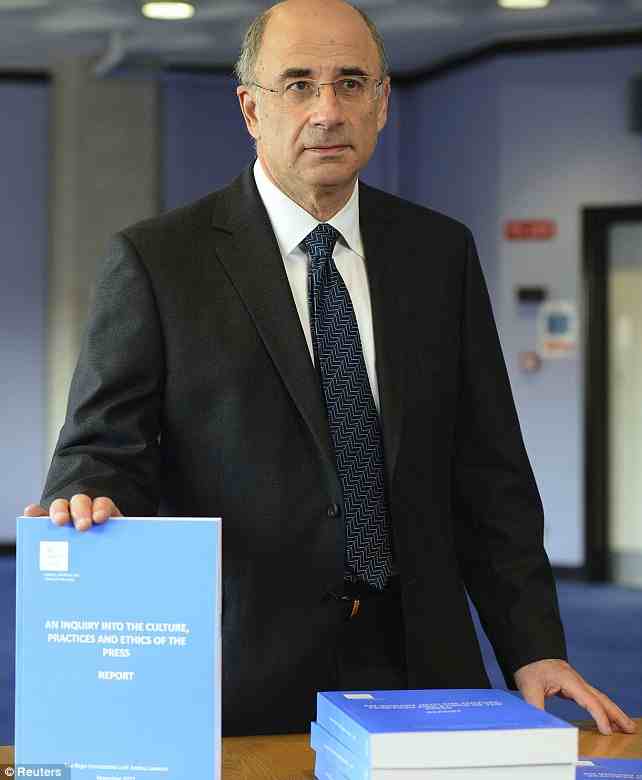
SOURCE: REUTERS
Its commissioning was a knee-jerk response of the PM to admittedly disgusting lawbreaking by certain sections of the press. But that is the point – certain sections and lawbreaking. Apart from the little man who cannot afford, like Lord McAlpine, to sue (and a way for justice for him must be found) the rest are covered by existing law.
It was the duty of the police to act, still less to be found complicit in the whole sorry racket themselves. It didn’t need an inquiry costing millions of pounds – which we can ill afford at this time of austerity – to deal with the matter. And it jarred that it provided a platform for the likes of sad Hugh Grant to strut the stage as though he was whiter than white as well as pretend that all he was interested in was the public good. It is true that many who have reported to Leveson had genuine and sometimes heartbreaking reasons to feel aggrieved, but Grant and his ilk were not among them. Nowadays when some scandal or other is breaking news there is this childish response… ‘we need legislation’.
We have been passing laws for hundreds of years and almost every conceivable thing that human beings can get up to has been provided for. A few have slipped the net and need closing off, like stalking, but by and large, if you look hard enough, there is a law which will cover it. All that is required is that the police stay clean and do their job. Everything that Savile did was against the law, as well as the North Wales children’s home abuses, the sex grooming of underage girls and the sick activities of Cyril Smith. What else is out there that we don’t know about? We have to have authorities in charge who are beholden to no one and will not cover up for the rich and powerful.
So what are we to do about Leveson? There is no God-given law written on tablets of stone saying his wisdom is so great that we must all be bound by his strictures. In fact, there is the understandable fear that the whole Leveson imbroglio is one of simple revenge on the part of the political establishment; payback time, in other words, for the press exposing their own scandalous shenanigans over expenses and the slurry of humiliation that poured over their heads as a consequence.
For my part, I have said it before and I’ll say it again: only a free press stands between us and the rich and powerful doing as they please. Only in the fear of their salacious and corrupt activities being laid open to public view is there a chance of holding them to account. If we are admired around the world for our media being willing and free to speak truth to power that is because for three hundred years – ever since the ‘Glorious Revolution’ when James II, the last of the autocratic Stuart kings, was sent packing – we have insisted on being told the truth.
Just as the current furore over secret trials, which seek to overthrow an even more ancient liberty, open justice, we cannot allow a clique of puffed-up, self-interested individuals to hide their shameful doings from us. That way lies the emasculation of what has been called the Fourth Estate of the Realm.
In the US, freedom of expression has been elevated to an even higher level. It forms the 2nd Amendment of the American Constitution and as such is untouchable. Leveson would not have been possible in that land of the free. So it should be here.
Cameron is now between a rock and a hard place. If he ignores the findings of a report that he himself commissioned and promised to abide by he will be accused of wasting vast amounts of public money in staging a media and celebrity circus as well as breaking his promise. On the other hand, if for the first time in centuries he succeeds in cowing the media by putting a political straitjacket on it, it will be a retrograde step whose end consequences we cannot even begin to imagine. Also, he will have made a bitter enemy of the media and that will not help his re-election chances.
Even under the freedoms we presently enjoy, which have allowed the press to go after wrongdoers fearlessly, dreadful things still happen. Imagine what slime will gather under future stones if you can no longer dislodge them and turn them over because the press is too afraid. Governments are famous for kicking inconvenient reports into the long grass. It should do that in this case.
Is it time for real change in the police force?
Last week’s police commissioners’ election was the biggest non-event in a very long time. In terms of voter turnout it was truly abysmal. Were it not for the court jester’s candidacy – John Prescott – it would have been even worse.
Two Jags’ supporters couldn’t be bothered to stir themselves from the warmth of their slumbers on that cold November day
This lack of interest is a pity because crime in a recent poll was right up there almost on a par with benefits and pensions as an issue of great concern to the public. Why then this lack of voter turnout when it has been given a chance to do something about it?
First, unlike general elections and referendums, there was a marked lack of information and hype. It all seemed like one big yawn; we didn’t even know who was standing nor where we were expected to vote and what’s more, no one bothered to tell us. In my own case, on the day itself, I had to ring up the town hall to find out where to vote and ask for a list of candidates. It took them ages to find out. Then I had to Google each one to find out what he or she stood for and what their track record was. Who, apart from a few nerds like me, was going to go to all that trouble? I tell you, I was on the line all of ten minutes waiting for an answer – and then they gave me the wrong place to go and vote.
What then was so important about this particular election? First, law and order is something that impinges on the life of every one of us. We have more contact with plod, by far, than we do with our local MPs. And the person who heads up our constabulary is responsible for an area and population hugely greater than our MP – in my case the whole of Devon and Cornwall, where there are many MPs.
We have all for many years been feeling that our friendly neighbourhood policeman has been slipping away from us: his presence on our streets declines daily, his appearance grows more intimidating, and his friendly nick closed – except by appointment in increasing numbers. He cannot, as a matter of course, have guns because on this one we dig in our heels, but he says ‘in that case then let us have tasers’. He seems unwilling to listen to our pleadings and determined to go his own way.
We have always judged it important that, operationally, the police should be free from political interference. And while this has to be right, it is equally right that ultimate control of policy should rest with civilians. In theory this is the case, but every Home Secretary has found it next to impossible either to impose their will on a Chief Constable or sack him when it becomes necessary. The reality is that the police have many of the characteristics of an army: they learn to march in formation and salute; they are trained to obey orders; and they can hold you against your will; they have armouries; are licensed to kill; and they wear uniforms, even body armour. But we do not allow an army commander – even the chief of staff – to decide policy, much less to determine the magnitude of the lethal force to be used. If we did, then General MacArthur – admittedly an American but bound by the same military ethos – would have atom-bombed the Chinese in Korea. His insistence caused him to be sacked by the president.
Because the new police commissioners have hire-and-fire powers over chief constables, as well as budgetary control, we can now reasonably expect police priorities to move in the direction we would all like. What was important in this recent election was that we didn’t get a load of puffed up, power-hungry chancers make it through to these crucial positions. Nor did we want them to be over politicised. In the event, the public (at least that small part of it that voted) thought this too and the Independents, as a result, made a very good showing.
In a perverse sort of way the pathetically low voter turnout may have aided (this first time round) a good outcome. Elections are normally held during the better weather of the summer, and what with the lack of information and hype, Two Jags’ supporters couldn’t be bothered to stir themselves from the warmth of their slumbers on that cold November day. Yet the Polly Peck, compromised Michael Mates for the Tories couldn’t get his loyal followers out either so the field was left clear for that little band of determined, civic-minded individuals who saw the potential and understood what was at stake to make the effort. So, for the second time, Two Jags had egg on his face, but on this occasion managed to restrain himself from throwing a punch at his adversary.
May these elected police chiefs not be seen as part of the much touted ‘Big Society’ so beloved of the PM? David Cameron may not have planned it this way – that would have been too Machiavellian; too clever for him – but the fates conspired to keep the famous ‘plebs’ at home and leave it to the more dedicated. He may, as a result, have got himself some very good police commissioners. If the commissioners they do a good job, they can reasonably expect a new term with re-election.
For all the present government’s shortcomings, there is at last the prospect that many areas of public life will be the better for police commissioners having been brought into existence, albeit again – like the recent election – in an unplanned for way.
The coalition is hellbent on making us solvent again, although weaker on promoting growth; it is tackling welfare abuse and shrinking the bloated state; it promises a revolution in raising educational standards and it is not giving up on immigration. Only the police stand unreformed – a law virtually unto themselves with some horrendous practises coming to light. Now, at last, we may see some real changes there too.
If the economy starts to recover it would be a mean person who would not give the government on whose watch it all happened some credit.
The BBC deserves better than ‘five jobs’ Chris Patten
The BBC, perhaps the world’s greatest broadcaster, is much in the news these days. The trouble is that it’s for all the wrong reasons.
PATTEN PENDING
All the major countries began broadcasting at about the same time, so how, historically, it got to its hitherto august position in the world is hard to say. But undoubtedly the BBC’s founder, Lord Reith, had a lot to do with it. He set a bar for standards of truth and impartiality at an almost impossibly high level. Reith’s credo was to inform, educate and entertain. His stern, Scottish countenance, looking down from office walls all over the Beeb, struck terror into the hearts of those who were minded to transgress.
All countries felt the temptation to use broadcasting, once it was invented, as an arm of propaganda; none more so than the Nazi propaganda minister, Joseph Goebbels. His guiding mantra was that if you told a lie often enough and loud enough it would assume, eventually, the attributes of truth. But while he was broadcasting his lies, half truths and sly innuendos, the majestic BBC ploughed on, keeping faith with its Reithian traditions.
Even during the darkest days of the war when defeat followed defeat it told it as it was. Sometimes Churchill was furious with it and berated the organisation for giving succour to the enemy and spreading doom and despondency. Despite his draconian wartime powers it was all to no avail. The result was that the world, and most of all the downtrodden peoples of occupied Europe, turned to the BBC for the ungarnered truth.
Round their forbidden radios all over Europe they huddled together in darkened rooms, fearful of the sound of approaching jackboots. But they were prepared to take those heart-stopping risks, so much did they crave the reassuring chimes of Big Ben and the sentient words which followed: ‘This is London. Here is the 9 o’clock news.’ It is true to say that the BBC in its single self kept the flame of hope burning throughout those terrible times. It became almost a ‘light unto the nations’.
In the years that followed, the BBC World Service became the most trusted broadcaster on the planet speaking truth unto power fearlessly. Even today among our enemies in the badlands of northern Waziristan in Pakistan, it is listened to in their own language with respect – even, dare one say it, with affection.
This then is the organisation which currently faces the worst crisis since it began its work 90 years ago. We should all feel alarmed.
I am a great believer in the maxim that the buck stops at the top. Foreign Secretary Lord Carrington took it over the Falklands and was much admired for it. In my view it was a great mistake to appoint a man who had five other jobs. It was an insult to a body of such august pedigree, and indeed size, as the BBC. A part timer for such a massive organisation? What were they thinking about.
What of the man himself, Chris Patten? This is a man who purports to have a keen appreciation of the working world we all operate in, offering his services left right and centre, but who has never held a non-political job in his life. He began his ascent of the ‘greasy pole’ straight after leaving Oxford.
One of our complaints about modern politicians is that too few of them have any real experience of life outside the Westminster bubble. That could not be said of previous generations, but it can be said of Patten. He’s as smooth and smarmy an operator as it is possible to imagine. Even now, when he has at last woken from his slumber, he is busy mouthing the smooth platitudes expected of such a man trying to extricate himself from trouble.
For all the multitude of jobs that Patten has had he has not made a success of a single one of them. So why does such a man keep on getting these lucrative sinecures? What made David Cameron appoint him to head up the troubled organisation? Do we have yet another example of the PM’s own lack of judgement? I suspect we do.
As for Patten’s judgement, he was the man who thought it proper to appoint Entwistle to the post of Director General and then, when the heat started to move in, hung him out to dry. Patten arrogantly and high-mindedly berated the Culture Secretary, whose remit covers the BBC, for sticking her genuinely worried nose in to his fiefdom. Now he admits that although he knew of the impending, devastating assault on poor Lord McAlpine’s reputation, he didn’t think it necessary to warn poor Entwistle of the coming storm so that the Director General could check his facts before going on air.
The BBC is at a watershed. Its current amateur level of journalistic rigour is truly astonishing. Especially for an organisation with a budget of some £4.4bn.
Its left-leaning stance makes a joke of impartiality. This desperately needs sorting out. But can a man as ineffective and compromised as Patten be the right man to do it? I think not.
As was said of Charles I, the hopeless king who lost his head so magnificently: ‘Nothing in his life so became him as the manner of his leaving it.’ “Never mind,” Mr Patten declares, “heads may well have to roll in the BBC too.” He should start with his own.
He’d be doing us all a great favour and just for once we’d have something to truly thank him for.
We must get our railways back on track
We had better all pray that it will neither be a wet nor cold winter. That’s asking rather a lot seeing as it is the perverse British climate we’re talking about.
The reason for not being wet is that the water table from being alarmingly low at the start of the summer is now alarmingly high. Just a small amount of the liquid stuff and it will have nowhere to go except lie on the surface. Floods will then be inevitable and widespread, perhaps more than we have known in living memory.
As for not being too cold that is because we are a million miles from having repaired the pothole damage of the recent severe winters. To make matters worse the cost of keeping warm is going to be more than many people can bear, especially the old. We have had enormous hikes in energy bills – twice the level of general inflation.
This leads me to question of whether the wholesale privatisation of the utilities was a wise thing to do, especially where we have allowed so many of them to fall into foreign hands.
Apart from strategic aspects which we should always have an eye to, foreign companies care little if the British play up over being ripped off and obliged to pay more than the same company is charging in their own country. Naturally these companies are more sensitive to home criticism and will seek to minimise it there. The foreigner is seen as fair game.
Part of the problem is that there are only six or so major players – a similar number to the banks – and there is not genuine competition. Without a doubt real competition makes for efficiency and puts a brake on exploitative charges. It was right, as a consequence, to divest the taxpayer of as many of the lame-duck industries as possible – provided genuine competition could be introduced. I well remember how it was normal to wait for up to six weeks for a phone to be put in.
However, if we are sensible, we must accept that certain industries – and water is a good example – do not lend themselves to competition. Governments of all hues have known this, but were all so rapacious in getting their hands on the massive sums which the utilities could generate that they have been willing to sacrifice the national interest to do so.
And why, apart from common greed at the thought of all this lovely lolly, were they so anxious to do this? First, they had been so monumentally inept at balancing the national books that an infusion on this scale would camouflage their hopelessness; and second, they each had their own pet projects – mostly social engineering – which they were mad-keen to indulge.
Such indiscriminate privatisation as took place was not in the national interest. What was needed was an open-minded, selective approach and not one driven by short-term economic advantage nor an ideological zeal such as ‘privatise the lot’ or ‘nationalise all the commanding heights of industry’.
One very sad aspect of what has taken place is that the industry which this country pioneered, and as a result changed the world forever – the railways – is now a national disgrace, even a joke (albeit one in very low taste).
I almost wept when the last carriage-making facility in Leeds lost out to the Germans and this great industry, in the land of its birth, died. How sad that is.
 A person could urge the prime minister in all earnestness to wade in over the railways. He would earn more brownie points than all his silly PR stunts like ‘hug a hoodie’, husky driving and riding a bike to the Commons put together. A recent poll has shown that 70 per cent of the nation would like to take the railways back into public ownership. As things stand, our ticket prices are almost the highest in Europe – four time that of Slovenia and three times that of Spain and Italy. The pricing structure is a nightmare of Byzantium complexity and the overcrowding of passengers an utter disgrace. At the same time umpteen 1st Class carriages lie almost empty. Speaking of this term – 1st Class – is unfortunate in itself, especially in this still most class-ridden of societies. Far better it be called Premium Rate.
Communications are at the heart of any country’s success or failure. It was the railways which opened up the world. The American west was won more by the iron horse than by Wild Bill Hickok and the vast riches of the Russian east by the Trans-Siberian Railway. We absolutely must get our railways back on track.
We have vilified a progressive and enlightened English king for long enough
I have been pondering the proper course that should be adopted should the ‘king under the car park’ (Richard III) be validated by DNA tests. Assuming that the tests are positive, which seems likely, the find is of great significance.
Richard is one of the few English kings known around the world thanks to the story told about him by the world’s greatest playwright. Shakespeare undoubtedly has earned his place as a playwright of genius, but the same cannot be said of his powers as an historian. When the facts are examined his depiction of Richard lll can be argued to be nothing less than a character assassination. In two short years as king Richard performed an astonishing array of good works, some of which, such as the Bail system and the standardisation of weights and measures remain with us today. We know also that he was extremely pious, and endowed many monasteries and colleges of learning as well as ending the practise of buying public office. For him, merit alone counted. None of Richard’s achievements are acknowledged by Shakespeare; instead we have the depiction of a murdering ogre of grotesque physical appearance.
Were Shakespeare to be right then Richard’s dethronement would have been fully justified, even perhaps by someone with as thin a claim to the throne as Henry Tudor, the victor of the battle of Bosworth. But was Shakespeare right? We know what the record says about Richard’s achievements. Soon we may know what forensics say about the bones. Was it a hunchback with a withered arm, as Shakespeare said? It is known that Richard, after a heroic dash to cut down Henry Tudor, was himself cut down after being surrounded and that the butchery that took place against his person was truly dreadful. He was even stripped naked – no way to treat a king – and slung over a horse before being paraded for all to see to the nearby city of Leicester. Interestingly, the body under the car park did die violently. There is an arrow in the back and the skull has been impacted twice with an axe or a sword. Further examination may reveal more injuries.
As fascinating as these battlefield injuries undoubtedly are, what will be the clincher will be the integrity or otherwise of the spine and arm. You see, Shakespeare was adamant that Richard was grossly deformed; a hunchback, no less with a withered arm. Early examination suggests no such thing – just a slight curvature of the spine (certainly not a hunchback) and a perfectly normal arm. We cannot know whether he was of evil look mien as again suggested by the Bard, but portraits of the time show a perfectly normal countenance. Laughably, our Will said that even dogs barked when they saw him.
The person chosen to provide DNA evidence is a man who lives in Canada. He is of Plantagenet ancestry – the bloodline of the 300-year-old dynasty of English kings of which Richard was the last. Always assuming that the tests prove positive, then Shakespeare will stand exposed as a liar. He told porkies also about Macbeth. Let us be kind – in view of his colossal eminence – and call him an arch propagandist for the Tudors. It was, after all, under their patronage that he wrote and they insisted on nothing good ever being said concerning Richard, except that he died bravely. And in that matter there were too many witnesses to pretend otherwise.
But the fact will remain that because of him we and the world for five hundred years have vilified a progressive and enlightened English king. It surely must be right to do our best to make recompense. Justice dictates that the remains be treated with the respect and receive full honours as an English monarch – the last as it happens of truly English stock and the last to die in battle. After Richard came monarchs from Wales, Scotland and Germany. He should be laid to rest where many of his ancestors lie, in Westminster Abbey. This particular monarch’s end marks not only the end of the dynastic, thirty years bloodbath of the Wars of the Roses, but even more significantly the end of the Middle Ages and the start of modern times. So for all these reasons and many more Richard was an important king.
In ordinary circumstances fallen warriors of distinction were buried in the cathedral nearest the scene of battle, in this case Leicester. Then my thoughts turned to York – the Minster there – where his most devoted followers were located. He was a prince of the House of York and its famous white rose he many times carried into battle fearlessly against the red rose of Lancaster. Finally I plumbed for Westminster. Why? Because these are not ordinary circumstances. We have a major player in the great saga of English kingship and one, who I am convinced, has been grievously wronged. His interment, with due ceremony, in the home of English kings where he was crowned would be a way of saying sorry. It should be attended by the present monarch. It cannot make up for the generations who have lived and died believing Richard to be England’s most villainous king, but it would, at a stroke, set the record straight and be the right thing to do. Incidentally, I would hazard a guess that just about all the world’s media would be there to record the event. Westminster Abbey would be more on the tourist trail than ever. Most of all we would be able to take quiet satisfaction from the knowledge that after half a millennium truth has finally triumphed.
Get down to the gym boys, and don’t bother bringing your body armour
Very soon now we are going to be asked to vote for civilian police commissioners – a controversial proposal not much liked by plod.

SOURCE: Rex Features
It has got off to a bad start because of the calibre of some of the applicants, many of whom one suspects view it as an excellent chance to climb aboard the gravy train as well as throw their weight around. One of these applicants, the clownish buffoon and former deputy prime minister, John Prescott, has indeed a lot of that to throw around. Nonetheless, I believe that the concept is sound and as the years pass we will get genuine public-spirited men and women of stature and proven track record to oversee their force.
The reason I feel that the concept is good is that I believe that certain elements of the police are close to being out of control and act as though they are a law unto themselves: look at the incredible Hillsborough cover-up; the striking down of that poor man Ian Tomlinson who died in London and was going about his business with no thought of joining a demonstration. Then there was the shooting dead of a young, deeply disturbed barrister Mark Saunders, also in London, and the seven-bullets-to-the-head execution of the hapless Brazilian young man, Charles de Menezes on the underground – as well as many, many other incidents which have caused deep disquiet among the public. Accusations of thuggish behaviour on an increasing scale are levelled at the police.
The advent of jihadist terrorism appears to have provided an unarguable cover for the issue of more and more firearms and a tipping point seems not far off where every Bobby will have a pistol at his hip. More guns will, inevitably, lead to a greater use of them. Terrorism seems to have provided a ‘catch all’ excuse to usher in a whole range of repressive measures. Tony Blair, as with so many things which came back to bite him – such as devolution – embraced the whole scaremongering agenda. And yet, more than anyone, we were familiar with terrorism – a very competent form. We had thirty years of it with the IRA but yet, despite all the carnage such as the Brighton bombing which almost killed Margaret Thatcher and much more, we kept our nerve. We did not move towards arming our police.
Since Robert Peel set up the police, one of the glories of our country – one that has amazed the rest of the world – is that we have been able to maintain law and order without recourse to firearms. So the police know there is deep disquiet at the way things are developing.
‘If we cannot have guns’, seems to be their new mantra, ‘then let us have tasers’. And what do we see? A 43 per cent rise in their use in one year. We see a blind 61-year-old architect, who has already had a stroke, felled with 50,000 volts of excruciating pain.
In all the many instances of police malpractice there are precious few instances of officers going to gaol. They investigate themselves and produce what – predictably and in too many cases – the public perceive as a less than fair outcome. One of the useful actions that the new commissioners could address themselves to is to civilianise these investigations. That is a much needed measure and one that should be applied to each and every professional body. By all means let them have representation on that body, but not enough to determine an investigation’s outcome.
Once upon a time the police would go about their business – as the military is wont to say – in shirt sleeve order during the summer. Today they parade like Robocop, festooned with all manner of silly gadgets. Every new device that comes on the market they are fair game for; it rapidly becomes must-have. Soon they will be weighted down to such an extent that it becomes impossible for them to give chase. In any case, too many of them are out of condition and overweight that it would be impossible anyway. That too is a subject that the new commissioners could address: annual fitness checkups.(By the way, I don’t recall seeing many overweight soldiers locking horns with the Taliban. As an ex-health club owner I would be happy to advise on what needs to be done. Get down to the gym boys! I’ll meet you there, but don’t bother bringing your body armour.)
N.B. I was stopped by the police the other day after collecting my son from the railway station as I forgot to put my lights on. My car was given the once over; I was breathalysed; the works. They were a couple of fine young men – polite, fit and a credit to the force. All is not lost.
British weather? Don’t knock it!
Two Saturday afternoons ago I parked my bottom on the window sill of the Sir Joshua Reynolds pub opposite my shop basking in the hot sunshine of that early October afternoon (between customers, of course). It caused me to reflect on the vagaries of our famous – or should I say infamous – climate. During that week we had had some truly miserable weather, even the day before. It struck me as not surprising that weather is so often our opener in engaging with a friend or acquaintance whom we might bump into. All four seasons can be hand in a single day. I remember in August being astonished to see hailstones.
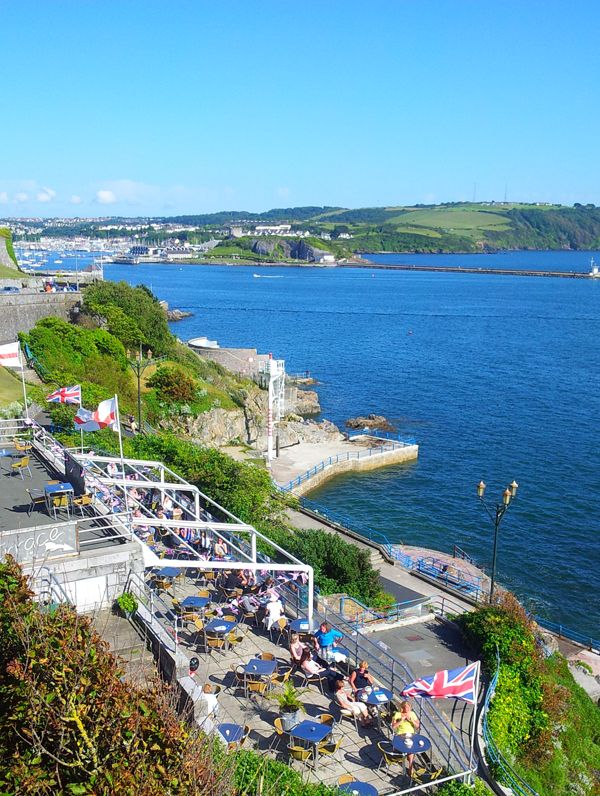 When I lived in South Africa during the early 70s, I used to make a point in the early days of walking the streets in the blazing sunshine, avoiding protective canopies that most shops offered. I was truly a Noel Coward’s ‘ go out in the midday sun’ wally. It didn’t last. In no time I found myself dodging from one bit of shade to the next. I remember clearly one day cursing the unremitting blaze and thinking how wonderful it would be to have leaden skies and even a gentle drizzle. The point about all this is that, as with almost everything, you can have too much of a good thing. It is not that we don’t enjoy our share of sunshine; it’s just that we don’t get as much as some. But the upside of this is that when sunshine days do arrive we fully appreciate them and know how to make the most of them.
Endlessly sunny days cause them eventually to pass unnoticed. There is little point in studying the weather since it is almost always the same. This was the case here in the UK during that freakish summer of 1976; there was no sense then even remarking on it to a friend as it would be tiresome. How many mornings can you say ‘lovely day, isn’t it?’ when perhaps you’ve had the better part of a hundred of them.
Ours is a gentle, no-extremes climate. Winters are mild and summers don’t cause you to drip sweat. How my own Lithuanian wife loves having turned her back on a climate where for months on end the stat. stays below zero, often many digits below. We may have had a pretty ropey summer, but hey, we had a sunshine Olympics, didn’t we? And who would exchange what we had for the blistering scorcher that laid waste two thirds of the United States, turning it into a dust bowl and utterly destroying their food crops? And who wants the bush fires currently raging in New South Wales on the other side of the world? We don’t have earthquakes, hurricanes, tsunamis, volcanoes, whiteouts or indeed anything that smacks of disaster. Even our floods are small beer compared with what Australia (Queensland), Pakistan and Bangladesh had recently. Instead we have our gentle, reliable, temperate climate that allows us to grow just about anything.
Dreamers among the old folk, ready to retire, fantasise about the grass being greener in the other field and head for the ‘Club Med’ countries. But apart from economic mismanagement making them a disaster area, with their properties plummeting in value, the grass is most decidedly not greener, but parched for much of the year. Those glorious, verdant landscapes of the British Isles must seem like a distant memory, and that much thirsted after sun nothing but a boring, skin-destroying nuisance that won’t give you a break. And what a risk they take health wise. At the very time in life when good health cannot be taken for granted and maladies pile up, they put themselves beyond the protective reach of the NHS.
As for having a good old yap with the locals as you go about your business, forget it. That too is not so easy when they speak their language and not yours. And participating in their world by learning their lingo is also not so easy when you’ve got a tired old brain to do it with. For me, I’m happy to settle for this beautiful island which the whole world admired so much during this festive year. When those glorious sunshine days, like that one two Saturdays ago, come I grab them with both hands and look forward to the next. And if from time to time you feel cheated and feel that you haven’t had quite enough of them? Well, there’s always those package holidays that can whisk you away to sunnier climes for not a lot more than it would cost you to stay at home.
For the longer term, if global warming heats us by a degree or two extra I won’t be complaining. They say that olive trees and vineyards will prosper again as they did in Roman Britain. Whoopee! Pity though that I won’t be around to see it. But if future generations are constrained economically and have to live in a world of making do with less and can never again enjoy the boom times of yesteryear, then a hotter Britain – freak weather phenomena notwithstanding – may at least be some small compensation.
Richard deserves justice
We are going to have to decide what to do with the remains of Richard III, should they prove genuine as seems likely. Richard was the last truly English king and the skeletal injuries confirm what even the Tudors could not deny: that he died bravely in battle – the last English king to do so.
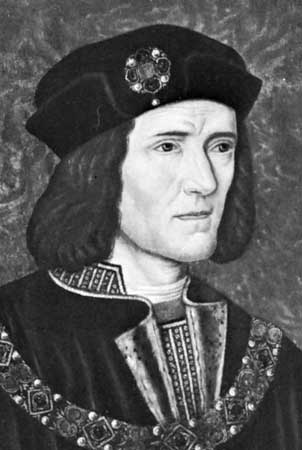
SOURCE: Encyclopædia Britannica
As the Battle of Bosworth neared its conclusion, with Richard having been betrayed by his leading commander switching sides with his large force, he was now outnumbered. Yet having caught a glimpse of Henry in the distance, he decided on an all or nothing dash to cut him down. Henry was surrounded by his supporters and his chief body guard was a huge man – England’s leading jouster – but Richard, like the Furies, crashed through enemy ranks and unhorsed him. He then cut down Henry’s standard-bearer to bring himself within a sword’s length of Henry, before he himself was cut down. We see the grievous injuries on the skeleton: an arrow in the back and his skull cleft through. The autopsy may reveal more.
Now, I am no apologist for Richard. He may well have murdered his nephews in the tower, but then so equally could others – including the victor of Bosworth whose claim to the throne was extremely weak. Richard’s claim was not, however. He was the last in a 300-year line of Plantagenets. In ordinary circumstances the princes had prior claim over Richard, being sons of the late king. But these were not ordinary circumstances.
The evidence is strong that Richard’s brother, the late king, had made a bigamist marriage. In high circles this was talked about, though never, of course, in the king’s presence. Then the Bishop of Bath & Wells waded in after he had died with an open address, making it public knowledge. The two princes were declared bastards and not entitled to succeed. Parliament and the nobility concurred and Richard was duly crowned. So Richard had no need to kill the princes, his nephews; merely to keep them locked up and out of harm’s way. But potentially they were a rallying point that disaffected opponents of Richard might seek to use.
It is entirely possible that Richard’s dilemma was solved behind his back, unilaterally, by close supporters in the same way that Henry II’s was solved when knights dashed off to Canterbury Cathedral to make an end of Thomas Beckett who had become a thorn in Henry’s side. It is acknowledged that Richard took his catholic faith extremely seriously, and it takes some believing that he would kill the children of the brother he loved so dearly and served so faithfully.
So what about the things Shakespeare had to say about Richard? Well, Shakespeare was a very poor historian. His depiction of Macbeth is very wide of the mark. We Scots have a very good opinion of him, and we should know; he was one of the very few medieval monarchs secure enough in his people’s affections to be able to absent himself for a year on pilgrimage. He had no worries about plotters conniving behind his back. What’s more, he kept his throne for 17 years.
The Tudors knew that they were not legitimate claimants and spent their time trying to boost their credentials in any way they could, discrediting Richard in the process. Possible claimants, however remote, were ruthlessly – some say paranoiacally – murdered.
When Shakespeare came along they had found themselves the world’s greatest propagandist. He truly was manner from heaven. His depiction of Richard is so grotesque that even if his usurper had little right to the throne, history would have endorsed his takeover. In Richard was made manifest the devil himself, Shakespeare implies. He had to be got rid of.
But what does the record show? No foreign ambassador ever reported back home of a hunchback sitting on the English throne with an evil countenance and a withered arm – the same arm that served Richard so well in battle. In fact, they all spoke well of him with some saying he was of fair countenance. Richard, by 30, had had an exemplary career, being utterly loyal to his brother and fighting his battles with great valour. On his estates in the north of England people actually loved him.
In two short years as king he proved himself progressive and an able administrator. To him we owe the Bail system, which continues to this day both here and around the world; the standardisation of weights and measures – an immensely complicated project; the banning of rich people buying public office (in Richard’s world, merit alone counted); the common man being able to understand what was going on in court (he banned Norman French and elevated, after 300 years, our own wonderful language to be supreme in the land). And he was extremely pious, endowing many colleges and monasteries. None of this adds up to a monster. Would that our present Prime Minister had done as much in his two years.
Cruel things were done in the Wars of the Roses (it was a cruel age) and Richard was no crueller than his peers. Even if he was responsible for his nephews’ deaths – and remember, that is a very big if – what about another Richard, the much revered Lionheart, England’s only king with a statue outside Parliament? He killed not two, but perhaps thousands of Muslim children. His legacy is so toxic that even today mothers quieten their small children by whispering to them ‘hush, hush, King Richard is coming’.
‘Crookback Dick’, I pray, will soon get justice. He was a brave, enlightened and legitimate king. The Queen should recognise that and do penance for us all. And congratulations I hope are in order for that dogged society The Friends of Richard III who have sought justice for their hero for so long. I hope your time has come.
So let’s give Richard his due after 527 years of lies and calumnies. Truth matters, and if the big furore of the ‘king under the car park’ making headlines around the world serves no other purpose but to set the record straight then it will have been a worthwhile exercise. The tyrant Tsar, Nicholas II, who did no good and was murdered by the Communists and whose bones were found 20 years, ago was given a decent burial. We can do no less. The Queen should go to Leicester Cathedral – the likely burial place – to pay proper respects to a much maligned ancestor.
Mind those plebs, Thrasher!
Concerning ‘Thrasher’ Mitchell, the Chief Whip, we seem to have moved backwards in electing ourselves governments of all talents. I am not saying we should discriminate against public school boys, yet at seven per cent of total school population they are grossly over-represented in government comprising over 50 per cent of the cabinet. Sixty years ago the Attlee cabinet was much more representative of the people it governed. But here we are today, all these years on, with one which would not have looked out of place in Downton Abbey days.
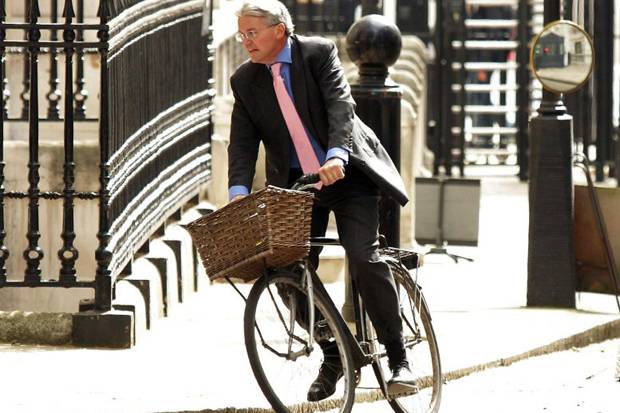 Although Cameron is a personable enough chap himself – one you perhaps wouldn’t mind having a pint with – he seems not to have the wit to see any of this. He understands that the nation’s finances are in dire need of sorting out, along with welfare dependency and educational shortcomings, but he seems to think that only a cabinet stuffed full of stinkingly rich public school boys can be relied on to see it through. The irony is that the two crucial success stories of his administration are likely to be the very ones not piloted by his public school chums: welfare reform and education.
The display of petulance, arrogance, threats and not to say downright abuse that the Chief Whip showed his police guardians – in the very week of grief, would you believe, for fallen comrades – opened a window into the mindset of these privileged individuals who really do believe that we are here to serve them, not they us. Theirs, it would seem, is a god-given right to rule and we should get used to it. The public does not like what it sees.
All of this is disastrous to the man who spent years trying to massage the image of the Tory party into a kindlier, voter-friendly mode. In a little over two years’ time he is going to have to asks the ‘plebs’ if they will give him and his pals a fresh run. It is lucky in the extreme that he faces such a deeply unattractive and discredited Opposition, but that won’t necessarily save him. If there is visceral hatred for his class, fanned by the likes of the ‘Thrasher’, that might be enough to sink him.
In addition to all this, Tory foot soldiers have neither forgotten nor forgiven for the fact that Cameron failed to win an outright majority against the most disastrous government of modern times led by the most unpopular prime minister ever. The fact that he failed in these circumstances and was obliged to put himself in hock to a party that hates his own and spends its time sabotaging so many of its most cherished policies rankles still further. And then there are the multiple instances of poor judgement in his appointments. It ill behoves Cameron, therefore, to adopt all too often a high-handed approach with his backbenchers which can be taken a a sign of perceived class superiority. Dollops of humble pie and signs of genuine contrition should be more the order of the day.
But Cameron’s troubles don’t even stop with those outlined; women (half the electorate) have gone off him too. They have concluded that – Samcam excepted – he doesn’t much like them and that Bullingdon attitudes still lurk beneath the surface. There is real anger that he has shortchanged them, having promised them a third of cabinet seats. The recent reshuffle was his last chance to make good on that promise and he failed miserably.
So for the prime minister there is much to do and little time to do it in. It worries me also that he doesn’t seem much concerned at the drip, drip hemorrhaging of his party to UKIP. Had disaffection not driven so many into their camp he may well have had that precious majority at the last election and the process continues apace. As I see it only one thing stands a chance of bringing large numbers of them back into the fold: he must give them an unequivocal pledge, written in blood, that there will be an in/out EU referendum immediately after the election. Then he must make it clear to them that if they do not respond they will have only themselves to blame for a fresh dose of Labour, but with even more of a Leftish lean. That, together with a hopefully recovering economy, troops home from Afghanistan, robust law and order policies and falling immigration should be enough. Welfare and Education success would be the clincher.
In the meantime he must get all his appointments carefully scrutinised beforehand, stop patronising women (or anyone else for that matter) and put the equivalent of a chastity belt on the mouths of certain of his ministers. As for the ‘Thrasher’ himself, he must go – but not before he has has received a damn good thrashing himself, to encourage les autres.
It was always delicious irony that Rugby School (of Tom Brown’s Schooldays fame) should spawn a character who would go on to be known as the ‘Thrasher’ and that that same character would go on to be awarded the Chief Whip’s job in government. That same whip must now be used on him. ‘Flashman’ Cameron is just the man to wield it. He’s got the perfect credentials.
Cinema is winning the fight against piracy
Cinema still exercises a powerful influence in the world today. There are the A-listers and the B-listers (terms I was never familiar with) along with all the time-honoured film festivals. Although youngsters still flock to see a blockbuster, I wonder if that influence is as all pervasive as it once was.
For a long time it seemed that cinema was on a slippery slope with the rise of internet piracy and competition from every conceivable quarter, but at long last it has found its proper niche of operating a service and not just selling a product.
What motivates people to going to the cinema? May it be because watching a movie in the company of hundreds of others, with a giant screen dominating and the wrap around surround sound, is an experience that people are willing to pay a premium for?
In the Golden Age of cinema (the post-war years) the attendances were truly vast. Hardly a person in the land did not go to the cinema at least once a week, and many twice – as I did. The competing modes of entertainment were so few that the ‘flicks’, as we knew it, had almost a free run. Today, however, life is very different.
Certainly the technology has advanced, with incredible special effects, digital and 3D all adding an extra dimension. The stars in my day became role models we all aspired to and were expected to behave well, even if privately they matched any of today’s shenanigans. When someone broke rank and was in danger of being caught out, the studios would go to extraordinary lengths to preserve their squeaky clean image. Winona Ryder would never have been allowed to go down the swanny over shoplifting; unquestionably, studio power was absolute.
Adults, and in particular youngsters, are almost overwhelmed by choice nowadays. Go to any high street and it seems that almost half of people are engaged with their mobiles, while at home the youngsters disappear almost immediately to their bedrooms to play video games. It is easy in these circumstances to see why cinema felt itself to be up against it. Modern cinema has met this lethal challenge by upping its game mightily by improving the ‘experience’: bigger than ever screens and better than ever sound and 3D (for those who fancy it).
Yet all these innovations are only available to those wanting to see new releases. That vast body of movies which so influenced the lives of all those over 55 is now relegated either to dusty archives or the small screen – an altogether inferior experience. Vue and the like are not interested in featuring these classics from the Golden Age.
But all is not lost! After 25 years as a projectionist (many of them spent at Plymouth city centre cinemas) covering both traditional and digital film showing techniques, David Huxham wants to bring back that great experience which the older generation so pines for. David has come up with the great idea of Plymouth Film Shows, where he will be hiring a screen at the Reel Cinema at Derry’s Cross every Wednesday morning. The doors will be opening for the first time at 10:15am on 26th September, when David will be showing that great silver screen classic, Singin’ In The Rain, staring Gene Kelly, Donald O’Conner and Debbie Reynolds.
Tickets are priced at £4 each and the Plymouth Film Shows’ website can be found at www.plymouthfilmshows.co.uk, which includes details about what’s on, how to purchase tickets and much more. David has also put together a competition on the site giving away several pairs of free tickets, so give it a try!
I was delighted to meet David a couple of weeks ago when he came into my shop on the Ridgeway to have his shoes repaired. He explained to me how his working life has been almost a love affair; always thrilled at putting on a show for hundreds, sometimes thousands, he started as a projectionist at 17. But much as he admires present advances in cinema techniques, he laments that lost ‘experience’ which was so central to his early life.
I, for one, look forward to a trip down memory lane to see some of the great classics on the BIG screen again, with many benefitting from being digitally enhanced, potentially providing an even greater level of enjoyment than could be experienced in that Golden Age.
Unfortunately David doesn’t propose bringing back the organist or the pretty, titillatingly clad ice cream sellers who walked up and down the aisles flogging their wares in their precursor minis; nor does he require the audience to all rise at the end of the performance and belt out the National Anthem. Woe betide those who tried to slink off early, anticipating the movie’s end. Destainful looks would accompany their hurried retreat.
A lovely little footnote to David’s story is that his Mum & Dad met while standing in a cinema queue at the Gaumont, Union Street, cinema in 1954. “Do you want to go in as a double?” inquired cheeky-chappy dad of the strange young woman close by. The rest is history.
Good luck, David. Let’s hope that Plymouth gets behind you.

Olympic legacy should re-ignite British pride
What a game-changer the Olympics have been. When I was born, London was the largest city in the world. Now there are 30 larger – though it is still the largest in Europe and North America.
We agonised as to whether we had made the right decision to host the games in the first place, though we felt a frisson of excitement at the challenge and dared to hope that we could pull it off. We knew we were a prime and juicy target for a terrorist attack and felt it next to impossible to guarantee that there would be no chinks in our armour.
We fretted over a gridlocked city, militant train drivers going on strike, and whether we could hold our nerve at stage managing such a colossally intricate extravaganza before the focused gaze of the whole world. Most of all – amidst the gloom and despondency of the longest recession in living memory – we worried about the sheer cost of it all. Yet every anxiety has been laid to rest in magnificent style.
The world will long remember these 2012 games and Britain has been showcased as it has never been in its long, long history. It was a project of immense and overarching complexity and we could have been forgiven for our worries as to whether we were any longer up to such a challenge. But that too has been laid to rest. We may not be the titan that bestrode the world when I was born – the only one to look Hitler straight in the eye and not blink – but we remain the repository of immense skills, artistry and organisational powers. The challenges that lie before us are daunting, to say the least, but we have proved to ourselves that however big and complicated they may be, we can cope.
In the past we have acquired something of a reputation for being always able to muddle through, but that can hardly be said of the way we have handled these games. It augers well for great projects like the Thames Estuary Airport; the Bristol Channel tidal energy scheme; the high speed rail link and perhaps anything else we might wish to put our mind to like the extraction of our massive reserves of shale gas.
We have been enthused with a renewed spirit of “can do”. Far from being a nation in decline, we can start to believe that we may be a nation on the cusp of great things again. With our massive reserves of oil around the Falklands, we can become energy-independent again and make ourselves indispensable to our European partners by supplying their needs too – no bad thing in the tough negotiations which lie ahead to repatriate many of the powers we have lost.
As we are all well aware, finance rules the world and the City of London rules finance. Of all metropolises, London seems to be the one that the “movers and shakers” most rave about, buying up real estate wholesale. It is cosmopolitan; tolerant; open; a good place to do business; is perfectly placed – time wise – to transact on the same day with both east and west; boasts an unrivalled theatre-land, along with – at last – good restaurants; and as if all this were not enough, it speaks the world’s lingua franca.
Empire gave us links and goodwill that no other country can match. We have our cosy little Commonwealth Club, spread all over the planet, and we play against each other in our cosy little world of cricket. What fools we have been not to maintain the great trading links we developed over centuries with those who were always best disposed towards us. Had we done so we would not now be so exposed to events on the continent as we are today. Even now it is not too late to reverse this shortsightedness. We should be putting together trade missions with the same zeal and fervour as the missionaries of old who carried the Gospel and opened the way for trade.
Having landed ourselves with the Olympics, we knew that we would be watched as never before for our competence and flair (if there was any) and we surprised the world, not least ourselves.
As for the Paralympics, we even set a new benchmark, having pioneered it – like so much else – in the first place. Disabled people have never in all history felt better about themselves and that is wonderful. In so many respects they took our breath away. Their feats would have outperformed most able-bodied people and they showed guts beyond belief.
In my own humble way I too am bionic – like so many of them – with two knee replacements. I’d be happy – even proud – to stand alongside them, if they would have me. Maybe future organisers should think about a 100m sprint for the over 70s with knee replacements. I’d be up for it in an instant, shouting, “Rio here I come!” The training, I promise, would start at once.
Like many of you (I suspect) I am sad that I could not see all of this wonderful jamboree. But I intend to buy a DVD of the highlights. And there you go! There are some of my Christmas presents taken care of already. For once I wont have to rack my brains for something that will not disappoint.
Doomed to mediocrity
As Zero Hour approaches with regard to Plymouth airport we have to ask ourselves some very important questions.
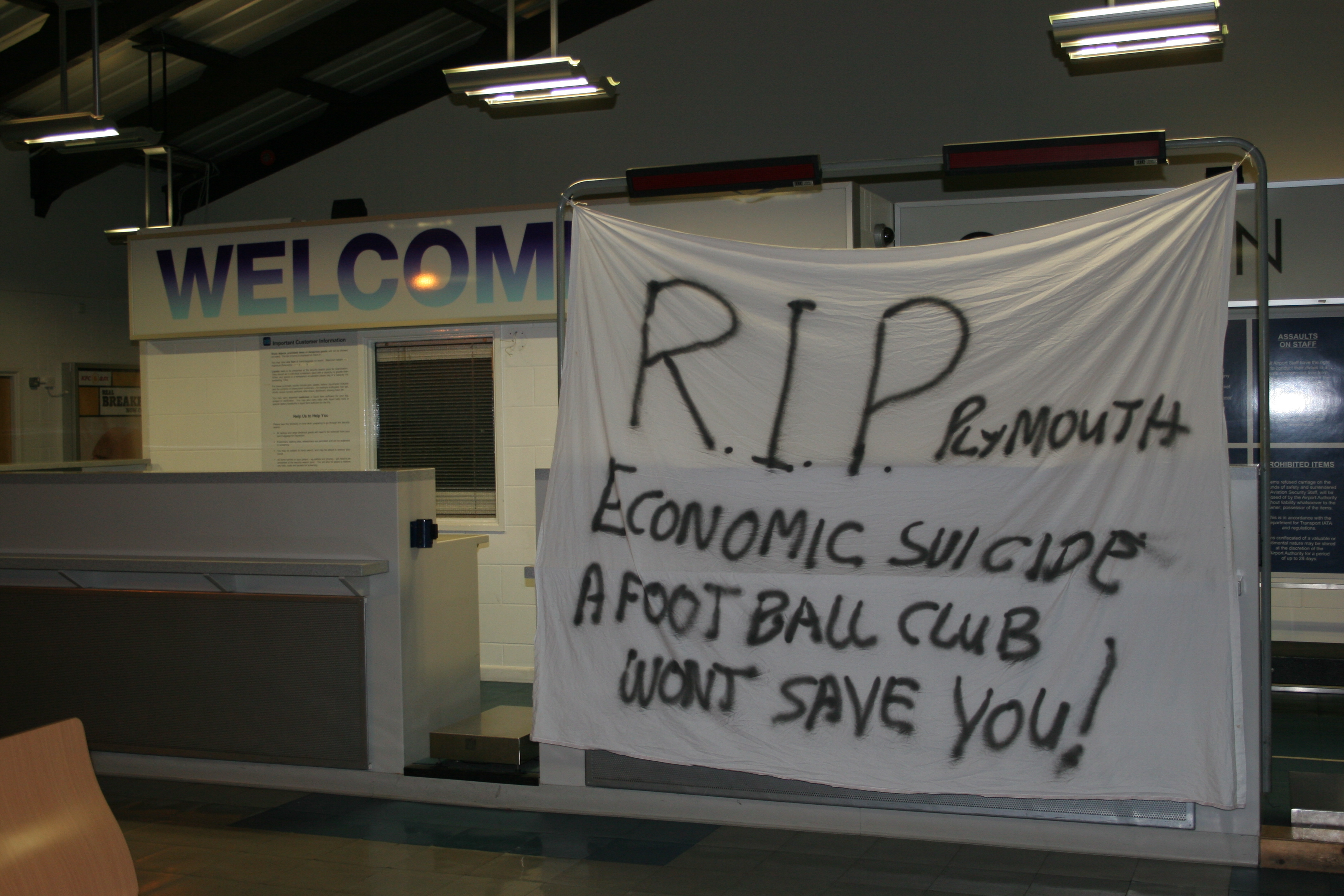 Are present communications by road and rail so good and secure that we can still thrive by relying on them alone?
Are we confident that Captains of Industry thinking of establishing great centres of work will not dismiss us instantly because they cannot access us in the shortest time possible; maybe even think that because we have no air link there is something odd about us?
Are we confident that in a rapidly changing world nobody in the future will step forward with a plan which will work?
Is the prospect of foreclosing on an option which can never be reversed something that we can live with?
In today’s world large numbers of tuppenny ha’penny places have airports. They are regarded almost as a mark of the community’s virility. For myself it is a resounding NO to every one of these questions and I will tell you why.
Plymouth is the only big city in a peninsula 200 miles long, which commands the Western Approaches and with the largest naval dockyard in Europe is an important regional centre.
Are we not peculiarly at risk by rail and by road? When the Victorians drove through their rail link they were anxious to make the journey (experience) a memorable one; quite rightly so.
In some places they did brave things, like when they challenged the ocean waves by running so perilously close to them as they did in places like Dawlish.
They could not be expected to know that man made emissions would alter the world’s climate so that extremes of weather would become a regular feature of life.
It is entirely possible that, as a result, that line may be broken if not washed away at some point in the future. What then do we do?
That marvel for its time, the almost 170 year old Brunel suspension rail bridge must surely be coming to the end of its life so that Cornwall becomes no longer accessible by rail.
May not the private operator, faced also with a storm lashed, perilous and collapsing Dawlish line, then decide to cut his losses and end the rail link at Exeter?
I remember well the storm of protest that met the decision to end the M5 at Exeter. Nothing would move them.
It was almost as though they’d got it in for Plymouth. They gave us a quite superior A 38 for the remaining 40 miles and tried to console us by calling it the Devon Expressway.
But nobody was fooled. At the end of the day it remained at best a dual carriage way. When accidents, resurfacing and other repairs happen we are doomed to single lane traffic. Imagine your Captain of Industry who on being told he could not fly then asking for a first Class rail ticket only to be told that isn’t possible either.
He then takes to the road and ends up in nose to tail single lane traffic. Nice one Plymouth City! This may all sound bizarre and it is. But it entirely within the bounds of possibility. These thoughts and other should be pressing on the minds of those who are charged with looking to the future of our city.
No one blames Sutton Harbour Development Company for seeking to coin a buck – millions of them by off-loading non profitable airport land to make themselves a fortune – with all sorts of other developments. Their duty is to their shareholders not the people of Plymouth.
I do blame a desperate city, though, for granting them such a preposterous lease as 150 years. They may as well have sold it to them freehold, but perhaps as well they didn’t, they might have let it go for silly money.
So strongly do I believe many people view this issue that it would not surprise me in the least to see protesters sitting on the runway on the day the bulldozers were told to move in.
Our city seems obsessed with short term considerations. Of course it is right not to burden itself with loss making operations, but its priorities seem very skewed when it rushes off to build theatres, Pavilions, Domes, Life Centres and even Aquariums.
Some may say this is all very wonderful while others might to say it is self indulgent.
All I know is that Plymouth must keep its lungs and arteries open while being ready at the same time to receive the world. Business should trump all other considerations. From that comes the wherewithal to do all these other no doubt commendable things.
It is not, even now, too late to hold back from an irrevocable decision. While it is impossible to predict what the future holds, what seems foolhardy in the extreme is to do this thing; like close down the argument forever.
Who would want to be the man or council who very possibly doomed this city to permanent mediocrity? What a sad epitaph to have to say that it happened on my watch.
We’ve bin let down by our council
It has always upset me that our people are considered the litterbugs of Europe and that our streets are disfigured in the way they are.
Long ago Mrs Thatcher displayed what many of us at the time considered the eccentric trait of picking up rubbish strewn along her line of walk and disposing of it. She recommended that more of us should do the same to make Britain a tidier place. I have to confess that I share that eccentric habit.
Walking with my son the other day our local Tesco Express – a distance of three quarters of a mile – we commented on how litter was lying around, even in one of Plymouth’s more affluent districts. But then it hit me whose fault it principally was: it was the local authority’s.
In all that distance there was not a single bin. What right, we both asked ourselves, have the powers that be to criticise people when they themselves fail in such a basic function as providing receptacles? Do they seriously expect young people – the principal offenders – to carry their rubbish for untold distances? They even have the effrontery to believe they have the right to punish the miscreants when they have failed in their own duty. It is ludicrous and completely unreasonable.
I have a suggestion for Plymouth City Council; indeed, it might make it the cleanest, tidiest council in the Kingdom. Give us the bins and then you can consider yourselves entitled to go after us if we do not use them. In fact, it is a suggestion which might usefully be taken up at government level. Were it to legislate that every council in the land put out bins commensurate with the size of its population (X number of bins for Y number of people) we might, at last, move away from that less than flattering sobriquet, ‘Europe’s Litterbugs’.
While we are on the subject of councils failing in their duty, why is that they are so inconsiderate in the hours that public loos are open? It is nothing short of scandalous that an entire city centre is devoid of them during much of the 24-hour day. The same could be said of our world famous Plymouth Hoe.
Before the former Derry’s Cross filling station and car park was sold off to coin a buck, there was a 24/7 facility there. My own suburb of Plympton, with a population of 35,000, has its one and only loo locked up from three in the afternoon.
Such callous disregard for people in distress – particularly older people with bladder problems – is quite unfathomable. Would they win a case were they to prosecute a person caught peeing in a public place? I think not. Particularly when they themselves had transgressed in such an important Human Right – a truly genuine one for once. Cherie Blair, in her chambers, would love to fight their corner.
Having said all this, it is only fair to give credit where it is due: well done Plymouth City Council for its recent ‘Best Run Council’ award. It is clearly doing some things right, like collecting rubbish once weekly.
On a less critical theme, the afterglow of the Olympics will stay with us for some time I hope. And let’s not forget that we still have the Paralympics to look forward to. Around the world, disabled people have a hard time and none more so than in the Third World. When we look at someone afflicted with a physical – or mental – disability we should all say silently to ourselves, ‘there but for the grace of God go I’ and act accordingly.
It is heart-warming that even in a country like China, wherefrom time immemorial the state felt no obligation to intervene, things are changing. Having had charge of the previous Olympics – with its now obligatory Paralympics – has brought home to them what is the right and noble thing to do.
That afterglow of which I spoke should encourage us in the harsh years that lie ahead. Projects don’t come bigger than the Olympics, and even if we say so ourselves: we made a thundering great success of it. All the world was impressed, even enthralled.
In my entire life (73 years) no single feat of organisational brilliance of ours has come anywhere near it for scope, efficiency and aplomb.
Those blues that have dogged us through all the years of the rundown of Empire and beyond have finally been laid to rest; now, at last, we know that we still have what it takes and can compete with the best – even beat them. So now let’s apply that spirit of ‘can do’ to get out of the hole we’re in and fashion a bright new future for ourselves.
Our bankers can learn a lot from Team GB
Well done Team GB. You have not just chalked up wonderful results, but you have avoided tub-thumping triumphalism and shown the world that there is a facet of Great Britain that is most appealing: our ability to self-deprecate and laugh at ourselves. Would that we could say the same about some ‘gentlemen’ in finance.

As we all know, some disastrous things have been taking place there. It truly makes MPs grubbing around for small change in the expenses scandal look quite inconsequential. These guys can sink us all; they almost did, and might yet do so.
I believe the time has come for drastic action, starting with the criminalisation of excessive and irresponsible risk-taking. Had we done so at an earlier date, ‘Fred the Shred’, and others like him, would almost certainly have thought twice before doing what they did.
Nothing concentrates the mind like a good hanging – only, in this case, we’ll settle for a lengthy prison term. Yet for some reason the powers-that-be are strangely reluctant to come down on white collar crime in anything like the way they do on blue collar. Do I detect privilege looking after its own? Is there an ‘old boys’ network in operation? David Cameron says we should not encourage banker bashing. May it not be that what he is really saying is: “leave my friends alone”? The Americans are far more willing to send financial miscreants to prison than we are. Why is this?
The whole western world is suffering to an extraordinary extent because of the misdeeds of the financiers; likely to be protracted, and life destroying to many millions of people who have done nothing wrong, the Great Recession has already been dragging on for four years now and no end can be discerned. In truth, it is likely to get much worse. Not a pundit on the planet has a clue where it is all going and when it will end.
The people who have done this to us have not only got away with it scot-free, but seem unable to grasp the enormity of what they have done. Nothing better illustrates this than the continuance of the iniquitous bonus culture they have built around their activities. Where else do such incredible sums get thrown at people with such gay abandon? How did it all start? Its insidious effect has even moved over to the public sector, where managers also now look to extra awards for merely doing their job. Getting money from Joe Public has never been easier; plastic cards by the hundred thousand now help grease the wheels.
Almost uniquely, banking is in a position to bring the whole system crashing down. That is why the innocents have been successfully compelled into saving the guilty. Only the stiffest penalties we can devise will do to punish those who have set the financial crisis in train. We must never allow ourselves to be put in a position like this again.
What a scandal that people who saved up all their lives, forgoing foreign holidays and the like, must see their savings decimated to prop up the feckless, as well as profiteering, bankers who were lending – where they care to do so – at sometimes twenty times what they are charged.
It is unfortunate that no economic model other than capitalism has been shown to deliver growth and prosperity, and it will always be down to the cleverest and best educated in our midst to operate it. But that very fact is what makes it so reprehensible that they have done this thing to the trusting billions around the world. Apart from the wicked greed they have displayed, they have provided priceless ammunition to the misguided enemies of capitalism who, even now, would drag us back into discredited and dangerous other models such as communism. (Incidentally, these Occupy protesters are confusing capitalism with corporatism, but that is not the point.)
There are four measures I believe could save us from a re-run of this saga. The first, as I have already detailed, involves banging up bankers. The second is the protection of whistleblowers. Once again here, Uncle Sam leads the way; he does not put his trust so much in setting up expensive regulatory agencies and quangos, staffed, in so many cases, by second-raters who dance to the tune of the Bob Diamonds of this world. Instead, Uncle Sam goes for insider information which makes it all the easier to secure convictions. And he gets it by rewarding the whistleblower with a percentage of any fines levied on the corporation for its misdeeds.
Right across the board, the whistleblower performs a valuable and often courageous service – often without reward. He or she is frequently someone who has witnessed scandalous activities which affront their conscience. In this country, however, whistleblowers are treated like pariahs. The people exposed – be they in the health or civil service – close ranks and sack the whistleblower. Once again the good man or women is made to pay for doing the right thing.
The third suggestion concerns our regulators. Since there will always be a need for close scrutiny of important financial activities, these agencies must be staffed by the very best – people who are cleverer than the people they are scrutinising (and not, as at present, the other way round). To secure these clever clogs, we are going to have to pay them top rates; that way, the dullards will find it next to impossible to bamboozle the cleverer man.
My fourth and final suggestion is a proper clear out of the top echelons of the Civil Service when a new government takes office. Often these civil servants are appointees who, if they disagree with the new government’s policies, will foot-drag as only the Civil Service knows how – ‘Yes Minister’ style. The clear out should take the form of the various head of departments being obliged to offer their resignation; if the incoming government feels they are not ideologically opposed to their manifesto, are on top of their brief and unlikely to be obstructive, then it could choose to keep them in their post.
The cruel betrayal of a lost generation
Last week I went with a friend to see the new Batman movie, The Dark Knight Rises. It was very good, with spectacular special effects and some surprisingly mature themes for a movie based on a comic book superhero.
Among the many ads before the movie, there was an Olympic-themed one which promised the world to the Batman audience. It blared out that old mantra – with which we are all regaled today – that each of us is possessed of “amazing abilities”.
The media pumping out of the London Olympics hint at much the same thing – that the contestants are ordinary people, who through dedication and hard work have turned themselves into godlike Olympians. Well, maybe some have, but the vast majority are gifted with that something extra: the ‘X Factor’, let’s call it.
Perhaps the worst offenders of this insidious rubbish of ‘prizes for all’ – that we each have got what it takes and that we are all winners – are the teachers’ training colleges, pushing their skewed and fanciful notions of education and throwing out so many of the tried and tested old certainties. And let’s not forget the politicians who, as always, have let them get away with it.
Well, I’m sorry to disappoint, but most of us are ordinary. We are not winners, born with great intellects or reservoirs of Olympic-winning genes. We plod along making the best of what we’ve got, paying the bills – though even that gets ever harder these days – and not nurturing any illusions as to our ‘amazing abilities’.
 Propagating this cruel myth was that disastrous charlatan Tony Blair, who, along with his many other sins, set out to raise university entries to wholly unrealistic levels. He and his political and academic cohorts insisted that no fewer than half of us had the ability to benefit from a university education, when the truth was that by far the majority would have suited vocational qualifications. In order to achieve their purpose, they dumbed down and degraded qualifications year after year while, all the time (surprise, surprise), trumpeting the ever rising number of passes.
Employers saw it differently, though, as did even the universities. They complained that the entrants reaching them were not fit for purpose, that they lacked even the basic skills of literacy and numeracy, and that they had to spend precious time and resources in getting them over this initial hurdle before they could even begin to put them to work.
Our society today not only faces economic meltdown, but it is peopled with individuals with wholly unrealistic expectations. Wives expect perfect husbands and husbands expect perfect wives; the magazines tell them so. Divorce is easier than ever! If you’ve fouled up, try someone else. Why bother seeing if you can identify what’s gone wrong? Worry about the kids later!
School leavers – little emperors and empresses to their parents – are shocked that their teachers, who promised them so much and waxed lyrical about their abilities, have lied to them. These unfortunates, who were conned into spending precious years chasing Mickey Mouse degrees due to their lack of ability, are shocked all over again when they find that the world of work is not the least impressed that they are a graduate in achieved a BA in Golf Management, Surf Science or Third World Development.
Unable to get jobs, in so many cases, and certainly not ones commensurate with what they were told their degree would bring them, they look with horror and depression at the mountain of debt they were encouraged to build up while they were chasing moonbeams. Half their working life will be spent paying off those worthless degrees. This has to be the cruellest deception of them all.
Realism is the thing most lacking in our young people today. It is not their fault; parenting skills, the ability to discipline along with standards of probity have all evaporated. With, in so many cases, couch potato, disinterested parents who bought them off from troubling them, what role models did they have? Bad tempered expletives were, everywhere, the order of the day. And those who should have known better outside the house made a bad situation worse by further indulging them and encouraging false expectations.
Then along came the lottery millionaires followed in quick succession by Britain’s Got Talent, The X Factor, Big Brother and the ‘Victoria Beckham factor’ (i.e., marry someone rich). Anyone can strike it lucky! Fame is the name of the game. Just look at what happened to Victoria, Jade Goody and Jordan! Why bother with the hassle of applying yourself to your studies when you can achieve it all and more by a lucky and lucrative break into the dream world of Celebrity?
Victoria – who admitted to never having read a book (though, would you believe, she’s currently into Fifty Shades of Grey. Watch out, ‘Goldenballs’, she’ll be coming with the cuffs next!) – couldn’t even sing, and poor Jade couldn’t string a coherent sentence together.
Tragically, there is not a lot that can be done for the present, lost generation, so cruelly betrayed by the left-leaning liberal establishment. But hope is on the horizon for the next. Reforms are in train which may well turn things round. We must pray that they will, for a chill wind is blowing from the East, which promises only to get chillier.
One thing only will save us: a knowledge-based, productive and hard-working workforce, as it alone has any hope of competing. The cosy world of an easy, unopposed living which the West has enjoyed for half a millennium is coming to an end. May the best man (or woman) as they are saying this very day at the London Olympics, win.

Child abuse takes many forms
Any society purporting to call itself civilised has one duty above all others: the protection of its most vulnerable, the young and the old. Even armies on the rampage have generally respected these two imperatives.
We are, however, failing to protect our young in an area that is increasingly coming to the fore: allowing our children to become obese.
The truth is that overfeeding is every bit as damaging as underfeeding, yet a malnourished child turning up at school would pretty soon attract the attention of the authorities.
So let’s look for a moment at the consequences for a child of allowing them to become obese. First, the whole of their school experience becomes a misery; they are be picked on mercilessly, and utterly useless on the sports field; groups would likely shun them and the obese child would become the perpetual outsider; and any consequent emotional scaring would likely be carried into adulthood.
The irony of it all is that they are being set up by those who most protest their love for them for a whole range of illnesses in later life, and condemned to what is almost certainly an early grave.
If this is not abuse, I would very much like to know what is. What form of love is it that a parent would do such a thing to its child?
If we can agree that rescue for the child trumps all other considerations, then what are we to do? It seems elementary that we must work for a solution through the parents. But if, despite all our efforts, a satisfactory outcome cannot be reached, then we should be prepared to remove the child and find a dedicated foster parent.
Moving on to another form of child abuse, the recent ruling of a German court found that circumcision, due to cultural conventions, is a criminal breach of a child’s bodily integrity and of its human rights. It is unfortunate, to say the least, that the ruling had to come, from of all countries, Germany. Had it come from a British or American court – both largely free of modern anti-Semitism – there would still have been a howl of protest, but it would have been much muted.
We all abhor FGM (Female Genital Mutilation), and quite rightly it carries a heavy prison sentence. Yet it seems there are over a 100,000 women in our country who have had this procedure done to them and there has not been a single prosecution. Scandalous hardly seems sufficient an adjective.
If we deplore this act of barbarism for young girls, why do we take such a different attitude for young boys? Both involve pain and suffering to no medical end. How can an adult have the right to violate a child’s body?
Surely it is right to take a stand against such primitive and barbaric practices which should have no place in the modern world. If it is deemed important for religious purposes, why could the procedure not be put on hold until the child is of a sufficient age to make an informed decision? If their faith is strong enough, then doubtless they will comply in the fullness of time. But at least the decision would be theirs to make and not one that has been imposed on them.
Muslims as well as Jews will, I have no doubt, be up in arms at what I am suggesting because they too insist on the procedure. But neither faith could succeed in painting me as a bigot since I consider myself a true internationalist. I believe in the oneness and brotherhood of man. There are so many Muslims that I admire, just as there are Jews.
Lawrence of Arabia loved the Arabs and saw great nobility in their culture, and there has always been a strong Arabist lobby in the foreign office. We failed tragically to get a lasting solution that did justice to the Arab cause when we overthrew the Turkish Ottoman yoke in World War One, though all acknowledge that there was no easy solution either then or now.
As for the Jews, I glory in the fact that it was British arms and blood that made possible the state of Israel. So many millions exiled and persecuted around the world deserved a homeland of their own. I only wish we could have achieved the same for the many millions of Kurds as, indeed, we could have done.
I am saddened at how things have turned out, but Israel should heed the wise words of Winston Churchill when he said “in war, resolution; in defeat, defiance; in victory, magnanimity.”
No people in history have suffered in the way the Jewish people have, and no people know better what it is to be dispossessed and scattered to the winds. Pain and suffering puts you in a unique position to understand what it is like to be at the receiving end.
All reasonable Arabs now accept the permanence of the Jewish state – particularly now that, in extremis, it can defend itself with nuclear weapons.
Now is the time for Churchill’s exhortation of ‘magnanimity’ to come into play. Let the children of Zion pick up their winnings and leave the table. They can then go on to be a powerhouse for a resurgence of success and prosperity throughout the benighted Middle East which so fuels the Jihadists’ nihilist dreams. It should not let its fear plunge the area and the world’s fragile economy into chaos with a strike against Iran.
Iran knows perfectly well that it, rather than Israel, that would be “wiped from the map” in the event of a conflagration. The self same pressures which kept the Cold War from becoming hot would come into play were Iran to acquire the bomb.
The irony of it all is that the Jews and Arabs are ethnically the same people: they revere the same prophets and regards each other, along with Christians, as ‘People of the Book’.
What is needed now are cool heads and wise leadership, which could lead to a flowering of a lot of very talented people on both sides of the divide.
The Greatest Show on Earth
It may be said that the gods have punished us these many wet summer months for some misdemeanour of which we are unaware. But it appears they may have stayed their hand in ruining the most spectacular sporting jamboree on the planet.
 By this time of year the country’s lush foliage is normally beginning to wilt a little. Sometimes even our abundant and lovely grasslands are looking a bit browned off. But with the way it has all panned out it has made this summer, of all summers, the lushest it has ever been. Truly, if the sun shines on all this, our sceptred isle will look like no other place on earth. The nations of our planet will return to their homelands realising, perhaps for the first time, what a beautiful place we inhabit.
With its cosmopolitan and multicultural dynamism they are unlikely to deny they have been privileged to spend a fortnight in the coolest city in the world, and the closest thing to an earthly paradise beyond its city boundaries.
Danny Boyle’s evocation of the Britain he cherishes I hope will do us proud. Someone once said that “it is not what you are, but what you would be”. I believe that to be true and beautifully put.
No event provides such an opportunity to showcase yourself as does the Olympics, and what a sporting year this is already proving to be. We came within a whisker of carrying off the Wimbledon title and Bradley Wiggins has triumphed in the mighty Tour de France in what is surely the greatest single sporting achievement in any of our lifetimes.
We cannot know how many medals we will carry off, but I am sure we will acquit ourselves well. We are, after all, fielding two and a half times as many contestants as we did in Athens. And we are on our own home turf.
What an inspirational overture to all the contestants about to mount the podium to listen to the melody of the Chariots of Fire. We made that film and with it we made the world’s heart beat faster.
We are a little nation, but the footprint we have left on the world is that of a giant. It is small wonder that the author of ‘Jerusalem’, the gifted but delusional William Blake writing at the height of the Industrial Revolution, believed that we were a chosen people favoured by god to be a light to the nations. Only that explanation, he considered, could account for such extraordinary and overwhelming success in the world.
Reticence and understatement are in our genes, but the world looks to, and expects, the host nation to lay out its wares. What are those wares? We have sent out our sons and daughters to every corner of the planet in the greatest diaspora in human history; we created the greatest empire ever known to man and seeded it with justice, law, democracy and the world’s first – and likely to be its only – universal language; and our scientists, entrepreneurs and engineers catapulted the world into the Industrial Revolution: the only true change in the human condition since hunter-gathers turned to farming. It is not too much to say that we have invented the modern world.
And let’s not forget, during this great celebration of human physical prowess, our own contribution to sport. Just listen to the roll call of competitive sports we invented: football, golf, rugby, cricket; baseball, tennis, polo, modern boxing, darts, eventing/horse trials, billiards, badminton, squash, hockey, snooker, sailing, motor racing and Formula One, table tennis, cycling, rowing, ice hockey; bowls, ten-pin bowling, some forms of skiing, mountaineering and curling. It doesn’t appear we left very much for anyone else, does it?
So as tomorrow you enter this great festival of human endeavour be proud of who you are and of what your ancestors have achieved. Try to live up to them – not easy, I know – but remember, too, those many, still alive, who bought in blood and treasure the liberties that we and the world enjoy today.
Recessions come and go, but in the great pantheon of the gods, you – a little people living on less than 1 per cent of the world’s land surface – occupy a special place. You have done wondrous things. For all our many and grievous faults, I remain convinced that history will be kind to us.
Now go out to get some gold and lay on the greatest show on Earth!
Our PR-obsessed leaders today don’t cut the mustard
Last week was a disastrous week for the Cameron government, not because of anything the opposition did to it, but what it did to itself. An issue was presented to parliament of such importance that ninety-one of the Prime Minister’s normally loyal supporters could not, in all conscience, back the government line.
The rebellion concerned reform of the House of Lords. Should we get this wrong – as ‘devolution’ has so tragically shown – and all sorts of genies would be out of the bottle which could never be put back. The Lib Dem’s proposed reforms would land us with an unworkable setup between the two legislative houses and a second chamber, stuffed full of third-rate has-beens who couldn’t cut the mustard in the first house: the Commons. Patronage – itself one of our crippling ills – would, as a result, have been reinforced even further.
No one argues that the House of Lords (which, we should not forget, does a surprisingly effective job) does not need sorting out to make it more democratic. But the great conundrum is how, and we have been pondering that question for a hundred years. All we know is that if we get it wrong there will be the most grievous consequences, as we now realise with devolution, which threatens the very integrity of our country.
The Liberal Democrats want the reformed House of Lords to adopt the very system of proportional representation which was so soundly rejected by the public a year ago with – you may not be surprised to learn – beneficial results for themselves.
We would end up with two forms of democracy in our country, with the new one claiming a more genuine mandate. It seems a given that there would be serious clashes between the two house with each claiming the greater legitimacy; we would end up with the same sort of paralysis which so blights the life of Congress and the Senate in the US today.
Why does the PM test his party in the way he does? Why does he not realise that in a matter of such monumental importance he cannot expect party loyalty to override what so many in his party are convinced is for the greater good of the country? Is keeping the Lib Dems onside worth splitting his party for?
Little by little the evidence piles up that our leader – despite his good intentions – is not over-blessed with sound judgement. And the same applies to his chancellor, his deputy and so many more of his appointees. Remember Andy Coulson, the Downing Street photographer, and Liam Fox’s antics?
For a start, it was foolish – when people were feeling incredibly angry at what the moneyed classes had done to them – to stuff his cabinet with millionaires and public schoolboys, some from his own alma mater Eton College. It was Bullingdon brought to Whitehall, as many perceived. Didn’t he realise that his own privileged background raised eyebrows for some, and that to surround himself in cabinet with more of the same sent out the wrong signals? To reinforce this whole perception of privilege was crass in the extreme.
The government we have today is the most out of touch with ordinary concerns since Palmerston was sending out his gunboats. I’d put money on half the cabinet not knowing within 30 per cent the price of a loaf of bread, a pint of milk or a litre of petrol. Indeed, the Deputy Prime Minister was over 50 per cent adrift as to what a pensioner got. What a shower!
The trouble is that hardly any of them have first-hand knowledge of the workaday world the rest of us inhabit. They move seamlessly from Russell Group universities into think tanks and policy institutes before beginning their journey up the greasy pole. Once ensconced in the Westminster bubble they purport to know and understand the issues that concern the rest of us.
They disburse gargantuan sums of public money without suitable qualifications and experience, with none ever having headed up a public company; and they legislate on matters of which, in so many cases, they have no real experience. They live in the British equivalent of walled communities and don’t know within a million miles what it is to live on a sink estate.
On top of these shortcomings, they are too young. Occasionally, a boy like Alexander the Great or Pitt the Younger can confound the norm, but history is exceedingly short on such prodigies. (Both, as a matter of interest, had incredible fathers.) What is needed in our rulers is men of proven ability who have made their mark in the world.
Here, in our neck of the woods, we have such a man in Gary Streeter: son of a farmer, former solicitor and once Chair of Plymouth City housing. In defence of what he saw as an overriding public interest (rejecting the proposed Lords reform) he waved goodbye to any preferment in the Cameron government, which he could reasonably have expected as a senior MP and former Shadow Minister. That’s what I call guts. It is also high-minded and noble.
Everything today is so shallow. We even require our leaders to look telegenic, be bubbly and have a Tony Blair perma-smile, if possible. Say goodbye to ever getting a Churchill or an Attlee again, the miserable sods. May the Lord preserve us! How will we ever get out of the sort of crises they got us through? We could do with one such right now. But remember: he can’t be ugly, fat or have a speech impediment – like Churchill – or a clipped, staccato delivery like Attlee. No, no, they must be of the sort that can entertain us on breakfast television.
A triumph for mankind
I cannot let this day pass without mention of the Large Hadron Collider’s incredible achievement in validating Peter Higgs’ prediction of the so-called ‘God Particle’, which he made almost half a century ago in 1964.

The discovery, announced at CERN today, stands up there with Einstein’s theories of relativity and the discovery of DNA in its implications for how we understand ourselves and the universe we live in.
The importance of the Higgs boson’s discovery should not be underestimated. It is vindication of the Standard Model of particle physics, which in recent decades has come under fire by more exotic theories such as String Theory due to a hole in the model which today’s discovery now fills.
But spare a thought for the many physicists and others who bought into these bizarre theories. Having spent many years pursuing them, they are now totally discredited. Years of research have gone down the Swanee.
At last we have recognised our brave bomber boys
 I am delighted that after 67 years the nation has finally honoured the brave young men of Bomber Command who did their country’s bidding and died in such horrific numbers in the blackness of the night over occupied Europe. My own mother was made a widow in that campaign of hitting back at the enemy.
What must be remembered is that, after the evacuation at Dunkirk, we faced years of being marooned on our island with no way of being able to engage the enemy on the mainland of Europe while we rebuilt our army and readied ourselves to assault Hitler’s formidable Atlantic Wall.
What were we to do in this time? Allow Hitler to consolidate his hold over all the captured nations or disrupt it as best we could?
He had showed no qualms about using that new form of warfare – aerial warfare – to bomb our cities, and the jury was still out at that time as to whether it was possible to win a war entirely from the air. So it was not, in my view, immoral to send out our air fleets to see if this surgical solution was indeed possible. If we had won the war from the air, we certainly would have saved many of our soldiers’ lives from a bloody land campaign.
Although events later revealed that, until the arrival of the atomic bomb, you could not win a war without boots on the ground, the bombing campaign brought massive disruption to the German war machine; over a million men were tied down on home defense who would otherwise have been deployed on the Eastern Front and huge quantities of ordnance were similarly kept at home which also would have gone east. Indeed, 70% of their fighters alone had to stay to engage our bombers. It made the difference between Russia staying in the war or losing it, which it very nearly did anyway.
It can be convincingly argued, therefore, that the air campaign indirectly won the war by preventing the full might of Germany ever reaching Russia.
As well as having only 30% of its fighter force to engage the Russians, it had 50,000 fewer artillery pieces and much else besides. And then there was that massive morale booster: a symphony in the night skies played out over occupied Europe. In the eyes of its downtrodden peoples it beat anything Beethoven ever wrote; it was the sound of our bombers droning their way to the oppressor’s heartland. It was the one thing that gave them hope. It reminded them that a free people on the Atlantic seaboard of their continent remained unbowed and would one day bring them deliverance.
So when the establishment turned its shameless back on those brave young men (average age of 22) who were carrying out their orders so selflessly and stood a one in two chance of dying, it did a terrible thing.
The otherwise great Churchill must take a considerable share of the blame. In his speech after victory, when he lavished praise on every branch of the Armed Forces, he pointedly made no mention of those 55,000 dead bomber boys.
Now, at last, thanks to the pops stars Jim Dooley and Robin Gibb – bless them – the people, with their humble subscriptions, have had their say. The Ministry of Defence would not contribute a penny, nor has it to this day issued a campaign medal to this arm of the services who took by far, proportionately, the highest number of fatalities. Shameless, in fact, does not even begin to describe how they have behaved.
What, I have to ask myself, is the matter with our ministry? It refused also, through all those same years, to issue a medal to those heroes of the Arctic convoys who made what Churchill described as “the worst journey in the world” – worse even than that terrrible slog through the jungles of Burma to retake that country from the Japanese.
Our Ministry of Defence does not deserve such fighting men. Though it is penny pinching in looking after our boys – not even giving their families decent housing, and sending them into battle ill-equipped – it even argues the toss over piddlingly inexpensive medals.
And it can’t even get its procurement policies right, recently ratchetting up a black hole of debt that was almost as great as the annual defence budget.
The Ministry of Defence should be disbanded and started again with the top 10% of its echelon lopped off and not allowed to re-apply for their jobs.

If it ain’t broke, don’t fix it
 The state of our roads is very much a concern of everybody.
Currently motorists are trying to dodge – dangerously, I might add – millions of car-damaging potholes which severe winter temperatures have inflicted on us. Yet the government tells us that in these straightened time there is not the money to tackle them as we might wish.
It is possible that we might buy this line were it not for the fact that the highways department still seems to have ample funds to continue with changes to our existing road infrastructure.
For many years now we have had to put up with an endless succession of tinkering changes, all under the guise of protecting us from harming ourselves. I’m largely talking here of traffic lights where none had been previously thought necessary – even on roundabouts, the sole purpose of which is to keep the traffic flowing.
A few, I must concede, have been beneficial – especially improvements to known accident black spots. But then there is the senseless turning of so many streets into one way; the chicanes; the road bumps; the bus and cycle lanes (where grossly underused pavements could have been developed to accommodate the bicycles); traffic islands; and so many more instances of so-called ‘improvements’ which are actually little more than attempts of social engineering.
The fact is that for some long time now we have enjoyed one of the best road systems in the world, used by some of the safest drivers in Europe. So why, I keep asking myself, are we constantly wondering – and worrying – what ‘safety measure’ the road planners will think up next?
My own guiding principal is that old axiom ‘if it ain’t broke, don’t fix it’.
When the present government began the desperate task of finding savings why did it not turn its attention to the huge expenditure that these so-called improvements represented? We are talking billions here!
At a stroke it could have announced that we can perfectly well manage with what we’ve got and spend nothing more for the duration of one whole parliament. The savings would have been truly enormous, and can we seriously argue that we would have been any worse off?
During this time the traffic would have enjoyed the rare luxury of continuing to flow freely, spared the maddening delays which such ‘improvements’ entail.
I well remember a recent example of wasted effort and money in my own neck of the woods, where Plympton motorists join the A38 at the top of Chaddlewood. It was a spot where you had to keep your wits about you – but knowing the consequences of not doing so, people did. After all, you had a clear view of everything that was going on.
But Highways Harry knew better; he was not content with allowing motorists to trust the evidence of our own eyes, nor our own desire to stay alive. So at vast expense and months of roadworks and delays, he reconfigured things and, yes, you guessed it – traffic lights were part of his solution.
The upshot of it all is that, in my view, we are worse off than we were before and most certainly a lot poorer. I cannot think there could have been much change out of a million pounds for such a project.
The Department for Transport also pays little regard to the enjoyment of driving. When the Victorians developed their railways system, it was very much part of their game plan to drive the line through as scenic and pleasurable a route as it was possible to do – as long as doing so would not add too many more miles to the journey. You see, they wanted you to enjoy the trip.
As a result, we have some truly magnificent rail journeys all over our lovely island. They compare with some of the best in the world. One of them is right on our doorstep: the journey through Dawlish to Exeter. They could have saved a bob or two by a different, shorter, route, but they wanted you to enjoy your journey.
How differently the authorities view things today. They know how much the car means to us, but they are not the least bit interested in making the experience as pleasurable as they can.
Again, right on our doorstep: it used to be enjoyable to drive the Madeira Road route from the Barbican round the Hoe foreshore, with its world-beatingly spectacular views. Perversely, it would seem, they give every appearance of wanting to spoil it for us; they’ve peppered the road with poorly designed humps which deny you admiring the view at all.
Their answer, no doubt, is boy racers (I was never aware of it being an accident black spot). Well, police it properly, as you used to. Don’t rob us of one of our delights.
This highlights an area in which David Cameron’s vision of the Big Society could come into play.
The roads belong to us; it is we who have to live with the consequences of them getting things wrong, and we who have to foot the bills.
Seldom will the authorities admit a mistake, even when it is staring them in the face, much less make restitution. When it’s done, it’s done. “Tough,” is their attitude, “you must learn to live with it.”
It should not be enough for jobsworth Highways Harry, sitting in his office, to dream up ever new and bizarre schemes and then foist them on us. There should be much more democratisation where these matters are concerned, and in my view local people should have the final say.
Also, before our man in his office comes forward with his next bright idea – such as chicanes, road bumps and speed cameras – he should be obliged to prove his case and have done his homework. By this I mean that he should be able to convince us that there is a problem (i.e., by way of deaths, accidents or undue delays).
Every single decision which involves public money, dislocation or change should be evidence-based. In other words: bring us the proof.
If the government had put roads on a ‘care and maintenance’ basis at the start of its term of office, not only would there have been more than enough in the kitty to take care of every one of these scandalous potholes which so blight our driving today and damage our cars, but we might have been able to avoid some of the more contentious cuts altogether.
But before anyone takes me to task about the massive rise in unemployment we would see in our already hard-hit construction industry that a cessation of all road ‘improvements’ would entail, my answer is to get your priorities right.
Start building those much needed houses – social and otherwise – that our burgeoning population and young people need. Spain may have too many, but we most certainly have too few.
It must be truly depressing to see no prospect of ever being able to afford your own home. How can we bang on about family values when you cannot even find a pad to put down roots and raise your children?
You have to feel sorry for our young people. Not only can they not get their own roof over their head, but they cannot get a job either – even in many cases where they’ve toiled to get a degree. And as if that wasn’t bad enough, we’ve hit them with a double financial whammy: debt to pay off for what may well turn out to be a useless degree (if and when they do get a job), never mind a mountain of public debt to pay off as well.
All of this will make it next to impossible for them to pay into a pension plan for their old age. What a great legacy to leave our children. We should hang our heads in shame.

Growing ourselves out of a hole
There is no better way to get yourself out of the kind of hole we find ourselves in today than to grow your way out.
All the emphasis to date has been on the debt which hangs round our neck like an albatross. But while it was right to worry about this and to take measures to bring it under control, now we must get an engine fired up whose sole purpose is growth.
Where can this growth come from? It is easier first to identify areas where it cannot and should not come from; namely the self-indulgent areas such as we had known for the decade before the credit crunch hit us in 2008.
More than any other sector, the construction industry has taken the brunt of the recession. Once, it was commonplace to see giant cranes at work in every city centre, out of town shopping development and business park. Not anymore.
All is quiet on the Western Front, yet at the same time we have a crisis in housing. Millions of newcomers have flooded into our country and they all need accommodation. And while this moribund industry is virtually at a standstill, millions of our young people cannot get on to the housing ladder because prices are still too high.
Nothing is more likely to bring these prices down than a massive programme of building which closes the gap between supply and demand.
More housing means more carpets to be fitted; more furniture and electrical appliances to be bought; more soft furnishings; more blinds; more kitchen utensils; more visits to DIY stores – the list goes on and on. So here is one area crying out for a massive growth strategy.
With interest rates at an historic low there was never a better time to take out a mortgage, if only the product was there at an affordable price.
What about infrastructure projects to which we are already committed? Surely these could be fast-tracked. The Olympic project has shown us what can be slung up in a remarkably short time frame.
And then there’s Boris Johnson’s pet project: the Thames Estuary Airport to complement Heathrow. The estuary project would not only send a powerful signal to the world that Britain is determined to get ahead of the curve business-wise and continue to host the world’s number one airport; it would also be a faith restoring project as well as, hopefully, the world’s most exciting and, perhaps even beautiful, airport. Even the green lobby would have to have all its boxes ticked.
In our efforts to get energy prices down – a very necessary prerequisite for growth – why don’t we and the rest of the struggling West release a large part of those strategic reserves of oil we all built up to fight the Cold War in the event that it became hot? And why, for that matter, are we pussyfooting about getting up the massive reserves of oil which lie all around the Falkland Islands? At a stroke it would make us oil self-sufficient and even allow us to make the European Union independent of Russian or any other single country’s oil. Imagine what clout that would give us in Brussels!
We could set up ‘Enterprise Zones’ in depressed areas with special tax breaks. There could also be NI exemptions for new start-ups as well as firms employing fewer than 50 who take on new employees.
Yet underpinning it all should be massive, irresistible pressure on the banks to make it all possible. And funnily enough, quite apart from the massive liquidity injected into the banking sector via quantitative easing (money printing), Britain’s big and medium-sized companies are sitting on a huge stash of cash, too frightened to spend it. Rather than wasting political capital debating House of Lords reform or gay marriage, the government must develop a more coherent business strategy to inspire confidence in the business community.
With the pound so much more competitive than before the crisis and historically low interest rates provided by our recapitalised banks, we are in so much better a place than our continental rivals who have yet to bite this most difficult of bullets. Altogether we have very much going for us, if only we could be brought to see it.
Growth can also come from the world beyond Europe which occupies 60% of our export market – some of which in the developing world is not in recession at all. In this regard we have a competitive advantage since much of what we have kept of our once mighty industrial capacity is now at the cutting edge – and consequently difficult for foreigners to poach – such as Rolls Royce aeroplane engines and other high-tech earners such as our renowned computer software sector.
While we do not exercise that hard power that we once deployed around the world any longer, we still deploy plenty of soft power. We punch far above our weight everywhere.
There is a huge amount of warmth and goodwill to be found towards us in the world. You have only to look at that great gathering of the Commonwealth of Nations every four years to see that. Nowadays you even have countries which were never part of the empire applying to join the grouping.
I do not see it as fanciful that one day Uncle Sam himself will wonder why he has not re-joined his original family. Perhaps there is some truth in what George Santayana, the famous Spanish-born American philosopher, poet, and humanist, said when he opined in the nineteenth century: ‘Never since the heroic days of Greece was the world ruled by such a sweet, just, boyish master’.
We are mad not to capitalise on all this. And the wheels have been greased for us by the world choosing to speak our language before any other. We don’t even have to take an interpreter with us.

Skivers won’t turn around our fortunes
It is natural that workers in the public sector seek to weaken the law of the jungle in their state-funded workplace as best they can, but it must be remembered that the jungle is still where wealth is created.
It cannot be allowed to open up a gulf in remuneration, security and work conditions which causes resentment in that part of the economy that must produce the wealth to keep things going. It is unimaginable that any private business should say to its workforce, ‘don’t bother attending the office for the seven weeks before, during and after the Olympics. Do it all from home!’ But that is what is proposed for no less than 400,000 civil servants working in Central London.
This kind of disconnect with reality speaks volumes. Not even communist Chinese economics came up with such a ludicrous suggestion at their own Olympics.
There are two worlds which exist within our country: one of them is the closeted world of the public sector and the other is the brutal world of the private sector .
The Victorians had two guiding principles: sound money and a small, non-intrusive state. They ran the civil service with 4,000 against today’s 500,000.
They ran India with 1,000, spent 2% of GDP on Armed Forces which controlled half the world and all its oceans. Such was their power that they imposed the Pax Britannica which lasted a hundred years. It was only the second universal peace since Rome’s famous Pax Roma. They were stunningly successful in almost all their endeavours – except for one: they did not care sufficiently for the poor and disadvantaged. But even here, they began to develop a conscience.
Prompted by the evangelicals and people like Dickens, they began to mend their ways and see that their Christian beliefs did not sit properly with the squalor to be seen on their streets. So little by little, welfare became an issue.
By 1945 it became the lodestar which governed all state thinking. Armies of bureaucrats came forward to administer the new system (armies of what, when I was doing national service, were known as malingerers) also came forward with their hard-luck stories.
So at the very time that wealth creation was being relegated, the welfare state was being elevated. In the end, the welfare state became insupportable.
If this recession has served no other purpose but finally to get us to see all this then it will not have been in vain.
Of course, we must continue to do our duty by the disadvantaged, but we face a hard task in winkling out the malingerers.
Almost all of the third world countries must go down the road we went in taking better care of their people – but if they are wise they will learn from our mistakes.
As it is, at the moment, they enjoy a huge advantage over us competitively in that they do not carry the huge expense of even a limited welfare state. That, together with much lower wages, makes it next to impossible for the West to compete.
But their peoples are already demanding – and getting – increased pay packets; they are also demanding better work conditions and welfare for the disadvantaged – all of which will cost money.
When we have eventually completed the much harder task of convincing all our able-bodied people who presently feel no conscience about not working to work, there will be a meeting point at which we will all be competing on a substantially more level playing field.
This scenario has already been played out in several former third world countries such as Japan, Taiwan, South Korea and Singapore. They were all once undercutting us wholesale, and it will be the same with China, India and Brazil.
There are penalties with being an innovator – the first in the field in any activity. Inevitably you make lots of mistakes; but those coming later can take advantage of what you got wrong as well as the much greater number of things you got right. Once of the reasons Germany created the as successful an industrial model as it did was because it was able to avoid making the same mistakes we did.
One of those was with its technical colleges and apprenticeships. They elevated distinction on the factory floor; doctors of engineering and the sciences were as highly regarded as doctors of medicine in Britain and the landed gentry. There was not the same prejudice against those who got their hands dirty as opposed to those who kept them clean, as there was in Britain. Your smart boy was as likely to head for the factory as he was for the professions.
It is easy to forget that as little as 10 years ago Germany was being talked about as the sick man of Europe, having taken our place pre-Thatcher. But then she set about freeing up her labour markets and keeping down costs, including labour. Result: Germany über alles. And we must do the same.
The newly released Beecroft Report must be acted on. If we want jobs, we must make it as easy as possible for firms to hire, and that has to include the right to fire. No employer gets rid of a worker who is an asset to their company, and workers must know that their best protection is to be so. Only the skiver needs to fear, and why shouldn’t he? He won’t turn around our fortunes.

Leading by example
For society to work we must have people whom we can respect and admire.
Every now and then we need a titan, and if the Nobel prize is any measure we’ve had them in disproportionate numbers. In former times, such people were to be found in the sciences, academia, the Civil Service, town halls, the Westminster village, hospitals, the military, the legal profession, the utilities – and yes, of course, the banks.
Of all of these – and there are still many more – only the military today continues to inspire our admiration. But today even our famed ‘James Bond’ Secret Service has been found seriously wanting (i.e. the spook in the bag scandal).
It is a sad state of affairs when we have come to conclude that they are all in it for themselves and are letting us down in the process. At the heart of it all is a me-me culture leading to the devil take the hindmost outlook. Is it not surprising, therefore, that there is a cynicism about such as we have not known before. The turnout at the recent by-elections does no more than reflect that.
Proposals for elected city mayors and police chiefs – which in ordinary circumstances ought to promise so much – have been greeted by a sceptical public as little more than another devious ploy to distract us and deflect our anger. We are not in a mood for more tinkering, and prefer to leave well alone rather than risk additional mayhem from people whose motives we have come to suspect.
Had these proposals come from leaders we had come to admire and trust, does anyone doubt that they would have been received differently? It would have been more a case of ‘well, if this is what they believe is for the best, then we ought at least to consider it seriously’.
Returning to the subject I covered last week – the continuing offensive behaviour of bankers – we are being forced to watch perfectly good businesses being allowed to go down the swanny because banks won’t help. Refusing to use taxpayers’ money – with which we’ve stuffed their gullets so full they are in danger of constipation – to fulfil their moral obligation to save small businesses from the recession they created, they insist on using it to recover from their gambling-induced hangover to begin another binge anew.
We have gone from the sublime to the gawd blimey. One minute they were throwing money at us as though it was of going out of fashion – we all remember the credit cards once raining down on us like confetti – and the next they are sitting on it like mother hens nursing their eggs. Such extreme gyrations were never going to be anything other than disastrous for the general public.
If business activity and growth are now in a trough of despondency, this is because people have finally wised up to reality and are now anxious to pay down the debts that the banks have profited on so greatly. But now that the party has stopped, the banks are being allowed to have their cake and eat it, too.
Having said all this about the banks, we should not forget our own shortcomings; how eagerly and irresponsibly did we succumb to their blandishments to ratchet up our own personal debt levels by taking out second mortgages and spending much more than we earned. And although many have come to realise they cannot continue living beyond their means, we can only hope and pray that once personal debts have been paid off people will not have lost the habit of spending!
But human nature being what it is – and the average chap being no match for these whizz kids of finance – it is not difficult to see who was going to win the argument of persuasion. This is where the government, and in particular the Bank of England and FSA, should have stepped in.
With personal debt levels higher as a proportion of GDP than any country in the developed world, and house prices rising at a rate much greater than wages, the signals were all on red alert.
With all the gloating over Labour’s local election successes this week, the public must not forget that the last government bears a great deal of responsibility for our present woes. How could ministers warn Joe Public against the dangers of excessive debt when they themselves were the standard bearer of borrowing to the hilt? Had they shown ‘prudence’ – Gordon Brown’s now pricelessly ironic sobriquet – then they could have warned against the dangers and taken measures to restrain it.
But as well as borrowing like there was no tomorrow, the last government increased the burden of the public sector payroll by no less than 64% during its time in office.
All we can say is that these hard times are teaching us some very hard truths. History, however, does show us one encouraging thing: there never was a recession that sooner or later did not yield to better days.
The financial crisis has all given us no end of a reality check. Let’s hope that in so doing it has taught us no end of a lesson.

A heavy price for insurrection
 Everyone will have heaved a sigh of relief that the preacher of death, Abu Hamza, and four of his associates have failed in their bid to avoid extradition to the US.
Of course, the European Court of Human Rights would have caused outrage had they failed to bring in any other verdict. It would have been saying our closest ally was no different than the likes of Jordan, Morocco or Pakistan and that it could not be trusted not to torture or apply inhumane conditions – when in fact the conditions are likely to be even more over the top than our own 3.5-star gaols.
So the result, in truth, was a foregone conclusion and would, had it been otherwise, have represented a gross insult to the world’s greatest democracy.
Interestingly, the extradition is of exactly the kind that the controversial UK-US Extradition Treaty was designed to cover (i.e. terrorism). Had we reminded the US of this in many of the disputed cases where a clear terrorism link could not be established, we could have avoided much of the acrimony that has been thrown up.
But the fact remains that the treaty is flawed: the legal requirements in each case are not the same, making it easier for Uncle Sam to get his hands on our people than for us to get our hands on his. What incompetent treaty drafter thought it was in order to produce a document of this kind? He should be kicked sideways into oblivion as should the several other jobsworths who must have perused it before it was enacted into law.
This refusal to punish people who make monumental cock ups in the public sector is an affront to all of us; I believe it is at the root of so many of the outrages about which we throw up our arms and say ‘never again’ or ‘lessons will be learned’, but where they never seem to be.
In industry or commerce, it is clearly understood that either you do the job for which you are being paid or you will go. Only an equal sanction for those paid from the public purse is likely to do the trick.
Nothing, as they say, concentrates the mind like a good hanging.
What enrages the public so much is that salt is so often rubbed into the wound by either rewarding the miscreant with a promotion or allowing early retirement with the most mouth-watering of financial packages.
Police, for instance, can often avoid investigation into alleged irregularities by the simple expedient of taking early retirement. And that brings me to the ex-policeman, Brian Paddick, the no-hoper would-be mayor of London.
What a lovely set-up – naturally facilitated by money-bags Joe Public – that allows a perfectly fit and able copper to retire at the age of 49 on a pension of £65,000 a year!
This nice little nugget of information was thrown up as a result of the recent live BBC Newsnight debate between the mayoral contestants when, unwittingly, they stumbled into a pledge of total transparency in financial matters.
The issue has snowballed to the point where every senior holder of public office can now expect to be required to come clean. Get ready for more revelations about where all our money is going and how much.
But I started this article on prisons, and it seems right to finish on the same note.
The eleven and a half year sentence meted out to the London riot arsonist may have struck some as a bit over the top. But remember this: it was so very nearly murder and the offender gave not a thought to the fact that there could well have been many people trapped on an upstairs level.
As it was, a woman had to leap for her life to avoid being incinerated.
The law has always taken a very hard line where arson is concerned, and not just because it concerns property. Whole cities have been destroyed by conflagrations, including our own capital and large numbers of lives are lost to this day in fires. It is, perhaps, the most terrible way for a life to end.
Remember also that the authorities felt, rightly or wrongly – and, in this case, I think rightly – that they had to dish our exemplary sentences where the authority of the state was under threat.
For a moment during those terrible scenes of last August there was a widespread feeling that Armageddon had arrived: that if it escalates, the next thing we’ll see is the Prime Minister’s head being paraded down Whitehall on a pike, and that the dark underbelly of the disaffected underclass was taking over and was about to take revenge on the ‘haves’.
A message had to go out that if you indulge in acts of what amounted to insurrection, you can expect to pay a heavy price.
In those particular circumstances it would have seemed nonsensical to apply the normal slap-on-the-wrist for a bit of shoplifting.
And as for the recipient of the eleven and a half year sentence, also remember this: he turned out to be a career criminal with violence a part of his repertoire; and that the eleven and a half years is something of a joke anyway since he will be back on the streets in 2016 having served only half of his sentence.

Why are the Argentines so obsessed?
This was a dismal week thirty years ago.
A very nasty military junta, which had already killed over 20,000 of its own people – many thrown out of helicopters over the open ocean – had seized a far away British territory and made it its own. We were in shock.
And so the Falkland Islands burst upon the world scene and became a cause celebre – at least for the British nation.
Of all the many campaigns our assertive little country has ever fought, this had to be the bravest of them all… some said almost suicidally so; certainly foolhardy in the extreme, said others.
Our connections with the south polar regions have always been very great. Cook sailed into them in his search for the great ‘southern continent’ before he became almost ice locked and was forced to turn tail. The intrepid Ernest Shackleton almost made it to the pole and our very own Plymouth hero Captain Scott was mourned again this very week on the 100th anniversary of his poignant and tragic death.
It has always been a very great puzzle to me as to why Argentina obsesses, as it does, about the Falkland Islands and why it believes it has a better legal claim to them than we do.
It was, after all, the English navigator John Davis who first discovered them in 1592. And the British first established a permanent settlement as long ago as 1765 – over seventy years before Argentina came into existence.
In today’s world, the United Nations makes the wishes of the inhabitants of a disputed territory the deciding factor. Does anybody doubt for a second what those wishes would be?
Iceland is not a great deal more distant from Britain than are the Falklands from Argentina. What would the world say were we to state that Iceland should rightfully belong to us?
And what about the Channel Islands, only 10 miles from France and 90 miles from us? I don’t hear the French playing up about them.
My thoughts on the Falklands are simple: history is on our side, as well as that little matter of possession being nine-tenths of the law. What’s more, we’ve paid in blood to overturn Argentine aggression.
They stay ours until the inhabitants decide otherwise.
While blood can never be redeemed, expenses can; and to secure them against future aggression, they have been huge. So get up that oil and quickly!
Our balance of payments deficit can be mightily relieved by a bonanza hugely greater than the north sea.
Should Argentina be so foolish as to try to intimidate the oil companies already operating there then the British Government should state unequivocally to underwrite any risks that such silly threats are thought to pose to those operations.
Long ago – thirty years in fact – I made an attempt to summarise that heroic conflict in verse. This might seem a good moment to share the thoughts I had at that time with my readers.
The last of the colonial wars
Was strangely in a noble cause:
A far off people, few but strong,
Knew in their hearts where they belonged;
Their island home to most unknown
Would tug at Albion like a bone:
Assaulted for its wind-lashed bogs,
Its distant owners viewed as dogs;
Sad days for Argentina, these:
How could its despots seek to please
A tortured land in Fascist claws?
But rouse them in a long-lost cause,
The British state seemed not to care:
Its woes so great its chest would bare;
Now was the time to strike and win,
And quell its people’s clamorous din!
The world awoke that April day
To find that Spain’s child now held sway;
A stunned and humbled Britain gasped:
Depression reigned but would not last;
A steely thought ran through the land
That such an outrage must not stand;
The empire’s day it knew was done,
But never did its soldiers run;
The islanders sought firm redress;
Their injured pleas brought dire distress:
They were not Latin folk in chains,
But free-born Brits they stoutly claimed;
At any other time but this,
The men in London would resist
A rescue from across the world;
But now was firm defiance hurled:
A Boudicca was come to power,
Though some around would only cower;
At lightning speed her ships set forth,
To 50 South from 50 North;
Long years of cringing fell away
As Britons cheered them on their way;
Then silence fell as weeks progressed,
With fearful thoughts and risks assessed;
Its one-time child, the USA,
Could only look on in dismay:
A war between its two allies
Could rupture one of these two ties;
How hard she tried to arbitrate,
Then left the despots to their fate;
For Latin pride stood in the way
And now was come the time to pay!
Ships at length reached southern waters:
Skull and Crossbones meant no quarter;
The pride of Argentina’s fleet
Went plunging to the icy deep;
Now did the blood begin to flow
As combat raged with woe on woe;
For freedom comes at heavy price:
The toll is death when fools play dice;
Malvinas?… now read Falkland Isles:
The settlers there could once more smile;
In Latin parts more despots fell:
Their foul regimes consigned to hell.
Defusing the ticking NHS timebomb
Immigration is a matter of very great concern to us as it has placed huge pressures on all of our public services.
 It has even, some would argue, started to erode some of our core British values.
When numbers equivalent to a city the size of Plymouth come into our country each year, it is natural that people tend to become alarmed. Yet I have had an experience this week which has opened my eyes to one important aspect of it.
Having hammered my knees over a lifetime, I needed to get them replaced. The first to receive the treatment was done twenty months ago (successfully, I might add). Ever the glutton for punishment, I pressed on.
It’s a big op, I have to admit, and the aftermath is painful; but what’s a bit of short-term suffering against a very great and long-term gain? Thus I tried to persuade myself, for I knew what I was letting myself in for the second time round.
Everyone will have to cope with clapped out and painful joints as they grow older. The lucky ones, in my view, are the ones where this happens early as they get them replaced. The less fortunate soldier on with their dodgy parts until it is too late… they are too old.
They have to watch the sprightly oldies – with their joints replaced – enjoying full and pain-free mobility while they struggle on with sticks and, if they can afford them, mobility scooters.
I opted to go to the Peninsula Treatment Centre. There, I was surrounded by a mini United Nations.
There were Filipinos, South Africans, Chinese, Jamaicans, Zambians, Polish, Romanians, Germans, French, Zimbabweans, Bulgarians – oh, and yes, one or two Brits. They all spoke excellent English and the service that I received was top-draw.
As a team they were magnificent. If only the UN, away in New York, could perform so harmoniously. Even the building and the standard of cleanliness were beyond compare.
Altogether it was a great experience. It makes you think, doesn’t it? It would not be over-egging it to say that if you’d kept these people out of our country then we would be shooting ourselves in the foot.
In the higher echelon skills at Peninsula, East Europe seemed to have excelled itself. The Communists got many things wrong, but education was not one of them.
I have reason to know this at first-hand. My Lithuanian, university-educated wife (fluent in three languages) is a constant reminder. She even helps me with my crosswords – would that I could do the same with hers – and she sometimes assists with a point of grammar. English was her subject at uni, you see.
It would be no exaggeration to say that if all these superb people were removed from Peninsula it would have to shut down. Who then would be the loser?
Of course, you will have noticed that they all spoke good English and for the most part were highly skilled. This is the road we must go down: cherry-picking the best who want to join us.
As it happens we are the destination of first choice to these people because of our language, law-driven society and tolerance; they are not the sort of people who want to be holed up in some kind of ghetto, insulated from the rest of us.
It was a very big mistake to allow the mantra of diversity to shut down discussion as to how we could best integrate newcomers to these shores, and in this respect there is much the Americans could teach us.
Last week I bumped into a fellow shopkeeper and he too had had both knees renewed. They had been done the better part of twenty years ago and he wasn’t even using a stick. He is 91.
Instead of feeling that he had been put out to pasture, he has been allowed to remain a vibrant member of, and contributor to, our local community.
This has to be the future… keeping as many of us as possible active into old age. But it has to start much earlier than our 91-year-old shopkeeper, that’s for sure.
The wonderful new £41.5m Life Centre, opened this week in Plymouth, is certainly a step in the right direction.
All of us must take charge of our own well being, wherever possible, and there’s a lot of fun to be had in so doing. But those of us who are not prepared to invest in a healthier, happier future must be brought to see how very foolish this is.
We know we can successfully influence people’s life choices. Look what we did in turning attitudes around with regard to smoking and drink driving.
The ticking NHS time bomb of an ageing population could, in large measure, be defused if we could all be persuaded to get off our derrieres and get moving. Preventative medicine has the potential to free up possibly a quarter of all our hospital beds and allow us, in the process, to lead happier, healthier and more productive lives.
If the recession causes us to cut our supermarket food bills, so much the better, say I.
Instead of so many old people feeling surplus to requirements, they would become a valued and much needed part of society.
We British usually appreciate being the first recipients of most things coming over ‘the pond’. But I did not appreciate learning that, after the Americans, we are the next most obese people in the developed world. As it happened, not long after learning that, I watched newsreel footage of our people in the 1940s and 50s. Do you know, I couldn’t see a fatty among them?
Food rationing had done its work and made us the healthiest we had ever been; they all looked leaner, fitter and, I have to say, altogether merrier.
Although the treatments available to them, at that time, were primitive by our standards, at least they weren’t imposing a burden on their fellow citizens, because of their super indulgent, lazy lifestyle. They were all pulling their weight – just not so much of it.
Time, may I suggest, to turn our guns on the fatties amongst us!

Words can hurt more than sticks and stones
I knew a man once, a very dear friend, who was in a horrendously abusive marriage.
The abuse came in the form of the language which was deployed against him by his wife. To be sure, it wasn’t only that; there was violence too, but it was the language that was the most alarming.
I know this because he felt that no one could possibly believe how depraved and evil it was unless they could actually hear a recording, and that he duly made; several of them. I was stunned.
The recordings were full of the vilest language our otherwise beautiful tongue has yet conjured up. Truly, soldiers and sailors in their billets or berths couldn’t have ‘bettered’ it.
I asked him why he didn’t get out of it and he replied that he didn’t want to lose his children. What could I say to that? He was of the opinion that there is a gap in the law which fails to recognise verbal violence as being as damaging, in many respects, as physical.
As a boy we got used to the corny old saying ‘sticks and stones may hurt my bones, but words will never hurt me’. Yet, as we grew older we came to see this for the absolute nonsense it was.
It was perfectly possible not so many years ago to say just about anything you wanted to say: it was called Freedom of Speech, and that ‘holy cow’ allowed us to call people spastics, coons, yids, mental retards, Nancy boys, cripples and an endless repertoire of other demeaning terms.
Look, for example, at what passed for entertainment on the television. Alf Garnett at bay in Till Death Do Us Part or the ‘funny’ man Bernard Manning in full flow.
It took us a long time, but we came to realise that such bigoted, verbal diarrhoea could not be tolerated in a civilised society. Freedom of Speech had to have some limits. It could not be used to pillory and degrade minorities. We actually had long before come to recognise that when we created the law of blasphemy.
To say that words cannot hurt is to state the purest form of rubbish possible. Words can scar (for life); they can destroy self esteem; humiliate and degrade; crush the spirit; and can even drive a person mad.
Although referring to language’s written form, its message holds true even in the spoken form. ‘The Pen is Mightier than the Sword.’
Language is the most powerful weapon we can ever deploy against a person.
Not before time, society set about addressing this very real problem in its midst. And so a whole new industry was born: it is called ‘political correctness’, although in many of its aspects it might, more accurately, be described as ‘behavioural correctness’.
Few would deny that we were right to tackle this cruel form of abuse and are the better for having done so.
Only verbal abuse of the elderly is still permitted and I worry at what it says about us that we have allowed this most vulnerable sector of our society – the one to which we owe everything we have – to remain almost the last to receive such protection.
Like all new industries, the people whose jobs depend on it feel they have to keep up the momentum; justify, if you like, their existence. They spread the net wider and wider and probe into the most unlikely and deepest of recesses looking for that ever more elusive injustice.
If things go on as they are we may arrive at a situation where we are afraid to open our mouths lest we commit a felony.
The free flow of conversation itself may end up being imperilled as we put ourselves on mental override before we release our thoughts to a live audience.
I feel the time has come to put a brake on this whole burgeoning industry of political correctness.
Yes, we were right to look at all aspects of how we do things and what we say. Fairness and equality, along with tolerance, must always remain central to our way of thinking. But we are in danger, as always, of allowing the locomotive to run out of control.
It is interesting to note that we are not alone in wrestling with these thorny problems. The French are about to abolish the term ‘mademoiselle’ at the very time we are about to ban ‘Mrs’ on all government documents. Should the quaint term ‘Spinster’, still featured at every Registry Office, also be consigned to the dustbin of history?
While a very necessary transformation has taken place, it is important that we don’t end up making fools of ourselves and creating a lawyers’ paradise where all concerned argue, ad nauseam, as to whether offense was intended and the law breached.
Things are getting sillier by the minute.
Is it sensible to ban wolf whistles? Who will know which navvy among the many was the culprit? In any case, where’s the offence? My ex used to love it when she walked past a building site. She was guaranteed one every time.
Whilst not ordinarily in favour of any governmental expansion (in fact I am in favour of the reverse) I might be prepared to consider one exception: a new Ministry of Common Sense.

Accused without charge
I was astonished recently to learn that Ken Clarke, the Justice Minister whom I always thought of as something of a libertarian, should seek to clamp on the land of Magna Carta a Bill of wholesale restrictions on open justice.
He wants a special body of lawyers to sit behind closed doors conducting cases in which the accused cannot defend himself in time-honoured fashion. Incredibly, the accused will not even know with what he is charged nor have the right to face his accuser. He will be defended by a government-appointed lawyer he will never meet or speak with. And a Minister of the Crown, who may well be trying to protect himself or his department from well justified exposure, gets to decide whether the case in question merits this very special treatment.
Now, if this isn’t the very purest form of Kafka, then I’d like to know what is. Certainly every tinpot dictator of modern times would love it.
As you may have guessed from previous writings, the preservation of our ancient liberties is something of a hobbyhorse of mine. As I see it, we didn’t create, over centuries, the great edifice of The Common Law – admired around the world and used by over a quarter of it – only to see it dismantled in many of its essentials by a latter day band of political pygmies.
It is not as though I believe that it should be set in aspic, never to be changed. Some years ago I had deep misgivings when New Labour proposed to change the law of Double Jeopardy, whereby an acquitted person could never be tried on the same charge twice.
I came to believe that if science (DNA) could prove incontrovertibly at a later date that a guilty man had been acquitted then it would not be natural justice to let him continue to get away with it. There were, I considered, many good reasons for my earlier misgivings.
If, for instance, an oppressive government or police force were determined on a guilty verdict then it could keep on coming back for another bite of the cherry until it got the result it wanted.
Also, were the police to know that they could always have another try, they would not feel under the same compulsion to go that extra mile to ferret out all the available evidence the first time round. It would also be unfair on the acquitted person – who might believe that the powers-that-be were out to get him – to ask him to live under such a cloud of deferred retribution. But amendments were put in place that held to the double jeopardy principal except in the most serious of cases, so I was satisfied.
I have long felt that New Labour were cavalier in its attitude to the protections which The Common Law bestowed on us. When terrorism reared its ugly head in the aftermath of 9/11 they leaped to panic stations. They seemed to have forgotten that we, as a nation, had long experience of dealing with that particular sick and murderous element in society – thirty years, no less.
The IRA, of whom we are speaking, were, moreover, far more accomplished practitioners of the dark and terrible arts of mass murder than the Johnny-come-lately Jihadists who had grown up in our midst. Sadly, their bombs went off first time on nearly every occasion. The result was that, on a head count of victims, the IRA were light years ahead of their successors.
But New Labour saw it differently. They rushed through a whole range of measures which began the long assault on things we held dear: which had taken centuries of struggle to achieve. Now we have a new government of a different political hue, but it, too – inexplicably – continues the assault and even carries it into realms hitherto unthought-of. It has to be stopped.
Luckily, these new proposals have raised a great hue and cry from almost every quarter, including 57 of the 69 specially appointed lawyers who want nothing to do with it: bless their courage and probity.
Yet Cameron is supportive of the tragically misguided Clarke. No doubt the police and the security services would like – where they chose – to dispense secret ‘justice’ along with the hospital authorities, coroners’ courts, government Ministers and the Ministry of Defence – all of whom, it is proposed, at the minister’s discretion, can impose in camera hearings.
Were they to have had these powers, we would never had learned the truth with regard to the seven shots to the head, underground shooting of poor Charles de Mendez, mistaken for a terrorist; nor the lack of body armour and helicopters and the use of thin skinned vehicles which led to the death of so many of our brave soldiers; nor the lamentable toll of scandalous hospital deaths and shocking mistreatment of our old people; nor the truth about Princess Diana’s death; nor that of Victoria Climbié and Baby Peter; nor even, who knows, of the former Energy Secretary’s alleged wrongdoings. All of them bring acute embarrassment to the people and agencies involved and they would rather we knew nothing of their incompetence or couldn’t-care-less attitude.
Truth and openness, in my view, trumps every other consideration. Only in the most clear-cut threats to national security are we entitled to consider secrecy.
If David Cameron’s ‘Big Society’ means a smaller, less intrusive state and more power to the people then I am all for it. Power, inevitably, seeks more power. But I am not concerned how much power accrues to the people; the more the better: they can be trusted. But individuals and agencies must always be constrained, and a free press is there to help us to achieve that.
Servants of the state must also be held to account and answer for serious shortcomings. In industry, commerce and even sport, heads roll regularly: not so in the public sector. This must change. How often is abject failure rewarded not with the sack, but with promotion. This truly incenses the public.
Everybody knows what a failure the head of the Borders Agency has made of her job. And not just that, but the one before. Yet she gets promoted to head up HM Revenue & Customs, an agency failing almost as badly as her own and which desperately needs real and proven talent not failure.
What a way to do business. But that’s big government for you! Spitting in the eye of its paymasters at every turn.

Death by a million mouse clicks
First it was death by a thousand cuts; then it was death by a million mouse clicks.
It will take more than the retail Superwoman, Mary Portas, to save our high streets. Now, with people running scared at national and personal debt levels, there is a refusal to spend on all but the bare necessities.
Just a few years ago, the shopping ‘experience’ of going into town on a Saturday was something that all the family (except perhaps dad) looked forward to. That, I fear, will never come again. And councils have certainly helped to put the boot in by levying extortionate parking charges and granting all those out of town shopping centres where, of course, the parking is free. It is easy to forget that we are now in the fifth year of the recession
They tell us that it is not a recession until two quarters have passed with negative growth. By that yardstick, then, these four and a half years have not been a recession at all. Indeed, we have only qualified for six months by that definition and have seen flat-lining, marginally increasing, growth ever since. But tell that to the marines. For if this is not a recession, then they need to invent another word.
Calling it a downturn is to insult what people are going through. The whole scenario has been made worse by the constant diet of bad news which has fed into people’s psyche, inducing a ‘doom and gloom’ outlook. This, in turn, has helped reinforce people’s perceived need to batten down the hatches where spending is concerned.
It is difficult to believe that three and a half years have passed since Northern Rock became the first bank ever to seek help from its country’s central bank in September 2007. A bank in trouble? That was something new. Though it was relatively small beer in world banking terms, it represented the first significant shock to the global financial system. The collapse of a monster bank, Lehman Brothers, in America proved seismic and many have argued since that it was that much-touted phrase ‘too big to fail’ and should have been saved.
Throughout the autumn of 2007, we, in Britain, maintained an air of business as usual, even optimism, following the long stretch of apparent success that we had enjoyed since the Millennium began and in the few years before that. After all, had not our own prime minister told us that he had cracked the politician’s equivalent of the alchemist’s age-old dream of turning base metal into gold by ending ‘boom and bust’?
But four months after Northern Rock sought rescue from the Bank of England came the truly scary sight, just before Christmas that year, of depositors trying to get their money out of the bank. And it has been downhill ever since.
I have my own small shop on Plympton Ridgeway and for the first year of the recession (I insist on calling it that) I didn’t notice a thing, though many others did. I lulled myself into a false sense of security by saying that I was trading in necessities such as repairing shoes, cutting keys, fixing watches – things that even the Internet could not threaten.
Yet I felt immense sorrow for those businesses which did not enjoy my level of perceived protection, such as restaurants, builders, kitchen and bathroom fitters, furniture and carpet suppliers, taxi firms, fast food outlets and countless others including professionals.
But then came 2009, and I was brutally disabused of any notions of immunity; I had to take my share of the pain. During that year I took an enormous hit. I took a similarly big hit the following year. I prayed that it would not continue into another, for if it did I knew I would be up against it. Mercifully, the revenue decline bottomed out and the takings for 2011 matched those of the year before.
Now I am waiting on baited breath as the results for 2012 start accumulating. It’s very nerve racking, I can tell you. And right across this fair land of ours, retailers and so many others are suffering the same kind of anxieties.
But there is hope. America – that early invention of ours which bears a lot of the initial blame for our current woes with its reckless sub-prime lending – is showing real signs of recovery. That great can-do nation may yet lead us all out of this mess.
Only Europe – and it’s a very big ‘only’ – continues to cast a pall over future prospects, and that conundrum of the ‘one size fits all’ euro has yet to be resolved. If your biggest customer, by far, is in trouble then so are you: another good reason why we should diversify and market ourselves more effectively in the world beyond Europe.
We have such a huge advantage over all the others with our universal language, our Commonwealth connections and our all round understanding of the world that we cannot help but succeed, if we try hard enough.
We, for our part, are doing all the right things and this is reflected in our AAA credit rating. Despite our trillion-pound national debt, the markets still believe in us. We are, they consider, a safe haven for other people’s money. (As a point of interest, we are the only major nation – along with the US – never to have defaulted on our debts. They do not forget this.)
It will be an irony of the highest order if our European partners, who were so smug, even scornful, of the Anglo-Saxon economic model at the beginning of the crisis, have to sit back and watch us surge ahead while they continue to flounder in the swamp of the failed euro experiment.
And that may not be so fanciful a notion as you might think; the OECD, no less, has predicted that by the year 2050 we will be the third richest per capita nation in the world, beating Germany and just about everybody else. Whoopy!

The weighty matter of elected police chiefs
Nothing has filled me with despair recently so much as the news that that tired old retread John Prescott is to throw his hat into the ring to become the new Sheriff of Uddersfield. You come up with a good idea, and who leaps in to ruin the whole concept but the man we all thought had been finally put out to pasture: the former prize fighter/deputy prime minister.
The idea of elected police chiefs is for us to get a form of payment by results. That is to say, the chief increases the clear up rate of crime, brings order to our streets and thus enables us to sleep easier in our beds. And in return for performing this valuable service, he or she is awarded (and paid) with a fresh mandate and a continuance of his (or her) £70,000 stipend. It does sound like a good arrangement to me to me! So let’s look at this particular applicant’s CV.
He’s certainly been a busy boy during his long career – although, at 72, I worry a bit that that it’s just too long. His cheeky-chappie approach would undoubtedly go down well with the binge drinkers of a Friday night (the same people he’s promised to sort out). And his beer belly should also appeal to many, allowing him to empathise – always a most important consideration in this touchy-feelie age. But against this there’s the risk that if he’s provoked he might strike out. After all, he has got form in this department and a GBH charge is not something that would sit well on a police commissioner’s record.
But let’s get serious for a moment and look at Two Jags’ actual record. It is acknowledged that he was appointed deputy prime minister not just as a sop to the unions, but in order to keep peace between the warring prime minister and his chancellor… a sort of honest broker. Ten years of backstabbing and plotting between the two made a mockery of that and proved even beyond Prezza’s giant abilities.
Ever resourceful, and looking for something meaningful to do, he came up with the idea of regional authorities. What an ineffectual and horrendously expensive exercise in futility that turned out to be. But not to be deterred, he pressed on.
His next idea was to knock down street upon street of houses right across the land which his office deemed not fit for human habitation. It later emerged that they could have been renovated for a fraction of the cost of replacements and kept vibrant communities from disintegrating. But Two Jags, as he will freely acknowledge himself, was never very good at sums in school.
He wanted more development, so his next ‘Big Idea’ was to allow rejected planning applications (often sent back for good reasons) to be sent to his office where his expert eye could peruse them and tell whether the planners had got it wrong. As a result, large numbers of outrageous appeals were sent back to the planners with instructions to allow the development. Prescott could never leave it – nor for that matter some of his office staff – alone. He could never accept that he was, in fact, a man of limited talents.
It adds to the gaiety of nations for every administration to have its own court jester, and ‘Prezza’ was happy to fulfil that role for New Labour – although he never fully understood how much they were all taking the you-know-what.his own side included.
His opposite number in the Tory Party is Boris Johnson. But there is one very big difference between the two of them: Boris is superbly educated. Plus he comes up with ideas like getting rid of London’s hated bendy buses and returning to the much-loved jump on/jump off version. Then there’s freezing of congestion charges and, best of all, the world-beating, environmentally friendly replacement for Heathrow: the Estuary Airport. Most of his ideas make a lot of sense and are in accord with the public opinion. I’m personally looking forward to Boris stepping forward as Master of Ceremony for the London Olympics. Quite what Johnny Foreigner will make of him I wouldn’t like to guess, but I think there’s a good chance that, like so many of us, they’ll love him. At the very least we can be sure that he’ll create a sensation of some sort.
But returning to the hoped-for revolution in policing: this is a once in a lifetime chance to get the system sorted. The last thing we need is for a plethora of failed has-beens to prove all over again how useless they are; it is desperately important that we have people of proven track record and of the highest calibre if we are to have any chance of success.
We have strayed so far from policing as we would like it to be, and in many respects the Force no longer commands the respect which should be its due. We spent well over a million pounds on a state of the art police station in my suburb of Plymouth just a few years ago and it’s not any longer open to the public. You can only visit by appointment. Many officers, sad to say, couldn’t even give chase to a baddie. With all their Inspector Gadget accessories and body-armour weighing them down – not to mention their Prescott-style waists which so many seem to be developing – it’s small wonder police chiefs recently dismissed a move to introduce compulsory annual fitness tests for serving officers.

The new Plympton library
 After the devastating fire at Plympton library four years ago, a phoenix of a new library has arisen: 50% bigger and incorporating all the latest must-haves in a modern library. At a time when libraries across the land are being closed due to austerity cutbacks, this is serendipity of the highest order.
All this week there are events, and on Thursday it is authors’ day. I have been much privileged to be asked to contribute on that day. But what shall I speak about? My book, of course, but I shall also speak about children’s issues since it is much of what the book is about.
In researching the book, I came across a startling set of statistics; they relate to a recent UNICEF report. It stated that 60% of children passing through the present childcare system grow up to be either criminals, homeless or suicidal. And we must not assume that the other 40% have made successful lives for themselves; more probably they have muddled through and simply don’t qualify for a place in that terrible roll-call of tragedy.
These figures caused me to consider the fate of the Foundling Hospital children of which I was one. They were taken into care as weeks’ old babies, fostered out for their first five years and then sent to the hospital for their next ten.
The hospital, now called Coram after its 17th century founder, Captain Thomas Coram, has an association called the Old Coram Association (OCA) which encourages old boys and girls to keep in touch with each other. It publishes a twice-annual magazine and stages umpteen gatherings each year at its central London headquarters.
What emerges through all this communication is that, for all its faults, the hospital’s children made infinitely more successful lives for themselves than is the case with today’s deprived children. So what is going on?
Foundling children were institutionalised at a very tender age; they were subject to the harshest and most disciplinarian of regimes – although, it has to be said, no harsher than many of the country’s top public schools of the time – and should, therefore, be prime candidates for a failed life. They didn’t even know who their mother and father were, or even what their real name was (a new one was given them by the hospital). Yet despite all these things they have become, for the most part, loving parents and successful people.
The only conclusion that I and other ‘old boys’ can reach is that the hospital’s policy of fostering them out for their first five years saved the day. Children are tougher and more resilient than we often give them credit for. Having been surrounded by love and security since babyhood, they were able to survive the rigours of what was to become. But what they cannot survive is a messed up, abusive early start to life: nothing and nobody can undo such damage inflicted so early. If this is true – and all the evidence points to this being the case – then it seems to me that we have to move fast and adopt a much more hands-on approach where babies at risk are concerned.
The rights of parents absolutely have to come secondary to those of the child. It is well known that social services will bend over backwards and go to incredible lengths to keep mother and child together. And by the time they wake up to the reality of the relationship it is, in almost all cases, too late. The child is irredeemably scarred.
If it becomes apparent that the parent, or parents, for whatever reason cannot provide stability, love and a decent standard of care then I believe the baby should be removed as a matter of urgency and placed in an environment where it has all of these things. Intervention at the earliest point – once the facts have been established – is of the absolute essence. Who would deny that if such a policy had been in place for poor Baby P, he would not be alive today?
I would not even be averse to sending them, during term time, to a school such as the Foundling Hospital – ran with all its stunning facilities. There, in today’s world, they could be guaranteed a standard of education second to none. Think of the pressure cooking excellence that a live-in school bestows. And don’t say ‘yes, but it would be cruel to send them off from their home during term time’. Isn’t this exactly what the elite of our country have done for centuries and continue to spend thousands of pounds doing? Sending them at the tender age of eight from the far flung outposts of empire in times past, not to see their parents for years, never mind every school holiday?
Armed with this very superior education, wouldn’t society have gone a very long way not just in saving them, but off-setting the sadness of the loss of their own inadequate parents?
If you can spare some time to join with me, we can discuss some of these very important issues. I can also answer any of your questions with regard to my book. The opportunity comes at 2.30pm at Plympton Library on Thursday 9th February. Another local writer, John White, who writes military and political thrillers, will also be there.

The war on motorists is far from over
Few things impact on our lives more than the car. It is our friend, our refuge, almost our starship. So when Philip Hammond, the newly appointed coalition transport secretary, declared that ‘the war on motorists is over’ we all heaved a collective sigh of relief. Here, at last, was recognition of what the car meant to us.
For years we motorists had felt ourselves a beleaguered section of society: milked for all we were worth; told that we were anti-social for not using public transport; told we were a menace to life and limb; and told also that we were polluters of the planet. Never once did the-powers-that-be recognise what the car meant to the public and how we found them such a marvellous means of conveyance – and how we valued that it kept so many of us in work. So twenty months into this government, we are entitled to ask of the evidence that it intends to make good on its welcomed promise of a cessation of hostilities.
Motoring back from my Burns Night supper near Lincoln this weekend, I was struck by the number of newly installed average speed cameras: dozens and dozens of them. We were told that the whole matter of cameras and much else besides was going to be looked at, and that they were going to be confined to genuine accident blackspots – as was their original intention.
Nothing discredits a government more than broken promises. They do, after all, form the basis on which our elected politicians got their jobs in the first place, so it is little different from lying in a job interview.
Almost immediately on my arrival back in Plymouth I learned that Hush Puppy-booted Kenneth Clarke, the Justice Secretary, is to raise spot motoring fines by 66% to £100. What a kick in the teeth that represents. And what a duplicitous example of government two-timing its electors. What’s more, it demonstrates a total disregard for the financial pain people are suffering right now and only provides further evidence of how utterly out of touch with reality the political elite really are.
We deserve better than this. As I have said before in this blog, our motorists are among the most considerate in the world and our death rate reflects this fact. But here in Plymouth I continue to feel quiet fury at the way the transport authorities behave.
Take the Cattedown roundabout East End Development as an example. Long drawn-out and hugely over-budget, it has recently been completed. They have, however, built a superb slip road bypassing the Embankment shopping thoroughfare. It is smooth and congestion-free, without a single house flanking it, nor cross road or pedestrian crossing. Yet it is not fast. Absurdly, they have applied a thirty-mile speed limit and, just in case you are inclined to ignore this piece of nonsense and travel at forty, they have installed average speed cameras.
In the approach to this development coming from the city centre along Exeter Street, there was a road which allowed motorists to safely escape a hundred yards of nose to tail traffic leading up to Cattedown roundabout. Motorists have been taking this exit for years to no ill effect, but with the great benefit that it reduces the tailback of traffic leading to the roundabout. Now they are suddenly banned from this because it has been made one way.
How many streets, I ask myself, across the city have suffered a similar fate? Were the people who live in these streets asked for their thoughts on the matter? Were there accidents or fatalities that forced the planners into action?
I have spoken to people living in the street mentioned above, and they are furious that they cannot enter it any more from both directions. Yet all over the city things have been done to the annoyance of the people who have to suffer the inconvenience. And why? Because some pencil-pushing jobsworth thinks it’s a good idea, I imagine.
It was once possible to save time and relieve traffic on the busy Plymouth Road by passing through the Woodford estate. But now vast numbers of road bumps – which are exceedingly difficult to be taken properly and are often taken dangerously because of parked cars – make this route a nightmare. Again, locals say their views counted for nothing. It was imposed on them from on high – from our masters who know best.
I can only suppose that all over the city, and indeed all over the land, you would hear similar stories of ‘solutions’ foisted on communities with neither proper consideration of their feelings nor proper consultation with them. After all, they are the ones having to live on a daily basis with these foolish, not to say costly, changes. And when mistakes are plain for all to see there is invariably an arrogant refusal on their part to acknowledge them as such, much less to make restitution.
Far away in their ivory towers they hold to the view that the man in the town hall knows best.

A black box in every car
A letter recently unearthed during a house clearout dated 1925 read as follows: ‘Dear Mr. Grainger, We respectfully draw your attention to an under-payment of fifteen pounds, eight shillings and four pence made on your recent income tax remittance. We are sure this is an oversight. May we suggest the 31st of next month as being a suitable date for settlement of the balance. If you require clarification as to how we arrived at this figure we would be most happy for you to call at this office where we will endeavour to explain. In the meantime we remain your Most Obedient Servant’. How very polite and considerate this all is. No doubt here who the boss is.
The signing off tells you all you need to know: the state in those days knew its place. It was, of course, nonsense to suggest that its agents regarded themselves as anybody’s servants, but the then powers-that-be thought it important to continue to emphasise what the proper relationship should be. Today it is all different; government is in the driving seat.
With 4 million CCTV cameras in place (by far the highest number of any country in the world – North Korea included) and the planet’s largest DNA database and every conceivable detail of our lives – both personal and financial – logged, we are well and truly skewered and corralled. The East German Stasi (secret police) would have been proud.
Only the media stand between us and total subservience. That is why almost the first act of any authoritarian regime is to muzzle it. What people need to understand is that authority, be it central or local, has an insatiable urge to accumulate power – to regulate and control. It cannot help itself. It is in the nature of the beast. Only our ability to scrutinise it through the media and force it to submit itself for re-election has any hope of controlling its growth.
We like to preen ourselves as being almost the freest society on earth. But does this really stand up? We are bossed around to an extraordinary degree. Gone is the fanciful notion that ‘an Englishman’s home is his castle’. Hundreds of agencies have the power to barge into them and they don’t need a scaling ladder to do it either – just the local plod to intimidate any would-be heroes.
Our government recently wanted the power to lock us up without charge for 90 days and only the most extraordinary of efforts got that figure down to 28. And that is still one of the longest in the civilised world.
I cannot help believing that the age of terrorism has been a godsend to those most zealous in their urge to control us. It has given them the perfect cover to push through a range of measures under the mantra ‘Do you really want to get blown up?’ Well, the IRA were blowing us up for thirty years and were much more competent with explosives than the Jihadist buffoons – and just as ruthless. Yet we resisted bringing in all these special measures on the mainland so beloved of New Labour. They even talked of putting aircraft-like black boxes under every car bonnet until this was laughed out of court. But in truth it was no laughing matter.
They talked also of having all 62 million of us DNA tested – naturally, of course, so that they could catch more criminals. Townhalls were authorised to conduct certain types of surveillance on its citizens, and that ended up checking out people who were trying to get their kids into a decent school. Let’s not forget either the recent national census. Look at the ridiculous scope of the information it sought. And if you were unwilling to provide it, look out! You would be bludgeoned into submission.
But all is not yet lost. We appear to have a government (glory be!) which actually says it wants to devolve power from the centre to the regions. I never thought to hear it, but it says ‘Whitehall does not always know best’. It wants schools that answer to parents; elected police chiefs who have to clock up results or be thrown out; Mayors who have to run their cities competently or face the same fate; and even a social security network that protects the truly vulnerable, but not the army of scroungers.
The attitude of entitlement which so many display is truly marvellous to behold. What gives a person the idea that he or she is entitled to lie in their bed of a cold winter morning while their neighbour must get up and go off to work? And then, as if to rub salt into the wound, hold out their hand for large chunks of their neighbour’s earnings so that they can enjoy a not-much-different lifestyle. It’s actually all very bizarre. But the fact is that so many do really believe that they have that right. There’s no accounting for folk!
Nobody wants a return to certain of the bad old days. But not all of them were bad. We ought to cherry-pick what was best. Among them was neighbourliness, self-reliance (of the fit and able) and straight dealing – honesty if you like. Even today, members of the older generation are so imbued with this ethos of self-reliance that their pride will not allow them to take benefits that we would like them to take.

The Scots are bigger than Salmond supposes
Scotland deserves better than the opportunistic, smarmy Alex Salmond. He may be hard to pin down on television and have an answer for everything, but he is deceitful and disingenuous.
You do not lightly throw away something which took 300 years to build. And for what? A bunch of self-serving wide boys (and girls) bent on power, privilege and self-aggrandisement; people who care little for the greater good of the people living in these islands.
It is true to say that the take-off point for Great Britain was the union of the crowns followed, a century later, by the union of the parliaments. It set aside animosity and warfare that stretched back to Roman times and seriously weakened both countries. Under the new dispensation, and together with Wales and Ireland, it burst upon the world scene in a frenzy of technological, cultural, inventive and, yes, military/maritime brilliance. It changed the world forever ensuring that the language we all spoke became the lingua franca of the whole globe.
It was disgraceful that under history-lite New Labour the 300th Anniversary of that Union – the most successful ever established – was allowed to pass without national celebrations of any kind, not even a national holiday. So much for Gordon Brown banging on about the virtues of Britishness. He even suggested that more of us should take up the American liking for flying the flag in our gardens. How little New Labour knew about us. That kind of showy patriotism is not the British way. Our love of country runs deeper than they could ever imagine: it is almost spiritual in depth.
Politicians today seldom look to the big picture. They concentrate on short-term advantage, mainly economic. Very well then, let us go down that myopic road a little distance. In 2008 an independent Scotland would have found itself in the position of Iceland: bankrupt and humiliated. Bailing out The Royal Bank of Scotland alone would have been beyond their capabilities, never mind HBOS as well. Only the combined financial power of the United Kingdom saved it from the mad follies of Fred the Shred. Alex Salmond’s silly talk of an arc of ‘Tiger Economies’ stretching from Ireland through Scotland to Iceland would have been shown to be the ludicrous nonsense that it was.
I feel myself to be in a good position to see the merits of both sides. My Scottish mother turned to an English charity to care for her illegitimate baby when Presbyterian bigotry would offer her no shelter in her own country. For fifteen years that charity cared for me, and its influence – along with the many years spent living in England – have turned me into what might be described as an Anglo-Scot.
I see the English as a tolerant, fair-minded people who will resist to the utmost their hackles being forcibly raised. How else do you account for their tolerance of the Barnett Formula which allocates annually £1,624 more per head to the Scots than the English? It was introduced to balance out poorer regions over the more affluent ones. But Scotland today has moved up-scale and no longer qualifies, though England continues to nod through the payment with little more than a sigh. It does not wish to cause an argument with its sometimes feisty neighbour. And how else also do you explain England’s tolerance of free Scottish university places which are even extended to foreigners but not to the English? Or free prescriptions or free care home provision? All that, and much else besides, is courtesy of the 85% of tax payers who are English (yet feel they cannot afford these desirable benefits for themselves).
Slippery Alex Salmond’s sinister game is to ratchet up the ante, slyly and incessantly, so as to provoke the English and set them against their northern neighbour. He is even intent on using the squalid device of timing the referendum to coincide with Scotland’s most famous victory over the English at the Bannockburn 700 years ago so that he can whip up sentiment against the ‘auld enemy’. Imagine if England were to do the same in an argument with the French by resurrecting Agincourt, or in the case of the Scots the Battle of Dunbar! It is all so juvenile, but dangerous nonetheless. Some might regard Salmond as a traitor and it would be easy to sympathise with that view.
The British state is now a venerable institution and its Scottish sons were happy to serve in its glory days in disproportionate numbers as pro-consuls and even prime ministers. Do they feel no affection for the long journey we have made together, nor care for the blood we have jointly shed? Is Britain’s diminished state no longer appealing to them? Did they only want to belong to it while the world was in awe of it?
I think the Scots are bigger than Salmond supposes. He uses a precious gift – an articulate tongue – to low and unworthy ends. And the worst of it all is that he knows perfectly well what he is summoning up: it is called nationalism. And among that scourge’s many defects (some terrible) is his doubtless desire to create lucrative jobs for the boys: Scottish Prime Minister, Chancellor, Foreign Secretary, you name it – a carbon copy of the entire Westminster set-up. But let us not forgot that nationalism has been the curse of Europe and indeed much of the world. It has propelled us into the two most destructive wars in human history and is what the European Union was designed to eradicate forever. In this the EU has been triumphantly successful and I, for one, am mighty grateful that my generation has been spared the blood-letting of the recent past. So in this regard, too, we need to think carefully before we go down the separatist road.
In two weeks time my wife and I will travel north to Newark to attend a Burns Night Supper. After pestering me for years for me to join him, my brother has finally got me to make the effort. I am sure I will have a good time, though with my English accent and no kilt I worry about looking a tad conspicuous – despite being more of a Scot (my father was also of the tartan) than any of the be-kilted Sassenachs pretending to Scottish antecedents. My brother and brother-in-law have lived and worked in England for many years and have never felt disadvantaged or witnessed prejudice. I wish I could say the same about Englishmen working in Scotland.
The English will always root for the Scots in any sporting event in which they themselves have been knocked out, but oh how I wince when the Scots root for the foreigner, even when, during the Cold War, that foreigner was a communist. I understand how minorities have to make rather more noise than their numbers would justify in order to be heard above the din in a union. But the truth is that most Englishmen would actually quite like to be able to boast some Scottish ancestry. When will my fellow Scots stop girning, knock away that chip from their shoulder and acknowledge that they, almost more than anyone, have done quite well out of the union, and continue to do so. They are renowned for being canny. Let them show this admirable trait in the coming referendum.

Not so fast, Huhne
It is unusual for the police to press the Crown Prosecution Service to go ahead and charge a Minister of the Crown. But this is what they have done with the Energy Secretary, Chris Huhne. It is encouraging, too, that they insist they have enough evidence also to proceed against his wife who, allegedly, took his speeding points. I have no doubt that were the matter not to concern two high profile figures – Vicky Pryce, Huhne’s estranged wife and a leading media economist – a decision would have been made many months ago.
What the people of our fair-minded country have always insisted on down the centuries is even-handed justice. I venture to suggest that if the CPS do not decide to press charges there will be a storm of protest. In that event David Cameron could expect a very rough ride at Prime Minister’s Question Time in the House of Commons.
One could begin to understand the government’s reticence if Chris Huhne were a popular figure, doing a good job at his ministry – as Dr Liam Fox was at Defence – but Huhne is widely despised at Westminster and beyond. He gains no brownie points either by insisting that the country has 3,500 wind turbines foisted on it at huge public expense, in denial in the face of the mountain of evidence which shows that they are not cost effective. Desecrating some of our prettiest landscapes seems of no account to him.
The country has not forgotten, either, that here is a man who spent his life rubbishing nuclear power, only to experience a Damascene conversion all of a sudden when he gets his ministerial chauffeur-driven car and realises that there is no way the country can keep the lights on as well as meet its environmental commitments without it.
As for the police recommending that Huhne be brought to book, the government – which might not wish for a third ministerial resignation since, in Oscar Wilde’s immortal words, it will start to look ‘careless’ – should tread carefully. After all, it certainly did itself no favours by refusing to comply with the law of the land by denying an inquest into the suspicious death of Dr David Kelly, the arms inspector. When 19 eminent medics say that Kelly could not have died in the way the government claims he did, then we should be worried – especially when they point out that the inquiry into his death failed to address a series of important unanswered questions. The public smelled a rat most definitely when it later learned that a 70-year gagging order had been slapped on the proceedings. It was the first time in British jurisprudence that an inquest was refused.
This matter has not gone away, so if the government/CPS thinks it can again, within months, insult the intelligence of the British people by saying that there is not enough evidence to prosecute the Energy Secretary, then it had better think again.
***
Oldies, arise!
Like most Oldies, I have been reluctant to embrace new technology – especially electronics such as the mobile and the computer. But I have benefited in combating my reluctance with the aid of those more in the know: my children.
The first of my four came when I was twenty-nine and the last when I was forty-eight. I don’t think my last missed out too much by having a middle-aged dad though, since I was running the Physique & Figurama gym at Derry’s Cross and so was much more physically active than most men my age. I even think he may have gained a little by having a dad whose temper had been calmed by the years. But still, he wouldn’t let me move towards that ‘dark night’ of old age gracefully. He would tell me if my sartorial tastes let him down and he pressed me in matters hi-tech.
While writing my book I used to write the first draft each day in longhand before I turned to typing it in the second draft. My youngest was aghast at such an antiquarian approach, reproaching me by saying that he wouldn’t be surprised to find me at it one day with a quill! So the laptop it had to be, and the last two thirds of the book saw the longhand disappear.
What made my initial approach so nonsensical was that, having worked in journalism in my early life, I knew how to touch-type. But it mustn’t seem that the boy was always having a go at me, for there was always a point to his complaints. And another of his moans was the way I refused to take advantage of new technologies like the mobile.
I only used it for its most basic functions; I didn’t even know how to add new phone entries! I will admit that I was cross at myself for being such a shrinking violet in coming to grips with its many possibilities. But by the time my third upgrade came along I decided to do something about it. I would make it my toy, and every time I had a few minutes to kill I would use them to try to get to grips with it. In no time at all I had got my head round its more complex functions, such as its calendar and camera. It wasn’t so difficult and I got to understand why all the youngsters (numbers of whom I suspected were denser even than myself!) managed so well.
Another ‘hi-tech’ area my boy encouraged me to get into was digitisation: converting all my old analogue memories, including my increasingly tatty 50-year-old scrapbook, into digital files and folders on a computer.
It saddened me to see how faded and scruffy my scrapbook pages and images had become; but by digitising them – which even included restoring images to their former glory – I had preserved them for eternity. And what’s more, my youngest uploaded the digital scrapbook to the internet so now all my friends and family can access it via this blog – another fine 21st century communication tool he has encouraged me to embrace.
VHS tapes, cassettes, photos and other analogue mementos are just as vulnerable to age as you and I. But while our shift from analogue to digital technologies certainly isn’t good news for E.T. (since digital TV signals are much weaker and aerials broadcasting them are typically pointed towards Earth rather than outer space), we Earthlings are now able to preserve our precious family memories as though they were set in aspic.
So all you oldies out there – who managed so well in your day with such a bewildering range of challenging electronics – should know that you can still cut the mustard, if you’re minded to. It’s just a state of mind. All you have to do is go for it! You might even surprise yourself as I did.
Man’s best friend
If man’s natural best friend is his dog, then his material best friend must be his car. I have long considered this a given. Men, in particular, obsess about this mechanical marvel. What else can explain the phenomenal worldwide success of the BBC’s Top Gear? Every Sunday these myriads of aficionados can be seen lovingly caressing cars’ lines with their polishing cloths, devoting a level of tender loving care which often puts that devoted to their children to shame. I actually believe there are men out there who, given the choice between their wife and their car, would chose the latter. Mind you, I think the same could be said about not a few of the wives!
I once knew a woman for whom the family car was all that seemed to matter. When, for instance, she split with her husband the only item she chose to keep was the brand new car which her husband had recently paid cash for. Anxious for an amicable separation, she didn’t ask for half the house or its contents, nor for half of her husband’s valuable share portfolio; only the car.
What can explain the otherwise inexplicable? I think I know the answer. Our species was originally a wanderer, a hunter-gatherer. When it gave up following the game and settled instead for a stationary, farming existence it didn’t lose its love of the outdoors nor of travelling. Going back further in time the same could be said of his continuing, ape-like love of climbing trees. We all, as kids, couldn’t resist a good climbable tree any more than we could resist walking along the top of a wall as though it were the bough of a tree. That too, it seems to me, is an echo from our ape like past.
For millennia most of us lived and died in an area no more than eight miles from where we were born. But then came the train, glory be! And then the car, halleluiah! The free spirit in us was liberated in a way not known even to our distant ancestors; it was as though we had sprouted wings. We were able to get places even faster than a bird! But unlike them we didn’t even have to work hard to do it. We could accomplish it effortlessly, in warmth and perfect comfort, surrounded by an amazing range of gizmos to amuse us, all the while listening to our favourite melodies. Here, surely, is the extraordinary appeal of the car. We have even made it beautiful to look at.
But who has come along seeking to spoil all our fun? Yes, you’ve got it: big brother. Despite providing jobs for millions, the state almost sees drivers as public enemy no.1. It tells us the car is a killer and a polluter, and it’s selfish to journey to work in a car made for five with only one in it. And as for getting places faster than a bird? “Well, we’ll soon sort that!” it thinks.
Up go the speed cameras and, when the public learn how to deal with them, up go the average speed cameras. The name of the game, you see, is to knock his speed back to such an extent that he’ll eventually opt for a bike. Meantime, let’s give him a taste of what stage coach travel was like with potted roads to contend with! In go millions of speed bumps along with chicanes to make him swerve violently.
Loving it, our transport masters sit in their swanky offices dreaming up what new road schemes they can inflict on us and what roads they can stop us using by making one way. But the bit they love the most is the way they are empowered to pick our pockets shamelessly with their fines and almost the most expensive fuel in all Europe.
All of which brings me to my final point. Didn’t a certain government, when it came to power recently, promise us that ‘the war on motorists is over’? Well, eighteen months on, I’m still waiting.
Prince of hypocrites
So, Hugh Grant’s at it again! His supporters’ club must be dwindling by the minute. But none of it would matter too much were it not for the fact that he insists on lecturing us on matters which have a distinct whiff of humbug about it.
Nothing irritates the British public so much as hypocrisy. While Grant’s latest antics seem only a short step from the broom cupboard episode of poor Boris Becker, at least Becker showed genuine humility at how he had let himself and his fans down. But the self-obsessed, narcissistic Hugh Grant shows none. What’s more, Becker has demonstrated over the year a touching regard for his child, shock as it was and totally unplanned for, and knowing as he did what opprobrium that incident brought down on his otherwise lustrous head. He has nonetheless shown himself to be a marvellous father and totally, in my eyes, redeemed himself for that moment of madness.
Forgive my scepticism in Grant’s case (notwithstanding a few fine words from him), but looking at his track record I shall be very surprised if fine words translate into reality ten years down the line. Yet I hope, for his child’s sake, that I am proved wrong.
Grant has had a lot to say recently about press intrusion, and it does worry me tremendously that this inquiry into the Press Complaints Commission has so many people on it that seem ill disposed towards the press (including people who, for want of a better term, have been caught out at one time or another: Keith Vaz is one who immediately springs to mind). The political establishment will find it difficult to forgive the humiliations of being exposed as venal and self serving in the expenses scandal. It is a running sore which some politicos believe cries out for vengeance. I hope the majority are public spirited and big enough to acknowledge that the press were doing no more than their job – indeed their duty – in bringing it to the attention of the public.
But let me be quite clear about one thing. We are talking about the most vibrant and fearless national press in the whole world; an institution of which we should all be proud. And while in pursuit of stories, some of its people have been over zealous and crossed the line in to criminality, we have perfectly good laws which could have dealt with these matters, if only the Met had been doing its job.
It cannot be repeated too often that it was the press which blew the whistle on itself over phone hacking. I never subscribed to the venerable (in age) News of the World, but how I grieve for its demise. It’s a bit like that old saying ‘the death of any man diminishes us all’. Well, the death of the NoW has diminished us. It was offered up as a sacrificial lamb in the hope that it would silence the baying hounds, when in truth it should have been James Murdoch and his band of miscreants who were offered up. The paper had by then been cleaned up (Rebekah Brooks excepted), but as usual it was the ‘poor bloody infantry’ that was laid on the altar.
While watching BBC2 recently, who popped up lamenting the invasion of people’s privacy? Yes, you’ve guessed it: our old friend Hugh. It was truly nauseating listening to him. Equally vociferous in the cause of muzzling the press has been Max Moseley (caught out by the News of the World). For all its sometimes sanctimoniousness, and often own hypocrisy as well sleaziness, the News of the World could still boast a proud record of expose. How many, many were the stories down the years – which the public had every right to know about – did it break in its 168 years of publishing? Sad, sad that it has gone. Even the sleaziness – or most of it – can be forgiven. Experience has shown that an element of tittilation is required to spice up sales. I would argue that it is a small price to pay to help in the battle for survival. Sad, sad that it has gone.
It is uniquely difficult in today’s high speed, digital world to maintain a financially viable press, and many regional papers are having tremendous difficulty competing for readers’ attention. Many are closing. They will never return. We risk, at our peril, taking away their necessary freedoms (which in any case are subject to strict laws of defamation).
When I was in the States recently, I had an object lesson in how very good our press is by comparison. Theirs was boring, parochial and expensive. The BBC’s founder, Lord Reith, spelled out what he saw was the Corporation’s duty to the public: it was “to inform, educate and entertain.” Our press does that in bucket fulls. Let’s keep it that way.
Where open justice is meaningless
One of the worst afflictions our country suffers from is a culture of secrecy.
Where it all began is difficult to say. It certainly became more virulent in the period leading up to the First World War, when the country became paranoiac about our naval secrets being stolen by the dreaded Hun. Then, in 1989, came that draconian, catch all, Official Secrets Act, which ended up making it possible for the number of paper clips Whitehall used being classified as a state secret.
But nowhere is this culture of secrecy more evident than in the family courts. Terrible things are being done in our name behind closed doors, and always the excuse is the same: the need to protect the vulnerable. I suspect, however, that a very large part of its application is for a quite different reasons, including miscarriages of justice, botch-ups, executive incompetence and little-Hitler power structures which brook no interference.
The Blair government got so many, many things wrong, but one thing it did get right was the introduction of the Freedom of Information Act. But, true to form, and in typically British fashion, it was hedged about with so many exclusions and let outs that most of its teeth were drawn before it ever reached the statute books. That is why when you put a simple question, as was done recently, to 90-odd town halls, barely half of them reply. You cannot draw any conclusions from the half which did answer since they are almost certainly the ones who have the least to hide, surely.
Say what you like about the Americans, Australians and the rest, but they are much more open and upfront; not devious and condescending like our lot. Here, there is a patronising ‘don’t bother your little heads, leave it to the experts, we have your best interests at heart’ attitude.
But returning to my bête noire, the family courts, there is almost a conspiracy of silence where they are concerned. Children, in numerous cases, are being legally abducted on the flimsiest of social worker say-so. These little demigods are instrumental in breaking up families so that the child is separated from its parents. Put up for adoption, these children are never to be seen by their parents again. The heartache is unbearable. All this is agreed in closed sessions, and woe betides anyone who in their anguish lets slip a name, for they will go to prison.
Open justice is a meaningless concept to these upstart, dangerous jobsworths. And their skewed attitudes are also at work in the adoption agencies. So politically correct are they, that they will not allow couples to adopt across racial divides (yet one of the great glories of our people is how accommodating they are to people of other races. We would feel nothing but admiration for a couple who opened their door, as well as hearts, to a child of another race). Neither will they if one of them smokes, nor if they are too old, nor if they are this or if they are that.
Two years and seven months it takes on average for them to process a child: an eternity in the life of any kid. And so many are the hoops to be jumped through that it is difficult for any loving couple to be optimistic about their chances (which might – who knows in this topsy-turvy world – actually be improved were they to be gay or lesbian). Indeed, a recently commissioned report stated that the criteria is so strict, the box-ticking so extensive, that most people would not be able to adopt their own children!
Sixty children under the age of one were adopted last year. Yes, 60, in this nation of 62 million. Meanwhile, some 65,000 children languish in care with their childhoods slipping away, and with them their life chances. Shining light on our grossly inadequate care system, the United Nations Children’s Fund, UNICEF, recently published a set of very disturbing statistics, indicated that 60% of those poor children end up to be either homeless, criminals or suicidal.
Only one other duty – our care for our elderly – equals that of our duty towards our children. Just as the old gave us our past and present, our children are our future. If we do a good job by them – love them, educate them, nurture them – then you can empty out half our prisons in the future and keep our streets free of rioters.
I am one of the very lucky few, after having spent my first 15 years as a foundling in institutionalised child care. My heart bleeds for the ones less lucky – the huge majority – who will suffer all their lives for their screwed up childhoods. Yet the Sharon Shoesmiths of this world feel free to shrug off their culpability and pocket their million pound compensation/pension packages. Scandelous.
The foolishness of clever men
I never cease to be amazed by the foolishness of clever men. And I’m not only talking about Conservative posterboy Dr. Liam Fox, the ex Defence Secretary. I could equally be talking about the previous head of the IMF, Dominique Strauss Kahn, and so many, many more public figures.
Our own Prime Minister – a public relations man, would you believe – is not above his own share of foolishness: cycling to work to show his green credentials with the ministerial car carrying his papers following; trying, in these immensely straightened times, to get his personal photographer on to the public payroll; and taking on the editor of the now defunct News of the World against all the advice of people who knew better. These, and other things, perhaps, explain his tolerance of the bizarre goings on of a man he was not particularly fond of.
Are we not entitled, therefore, to suspect that throughout the Westminster Village there is so much foolishness and taking-the-public-for-a-ride-is-OK-as-long-as-you-don’t-get-caught that were we to know the full extent of it all we would throw up our arms in horror and think the expenses scandal a small matter? My own feeling is that while there are still many good and true men in politics and the public service, the dross which rises to the surface is only the tip of a very nasty and deep iceberg.
And in this matter of getting to hear about what we do, imagine how little we would know were it not for an untrammelled press. If this knee-jerk demand of Cameron’s for an inquiry into the press results in the shackles being applied, we will all be the poorer and frighteningly exposed. The rich and powerful will be licensed to do virtually as they please.
The Prime Minister wasn’t so keen on an inquiry into MPs’ expenses (in fact we didn’t get one) and many suspect that the political class see this as payback time since it was the press which rumbled them and took them to task. There is a tremendous urge to protect their own and this crosses party divides.
Why, when 19 distinguished doctors declared their dissatisfaction with the findings of the weapons inspector Dr. David Kelly’s mysterious death did we not get a proper post mortem as the law says we should have done? It took a decade of never ending pressure to get one for Diana. But this ‘transparency, transparency, transparency’ government will still not match its words with deeds where Dr. Kelly is concerned. Are they protecting someone or something? But that unusual gagging order does at least mean that we will eventually get answers. Pity though we have to wait 70 years when everyone concerned is dead. Nice one, don’t you think?
And while we’re talking about protecting their own, why is it that the CPS is taking so very long to decide whether there is a case to answer in the matter of whether the Energy Secretary got his wife to take his speeding points? I would have thought that what with her not having wings to get her to the place where the incident occurred, and a telephone recording of their own son allegedly urging his father to come clean – plus all the other circumstantial evidence – makes for what should be an easy and quick case for the CPS to decide.
The surprising thing is that the immensely unlikeable and oily Chris Huhne is widely hated across all classes, political included. But it may be that a second ministerial resignation from the LibDems (remember David Laws?) would rock the Coalition boat too much. And now with Fox gone, that would be a third cabinet member gone in only 17 months. Not good! Watch this space! We will see if the CPS is truly independent or is prepared to do its master’s bidding. Don’t forget if they charge Hughne they must also charge his two timed, angrily estranged Greek economist wife for aiding and abetting as well as perjury. What a mess! But at least is has the potential, briefly, to distract us from our present woes.
Moving on from the subject of our esteemed rulers, I think the thing that concerns all of us most is what is going to become of our economy and jobs. OK, the years of New Labour’s ‘Cool Britannia’, throwing away a golden economic inheritance, are, happily, now behind us. However, the malign hole that it dug for us is still deep. But at least we’ve chucked out the diggers and have stopped mining. And we’re trying our damnedest to climb out of it.
We’ve already done a lot of the necessary things, including recapitalised – at horrifying public expense – the banks and we’re now the Market’s good boy with stars to prove it. They see us as the one and only reformed sinner and predict a happy ending for us. But how do we see ourselves? All the signs are that we’ve talked ourselves into such a doom and gloom mindset that the prognosis is in danger of becoming self-fulfilling.
So much of life and business is perception. In fact, there are as many, if not more, positive signs as there are negative, unlike in most of the rest of the developed world. But you wouldn’t think so listening to the Jeremiahs all around us.
Unemployment at 7.1 % is two whole percentage points below the US and light-years below poor Spain’s 20%. And it is below the EU’s average. Big business is awash with cash if only it could be persuaded to invest it. But there’s the rub: it won’t if it believes that people are too frightened to spend.
All this talk comparing the situation to that of the 1930s must be shown to be the nonsense that it is. Just look at the condition of the Jarrow Marchers. The poorest in the land live like kings compared to them! We must chill out, as the young people say, and start to believe in ourselves. And start spending! If you don’t spend, the bosses will hold back their investments until you do. And if you still refuse then you can whistle goodbye to any growth to pay down our debt and create new jobs. We’ll be flat lining till the end of time. And we might even push things into deflation as the bosses seek to maintain profits with ever greater productivity (i.e. even fewer jobs). Then we’d really have something to complain about, like owning house having halved in value in less than a decade and still stuck with the original mortgage!
After nothing but a succession of body blows, casino banking, mountainous debts and corruption in high places, we can be forgiven for not being in the jolliest of moods. But cheer up! Next year the feel good factor will return big time, at least for Great Britain. We will be truly great again, if only fleetingly, with the double whammy of the Olympics and the Diamond Jubilee. Perhaps then we will start spending.
Celebrity
Most children today have such a cosseted, undemanding life at home. In too many cases their every whim is pandered to. They become little Emperors, missing out only on the imperial purple. Instead they get designer clothes as a substitute. Naturally, they expect this child centred mollycoddling to continue when the day comes to begin their education, and in so many ways it does. If you have a cushy, spoiled, indolent life at home and school you are likely to carry this forward into the workplace.
The very first of life’s many disciplines is getting to school on time. Failure, only a little while ago, was almost unthinkable: it was hugely embarrassing and carried a substantial penalty. This sowed the first seeds of being a good timekeeper.
A few years back it was voguish to deride the Victorians and use them as a way of insulting people. Not anymore. We have come to an appreciation of their towering achievements; they had a work ethic that inspired the world and powered the Industrial Revolution. Recently I read a letter which had come to light from a 17-year-old Durham miner in the trenches of the western front in WWI. I was quite blown away by the literacy of the lad. Not only that, but the handwriting was almost a work of art: beautiful calligraphy. The poor lad almost certainly suffered from trench foot and would have had an army of lice crawling over him as he wrote that letter.
Then, on another occasion, I saw a paper of 20 questions which 11-year-olds, a little earlier, were expected to answer. Three of them were beyond me.
Right now in Singapore, India and China that very same sort of rigour is being applied in schooling. Go into an Indian classroom and you will think you have passed through a time warp. It is the very model of the classroom of their former rulers. They may have said their goodbyes to us, but they are not too proud to cherry pick the best we had to offer, including our wonderful language.
What great societies have to guard against is the soft living and compromised standards that their very success induces. The Greeks despised the Persians for their effete ways and the barbarians the Romans for their dissolute lifestyle. And we know who came out on top in those standoffs.
No one is saying that we should not enjoy the fruits of our success, but we must maintain our core values and the essential disciplines which go with them. Otherwise we will go the way of Nineveh and Tyre.
Not helping in this struggle to maintain standards is the West’s current obsession with celebrity. It has reached farcical proportions. Time was that to be a celebrity you had to have done something; something pretty amazing. And you had not to blot your copybook along the way. Yet today we shower adulation and honours on former drug and sex addicts, philanderers, rotten bankers, shady party funders, time servers, spin doctors, failed politicos, useless Met chiefs and not so brilliant actor/showbiz types who, in many cases, deny the country who made and furnished them with their great wealth a small part of it to fund its necessary expenses.
Young people are mesmerised by the lure of fame. They are being seduced by the idea that their life chances are unaffected by not taking their studies seriously. Why endure the tedium of swatting when you can nab a mega-rich footballer, try your luck on the lottery, win the X Factor or be a Page 3 girl? There’s always something out there. And if all else fails there’s always that soft-touch dozy lot down Social. And if you prefer not to work, well that’s a lifestyle option, innit. And no worries either about having no points on the social housing list! No prob… just have a baby or two… or three… or four.
It is truly a sad spectacle to see all those delusional wannabes packing out the car park of The X Factor waiting for the call. And what does it say about us that the producers serve up for our edification and ridicule the most hopeless, cringe-making losers. There is almost a gladiatorial games feel about it all when they step out in front of 5,000 people to demean and make fools of themselves and, inevitably, be hissed and booed. Many are genuinely puzzled, even furious, that others cannot see the enormity of their talent. Some, undoubtedly, have mental health problems and it is hard to believe that the producers do not know that.
The truth is we have to be realistic and accept that few of us have that sort of shining talent which will leave our peers breathless. Equally, we must accept that the odds against us winning the lottery or The X Factor, or bagging a Wayne Rooney, are slim to the point of vanishing.
So what is the alternative? A humble acceptance of not being a super nova, but being ordinary. Normal, if you like. Being normal is not such a bad thing. Great nations are not built by the glitterati, but by the quality of their ordinary people. It was those ordinary people who Wellington, by the way, described as “the scum of the earth” who handed him his victory at Waterloo after a daylong pounding by the best that the French could throw against them. Hallelujah, I say, for the common man; more properly termed ‘the salt of the earth’. His loves and lives beat nine out of ten of the never satisfied divas.
Plod under caution
A searching spotlight has been directed on to police in recent weeks as a result of the recent riots. It is true to say they are all that stands between us and anarchy, since we are not a militarised state with a large standing army. (We have always found work for the latter to do far from our shores.) But anarchy did, indeed, descend on us 4 weeks ago and for a while the nation trembled at the thought that it was running out of control. What disturbed it most was not the perception, funnily enough, that rioters were on the rampage, but that the police were powerless to stop them. Let us be clear about one thing: it was not lack of numbers which created the difficulty; at 143,000 officers the police are 50,000 greater in numbers than when they faced down the miners. What it all comes down to is how those numbers were deployed. I was shocked to learn the other day that the time of greatest police deployment was on a Monday morning and the time of least was on a Friday or Saturday night. What is going on? It seems to me that the police are working themselves into an office mindset whereby they see themselves as a basically 9am to 5pm operation with overtime paid for unsocial hours. I was even more shocked to learn that in one constabulary almost half of all officers make no arrests in a whole year. And other constabularies perform in similarly dismal fashion.
What the public craves above everything is a visible presence on the streets and it has begged for this for years. But Plod wishes not to plod any more. It’s highly unglamorous and a little demeaning. Much better a high speed chase, lights a flashing and siren screaming. Now that’s glamour! In between times there’s cruising the streets in their costly, often alloy-wheeled cars (preferably with a pretty young thing for company) and seeing not a lot as they pass. The public wishes to see the money which is extracted from it under duress spent responsibly. It does not regard two officers ‘patrolling’ safe areas while they chat away to each other not noticing much as money well spent.
We know that gang culture blights our larger cities, but what do the police do when the Prime Minister wants to engage the services of a proven gang buster from the States and put him in charge of the rudderless Met? They throw up their arms and say ‘we’re not having a foreigner coming over and telling us what to do’. They know a game changer when they see it; he would be jumping on their Spanish Practices and spoiling everything. Indeed, a few years ago a South African policeman came to work at one of the constabularies. He took his job seriously and his arrest rate was light years ahead of his colleagues. What happened? He was sidelined and virtually sent to Coventry. He left in disgust. We have 43 Constabularies in Britain and the crime clear up rate in some are, again, light years better than others. Were this to be the case in a company, the CEO would descend like the Furies on the laggards: heads would roll and things would change. Nothing less than a rout-and-branch shake-up of the police is required.
But it is certainly not all their own fault. They have been blown this way and that way by the armies of bleeding hearts, health & safety directives, race & equality demands, box-ticking requirements, political correctness and courts who make their bringing to trial efforts a joke by handing down laughably lenient sentences. Even their dropping of the term Force in favour of Police Service tells you how confused they are. They cannot any longer be seen to project an image of firmness. They are ‘At Your Service’, if you please! But there is one area of law enforcement in which the police do show genuine zeal. That is their pursuit of the motorist. A hugely disproportionate level of resources are devoted to motoring offenses. Is it, I wonder, because they are easy pickings? Like shooting pop-up ducks at a fairground. The British motorist is the perfect customer: he goes quietly, is not abusive, and best of all never violent. What is never recognised is that he is the most considerate driver in the entire world with a death rate which reflects this. My Baltic wife, when we married ten years ago and she came to live here, remarked how willingly people gave way on our roads and even gave a little return wave when they were thanked for their kindness. She said such gentlemanly behaviour would be unthinkable in her country. An elected head of each constabulary – answerable for his or her own performance, with real powers of hire and fire in the top echelons – would be a good start and could work wonders. And a Home Secretary who would stand up to the vested interests within the Force and say to them that the vacant post of head of the Met was open to all, foreigners included, would also help. What does it say of David Cameron that he meekly acquiesced in his Home Secretary’s refusal to look for the best wherever it could be found? I doubt that Mrs. Thatcher would have tolerated that sort of cheek from her Home Secretary, or even Gordon Brown for that matter.
What a distance we have fallen
In the ongoing debate about the UK riots it is important to explore further its causes as well as possible remedies. A great mystery for many is why by no means all of the rioters were from deprived, ill-educated backgrounds. What we have to recognise is that below the veneer of civilised life there lurks an anarchic streak which needs only a few factors to coalesce to release mayhem. (St. Petersburg was the most civilised of cities until its people started to eat one another under the pressures of the German seige.)
One of the factors, I suggest, which let the anarchic genie out of the bottle was the images of the early rioters getting away with stealing much sought after goods with impunity, with the police seeming to be impassive bystanders. The many rioters not normally associated with the lawless underclass saw their acquisitive instincts rise to the fore; they felt powerfully envious and jealous that others were acquiring the things which they themselves valued highly and were doing so unimpeded and without risk, so it seemed, of consequences. Ours, as we are all very well aware, is an extremely acquisitive and materialistic society and the temptation was very great. And so adding to all the other tragedies of the last few days is that of bright young people throwing their futures away. For obvious reasons, and to maintain that veneer of civilised conduct, we must come down hard on rioting. There was a time when rampaging, destructive rioters were shot on sight. As for arson, the law has always bracketed it very close with murder because in so many cases it ended up with just that. Of course those days have gone, although the arson view remains.
Many have drawn a parallel with the blatant and offensive greed we see at the top of society. They are not unconnected, though they are not the same: these people have said that a climate right across society of the devil take the hindmost and every man for himself has had a corrosive effect and they are right; they have further pointed out that the sums involved in what might be called Grand Larceny by the upper classes make their hapless imitators in the lower orders look like pathetic amateurs; perhaps more disgracefully, the big practitioners have used their superior wits and education to mask the wickedness of what they are doing. For the fact is they do know what they have been doing and are still doing. But they have been rumbled (highlighting the need for a free and untramelled press). There is, as a result, a very great anger out there among the public.
Not one of the agencies which shape our lives sets an example of probity, save perhaps the military: not the town halls with their obscene rewards for second rate executives; not the parliamentarians who frame our laws; not the police who receive payment for information; not the press with its eagerness to get an expose; not our financial institutions; nor even the House of Lords who are meant to be above it all, packed full as it meant to be with people we are asked to admire as a result of their lives of supposed selfless service in whatever field they have specialised in. But what of the professions? Have they performed better? Don’t believe it! We have doctors conning a witless government into paying them 30% more for less cover and work. We have ambulance chasing lawyers rubbing their hands with glee as they pursue what should be hopeless Human Rights cases at huge expense to the taxpayer (step forward Cherie Blair). And we have accountants stretching the law to breaking point as they seek ever more ingenious dodges and tax havens for their rich clients. Why do people in corporations such as Sir Philip Green along with the likes of philanderers and ex-drug users such as Mick Jagger and Paul McCartney as well as clean (as far as we know) Cliff Richard and actors such as Sean Connery and Roger Moore, all of whom along with Rod Stewart short-change their country’s treasury get honoured? They are not patriots, they are cheating scoundrels. Sanctimonious Bono’s U2 cheats even poor benighted Ireland of its desperately needed dues. All of these people and bodies have been found wanting and intent only on feathering their own nasty little nests at the public expense.
Corruption, fraud, dissembling all are alive and well in the British state. Oh, for that magnificent body that we once created in distant India – the ICS (Indian Civil Service) – which in over a hundred years of dedicated and selfless service never found one of its servants corrupt. They were chosen after perhaps the stiffest examination ever known to man (the Mandarin exam being a possible exception) and they were expected to be fluent in the language of the area they were seconded to. Setting example, leading from the front, taking the rap that is what all of us look to in our leaders. When did the last politician (David Davis excepted) resign his post on a point of principal or even when a monumental cock-up has been made in their department? Yet funnily enough, Enoch Powell was one of those to do so. Indeed, the last one that I can think of was Lord Carrington over the Falklands and that was nearly thirty years ago. Even lying to Parliament seems not a resigning matter any more. And we have a Speaker who appears little better than a clown (the previous one was no better, being both ignorant and corrupt). What a distance we have fallen. Where oh where, by the way, was the Archbishop of Canterbury in the terrible events of last week? A few words concerning Christian values would surely have not gone amiss.
Not until we show that we will not tolerate reprehensible conduct can we, with justice, expect what used to be called ‘the lower orders’ to respect the law. But meantime we must hold the line on the streets. Let the work begin. Perhaps we can now see a little of that ‘Big Society’ that David Cameron is so keen on. They were there with their clean up operation the morning after the riot.
Police must lose Robocop image
How humiliating that perhaps the greatest city in the world, known to everyone since the very first Caesar, has fallen to the latest incarnation of the Vandals. What happened last week has been headline news all around the world to what should be the huge embarrassment of every person living in these islands.
How did it happen? It happened because a group of amoral young people saw an opportunity to unleash their feral instincts and have what was to them some real fun. Underpinning this was a unique chance to help themselves to items that their state handouts would not allow them to buy. They did not set out to harm anybody, but that was the inevitable consequence. They just wanted everyone to get out of their way so they could do as they pleased. Where did the forces of law and order feature in all this? First they were caught asleep on their watch with the only two senior officers who might have made a difference pushed out of their job because of pettifogging nonsense over phone hacking. So the ‘Great Met’ was rudderless. They should have been monitoring the Twitters and realised that in today’s joined-up world they can get advanced warning of what is likely to happen. Wake up Met, the Internet is here! Then when they did spring into action they stood back, looking like RoboCops, and stared out from behind their shields. Were they afraid?
There is a terrible disconnect between the police and the lawless underclass, who view them as the despised enemy; someone, who in their take on the world, can be to blame for the boring pointlessness of their lives. But who, we have to ask ourselves, is truly to blame? Back we have to come as I said in my last spiel to the lack of values inculcated at family level. And who encouraged that? Why, the ‘bleeding hearts’ who said that discipline at all levels – be it at home, school, the policeman on the beat – should be eased. Reasons must be sought for bad behaviour. We must try not to be so judgemental. And as if we were not storing up enough trouble for the future with such policies, we failed to give these luckless kids a decent education.
A few decades ago there was one arm of the state which might still have saved these sad cases of hopelessness: the military. Two years before the mast (National Service) would have knocked some real sense into them and taught them many real and valuable skills. They might even have come to take some pride in their country’s military prowess down the centuries and come to love her. But, alas, we must deal with the situation as we find it now. First of all we must get behind the Education Secretary’s revolution in the classroom. Then we must support the policies which encourage people into work and penalise the workshy and the malingerers. But most all we must do everything we can to reinforce the family and ditch the silly notion that a father isn’t altogether necessary.
I am pleased that we did not rush into using water cannon, rubber bullets and tear gas. The foreigner may be shocked at the images coming out of London and elsewhere, but he should not get supercilious and start tittering. Germany, France, Greece and others have all resorted to these but, except for Northern Ireland, we never have. And our policemen are virtually alone in the world in not being seen to strut the streets with a pistol at their hip. Such is the British way and the foreigner stands in awe at such law enforcement. We have ethnic groups who do not yet understand these things, but in time they will.
Meantime, it would help if our police stopped dressing up like Robocops. If they are to connect with these feral young people they should look as casual as possible, not like someone who has leaped straight out of ‘Grand Theft Auto’ or some computer game they have been playing… someone they have just zapped into oblivion. Even our ‘Bobbies’ on the beat are padded out to an absurd degree and no longer look normal. Mrs. Thatcher’s police faced worse violence during the miners’ strike without these scary looking outfits, but yet they managed to contain the situation. But the difference is that they got stuck in; they didn’t cower behind their shields and allow the collieries to be torched. It was just the same when the print unions took on Rupert Murdoch at Wapping. All done without a lot of show-off, expensive paraphernalia, but with a determination to oppose lawlessness at any cost, even to themselves. I bet the boys presently in Helmand Province would laugh their socks off (or perhaps weep) at such pusillanimous as we have seen on the streets of London recently.
Ian Blair, the former head of the Metropolitan Police, has so much to answer for with his politicising of the police and his insistence on political correctness. What a disgrace that we must now refer to him as Lord Blair! But in all this sad litany of woe there is a very great silver lining: we can now be sure that the police will not allow themselves to be caught again with their pants down at the London Olympics next year.
A Mysterious Death
There is a deep public perception that not all is as it should be with the mysterious death of of Dr. David Kelly, the internationally respected arms inspector. The Prime Minister needs to understand that there will be public outrage if his government refuses the inquest that should have been held in the first place.
I am not by nature a conspiracy theorist, believing as I do that most things have a perfectly rational explanation. Yet in this case there are far too many unresolved questions to which the public has a right to seek answers. Three additional factors strenghten me in my belief that the government will do itself no favours by quashing any further investigation: first, no fewer than 19 medical experts have banded together to question the inquiries findings; second, why was a 70-year gagging order placed over the whole affair? And third, if David Cameron wishes us to believe he is sincere in his constant pleas about transparancy, he’d better demonstrate it in this most disturbing of cases.
The Royal Wedding
The truly beautiful spring we’re enjoying here in Great Britain sets the scene, we must hope, for a truly beautiful wedding in just under a week’s time. The bride is certain to look stunning; she is already a gift to the camera, being tall and slim with a nice dress sense. Indeed, she seems certain to give the late lamented Diana a run for her money in all these departments.
Diana’s imprint must lie heavily on William. He had, after all, reached 15 when he suffered that terrible tragedy. She had gone to extraordinary lengths to be a different sort of royal mother. Having suffered heartache as a child, she wanted her sons to appreciate how much of that there is out there beyond the privileged and cloistered world of the royals. Marrying into a solid, successful, loving middleclass English family, I hope William remembers this and delivers to us in the fullness of time a monarchy different from that which the palace courtiers are so keen on today.
The royal wedding will lift spirits and bring a bit of cheer to millions worldwide, especially in these straitened times. Then in July comes the wedding of the Queen’s down-to-earth and vivacious granddaughter, Zara Phillips. And then it’s all aboard for the really big one: the Queen’s Diamond Jubilee next year—such a momentous occasion that you would have to go back to Queen Victoria to find another such celebration. Queen Elizabeth II seems on course to become the longest reigning monarch in human history. But poor old Charles! He seems on course to set his own record: the oldest person ever to ascend a throne.

 The Last Foundling